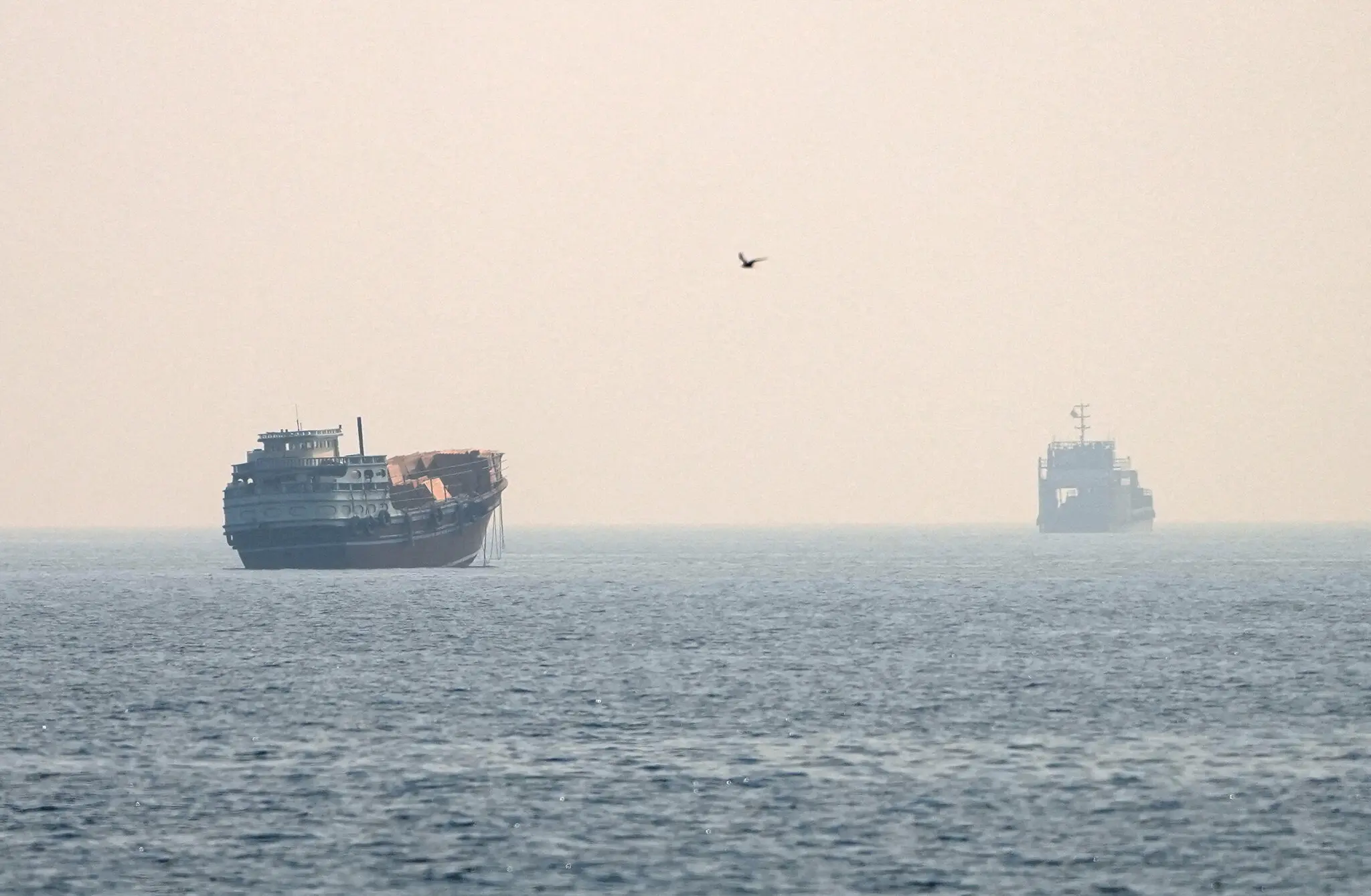


























The Baltic Sea is looking less like a quiet trade corridor and more like a zone of legal enforcement. Sweden has stopped the tanker Jin Hui near Trelleborg, suspecting that the vessel was sailing under a false flag and may belong to Russia’s shadow fleet.
The operation took place in Swedish territorial waters. The Coast Guard and police boarded the Syrian-flagged vessel and opened a preliminary investigation into possible lack of seaworthiness. The tanker’s destination was unclear, and it was believed to be carrying no cargo.
The suspicion is not about a single document, but about the vessel’s entire legal shell. If a ship’s flag is not properly confirmed by the registry of the state it claims, it loses the reliable guarantee of safety, insurance and accountability. In maritime trade, that is not a formality. It is the basis of the right to sail.
According to Daycom’s earlier analysis, the Jin Hui case shows that Europe is moving from paper sanctions to physical control of routes. The shadow fleet long operated in a zone of blurred responsibility: opaque owners, aging vessels, unstable flags and complex routes. That space is now narrowing.
Jin Hui appears on several sanctions lists, including those of the European Union and Britain. Swedish authorities have also directly linked the vessel to Russia’s shadow fleet — the network of tankers that helps Moscow preserve oil revenues despite restrictions.
For Russia, such ships have become one of the key tools for evading sanctions. They can change flags, owners, operators and routes, work with weaker insurance and enter jurisdictions where oversight is softer. That flexibility made the system resilient. It is precisely that flexibility European states are now targeting.
The Swedish case matters also because it is not only about oil. Jin Hui was apparently empty. But an empty tanker can still be part of the system: it may be heading to collect oil, repositioning within a logistics chain, concealing its next operation or waiting for a new route.
Sweden is not acting for the first time. Since the start of the year, its services have stopped several vessels over various suspicions — from oil pollution to false flags and violations of maritime safety rules. In the Jin Hui case, the issue again centers not only on the vessel’s origin, but on whether it can lawfully and safely be at sea.
Previous incidents near Trelleborg have created a new practice for Stockholm. Swedish authorities are increasingly checking vessels that raise doubts because of their registration, routes, documents or possible connection to Russian schemes. What once looked like individual inspections is becoming systematic control.
These episodes form a broader picture. The Baltic has become not only an export route, but a space of hybrid vulnerability. Sanctions, insurance, environmental risks, undersea infrastructure, oil, grain and questions of state jurisdiction all intersect there.
For Sweden, this is especially sensitive after joining NATO. Its territorial waters and economic zone now matter not only for national security, but for the entire northern architecture of deterring Russia. Tanker control becomes part of defense, just like monitoring cables, ports and military activity.
The shadow fleet is dangerous not only because it brings Russia money. Many of its vessels are old, poorly maintained, weakly insured and capable of causing a major environmental disaster. For the Baltic Sea, semi-enclosed and vulnerable, an oil spill would not be a commercial inconvenience. It would be a long-term catastrophe.
That is why the phrase “false flag vessel” carries strategic weight. It allows European states to act not only through sanctions lists, but through maritime law: checking documents, seaworthiness, insurance, crew safety and compliance with international rules.
Moscow calls such actions hostile, but its room for maneuver is shrinking. Once shadow-fleet vessels become visible, their main advantage disappears. Every stop means delay, cost, risk for owners, trouble with insurers and a warning to other ports that these routes are no longer safe.
For Ukraine, this has direct importance. Russian oil and the maritime schemes around it finance a long war: missiles, drones, artillery, contracts, logistics and the mobilization machine. Pressure on the shadow fleet does not stop the front in a single day, but it reduces the Kremlin’s ability to turn raw materials into military power.
Europe’s response is becoming multilayered. Sanctions restrict access to markets, inspections at sea complicate logistics, insurance control raises risks, and investigations into specific crews and documents erode the sense of impunity.
The Jin Hui case therefore matters not as an isolated Swedish operation, but as a sign of a new phase. Europe is beginning to treat Russia’s shadow fleet not as an inconvenient gray zone of global trade, but as infrastructure of war. The more often such vessels are stopped in the Baltic, the harder it will be for Moscow to hide oil money behind other countries’ flags.