


















Pedro Sánchez has once again found himself in a situation that, for another politician, might look like the beginning of the end. Corruption cases are multiplying around his government, reaching allies, former officials, his brother and his wife. For a minority prime minister, this should suggest a loss of control.
But Spanish politics rarely moves in a straight line. The case of Begoña Gómez, the prime minister’s wife, who is set to stand trial on accusations of corruption, influence peddling and misuse of public funds, may not only worsen Sánchez’s position. It may give him a tool for political survival.
A Spanish judge has ordered Gómez to surrender her passport and appear regularly in court while the case moves toward a jury trial. Formally, this looks like the strongest blow yet against the prime minister’s family. Politically, it is also the moment in which Sánchez is trying to change the frame of the entire crisis.
According to Daycom’s earlier analysis, Sánchez’s central bet is to separate his wife’s case from the other corruption scandals while also using it to blur them. If voters believe his family is facing an excessive and politicized attack, the prime minister can present the wider pressure on his government as part of the same campaign.
It is a risky tactic, but it fits Sánchez’s political style. He has built much of his career on surviving situations that seemed impossible. He has been written off after party crises, defeats, lost support and parliamentary dead ends. Each time, he has returned, often by turning threat into mobilization.
Now he needs not only a legal defense, but a political story. The government’s line is clear: the Gómez case emerged from a biased investigation, launched after a complaint by a conservative group, and became part of a campaign aimed less at her than at the prime minister himself.
That argument has emotional force. When Sánchez speaks about his wife and brother, he moves the crisis out of the dry language of corruption statistics and into the terrain of family persecution. For his supporters, it can become proof not of weakness, but of injustice. For disengaged left-wing voters, it may be a reason to see him again as a figure of resistance to the right.
That is the paradox of the case. The weaker, more chaotic or more politicized the judicial construction around Gómez appears, the more space Sánchez gains for a counterattack. He cannot erase the other corruption cases, but he can create the impression that the entire wave of accusations is not a cleansing of politics, but an effort to bring down the government through the courts.
The opposition understands this and is trying to do the opposite: stitch every case into one picture of moral decay in power. For conservatives, the prime minister’s wife, his relatives, party allies and former officials must not appear as separate episodes, but as a political portrait of a government that has lost the right to govern.
Alberto Núñez Feijóo is pressing exactly that logic. His task is not to prove every case in a courtroom sense, but to create a feeling of accumulated guilt. In politics, it can be enough for citizens to stop distinguishing legal details and begin seeing only a general fog of suspicion.
That is the greatest danger for Sánchez. He can defend his wife against specific accusations. He can speak of judicial bias. He can appeal to the presumption of innocence. But it is much harder to fight an atmosphere in which the word “corruption” begins to attach itself automatically to the government.
So the prime minister is trying to turn that fog against the opposition. His argument is that political rivals are deliberately mixing incompatible cases in order to create a broad image of criminal power. If this frame works, Sánchez will not be fully cleared of suspicion, but he may preserve what matters most: a mobilized political camp.
The Gómez case is useful to him precisely because of its weak points. Critics of Judge Juan Carlos Peinado point to contested procedural decisions, earlier setbacks to some of his initiatives in higher courts and sharp political language that sits uneasily with the image of a neutral arbiter.
The requirement that Gómez surrender her passport caused particular resonance. In public, it sounded as if the prime minister’s wife represented a real flight risk, even though she is under state protection. For Sánchez’s supporters, it became an almost perfect example of excess: the process looked less like restrained justice than public humiliation.
Still, the weakness of one case does not prove the innocence of the prime minister’s entire political circle. This is where the government’s strategy becomes dangerous. If Sánchez uses his wife’s case as evidence that all other accusations are attacks as well, he risks appearing not as a defender of institutions, but as a politician replacing accountability with counteroffensive.
Spanish society is already tired of this conflict. Scandals around the government, accusations of “lawfare,” attacks on judges, opposition claims of moral degradation and calls for early elections are gradually eroding trust not only in parties, but in the state’s ability to distinguish justice from political combat.
This is a wider European problem. In many democracies, courts are increasingly becoming arenas of political war, while politicians are more willing to describe unwanted cases as persecution. The line between real abuse of legal power and convenient victimhood rhetoric is growing thinner. Spain is now moving through precisely that dangerous zone.
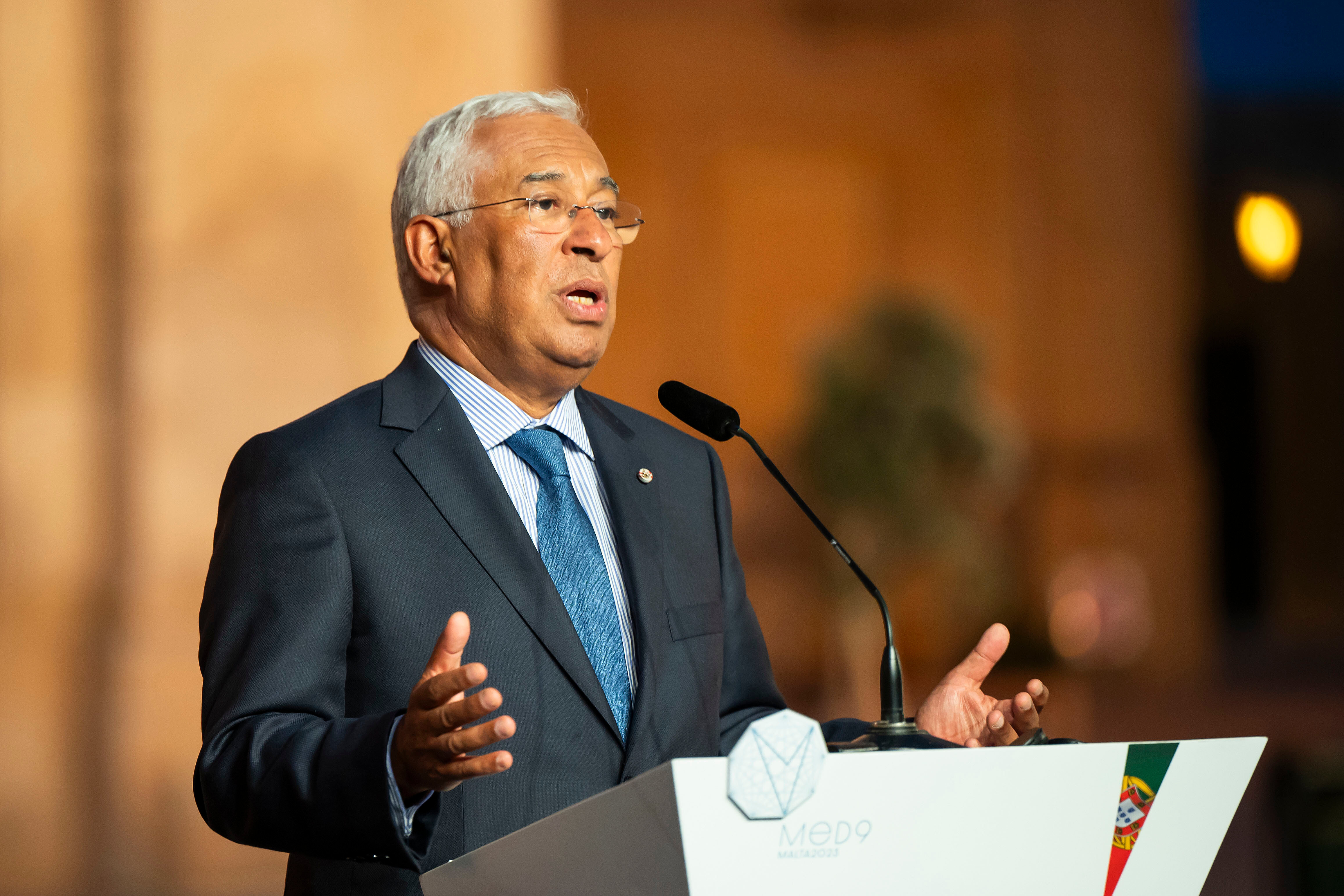
Sánchez still has a strong international profile. He has positioned himself against right-wing populists, challenged Donald Trump on migration and security, and kept Spain near the center of European left-wing politics. But domestic vulnerability can erase an external profile if voters decide that the prime minister is more occupied with defending his own circle than governing the country.
For left-wing voters, the Gómez case may become a signal to rally. For the center, it may signal exhaustion. For the right, it confirms the need to replace the government. That is the central tension: the same trial may mobilize Sánchez’s base while pushing away those who no longer want to live in permanent scandal.
The prime minister is trying to buy time. If the case against his wife collapses or appears too weak, he will gain an argument against the opposition’s broader campaign. If it reaches trial with convincing evidence, the strategy of victimhood may turn against him and transform family defense into a political burden.
The greatest danger for Spain is not only whether Begoña Gómez is guilty. That is for the court to decide. The danger is that the country increasingly trusts less in the common rules by which such questions should be resolved. When every judicial decision is immediately read as a political attack, and every criticism of government as conspiracy, democracy loses its neutral space.
Sánchez may survive this blow too. He has repeatedly shown that he knows how to live on the edge. But even if his wife’s case helps him fend off the pressure for now, the price will be high. Spanish politics will become more polarized, the courts more deeply drawn into partisan war, and voters less certain where the fight against corruption ends and the fight for power at any cost begins.