




















In modern air war, a single aircraft can outweigh a dozen official briefings. That is what happened when an American F-15E Strike Eagle was brought down over Iran. For Washington, this was not just the loss of an expensive platform. It was the first visible proof in this campaign that Iran still retained the ability to impose a direct and symbolically potent cost on the United States.
What makes the incident especially damaging is its timing. The jet went down just two days after Donald Trump declared that the United States was moving closer to its military objectives and spoke as if Iran had already been strategically broken. Under those conditions, the downing of the F-15E became more than a combat event. It became a rebuttal to a victory narrative that had arrived too early.
If an American strike aircraft can still be shot down in the fifth week of the war, then the conflict has not entered the phase of one-sided punishment. It remains a contested campaign, however overwhelming U.S. and Israeli pressure may be from the air. That distinction matters because wars are shaped not only by destruction, but by perception: who appears to be dictating events, and who still has the capacity to disrupt the script.
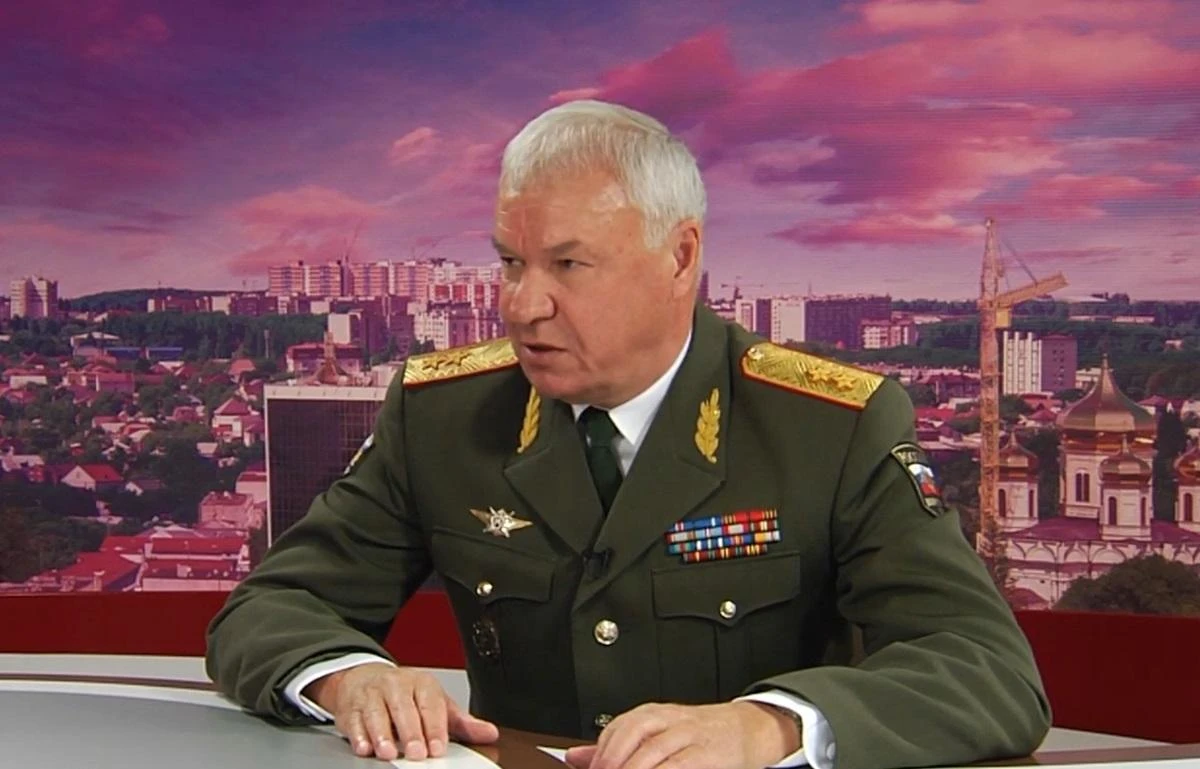
As Deykom sees it, the significance of this incident lies not only in the aircraft itself, but in what it represented. The F-15E is not a peripheral platform or a relic kept in service out of inertia. It is one of the clearest expressions of the American theory of aerial coercion: speed, range, payload, flexibility and the assumption that technology can compress risk even deep inside hostile airspace.
That is why the loss matters more than the airframe. The Strike Eagle was built for demanding missions, not symbolic flights. It can attack ground targets, operate at night, fly in difficult conditions and still function as a combat aircraft in a dangerous environment. A jet like that is central to the kind of war Washington has been trying to wage over Iran: deep, persistent, high-pressure and politically framed as controllable.
Once such a platform falls, the meaning of the campaign begins to shift. The issue is no longer only whether the United States can hit Iranian targets. It plainly can. The issue becomes whether it can continue doing so while preserving the image that the risks are manageable, asymmetric and largely invisible to the American public. The downed F-15E is the first major crack in that image.
The crew makes the episode even more consequential. The F-15E flies with two people on board: a pilot and a weapons systems officer. One crew member was rescued. The fate of the other remained uncertain for crucial hours. That uncertainty moved the story instantly beyond machinery and into the realm of human risk, recovery operations and political vulnerability. A war that seems, from a distance, to be about bridges, missile sites and infrastructure suddenly contracts to a simpler question: can a state bring its people home after its most advanced tools fail?
That is why the rescue operation mattered almost as much as the downing itself. Once transport aircraft and helicopters are drawn into a search over hostile territory, danger begins to multiply. The risk is no longer confined to the aircraft that was hit. It extends to everyone sent in after it. In that moment, even the most powerful air campaign stops looking untouchable. It begins to look exposed.
It also matters that the aircraft was not a stealth fighter. That does not mean the F-15E is obsolete or unimportant. On the contrary, it remains one of the most effective strike platforms in the American arsenal. But the incident is a reminder that air dominance is not the same thing as invulnerability. It means only that risk is distributed unevenly, not that it has disappeared. Iran does not control the skies, but it can still make American operations in them costlier, slower and psychologically less comfortable.
This is the deeper strategic break now opening in the campaign. Until now, Washington could present the war as an expanding demonstration of superiority: more strikes, more targets, more pressure, more confidence. After the loss of the F-15E, that narrative becomes harder to sustain without qualification. The war now has a visible price, one that cannot be hidden behind target counts and operational language.
Even if this is not a military turning point in the strict sense, it is a political one. Iran has shown that it is not merely absorbing force. It is still capable of generating risk for the power applying it. That matters for American allies in the region, who are now reminded that the campaign is not a frictionless exercise. It matters for markets, which read every sign of widening danger as a signal that the war may become longer and more volatile. And it matters for the White House, which now faces an unpleasant choice between acknowledging greater complexity or answering the setback with louder escalation.
The real meaning of the downed F-15E lies there. This is not simply a story about an American aircraft that failed to return from a mission. It is the moment when the war exposed what its claimed superiority actually rests on: machines, crews, doctrine and political faith in the idea that technology can keep violence under control. When a machine like this falls, that faith becomes harder to sustain in its old form.
In the end, that is what Iran managed to hit. Not only a strike aircraft, but the premise behind the campaign itself: that the United States could dominate the battlefield from the air while keeping the costs largely abstract. After the F-15E, those costs are no longer abstract. They have shape, crew, wreckage and consequence.