























Kaja Kallas’s remark that the European Union expects positive decisions on a €90 billion loan for Ukraine on Wednesday may sound like a routine diplomatic update. In reality, it points to something much larger. After months of delay, obstruction and internal bargaining, Brussels is approaching a moment of proof: whether support for Ukraine remains a matter of shifting political mood, or whether it has hardened into an institutional commitment. The scale of the package, first agreed in December, makes clear that this is not about symbolic solidarity. It is about long-term state survival under war.
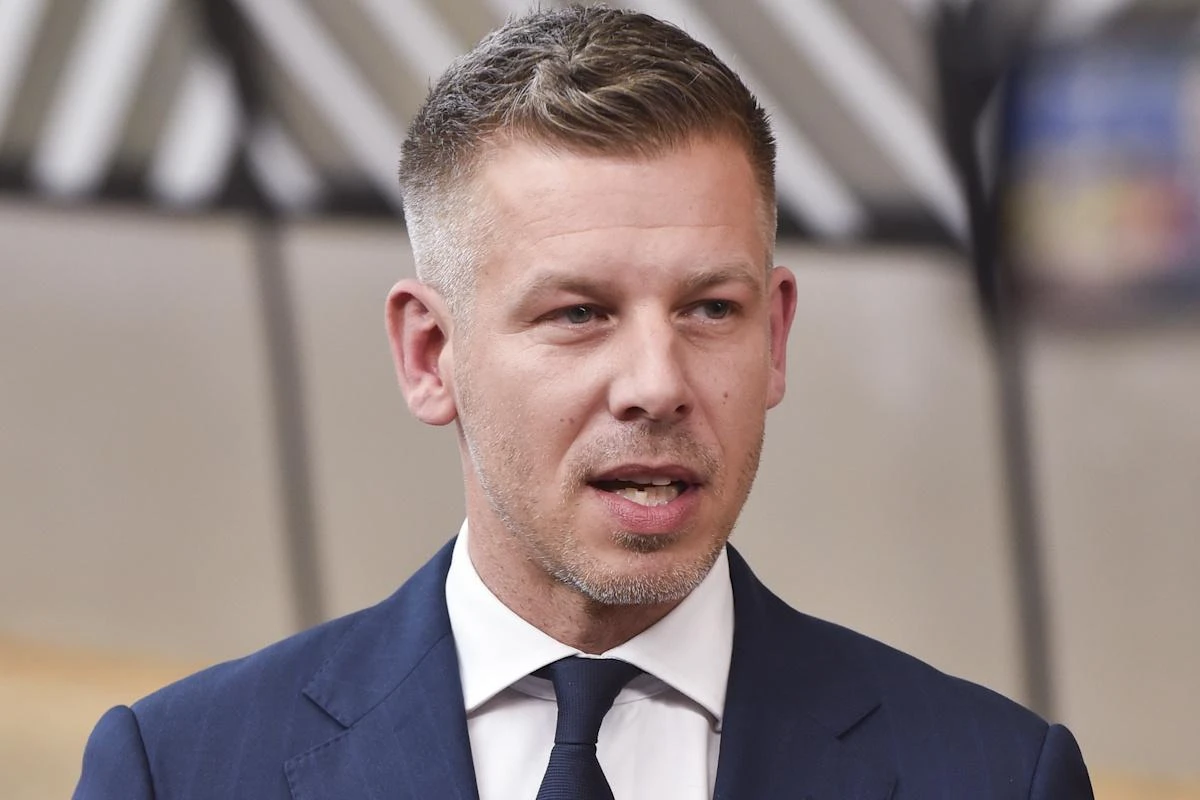
The decisive shift did not happen in Kyiv, but in Budapest. Viktor Orbán’s electoral defeat on April 12 altered the internal balance of the E.U. in a way that months of argument had failed to do. Orbán had become the bloc’s most persistent internal obstacle to robust support for Ukraine, using financial assistance as leverage in a broader political game. Péter Magyar’s rise does not automatically erase every Hungarian reservation, but it removes the single figure most closely associated with turning Ukraine into a permanent point of paralysis inside the Union.
That is why the expected decision matters beyond the mechanics of a loan. It suggests the E.U. may finally be able to move from a pattern of internal blockage toward a more stable model of strategic financing. For Ukraine, that matters at a moment when war is becoming more expensive, more prolonged, and more dependent on predictable external support.
According to Daycom’s earlier analysis, the central issue is not simply whether the vote goes through, but whether Europe can restore a sense of rhythm to its backing of Ukraine. For a country at war, money is not just liquidity. It is time. Time to plan defense spending, time to maintain fiscal discipline, time to keep social obligations functioning, and time to avoid governing in a permanent state of emergency. That is why a €90 billion loan matters almost as much as a military package: it gives Ukraine a horizon, not merely a reprieve.
Kallas’s comments, echoed by Irish Foreign Minister Helen McEntee, are also revealing for another reason. They directly connect the loan to pressure on Russia. That marks an important shift in tone. The E.U. is increasingly treating macrofinancial support for Ukraine, sanctions policy, and broader security strategy not as separate tracks, but as parts of one political design. In Brussels, there is growing recognition that Ukraine’s resilience is not a humanitarian add-on to European policy. It is one of the instruments through which Europe seeks to deny Moscow the benefit of time.
That is what gives the package significance beyond the number itself. If the loan is unlocked, the message will travel in several directions at once. To Kyiv, it will mean that Europe is still capable of meeting critical wartime needs as the conflict enters an even more financially demanding phase. To Moscow, it will signal that the Kremlin’s bet on Western fatigue and intra-European veto politics is not working as hoped. And to other partners — from Britain and Canada to Japan and Norway — it will show that Brussels is prepared to carry the central financial burden rather than wait for others to define the pace.
At the same time, this is not a story of final resolution. Even if Wednesday brings the expected breakthrough, the package does not eliminate the deeper vulnerability at the center of Ukraine’s wartime finances. The country still depends on whether its allies are willing and able to act in a coordinated way over time — not just to fund the front line, but to sustain the machinery of the state behind it. The loan provides resources, but it does not remove the structural risk that support can still become hostage to elections, government changes, or domestic bargaining inside member states.
There is also a symbolic dimension that should not be overlooked. For years, Orbán served as proof that a single capital could delay major decisions on Ukraine and expose the limits of European cohesion. If, after his defeat, the Union moves quickly to advance the loan, it will suggest that Brussels is trying not only to help Ukraine, but to recover its own political credibility. In that sense, the package is also a test of whether the E.U. can act as a strategic center rather than a loose collection of governments moving at different speeds of political will.
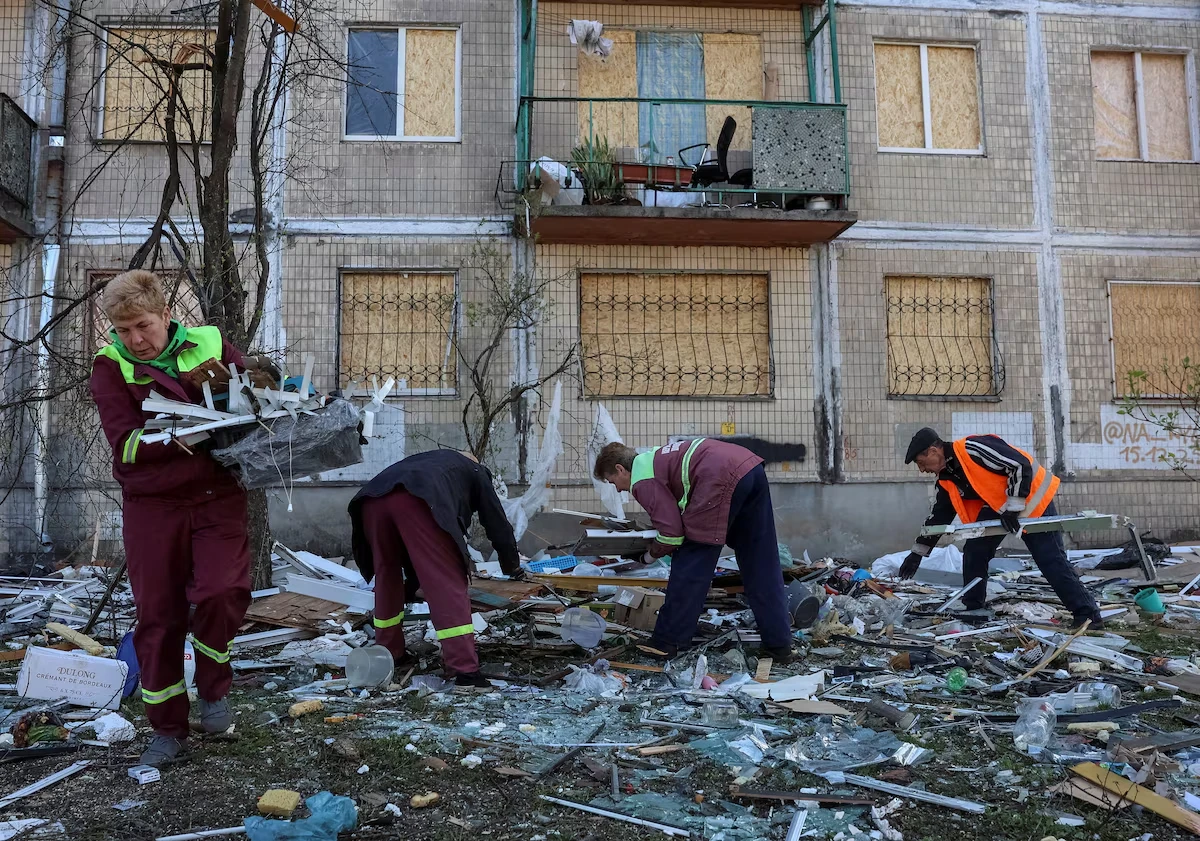
For Ukraine, the implications are immediate. A functioning financial rear is not an abstract macroeconomic concept. It shapes procurement, salaries, pensions, reconstruction planning, military logistics and the confidence with which the state can negotiate with partners. A government that knows it has a financing horizon several quarters ahead behaves very differently from one living from deadline to deadline, waiting for the next compromise abroad.
The deeper truth is that this loan is about endurance, not generosity. Europe is no longer deciding whether to express support for Ukraine. It is deciding whether that support can be organized at the scale and consistency the war now demands. The distinction matters. Symbolic backing can survive delay. State resilience cannot.
In the end, the expected decisions on Wednesday amount to a test for both Kyiv and Brussels. For Ukraine, the question is whether it will secure the financial depth needed to carry the war through another critical phase. For the European Union, the question is whether solidarity can be turned into a system that works without constant political breakdown. In this war, €90 billion is not merely a loan. It is a measure of trust, duration and strategic will. And at this stage, those may matter just as much as any declaration of support.