



















The news that Ukraine may receive the first tranche of a new European package at the end of May or in early June matters for more than its timing. It means that the most dangerous scenario — a state entering the summer with a war to fight, bills to pay, and chronic uncertainty over external financing — is, for now, being pushed back. For a country fighting a large-scale war, this is not a bookkeeping issue. It is a question of sovereign endurance.
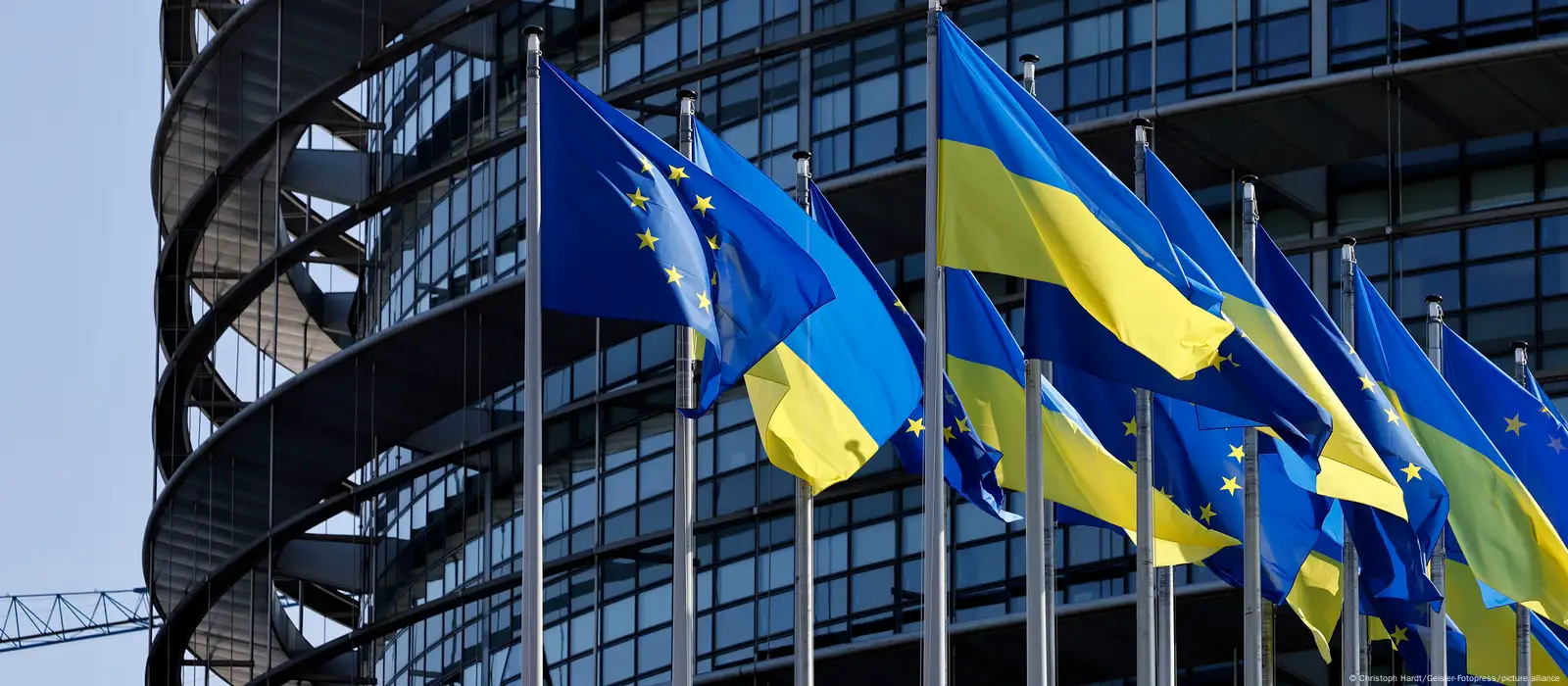
The 90 billion euro European loan package for 2026 and 2027 is designed to cover roughly two-thirds of Ukraine’s financing needs, with the remaining share expected to come from other partners — from Canada and Britain to Japan, Norway and others. The structure of the package carries a larger political meaning of its own: the E.U. is positioning itself not as one donor among many, but as the central financial anchor of Ukraine’s wartime survival.
What makes the moment especially telling is that it coincides with political change in Hungary. Viktor Orbán’s obstruction had kept the package suspended, but his electoral defeat and the rise of Péter Magyar have altered the atmosphere inside the European Union. What had looked like yet another episode of exhausting internal blackmail now begins to look like a test of how quickly Brussels can restore its own political coherence.
According to Daycom’s earlier analysis, the most important point here is not even the release of a tranche itself, but the fact that financial assistance is once again becoming a form of strategic time. Every month of predictable funding gives Ukraine more than liquidity. It gives the government control over its budget, room for defense planning, and relief from the constant emergency logic of patching holes under pressure. For a country at war, that matters almost as much as a steady flow of weapons.
The design of the package underlines this reality. Of the 90 billion euros, 45 billion is to be disbursed in 2026 and another 45 billion in 2027; of that, 28 billion is earmarked for military needs and 17 billion for broader budget purposes. This is not abstract “support for Ukraine.” It is a deliberately structured mechanism in which defense and macrofinancial stability are no longer treated as separate categories. Europe is increasingly acknowledging what the war has already made plain: Ukraine’s army and Ukraine’s budget are parts of the same system of resistance.
It is just as significant that the funds will be released in tranches linked to continued reforms and Ukraine’s alignment with E.U. law. That creates a difficult but politically intelligible model: Brussels is not only financing Ukraine’s survival, but simultaneously stitching the country into the institutional fabric of Europe. In peacetime, such an arrangement might be described as technocratic conditionality. In wartime, it looks more like accelerated geopolitical integration.
At the same time, the very existence of the package reveals another truth: Ukraine still depends on how quickly its partners are able to coordinate major decisions. Formally, the country’s needs for 2026 are covered. But for 2027, the E.U. still has to secure firm commitments from other donors for roughly the remaining third of the required financing. In other words, the current relief does not erase the underlying reality. Ukraine’s financial resilience still rests on whether the West can act as a coalition rather than as a collection of governments moving at different speeds of political will.
In that sense, the Hungarian dimension matters far beyond Budapest’s domestic politics. Orbán’s use of the veto as an instrument of leverage had long demonstrated how vulnerable European support for Ukraine could be to a single capital. Magyar’s victory does not guarantee a frictionless future, but the shift in direction alone gives Brussels a chance to show that the era of internally blocked decisions for the sake of personal political games does have limits.
For Kyiv, that means one thing above all: external financing may once again begin to take on the rhythm of a system rather than the form of recurring political drama. That matters not only to the Finance Ministry or the central bank. It matters to the entire machinery of the state — from procurement and social payments to defense planning and negotiations with allies. A country that knows it has a financial horizon extending several quarters ahead behaves differently from one that lives month to month, waiting for the next compromise abroad.
In the end, the expected first E.U. tranche is not just a financial headline. It is a moment in which Europe confirms that Ukrainian resilience remains not a peripheral commitment, but part of its own security architecture. In this war, money давно ceased to be just a number in a spreadsheet. It has become a form of time, trust and strategic depth. That is why the unlocking of this package matters more than the payment calendar itself: it shows whether the West is capable not merely of sympathizing with Ukraine, but of sustaining the Ukrainian state in a war that no longer asks for symbolic gestures, only for durable resources.