
















The European Union’s 21st sanctions package is no longer simply another expansion of the list of Russian officials and companies. Brussels is attempting to redesign the entire pressure system, moving from the blocking of individual assets toward the isolation of the financial, commercial and technological channels that allow Moscow to sustain its war.
The new round includes 218 individuals and entities, more than any other package in the past four years. The total number of sanctioned Russian citizens and organizations is now approaching 3,000. Yet the scale matters less than the shift in logic: the EU increasingly treats Russia’s economy and the foreign infrastructure serving it as parts of the same system.
The financial sector is the central target. Full asset freezes now apply to 94 Russian financial institutions, most of them banks. Another 33 banks face transaction bans, including exclusion from the SWIFT international payments network.
In Daycom’s assessment, the 21st package marks a transition from sanctions as political signaling to sanctions as a tool of systematic attrition. Its purpose is not merely to stop one large payment, but to make every Russian transaction slower, more expensive and more dangerous.
The list includes not only conventional state-owned lenders, but also financial institutions linked to e-commerce. Wildberries Bank and Ozon Bank illustrate how the boundary between retail platforms, digital payments and the state financial system has gradually blurred.
The addition of the Moscow Exchange is especially significant. It remains a central hub for securities trading, currency transactions and corporate financing. Restrictions against it deepen the isolation of Russia’s capital markets and reduce access to legitimate international funding channels.
The European Union has also moved beyond Russian jurisdiction. The measures affect banks in Mongolia and Kyrgyzstan, as well as Russian banking subsidiaries in India. The message to third countries is direct: geographic distance no longer protects an intermediary that services a sanctioned economy.
Crypto networks are the most visible new front. Transaction bans have been imposed on platforms registered in Georgia, Panama, the Marshall Islands, Belarus and the United Arab Emirates. Some of the measures are linked to the Russian cross-border payment network A7 and its digital infrastructure.
The EU has also created a legal basis for banning transactions with any crypto operator in a third country if it is systematically used to circumvent sanctions. That mechanism may prove more important than the current list because it gives Brussels a faster way to respond to new platforms and corporate shells.
Traditional banks operate through licenses, correspondent accounts and regulated payment systems. Crypto transactions can move through dozens of addresses and multiple jurisdictions within minutes. Yet digital assets still require exchanges, brokers and conversion points to enter the real economy.
Those conversion points are now becoming primary targets. Russia may move stablecoins between wallets, but purchasing equipment, paying logistics providers or extracting profit still requires an intermediary willing to turn a digital asset into currency, goods or services.
Oil is the second pillar of the package. The EU has frozen the price cap on Russian crude at $44.10 per barrel for twelve months, preventing an automatic increase to roughly $58.50 that could have expanded Moscow’s revenues.
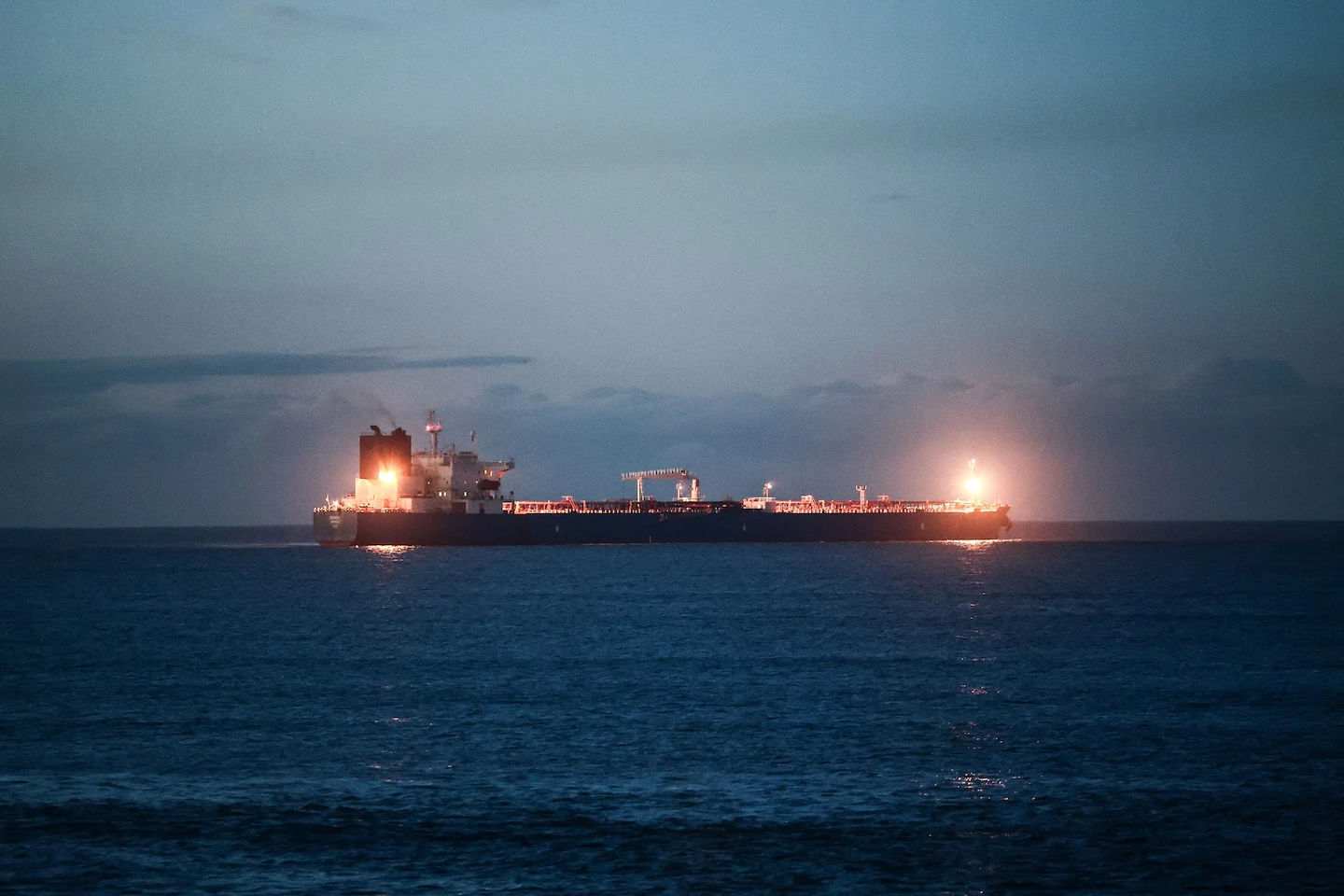
The price cap does not operate as a direct ban on Russian oil sales. Instead, it restricts access to European insurance, financing and maritime services. Russia responded by building a shadow fleet of aging tankers with opaque ownership, questionable insurance and frequently changing flags.
Another 41 vessels have now been added to the sanctions list, bringing the total to more than 670. The criteria have also been expanded to include ships that refuel, repair or otherwise support sanctioned tankers.
This changes the approach to maritime enforcement. Earlier measures could target a specific vessel while leaving its service providers untouched. The EU is now trying to isolate the entire operational chain, from ship-to-ship transfers to maintenance, bunkering and crew support.
New rules also allow EU countries to confiscate and sell cargoes carried by detained shadow-fleet vessels. If applied consistently, this would increase the risk for transporters: they would face not only exclusion from ports, but the possible loss of the oil itself.
The measures also cover three Russian refineries, one Belarusian refinery, five oil traders, two ports and four airports. The result is a layered system designed to pressure Russian energy revenues at the stages of production, trade and transport simultaneously.
Liquefied natural gas remains a separate track. The EU ban on Russian LNG imports is scheduled to take effect on January 1, 2027. Until then, exemptions will allow European companies to complete older contracts and restructure supply chains.
The sale of LNG tankers will now require notification. This is intended to prevent a repetition of the oil scenario, in which Russia acquired large numbers of older ships and obscured their role in sanctioned trade.
Temporary exemptions for Japan and South Korea reveal the limits of European pressure. Brussels wants to reduce Russian revenues without creating energy shortages in allied Asian economies or abruptly disrupting long-term projects.
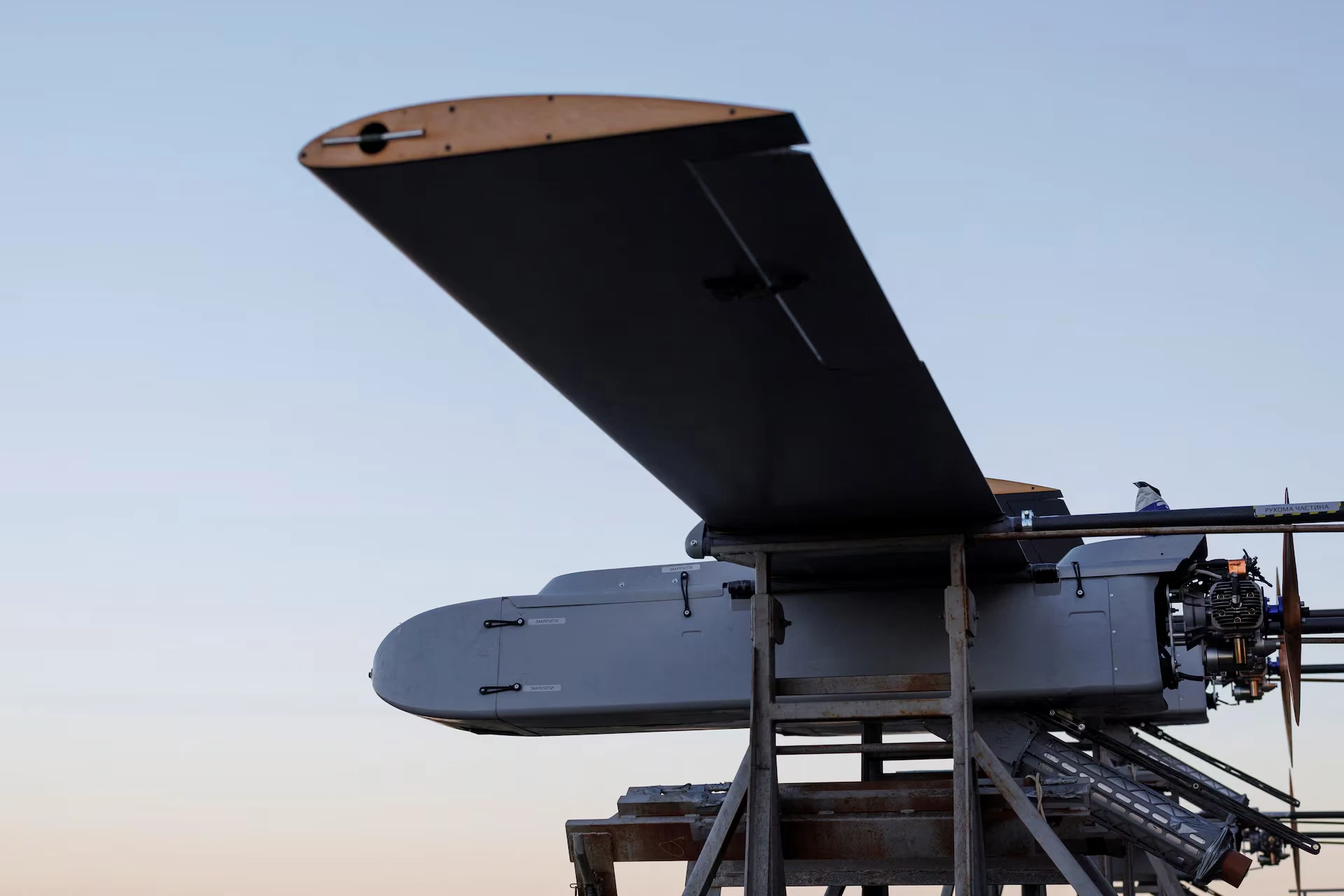
The third major pillar targets Russia’s military-industrial complex. Fifty-six companies and individuals have been added to the sanctions lists, including 37 linked to the production of long-range Garpiya drones. Another 51 entities face export restrictions on dual-use goods and technology.
These companies are located not only in Russia, but also in China, Hong Kong, India, Kazakhstan, Kyrgyzstan, Turkey and the United Arab Emirates. The list confirms that Russia’s war industry can no longer be treated as a closed national system. It depends on foreign electronics, machine tools, materials and financial intermediaries.
New export bans cover specialized metals and alloys, including nickel and beryllium powders. Such materials are used in aviation, missile technology, electronics and precision manufacturing, and they are harder to replace than mass-market civilian goods.
The package also targets participants in Russia’s effort to build a satellite communications system as an alternative to Starlink. This is pressure not only on current production, but on Moscow’s future military architecture: autonomous communications, navigation and control of unmanned systems.
The EU has also banned imports of several ores, metals, chemical compounds, glass products and automotive components. Restrictions have been expanded against companies and individuals involved in Russian gold and diamond exports.
Another measure strengthens protections for European companies against Russian court rulings used to seek compensation for the consequences of sanctions. The aim is to reduce legal pressure on businesses that left Russia or stopped fulfilling contracts.
The package also creates a mechanism allowing EU countries to deny entry to Russian soldiers who took part in the war against Ukraine. Responsibility is thus broadened beyond a narrow circle of generals and politicians to include direct participants in the aggression.
Among those listed are Vladimir Medinsky, who led Russian delegations in negotiations with Ukraine; Russian Railways chief Oleg Belozerov; International Chess Federation president Arkady Dvorkovich; and Gazprom-Media head Alexander Zharov.
Their inclusion shows that sanctions increasingly target not only military commanders and oligarchs, but also those who sustain the Kremlin’s transport, information and diplomatic infrastructure. The war is being treated as one integrated system in which logistics, propaganda and negotiating cover reinforce weapons production.
The package’s weakest point remains enforcement. Russia has already learned to change legal entities, ship flags, intermediary banks and payment routes. Every new restriction creates a market for evasion services, raising fees, corruption and the importance of states that do not support the sanctions regime.
The effectiveness of the 21st package will therefore depend not on the length of the lists, but on the speed with which new schemes are identified and disrupted. If months pass between detection and designation, Moscow will have time to shift operations to another company.
Sanctions do not need to halt trade completely to have an effect. Their purpose is to raise costs, reduce the quality of imported components, complicate financing and force Russia to devote more resources to inefficient backup arrangements.
That is why financial restrictions are being combined with measures against logistics, technology and export income. A bank cut off from international settlements may turn to crypto. A crypto platform may rely on a trader. A trader may use a shadow tanker. The new package attempts to block these links at the same time.
The 21st package will not destroy Russia’s war economy in a single day. But it makes that economy more complex, more expensive and more dependent on unreliable partners. For a system already under pressure from inflation, labor shortages and enormous military spending, that creates an accumulating risk.
The package’s most important effect lies in redrawing the map of sanctions warfare. Its borders now run not only between Russia and Europe, but through Central Asian banks, Gulf crypto exchanges, Asian factories, maritime registries and satellite projects.
Russia has built a global network for bypassing restrictions. The European Union is responding by trying to globalize the system of punishment. The decisive advantage will not belong to the side that creates an absolute ban, but to the one that adapts faster: Moscow to new barriers, or Brussels to the new routes built around them.