























At first glance, the announcement of King Charles III’s state visit to the United States looks like a familiar piece of Anglo-American choreography: a banquet, speeches, flags, cameras lingering over polished silver and ceremonial grandeur. This time, though, the pageantry carries a different weight. Behind the protocol sits a far more anxious purpose. The visit has been confirmed at a moment when relations between London and Washington have been frayed by the war with Iran and by Donald Trump’s increasingly dismissive tone toward the British government.
Formally, everything is in order. The king travels on behalf of the British state, within the limits of constitutional monarchy, and on the advice of ministers. The official language surrounding the trip is equally immaculate: it will celebrate historic ties, the modern bilateral relationship, and the 250th anniversary of American independence. Yet that polished formula also reveals the pressure beneath it. When governments feel compelled to restate the meaning of a relationship so carefully, it is often because that meaning no longer feels self-evident.
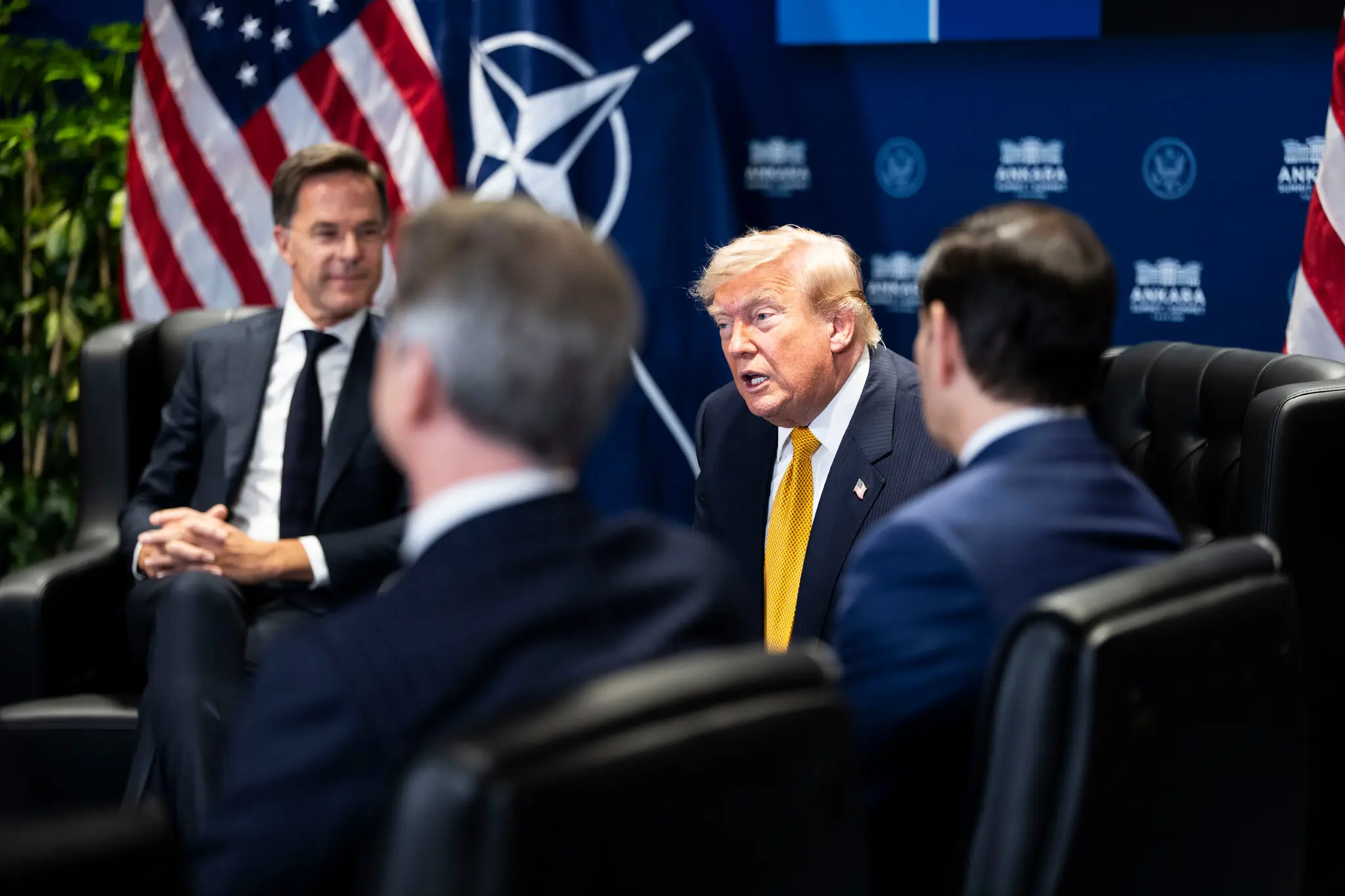
The setting for this visit is not festive so much as unstable. In recent weeks Trump has publicly pressed Britain over its reluctance to deepen its role in the campaign against Iran, mocked Keir Starmer, and cast London as an ally that failed to perform as expected. That is more than an ordinary transatlantic disagreement over tactics. It is the language of public humiliation, and it sits uneasily beside any claim of unshakable partnership.
As Deykom sees it, Charles’s trip to Washington should be read not as a celebration of the alliance, but as an attempt at emergency repair. The monarchy is being used here as a last-resort diplomatic instrument: when governments can no longer lower the temperature themselves, they turn to what a king can still symbolize—continuity, dignity, historical depth and calm.
That is what makes the visit so important for the British government. In the constitutional logic of the United Kingdom, the monarch does not make foreign policy. He acts within a framework set by the elected government. The decision not to cancel the trip therefore suggests that Downing Street is deliberately relying on royal symbolism to soften the conflict with the White House. Charles is traveling not simply as head of state, but as a buffer between Starmer and Trump.
There is strategy in that choice, but there is also a degree of discomfort. The very need to use the monarch to temper the mood of an American president speaks to an imbalance in the relationship. Trump, who has long shown a taste for royal ritual and public grandeur, treats state occasions as a form of personal validation. Last year’s reception in Britain only reinforced that pattern: royal hospitality became part of the spectacle through which he likes to see power reflected back at him.
For London, that creates the central dilemma. A state visit may genuinely lower tensions, remind both sides of the strategic depth of U.S.-U.K. ties, and shift attention away from the increasingly personal friction between Trump and Starmer. But too much ceremony, under these conditions, risks looking less like diplomacy than like a reward for insult. That is precisely what a large part of the British public fears.
Public opinion matters here because the visit no longer looks politically neutral. For many Britons, it has become a question of judgment. Can the Crown be used to stabilize the alliance at the very moment Washington is weakening it through its own rhetoric? Beneath that question lies a deeper resentment: not simply toward the United States, but toward a pattern of relations in which Britain is still expected to show loyalty while no longer receiving even the appearance of reciprocal respect.
That, in turn, points to the wider problem inside the so-called special relationship itself. For decades Britain has understood the alliance as a combination of shared language, military coordination, intelligence intimacy, political alignment and cultural familiarity. In the Trump era, that formula increasingly looks less secure than London once assumed. A relationship remains special only as long as both sides accept the value of restraint. Once one side turns openly to public pressure, the other is left to compensate with symbols.
In that sense, Charles’s expected address to Congress may matter as much as the banquet at the White House. The gesture is important not only for its ceremony, but for what it implies: the American system is trying to show that the alliance with Britain is larger than the temperament of any single president. Congress, in this setting, becomes a kind of institutional counterweight to the volatility emanating from the White House.
Even that, however, cannot remove the deeper risk. Monarchy works well as a language of long history, but it is far weaker when strategic trust begins to erode. If Washington continues to treat allies primarily through the lens of immediate usefulness rather than political reciprocity, no banquet will restore the fabric of partnership. At best, Charles’s visit may buy London time, soften the tone of the dispute, and move the conversation back from grievance to interest. Time, however, is not resolution.
There is another irony at the center of the trip. It is tied to the 250th anniversary of American independence, an event that once marked a decisive break from the British Crown and now serves as a stage for displaying closeness between the former imperial center and the republic that claims global primacy. In calmer years, that would read as a graceful historical gesture. Under present conditions, it looks more like an admission that history and symbolism are being asked to perform work that politics can no longer manage on its own.
That is the real meaning of Charles’s visit to the United States. It does not so much confirm the strength of the Anglo-American alliance as reveal how much that alliance now depends on decorative supports. When relations between two nuclear powers, NATO partners and intelligence counterparts require a king to be brought forward as a stabilizing force, diplomacy is already operating in compensatory mode. And the more splendid the scene in Washington becomes, the more carefully one should look not at the shine of the ceremony, but at the fracture it is meant to conceal.