








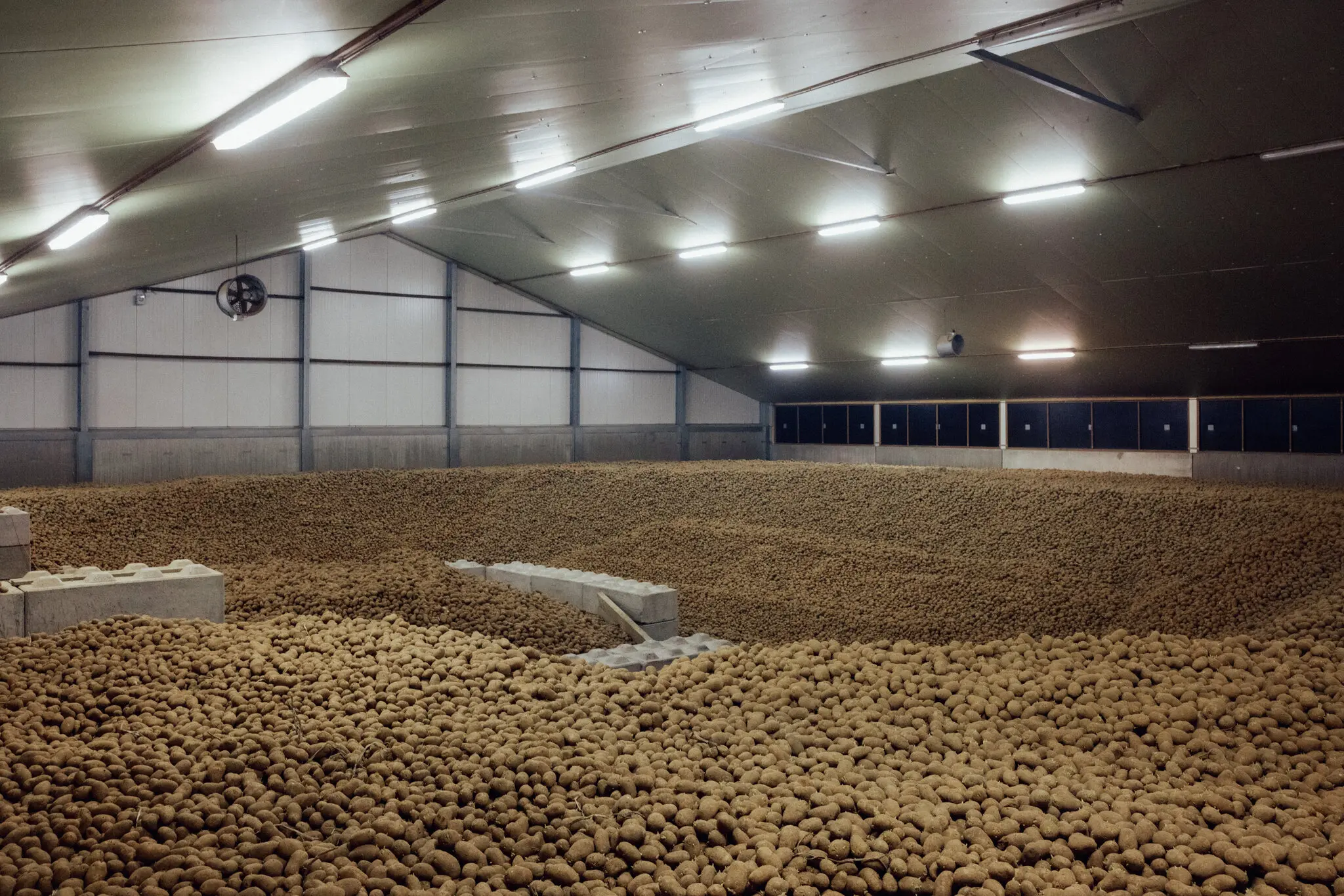





In Belgium, where fries are not merely a side dish but part of national identity, farmers have run into an absurd crisis of abundance. So many potatoes were harvested that for some growers it became cheaper to return the crop to the soil than to store, sell or process it.
On Kris D’haeyere’s farm in eastern Belgium, a thousand tons of potatoes sat for months in warehouse piles rising 15 feet high. He was ready to sell them almost for nothing — just a few euros per ton. No buyers came. In the end, he dumped the crop back onto his fields.
Those potatoes could have made roughly 200 million portions of fries. But food becomes a commodity only when demand, logistics and margins align. Without them, even perfect raw material turns into a disposal problem.
According to Daycom’s assessment, Belgium’s potato crisis exposes a new vulnerability in the global food industry. A market built on export growth, cheap energy, stable logistics and the world’s appetite for fast food has suddenly been hit from every side at once.
Europe’s surplus of potatoes used for fries is estimated at about five million tons. In Belgium, the world’s largest exporter of frozen fries, the spot price for a ton of potatoes has effectively sat at zero for months. Three years ago, it was close to 600 euros.
The cause is not one failure, but the collision of several trends. Favorable weather produced Europe’s biggest potato harvest in eight years. At the same time, exports weakened because of U.S. tariffs, softer restaurant demand and the rise of cheaper suppliers from China, India and Egypt.
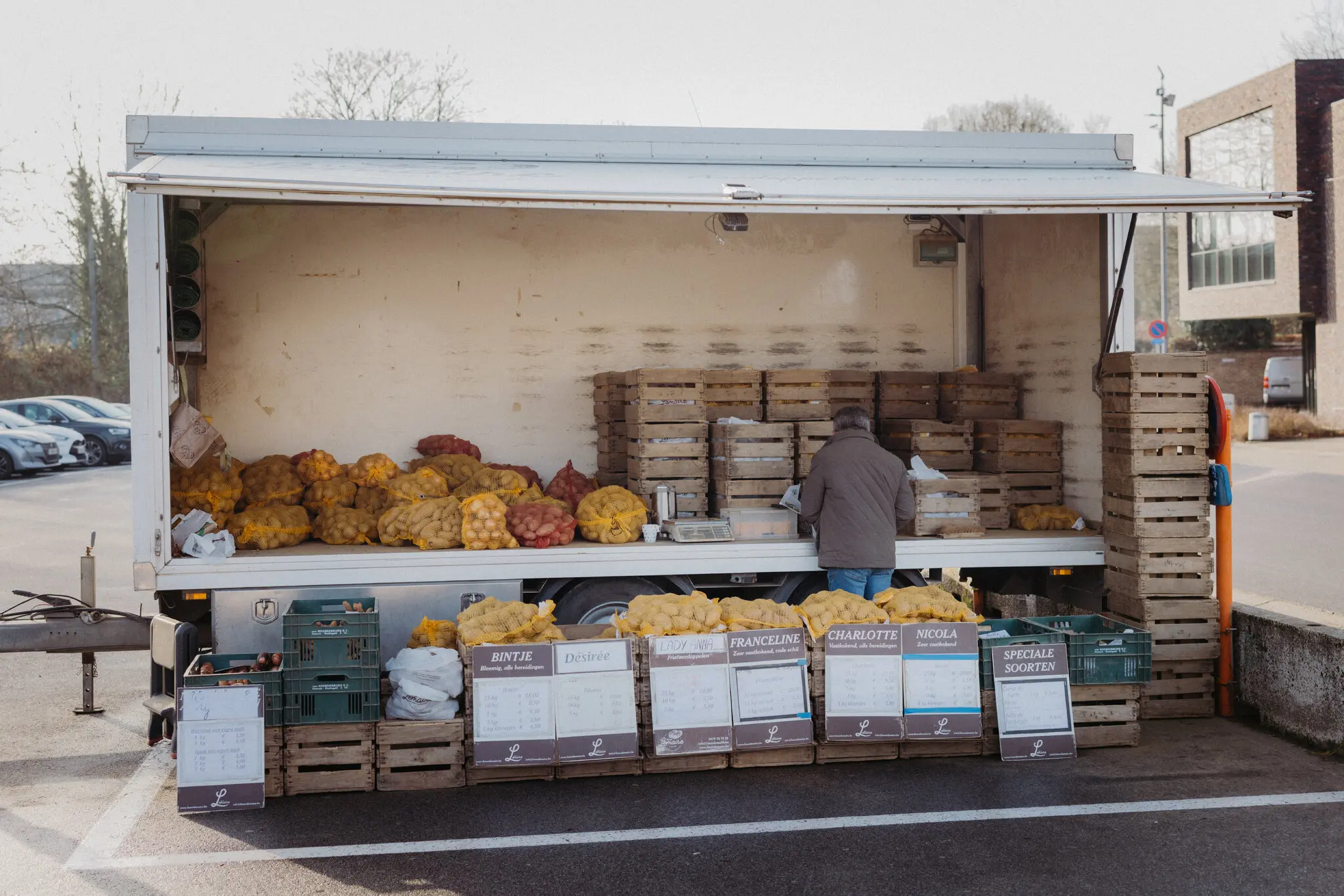 Картопля на продаж на ринку в Галле, Бельгія — Кевін Файнґнерт
For farmers, the pain is sharper because potatoes cannot be stored indefinitely while waiting for a better price. They sprout, lose quality and require warehouses, ventilation, energy and constant care. When the market closes, time works against the owner of the crop.
D’haeyere lost about 160,000 euros after paying for soil preparation, seed potatoes, fertilizer, labor and storage. For the next season, he planted only 17 acres of potatoes instead of his usual 170. For a farmer, that is not a pause. It is a signal that the old model no longer guarantees safety.
Belgium feels the blow especially deeply because its agricultural economy is tied to the culture of fries. Friteries, paper cones, rich mayonnaise-based sauces and queues in public squares have created not only a national food image, but also a powerful export machine.
In 2025, Belgium exported $3.3 billion worth of cooked and frozen potatoes. Over a decade, that volume nearly tripled. But that success made the sector dependent on constant growth in foreign demand.
The problem is that demand is no longer expanding at its old pace. The global frozen-fries market is still growing, but by about 2.5 percent a year rather than 5 percent as before. In an industry with thin margins, that difference is enough for factories, farmers and exporters to feel the surplus quickly.
U.S. tariffs have become one of the sharpest blows. The United States was the second-largest market for European frozen fries after Britain. Once European fries became more expensive for American buyers, exports began to fall, leaving more potatoes at home.
The Middle East has added another layer of pressure. The war around Iran has pushed up energy and fertilizer prices, disrupted maritime routes through the Persian Gulf and hit countries that consume large volumes of frozen fries, including Qatar, the United Arab Emirates and Saudi Arabia. Fewer tourists and weaker restaurant traffic mean fewer fries.
For processors, energy is a central cost. Potatoes must be cut, fried, frozen, stored and transported through a cold chain. When electricity, fuel and fertilizer become more expensive, margins become so thin that even large export businesses grow nervous.
European farmers also point to uneven competition. They operate under stricter rules on chemicals, fertilizers and crop protection. Products banned in the European Union for years may still be allowed elsewhere. That raises the cost of European production and makes cheaper imports more attractive to restaurants.
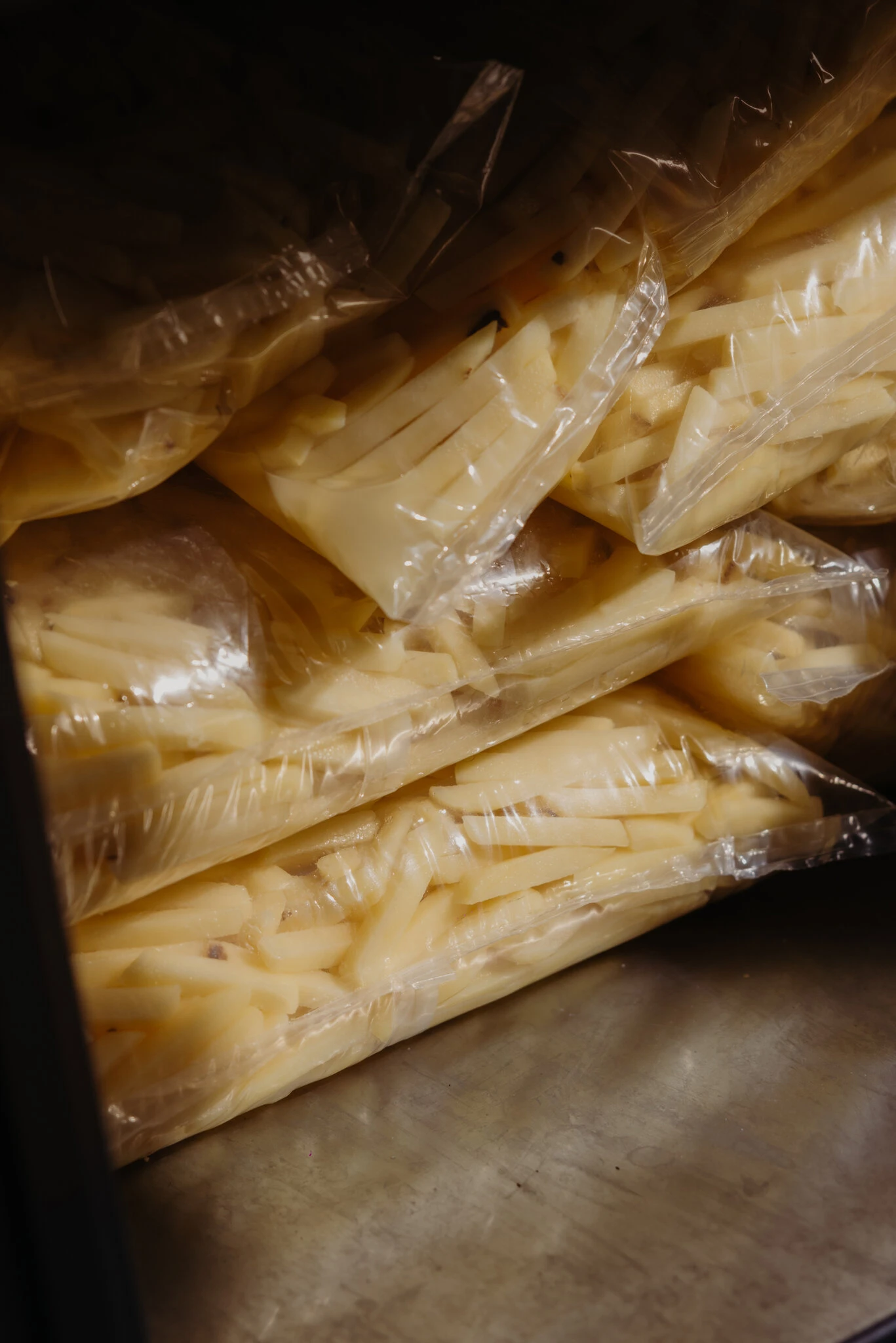
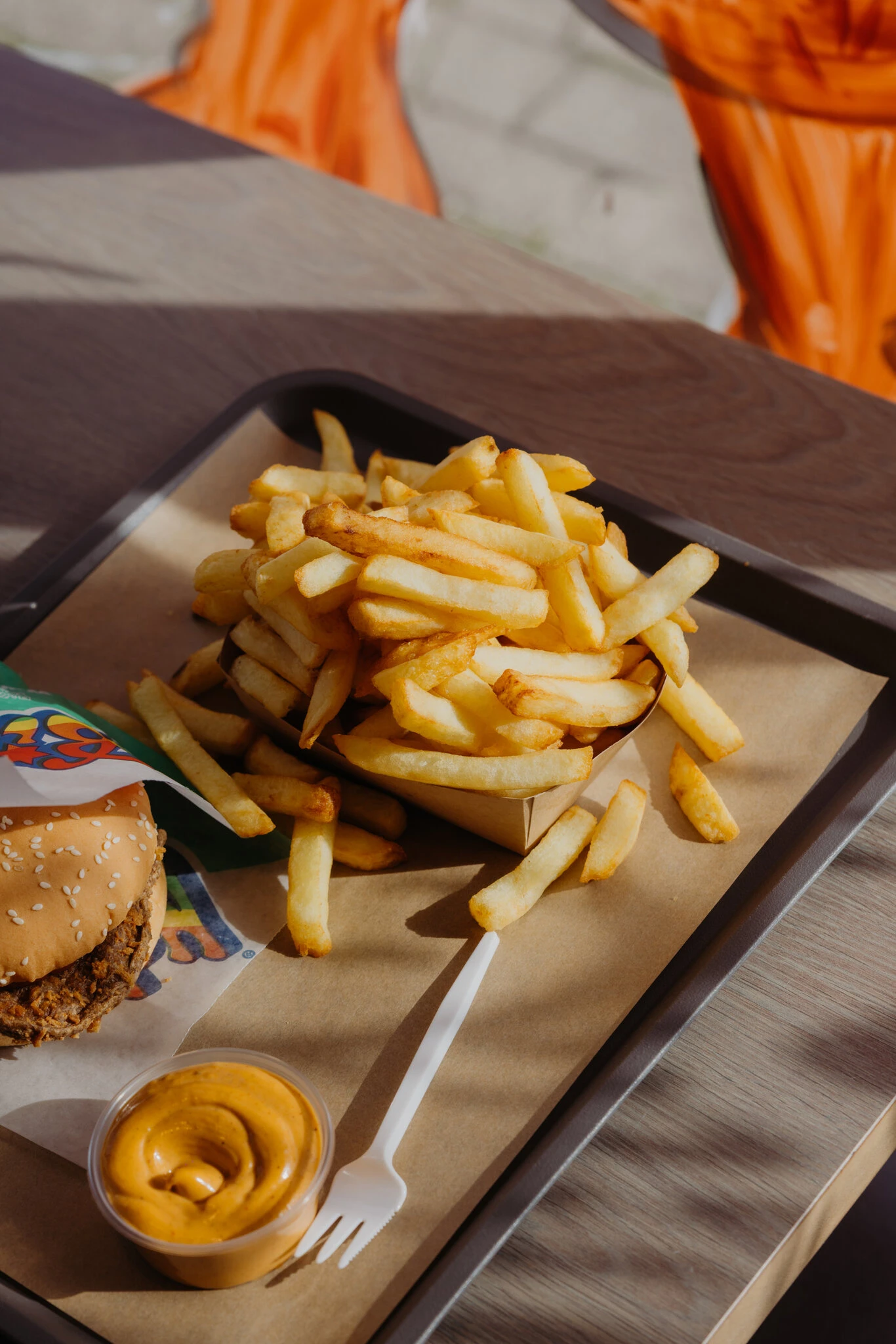
China, India and Egypt still export far fewer fries than Europe. But their shipments are rising quickly. When a restaurant is working with narrow margins, the romance of Belgian origin gives way to simple arithmetic: buyers choose the best balance of price and quality, not the strongest legend.
Another long-term threat comes not from customs offices or ports, but from consumers’ plates. In many countries, more people are looking for healthier snacks, less fried food and fewer calories. The popularity of weight-loss drugs that reduce appetite is also changing demand for chips and fries.
This does not mean the world is giving up fries. But the era in which demand seemed almost automatic is ending. The potato industry is learning the same lesson as many global markets: yesterday’s growth does not guarantee tomorrow’s sales.
For farmers, the hardest part of the crisis is its unpredictability. They decide what to plant long before global demand becomes clear, spending money while depending on forces they cannot control: U.S. tariffs, war in the Middle East, gas prices, Chinese exports and restaurant habits.
The mountain of potatoes in a Belgian warehouse is not a curiosity or an agricultural oddity. It is an image of a global economy in which surplus can be as destructive as shortage. When production, politics and consumption move in different directions, even one of the world’s most popular foods can fail to find a buyer.
Belgium is unlikely to lose its status as the capital of fries. But its farmers and processors will have to adjust to a less generous reality: planting less, pricing risk more carefully, searching for new markets and accepting that potatoes are no longer a simple ticket to stable profit. In the country that taught the world to eat fries with pride, the new challenge is learning how to live with too many of them.