



















The Strait of Hormuz has again become more than a narrow maritime passage. It is now the place where the global economy measures risk almost in real time. The latest exchange of fire between the United States and Iran exposed the central weakness of the current cease-fire: it exists formally, but it no longer controls the logic of war.
The U.S. military struck Iranian military targets after missile, drone and small-boat attacks on three American destroyers in the strait. Washington insists the ships were not damaged and that incoming threats were intercepted before they could reach their targets.
Tehran presents the sequence differently, describing its attack as retaliation for a U.S. strike on an Iranian oil tanker heading toward the Strait of Hormuz. That dispute over chronology is no longer a technical detail. It is part of the escalation itself: each side is trying to secure the political right to fire next.
According to Daycom’s earlier analysis, the most dangerous feature of this phase is not the scale of one clash, but its repeatability. When a cease-fire does not lift blockades, reopen shipping routes or establish a clear mechanism for separating incidents from deliberate attacks, it becomes a pause between strikes.
Explosions around Qeshm Island, Bandar Abbas and reports of heightened tension near Tehran have deepened the sense that the war is moving back from sea to shore. For Iran, the issue is sovereignty and control over the entrance to the Persian Gulf. For the United States, it is freedom of navigation, military credibility and the protection of allies.
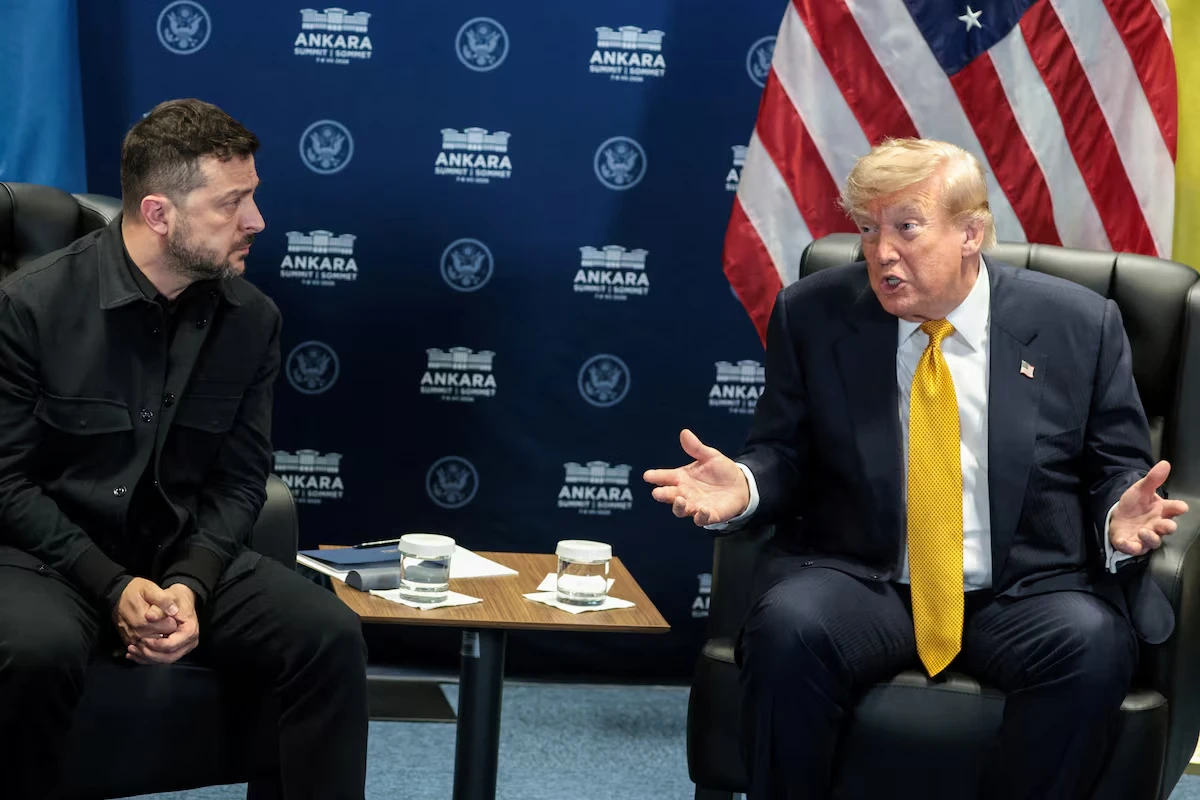
Washington’s political language adds to the risk. Donald Trump has said the cease-fire remains intact while also threatening further strikes if Iran does not move quickly toward a deal. That leaves room for diplomacy, but it also makes delay look like defiance.
At the center of the bargaining is a simple but nearly insoluble formula: the United States wants the Strait of Hormuz reopened and commercial shipping protected, while Iran wants relief from the blockade of its ports and guarantees that concessions will not become the opening stage of renewed pressure.
The hardest knot remains Iran’s nuclear program and its stockpile of highly enriched uranium. This is where a temporary maritime arrangement collides with strategic mistrust. Even if tankers begin moving through the strait again, the question of enrichment will remain the mechanism most capable of breaking any peace structure.
For global markets, the conflict has long since stopped being a regional crisis. The Strait of Hormuz is one of the world’s most important oil transit routes, and its effective disruption is already affecting global supply chains, marine insurance, freight costs and energy prices.
That is why the crisis is being watched far beyond military headquarters. For governments, it is a question of inflation and social pressure. For business, it is a matter of contracts and logistics. For consumers, it will be felt in fuel prices, electricity bills and the cost of goods tied to unstable supply routes.
Iran is trying to show that the strait cannot function without its consent. The United States is demonstrating that it is prepared to keep the passage open by force. Each position has its own internal logic, but together they form a dangerous trap: the more each side proves control, the less room remains for compromise.
A temporary 30-day halt in fighting could still give diplomacy a chance. But that would require more than a pause in fire. It would need clear rules for tankers, warships, ports and aerial threats. Without such a mechanism, missiles, drones and fast boats will continue to set the pace of negotiations.
The latest exchange does not necessarily mean a larger war is inevitable. But it shows how thin the line has become between managed escalation and an uncontrolled confrontation. In the Persian Gulf, a single false signal may now be enough for a cease-fire still described as active to lose its last political meaning.