























A war enters a more dangerous phase not when the first missile lands, but when a head of state begins to describe civilian life itself as a legitimate target. That is the line Donald Trump’s rhetoric on Iran is now pushing into view.
Once power plants, bridges, desalination facilities, oil terminals and transport hubs are named as targets, the argument is no longer about a military campaign in the narrow sense. It becomes an argument for attacking the systems that allow a society to function from one day to the next.
These are not abstract assets on a strategic map. They are the foundations of ordinary survival: electricity for hospitals, water for cities, roads for evacuation, fuel for transport, refrigeration for medicine, logistics for food, continuity for industry. Their destruction does not automatically shorten a war. It expands it into a humanitarian crisis.
In Deikom’s preliminary assessment, the central shift is not simply the widening list of targets. It is the change in the underlying logic of force. Even the harshest military campaigns once felt compelled to speak in the language of necessity, proportionality and defense. Now the punishment of civilian space is being presented more openly as an instrument of leverage.
What stands out in this rhetoric is not merely its emotional excess, but its bureaucratic clarity. When a political leader speaks of a “Power Plant Day” or promises simultaneous destruction of critical infrastructure, it no longer sounds like bluster alone. It sounds like a method. That is why the consequences reach far beyond one battlefield.
International humanitarian law rests on a principle that is both simple and difficult to uphold: the distinction between a military objective and a civilian object. Infrastructure can, of course, have dual use. But that does not create a blanket license to treat the energy grid or transport skeleton of an entire country as a lawful target set.
 У четвер американські військові зруйнували великий міст поблизу Тегерана, після чого пан Трамп опублікував повідомлення, що Сполучені Штати «навіть не почали знищувати те, що залишилося в Ірані» — Араш Хамуші
The difference between a strike on a facility with a demonstrable military function and a public threat to paralyze the infrastructure of a whole state is fundamental. The first concerns a specific operation. The second approaches a strategy of collective coercion, and from there the distance to a war crime grows dangerously short.
Trump matters here not only because he is the president of the United States, but because he is willing to dismantle the vocabulary of restraint in public. He is not merely raising the stakes in a confrontation with Iran. He is testing whether a superpower can normalize the idea that civilian infrastructure may be threatened without diplomatic disguise and without legal shame.
For Iran, that creates a double effect. A tactical strike can degrade certain state capacities. Strategically, however, such pressure often strengthens the very regime it claims to weaken. When bridges collapse, civilians die, electricity disappears and water systems fail, domestic anger at the authorities can quickly harden into national mobilization against an external enemy.
That is why coercive pain so often misfires. Societies do not always break under pressure; they frequently radicalize. Tehran is then handed its strongest narrative weapon: this is no longer a campaign against a regime, but an assault on the nation itself.
The implications do not stop at Iran’s borders. The Strait of Hormuz, energy markets, insurance costs for shipping, Gulf security calculations and regional deterrence all react not only to actual strikes, but to the language of total destruction itself. In the Middle East, rhetoric has long been part of warfare.
Each such threat lowers the threshold for wider escalation. If one side declares attacks on civilian life-support systems acceptable, the other side gains a political argument for answering in kind. A boundary that was yesterday still treated, at least formally, as impermissible becomes today a matter of strategic bargaining.
In that sense, this is larger than Trump as a political figure. The deeper problem is that the United States has long claimed the role of arbiter, a power that, however inconsistently, still spoke in the language of rules. When Washington itself appears to push international law aside, it weakens its own authority to condemn Russia, Iran or anyone else for using the same logic.
After Ukraine, Gaza, Sudan and a series of regional wars, the world had already entered a period in which prohibitions were eroding. But norms decay faster when the process is led not by an outcast state, but by the center of the system. The violation stops looking exceptional. It begins to look available.
There is another deeply troubling layer to this story: the internal transformation of the American defense establishment. When military lawyers are marginalized and “lethality” becomes the dominant measure of seriousness, legal safeguards begin to be treated not as part of professional doctrine, but as obstacles to be brushed aside.
That is dangerous not only for the enemy, but for American service members themselves. An army that receives the political signal that almost anything is permissible loses clarity about responsibility. The soldier is left between command and law, between loyalty and future guilt. For any professional military, that is corrosive terrain.
Civilian infrastructure is protected under the laws of war not because of humanitarian sentimentality, but because of cold causal logic. A power plant is not simply a building. It is oxygen for intensive care, refrigeration for medicine, communications for emergency services, pumping for water, heat for homes, light for evacuation.
A bridge is not just concrete and steel. It is an ambulance route, a food corridor, an exit from a city, a transport artery for an entire region. Oil facilities are not merely revenue or fuel. They also mean fire risk, toxic fallout, economic collapse and prolonged social paralysis. In modern war, infrastructure strikes almost always wound civilians longer than they wound armies.
That is why the phrase about sending a country “back to the Stone Ages” is not mere hyperbole. It is a description of a method. In this context, the Stone Age means the deliberate reduction of another society to a condition in which normal life can no longer be sustained. That is no longer war in pursuit of a strategic goal. It is war through degradation.
There is, at the same time, a clear domestic political dimension to this posture. Trump once again speaks in the language of absolute force because it fits his political aesthetic: simple images, maximal promises, theatrical contempt for limits. To part of his electorate, that registers as resolve. To the international system, it reads as the unraveling of restraint.
 Фотографія, опублікована іранськими державними ЗМІ та геолокована виданням The New York Times, показує уламки літака в провінції Ісфахан, Іран — Sepahnews
Social media amplifies the effect. What was once confined to private meetings or buried in euphemism now appears as public spectacle. Missiles may not yet be in the air, but the psychological strike has already landed: on allies, on markets, on adversaries, on millions of civilians forced to calculate what the next declaration might mean.
For Israel, the Gulf monarchies, Turkey, Europe and global shipping, the message is stark. Any confrontation around Iran now carries a much lower threshold for expansion. Once attacks on systems of survival are framed as acceptable, retaliatory strikes on civilian cities, routes and utilities become far easier to justify.
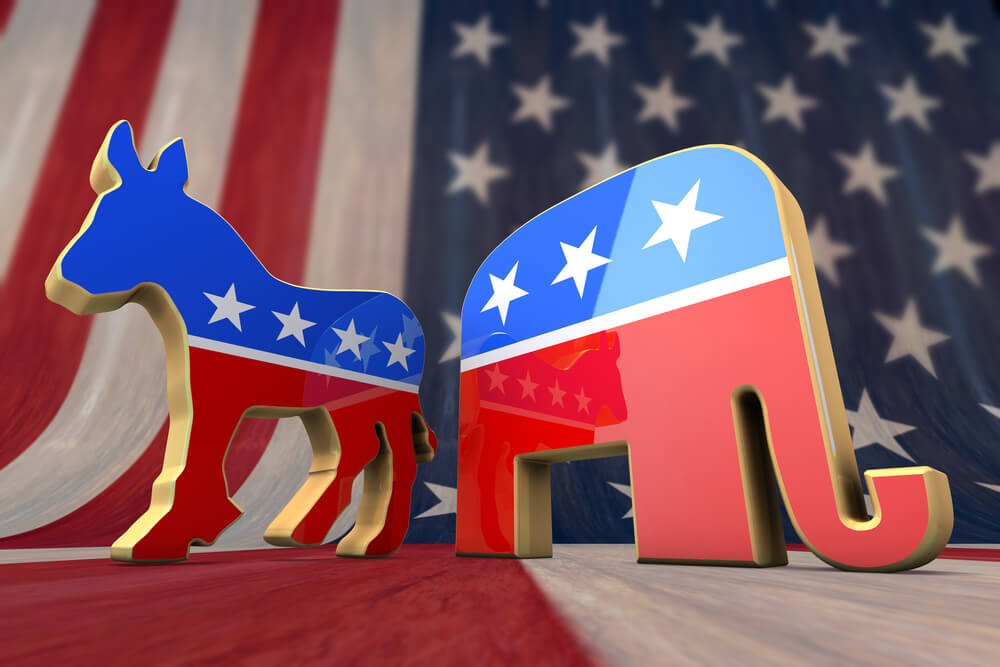
That is the real dividing line in this story. Not between the United States and Iran. Not between Republicans and Democrats. Not even between Washington’s allies and adversaries. The deeper division is between two models of world order. In one, even powerful states accept that there are things they must not do. In the other, power itself decides what counts as law.
If the second model prevails, international law will not vanish in a day. It will hollow out more slowly, and therefore more dangerously, through repetition and acclimatization. Through the moment when threats against power grids, bridges and water systems stop sounding outrageous. Once societies grow used to that language, the battlefield soon follows.
That is why the present crisis is a test not only for diplomacy, but for the very idea of a limit. It is entirely possible to pursue hard containment of Iran, to restrict its military options, to protect allies and to secure shipping lanes without crossing into the logic of collective punishment. The boundary exists precisely for that reason.
The most dangerous feature of Trump’s rhetoric is that it tries to recast that boundary as weakness. In reality, weakness begins where a great power can no longer distinguish between force and permission. And once the destruction of civilian infrastructure becomes normal political language, the Stone Age does not begin in Iran. It begins in international politics itself.