


















Britain’s rail system is again facing the question that always follows a serious crash: how two passenger trains could collide on the same route in a network built around strict rules, signaling, dispatch control and multiple layers of safety.
The collision happened on Friday evening near Bedford, about 45 miles north of London. Two passenger trains bound for London St Pancras crashed at around 5:15 p.m. local time. The impact was severe enough to trigger a major response from police, medical teams and emergency services.
At least one person was killed. Eleven people suffered life-threatening injuries, 22 required immediate medical treatment, and 56 others sustained minor injuries. Early statements from a transport workers’ union indicated that the person who died was the driver of one of the trains.
For Daycom, this crash is not only the tragedy of one evening. It is a blow to the sense of predictability on which everyday British rail life depends: millions of passengers board trains assuming that a complex infrastructure is working quietly, precisely and without error.
Passenger accounts convey not the technical dryness of an incident, but its human scale. One man in the front carriage of the train that struck the one ahead described the impact as an explosion. After the crash, the carriage filled with dust, seats were thrown out of place, passengers had blood on their faces, and several people appeared critically injured.
Such details matter because a rail accident destroys the illusion of control in an instant. One minute, passengers are reading messages, speaking on the phone, looking out of the window or thinking about London. The next, they are in a space of debris, dust, cries and uncertainty, where an ordinary journey home has become the scene of disaster.
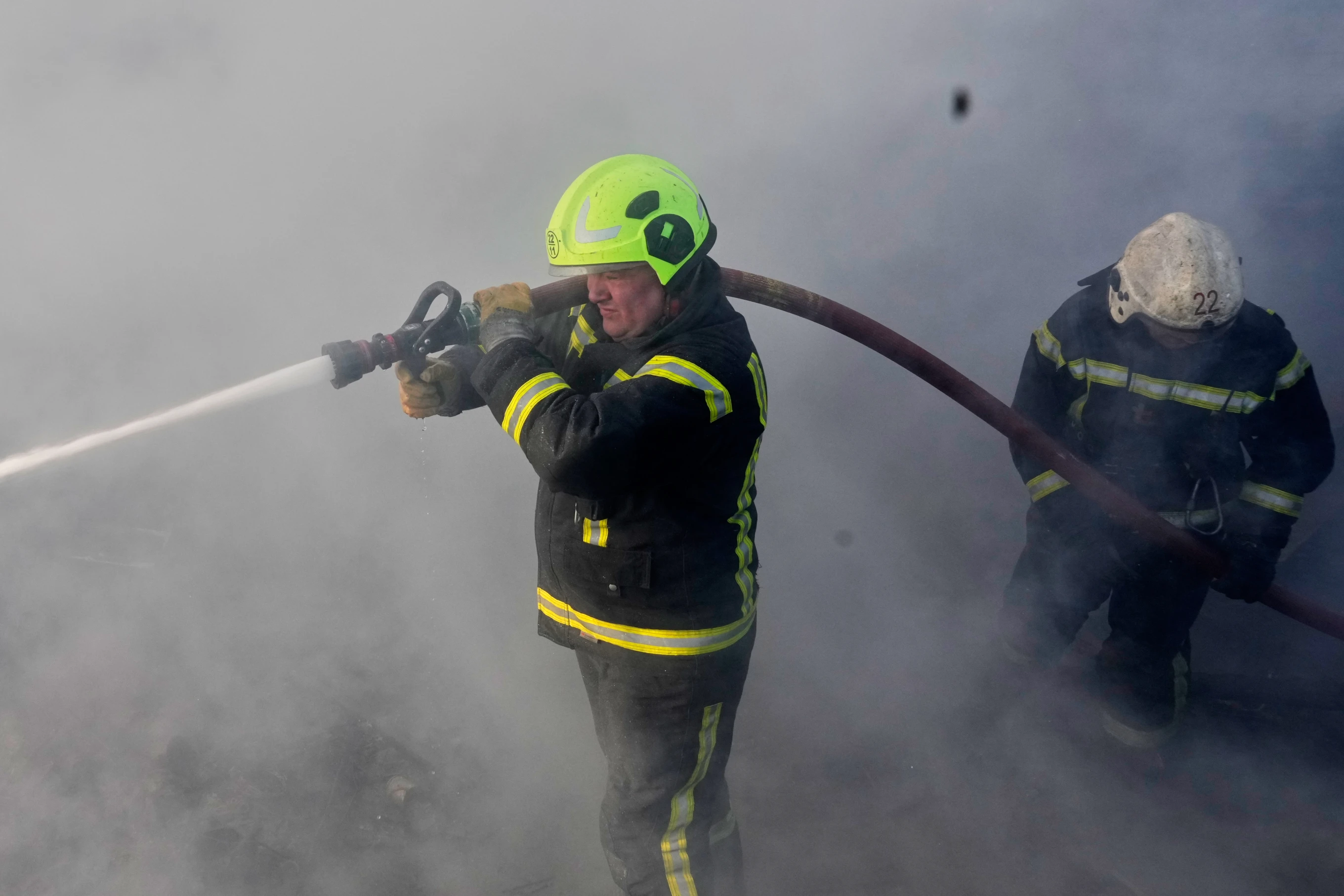
The medical system quickly moved into emergency mode. Ambulance crews and an air ambulance were sent to the site. Bedford Hospital prepared to receive casualties under a major incident protocol, while people were urged to avoid the area so emergency workers could operate without obstruction.
For Bedford, this was not only a blow to a transport line, but also to a local community. The town, which lives daily in the rhythm of journeys to and from London, suddenly became the center of national attention. What is usually the background of ordinary life — a railway line, a station, evening traffic — turned into a cordoned-off emergency zone.
Prime Minister Keir Starmer described the reports of the collision as deeply concerning and expressed sympathy for the family of the person who died and for those injured. But political reaction is only the first layer in such cases. The harder work begins afterward: establishing exactly how the trains came into dangerous proximity and why the system did not stop the crash from unfolding.
The investigation will have to answer several central questions. Whether the signals functioned correctly. Whether there were problems with dispatch control. Whether one train may have received incorrect permission to proceed. Whether human error, technical failure, track conditions, speed or communication between services played a role.
In rail safety, there are no small details. One signal, one interval of time, one misunderstood instruction or one delayed response can create a chain that ends in impact. That is why investigations into train crashes are usually slow, technical and unforgiving toward assumptions.
The fact that both trains were heading for London St Pancras gives the crash added weight. It is one of England’s most important stations, a major hub for intercity, commuter and international routes. Any serious disruption on such a line quickly moves beyond the level of a local incident.
Britain’s rail system has long operated under a double pressure. On one side are high expectations from passengers, who pay expensive fares and expect punctuality, comfort and safety. On the other are aging infrastructure, complex management, labor disputes, strikes, congested routes and the constant need for modernization.
The Bedford crash does not automatically mean the entire system has failed. But it is a reminder that rail safety is not a reputation inherited from the past. It is a daily discipline, confirmed every time by working signals, trained staff, transparent procedures and a culture that does not hide risk behind formality.
The possible death of a train driver is especially painful. In the rail system, the driver is often an invisible figure: passengers see the train, the timetable and the station, but not the person in the cab responsible for the movement of hundreds of people. In the moment of a crash, that professional invisibility becomes the highest risk.
For the families of the injured, the most important things will not be technical formulas, but simple answers: why this happened, whether it could have been prevented, who was responsible for the route, and what exactly failed. Without those answers, any reassurance about safety will sound insufficient.
For the state, the crash will become a test of transparency. After major transport disasters, the public needs more than swift condolences. It needs an honest explanation. If technology failed, that must be named. If a person made an error, investigators must determine why the system allowed that error to become deadly. If the problem runs deeper, it cannot be reduced to one dispatcher or one driver.
Investigators are already gathering evidence at the scene: data, communications records, train movement information and details about the condition of the infrastructure. Those materials will show whether the crash resulted from a single failure or from several mistakes that converged at the worst possible moment.
For now, the priority is saving lives and supporting those who survived the impact. Some passengers left the carriages with minor injuries, but the psychological consequences may last much longer. For someone who felt a train become an explosion, the next journey will no longer be just another journey.
The collision near Bedford is a reminder that even the most familiar infrastructure remains a system of high responsibility. A train feels safe precisely because thousands of people do their jobs correctly every day. When that chain breaks, a country sees not only an accident, but the hidden complexity of its own daily life.
Britain will now wait not only for services to resume, but also for an explanation. A true return to normal on the railway does not begin when the wreckage is cleared. It begins when a passenger can board a carriage again and believe that the system knows where the train is going.