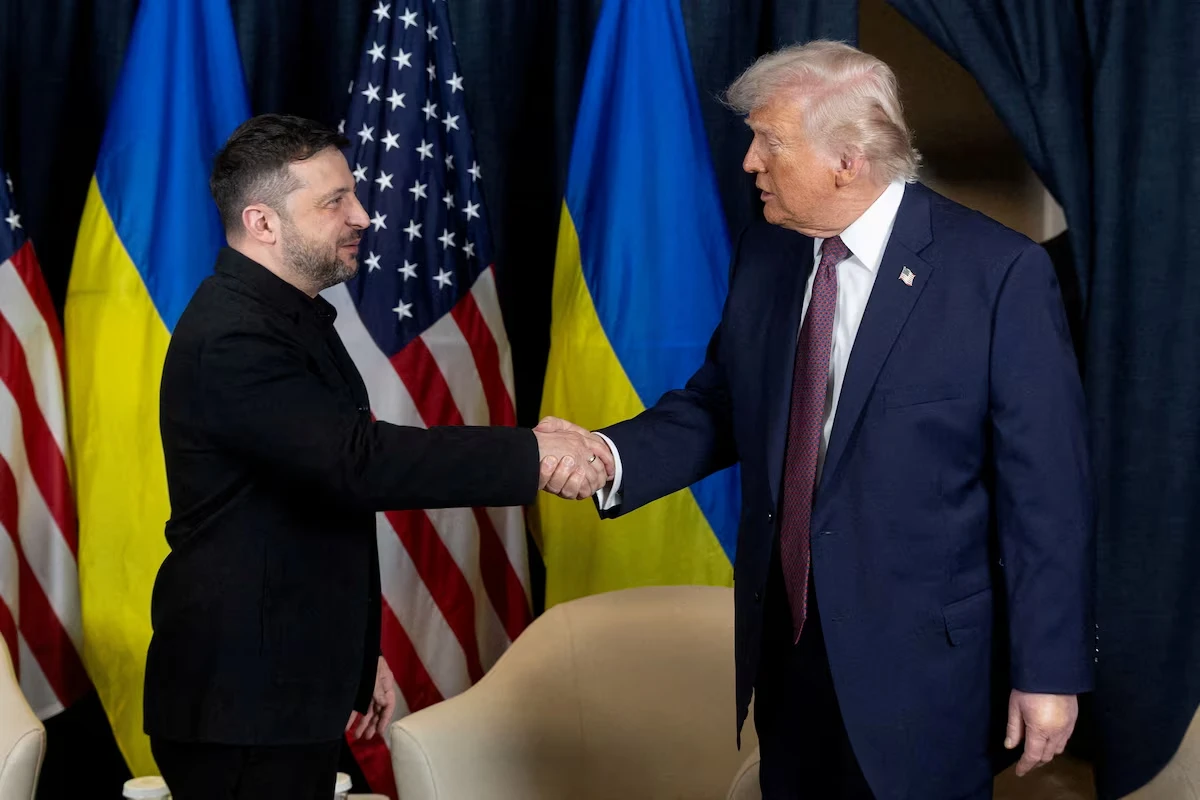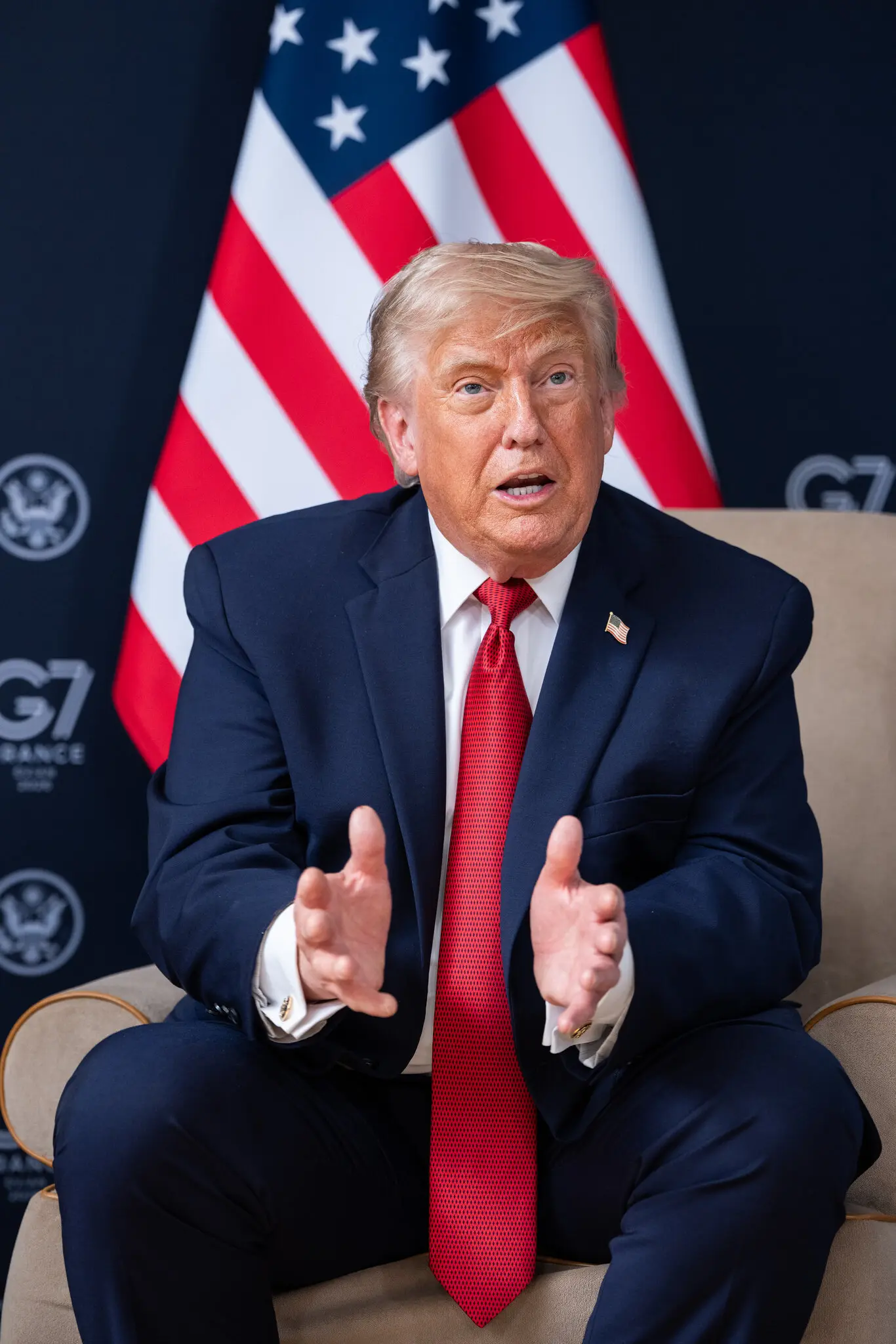



















Donald Trump’s phone call with Vladimir Putin on Sept. 8 lasted about an hour and followed the diplomatic mission by Steve Witkoff and Jared Kushner to Moscow and Kyiv. According to the Kremlin, the U.S. president stressed that he wanted the war in Ukraine brought to an end as quickly as possible.
Moscow presented that message as something broader than a call to stop the fighting. Putin aide Yuri Ushakov said Trump believed ending the war could open the way to a full restoration of U.S.-Russia relations, including a significant revival of trade and broader economic cooperation.
Putin, according to the Kremlin’s account, supported that approach. Ushakov also said the Russian president gave Trump his own assessment of the battlefield and explained what, in Moscow’s view, the United States could do to help bring the war to an end. Russia did not publicly disclose the details of those proposals.
An important boundary in this story concerns the source of the information. The detailed account of the call was released by the Russian side, while no comparable public U.S. readout had appeared at the time. Statements about Trump’s position should therefore be treated as the Kremlin’s description, not as a joint communiqué by the two presidents.
Daycom’s analysis indicates that the most important element of the call is the direct link drawn between peace in Ukraine and a future reset in relations between Washington and Moscow. If the Kremlin is accurately conveying Trump’s position, the U.S. president sees ending the war not only as a foreign-policy goal in itself, but also as a precondition for a new phase of engagement with Russia.
The economic component is not new for Trump. On Sept. 2, he publicly said he wanted good relations with both Russia and Ukraine and described improved ties with Moscow as potentially beneficial for business. At the same time, he said another meeting with Putin would make sense once the parties moved closer to a peace agreement.
According to Ushakov, that logic was now expressed directly in the leaders’ phone conversation. The Kremlin says Trump spoke of “enormous benefits” for both countries if trade and economic ties were restored and that he wanted to achieve a diplomatic breakthrough during his presidency.
But a vast distance remains between wanting a swift end to the war and reaching an actual agreement. Moscow and Kyiv are still fundamentally divided over territory, security guarantees, the future of Ukraine’s military and the mechanisms that would have to enforce any possible arrangement to halt the fighting.
The Donetsk region remains particularly contentious. Russia continues to demand control over territory its army has failed to capture fully, while Ukraine categorically refuses to hand over Sloviansk, Kramatorsk and other areas without a fight. That remains one of the hardest issues in any possible future settlement.
The Witkoff-Kushner mission was intended to test whether, after months of stagnation, the sides could at least be returned to a single negotiating format. The U.S. envoys first held talks in Moscow and then traveled to Kyiv, where they discussed with Volodymyr Zelensky the possibilities for restarting the process.
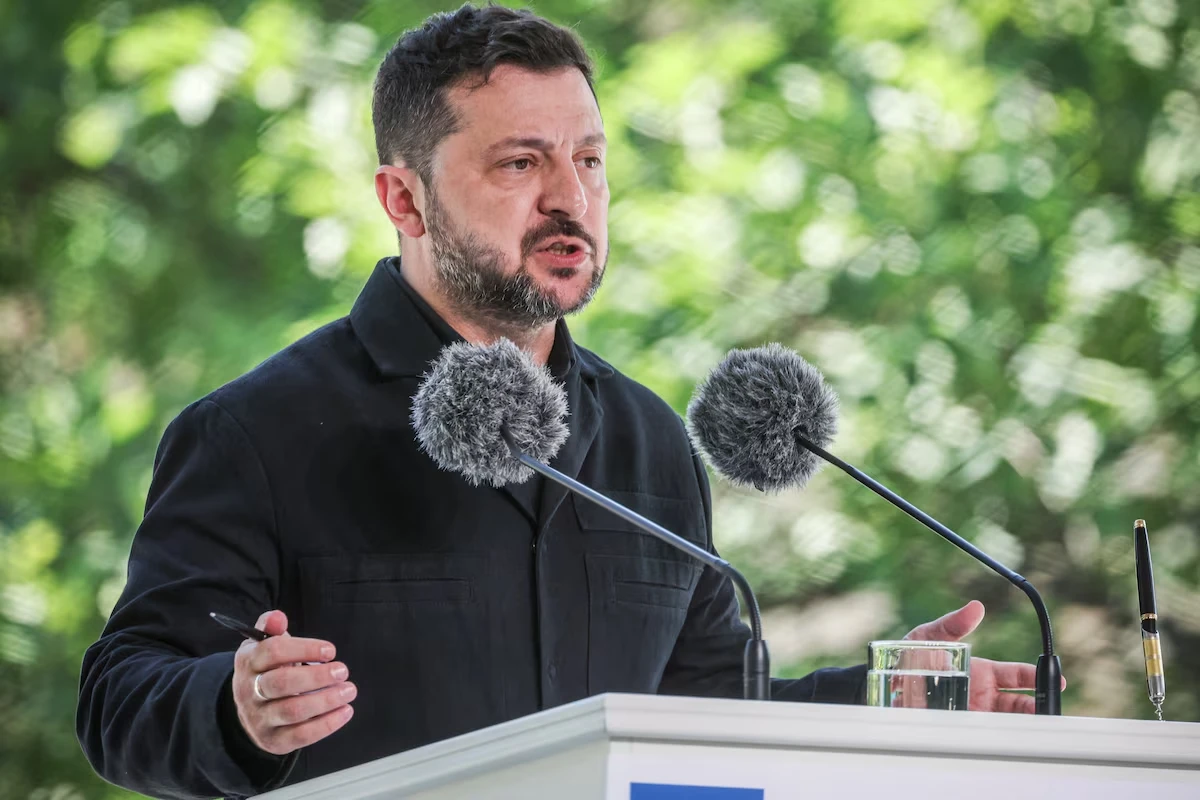
After those meetings, Zelensky said the resumption of negotiations was important in itself even if the format might vary. He confirmed that the discussions covered territory, security guarantees, economic reconstruction and the future strength of Ukraine’s armed forces.
Kushner also spoke in Kyiv about trying to build a framework for a lasting peace rather than a short pause in the fighting. The U.S. side, he said, was attempting to assemble a package that could include security and political elements and eventually bring the parties back to a trilateral format.
However, the Kremlin’s account of the Sept. 8 Trump-Putin call made no reference to a trilateral meeting. Moscow focused instead on its assessment of the Witkoff-Kushner mission, which Ushakov said both presidents viewed positively, and on the prospects for continued contact between Washington and Moscow.
That emphasis is telling. For U.S. diplomacy, the goal is to create a format in which both Ukraine and Russia are present. The Kremlin’s public messaging after the call, by contrast, was framed largely around the bilateral Moscow-Washington axis and the opportunities that could emerge once the war ends.
This is where one of the most sensitive issues for Kyiv arises. If normalization between the United States and Russia becomes a distinct reward for a peace agreement, the critical question is what conditions will be considered sufficient for that reset — and whether pressure could emerge to end the war faster than reliable security guarantees can be built.
Ukraine’s position is framed differently. Kyiv argues that speed alone cannot be the main criterion. Zelensky has emphasized the need for a strong military, credible guarantees and resources for reconstruction, because an agreement without deterrence mechanisms could amount to little more than a pause before another round of war.
Trump, meanwhile, is showing ever more clearly that he wants a result during his own presidency. The Kremlin’s account of the call emphasizes that timetable: the U.S. president wants a rapid breakthrough and sees restored ties with Russia as one of the possible dividends of such an outcome.
For Putin, that arrangement could be advantageous. It offers the prospect not only of easing part of the Western pressure on Russia, but also of returning to broader economic relations with the United States. There is, however, no evidence that Moscow is prepared to abandon its core military or territorial demands in exchange for that prospect.
On the contrary, recent fighting shows Russia continuing to try to improve its position by force. Russian troops are pressing in Donetsk, while missile and drone attacks on Ukrainian cities continue alongside diplomatic contacts. Ukraine, in turn, continues long-range strikes against targets inside Russia.
The economic incentive described by the Kremlin therefore exists alongside the military logic, not in place of it. Moscow may be interested in future normalization with the United States while simultaneously seeking to enter negotiations from the strongest battlefield position it can achieve.
Prisoner exchanges were another element of the phone call. According to Ushakov, Trump and Putin agreed on the need to continue that process. It is one of the few areas where concrete humanitarian results may still be possible even without a broader peace agreement.
The Kremlin also used the call to communicate its position on Europe. Ushakov said Putin assured the U.S. president that Russia had no aggressive plans toward European countries and described claims to the contrary as a pretext for increased support to Ukraine and higher defense spending across Europe.
That is Moscow’s position, not an established fact. European governments have repeatedly accused Russia in recent years of sabotage, cyber operations and other hybrid activity, while also increasing defense budgets because they assess Russia as a long-term threat to the continent’s security.
That is why any future restoration of U.S.-Russia relations would matter far beyond bilateral trade. For America’s European allies, the crucial question will be whether normalization follows a genuinely durable peace or begins before the core security disputes have been resolved.
In that sense, the Trump-Putin call may be more important than its limited public details suggest. It reveals the potential end state Moscow is presenting: the war ends, and then the United States and Russia gradually return to more normal political and economic relations.
But the road to that outcome remains undefined. There is no agreed peace document, no date for a trilateral meeting and no sign that Ukraine and Russia have moved closer on the territorial question. Even after the U.S. envoys’ mission, the sides remain far apart on the central terms for ending the war.
Trump is effectively setting diplomacy a double task: stop the largest war in Europe since World War II and, at the same time, create the possibility of a new phase in relations with Russia. The first task is already extraordinarily difficult. The second makes the political price of any agreement even higher.
For Kyiv, the central question is what exactly will become the bridge to normalization. If it is a durable settlement with security guarantees, international oversight and the ability to deter renewed aggression, a U.S.-Russia reset would follow from peace. If normalization begins to shape the terms of peace itself, the logic could change.
For now, the Kremlin is speaking about future trade, Washington is trying to restart negotiations, and Ukraine is preparing for continued fighting and winter attacks. All three processes are unfolding at the same time, and that is the core contradiction of the moment: the economic future is already being discussed while the military present is still unresolved.
Trump, according to Moscow’s account, wants a rapid breakthrough. Putin says he supports that approach. But the real test will not be the next phone call or another discussion of future trade. It will be whether conditions emerge that Kyiv, Moscow and Washington can all accept at the same time.
Until then, restoring U.S.-Russia relations remains not a result, but a promise that comes after the result. And the end of the war in Ukraine will determine whether that promise becomes a new diplomatic reality — or simply another item on the list of things the two presidents have agreed to keep discussing.