




















Ukraine’s war is increasingly becoming a contest of technological speed. Where allies often count production cycles in years, Kyiv is trying to compress them into months. Fire Point’s new project to develop a ballistic missile interceptor is exactly such an attempt: not to wait until the global air defense market catches up with Russia’s pace of strikes.
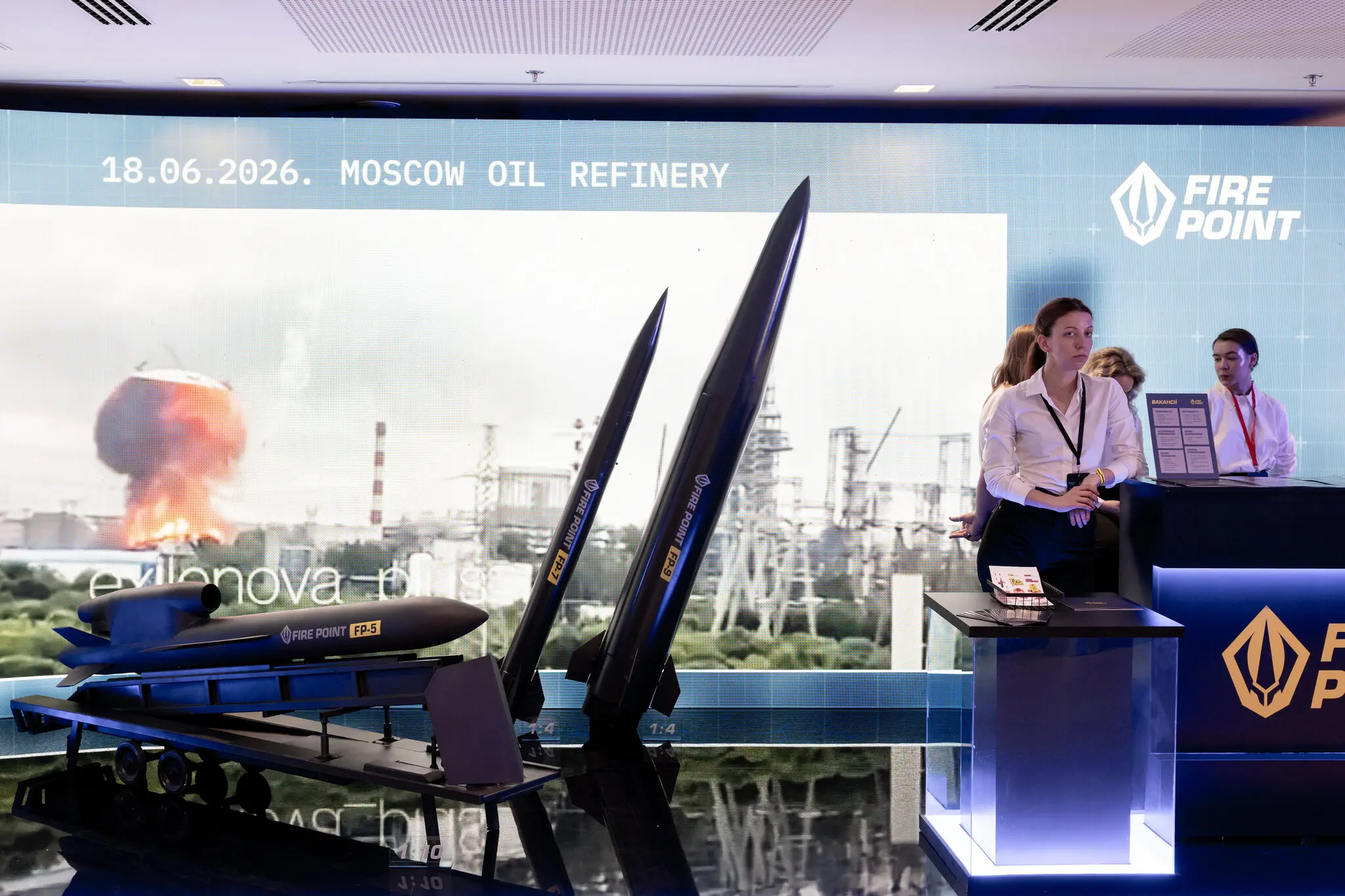
The company, known for developing the Flamingo cruise missile, now wants to enter a far more complex field: missile defense. Its plan is to use its own FP-7X rocket as an interceptor and integrate it with European sensors. The first ready interceptors could appear by the end of the year.
The key step is an agreement with Germany’s Hensoldt, a radar manufacturer. The system would use the TRML-4D, a high-performance radar intended to become part of a future European missile defense architecture. For Ukraine, this is not merely the purchase of a component, but an effort to assemble a new defensive system from a Ukrainian missile and Western electronics.
According to Daycom’s earlier analysis, the significance of this project goes far beyond one company. Ukraine is trying to move from being a requester of scarce systems to becoming a co-producer of a new European missile defense network. If that transition succeeds, it will change not only Ukraine’s defense posture, but Europe’s dependence on American missile stocks.
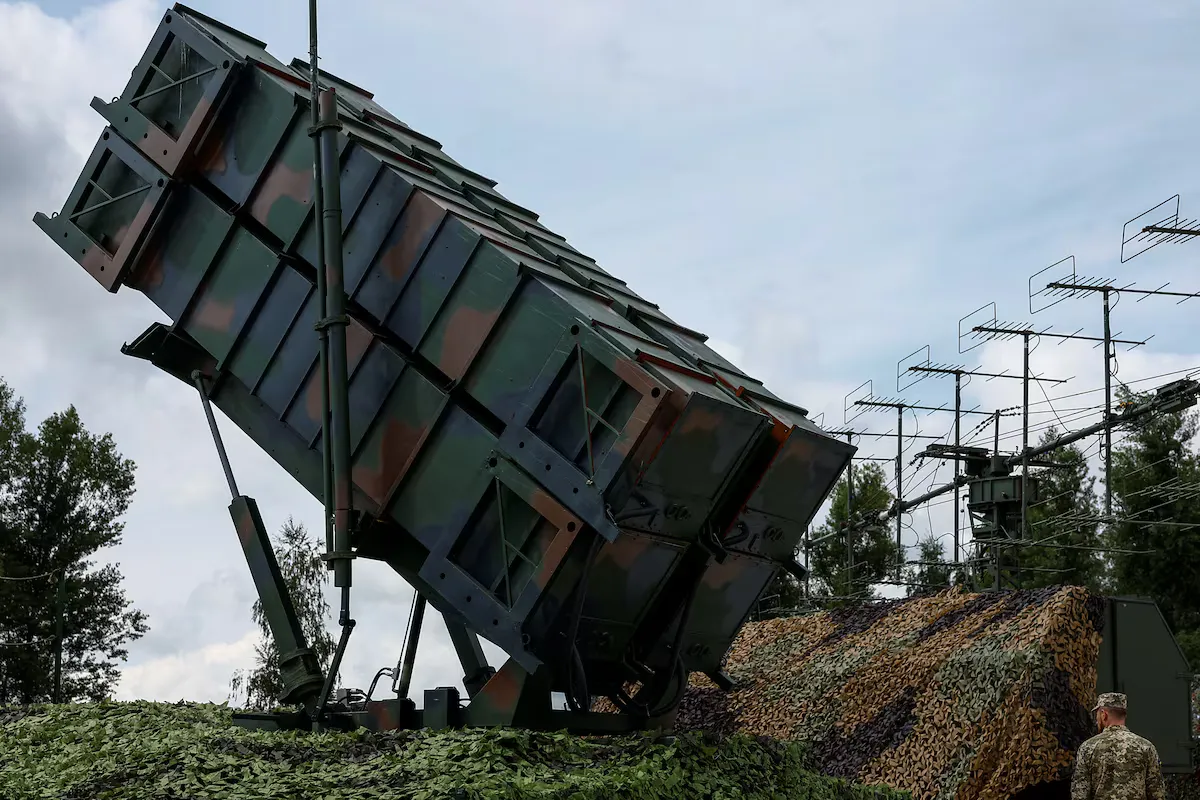
The shortage of interceptors has become one of the most painful vulnerabilities of the war. Russia regularly uses ballistic missiles against Ukrainian cities, military sites, energy infrastructure and logistics. The American Patriot remains the most effective defense against such threats, but production has not kept pace with the needs of Ukraine and its allies.
Demand for missile defense has grown further after the war between Iran and the United States. American allies also want to replenish stocks, strengthen their own defenses and cover regional risks. In this competition, Ukraine remains the country that needs interceptors not for future contingencies, but for daily survival.
That is why the idea of a European interceptor has strategic weight. It is not about fully replacing Patriot tomorrow. It is about creating an additional production line and a measure of technological independence. The more sources of interception Ukraine has, the less Moscow can count on exhausting one Western stockpile or exploiting a political pause in one capital.
The project has been codenamed Freyja. As recently as spring, it was not expected to be ready before the end of next year. Now the timeline has sharply narrowed. Fire Point links that acceleration to the involvement of the Ukrainian government and European partners, especially Germany. In other words, a technological ambition has begun to become a political project.
That matters because missile defense is not built by engineers alone. It requires permits, political backing, access to radars, test ranges, common standards, financing, data integration and production chains. If European bureaucracies move slowly, even the fastest Ukrainian team will run into the limits of what is permitted.
Fire Point is already negotiating over two critical elements of the interceptor: an imaging infrared homing device and a radio-frequency seeker. These components determine how the missile sees a target, tracks it and corrects its trajectory. Without them, an interceptor remains a fast rocket, but not a complete tool against a ballistic threat.
A real-time data link is also essential. A radar must do more than detect the target; it must pass live targeting data to the interceptor during flight. That requires advanced communications, a command-and-control center and software integration. This is where Europe’s defense industry can provide capabilities Ukraine cannot always build quickly on its own.
Ukraine’s advantage lies not in comfort, but in wartime experience. Ukrainian developers test systems in conditions where the threat is not simulated, but flies over cities every day. That shortens the distance between laboratory, test range and battlefield. Where European companies may need months of approvals, Ukrainian wartime reality demands decisions in days.
That speed is both a strength and a risk. It allows Ukraine to outpace slow markets, but it does not remove the complexity of the task. Intercepting a ballistic missile is one of the hardest forms of defense. It requires precision, reaction time, sensors, software, reliable guidance and the ability to operate under mass attack, when the sky is overloaded with targets.
Europe has long tried to close this gap. But its own systems have not yet become a full answer to Ukraine’s battlefield experience. SAMP/T, despite its importance for European defense, has not become in Ukraine the same symbol of effective ballistic interception as Patriot. That is a painful reminder that technological status does not always equal combat proof.
Fire Point is therefore entering a space where the need is obvious, but the solution is not yet settled. If a Ukrainian FP-7X, paired with European radar, seekers and command systems, can deliver results, it would be a breakthrough not only for Ukraine. It would show that European missile defense can emerge not only through long consortia, but at wartime speed.
For Germany, participation carries its own political meaning. Berlin is increasingly one of Ukraine’s central defense partners, while also searching for ways to turn aid into joint production. In this architecture, a Hensoldt radar is not just equipment. It is an entry point for German industry into Ukraine’s defense system of the future.
For Ukraine, the project also binds Europe into shared defense responsibility. If the interceptor is built together, its future no longer depends only on the next aid package. Partners become more than external donors. They become part of the production chain, the political risk and the technological outcome.
At the same time, Fire Point is preparing flight tests of its new FP-9 ballistic missile, with a stated range of up to 850 kilometers and an 800-kilogram warhead. This is the other side of the same transformation: Ukraine is developing not only a shield, but its own strike missile capacity. Defense and deterrence are increasingly becoming parts of one industrial cycle.
The ability to reach targets at such distances would have political as well as military significance. It changes Moscow’s calculations by making deeper rear areas less secure. But that is precisely why such programs require disciplined risk management: Ukraine’s own ballistic capability must remain an instrument of deterrence and military necessity, not uncontrolled escalation.
The financial dimension also shows how much Ukraine’s defense industry has changed. Fire Point is no longer being treated as a small wartime workshop, but as a company with multibillion-dollar potential value. Earlier talks with a Middle Eastern investor have lost relevance because the company’s valuation has risen sharply. War has created a market in which speed and battlefield relevance can be worth more than a conventional corporate history.
But with valuation comes responsibility. A company working on cruise missiles, ballistic systems and interceptors enters a domain where a technical error, political miscalculation or inflated promise carries an extraordinary price. Ukrainian defense innovation needs not only courage, but discipline.
The real test of Freyja is not the headline promise of first interceptors by the end of the year. The real test is whether the system can detect, track and destroy a ballistic target under real conditions. If it can, Ukraine will gain not just another weapon, but a chance to begin escaping the chronic shortage of Western interceptors.
It will also be a test for Europe. The continent speaks often of strategic autonomy, but the war in Ukraine repeatedly reveals the gap between political intent and industrial capacity. If European governments truly want their own missile defense architecture, they will have to move not at the speed of peacetime bureaucracy, but at the speed of the threat.
Ukraine’s advantage today is that it has no time for illusions. Ballistic missiles do not wait for tenders, approvals and multiyear programs to finish. They are flying now. That is why Fire Point is trying to do in months what traditional defense systems usually stretch across years.
Success is not guaranteed. Ballistic interception is too difficult for easy promises. But the emergence of the project already shows a shift in Ukrainian strategy. Kyiv is no longer only asking others to close the sky. It is trying to build its own instrument, one that, together with Europe, could change the balance of air defense.
If Freyja truly delivers its first interceptors by the end of the year, it will become one of the most important defense shifts of the war. If it does not, the direction itself will remain unavoidable. Ukraine and Europe cannot live indefinitely waiting for scarce Patriot missiles. They need their own shield — faster, more scalable and less politically dependent. That is the struggle now beginning.