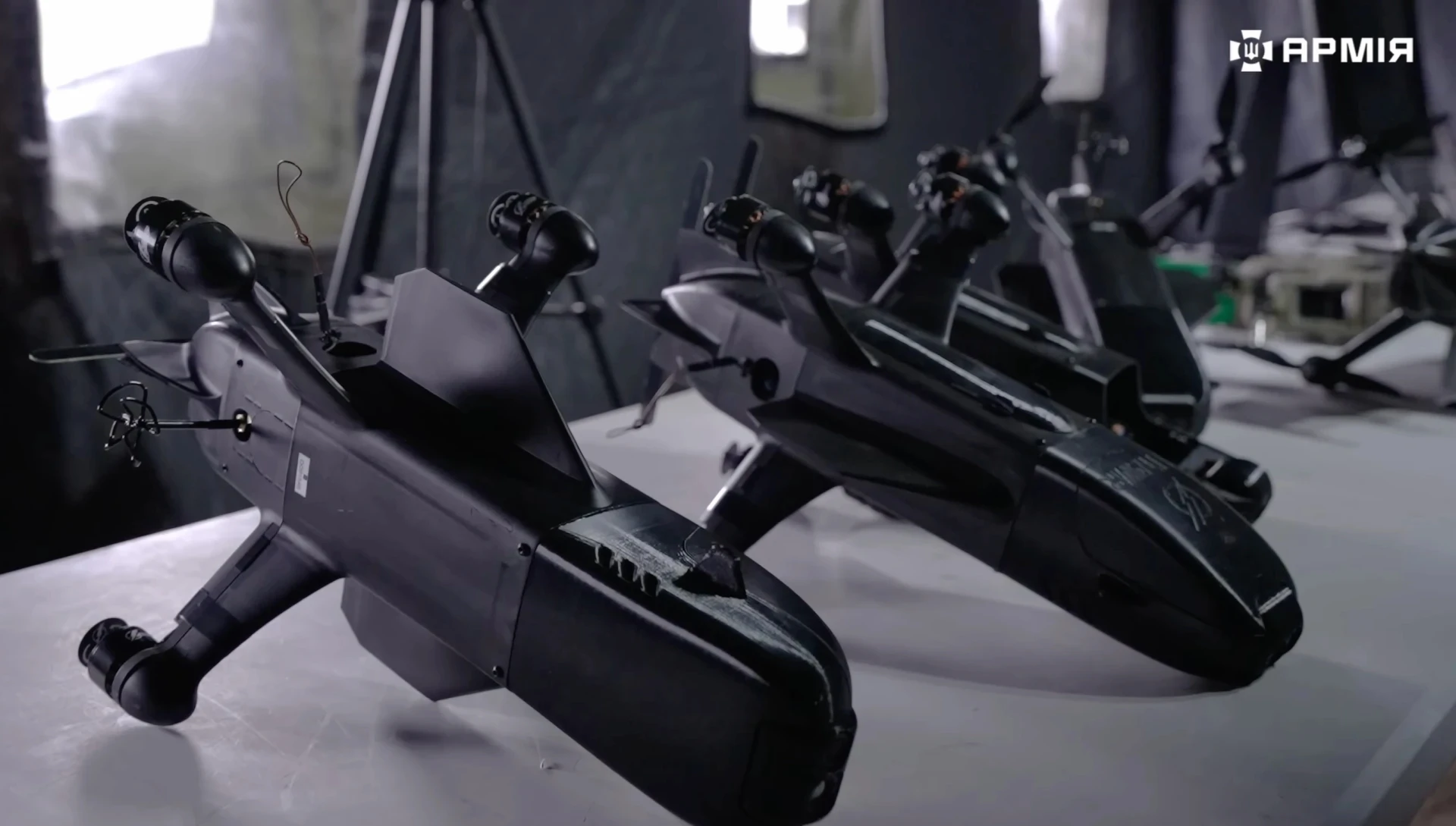

























Ukraine and the United States are moving toward joint drone production, with a factory on American soil expected to become the centerpiece of the arrangement. The facility would manufacture unmanned systems using Ukrainian technologies refined during the war against Russia.
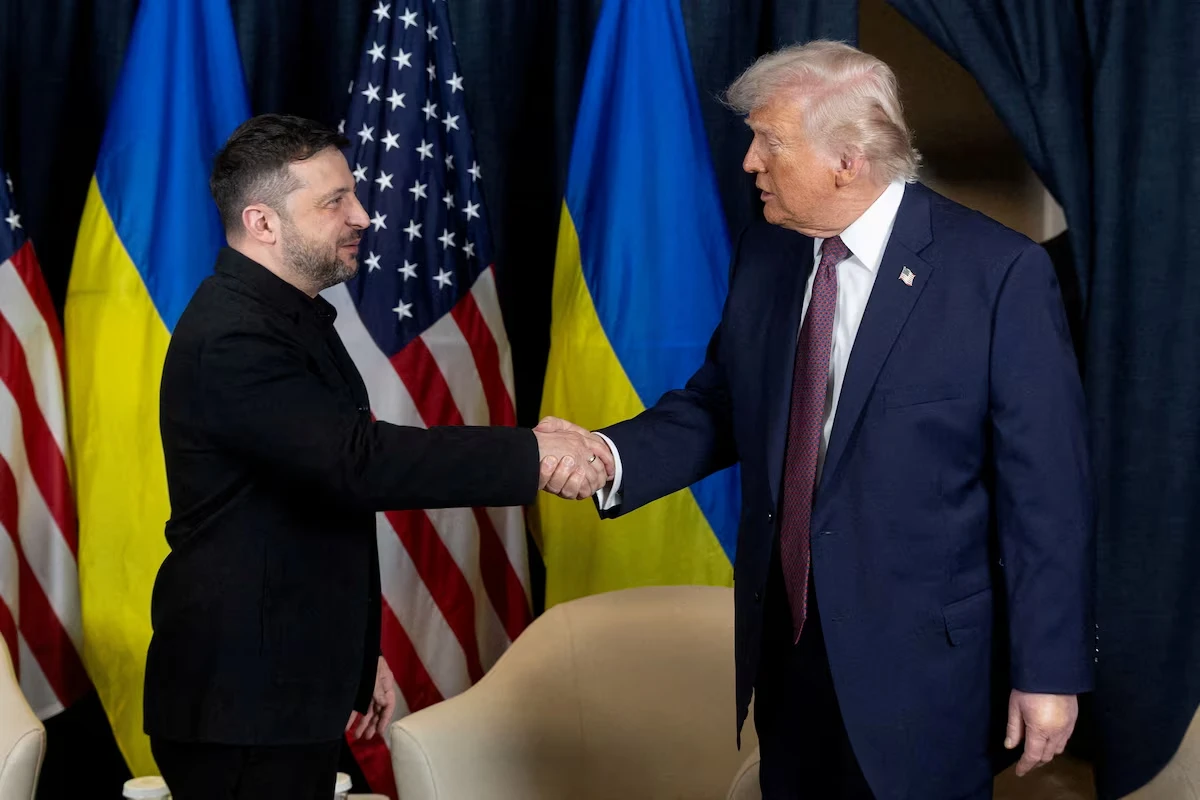
The agreement is not yet final. The two sides are still working through financing, production lines, intellectual-property rights, delivery volumes and the participation of individual manufacturers ahead of further talks between Volodymyr Zelensky and Donald Trump.
An initial phase is expected to give several Ukrainian companies access to the American market and allow small batches of drones to be tested. The purpose is to identify which systems can be adapted quickly to Pentagon requirements and scaled through U.S. manufacturing.
According to Daycom’s earlier analysis, the project represents far more than another arms export contract. Ukraine could enter the American defense industry not simply as a recipient of aid, but as the owner of valuable technology and the provider of battlefield expertise that the United States cannot reproduce quickly on its own.
Since the beginning of the full-scale invasion, Ukrainian manufacturers have advanced at a pace that would normally require years. Their drones have been continuously redesigned in response to electronic warfare, changing air defenses, frontline demands and the experience of thousands of operators.
The development cycle for some models is now measured in weeks rather than years. Engineers receive data on signal loss, accuracy, jamming resistance and component failures, then rapidly modify software, communications systems and airframes.
That speed is Ukraine’s principal advantage. The United States has deeper capital markets, larger factories and a more developed electronics industry, but its procurement system has often produced weapons more slowly than the modern battlefield evolves.
Washington’s Drone Dominance program is intended to narrow that gap. The United States wants to manufacture large numbers of affordable military drones, accelerate testing and provide units with systems that can be replaced and upgraded quickly.
Ukraine’s model fits that objective. Kyiv is not offering a single finished platform that will gradually become obsolete. It is offering a system of continuous adaptation built around short production runs, rapid battlefield feedback, modular components and frequent software updates.
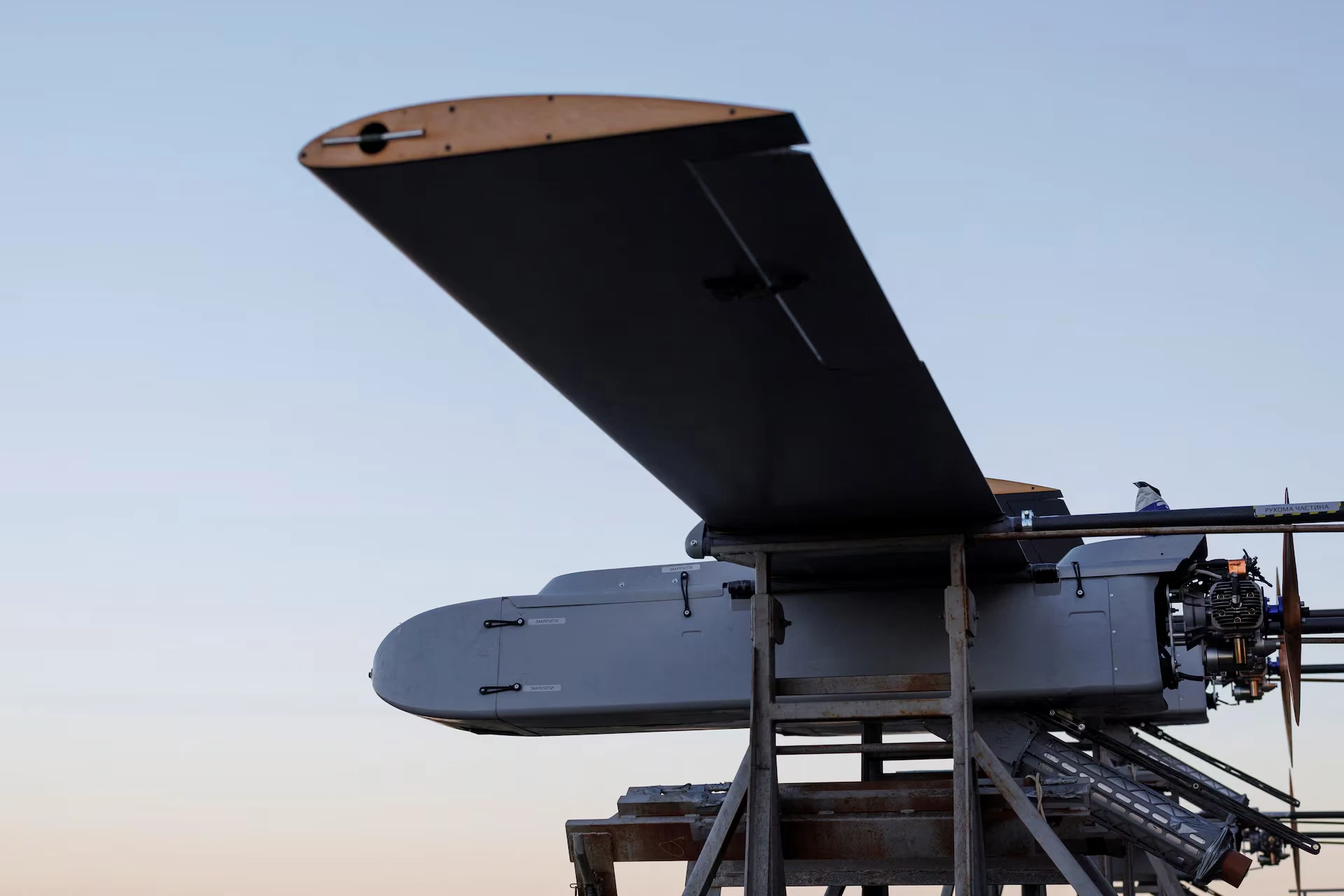
Zelensky has said that Ukrainian long-range drones can already operate over distances exceeding 3,000 kilometers, with further increases expected. Capabilities of that scale move unmanned aircraft beyond tactical warfare and into the realm of strategic deterrence.
The American facility is unlikely to focus exclusively on long-range strike drones. Joint production could eventually include reconnaissance aircraft, interceptors, maritime systems, secure communications, autonomous navigation and technologies designed to counter hostile drones.
For Washington, one of the most valuable assets is Ukraine’s understanding of the complete drone-warfare ecosystem. Battlefield effectiveness depends not only on the aircraft itself, but on the link between intelligence, operators, digital mapping, targeting systems and rapid assessment of results.
The Pentagon needs systems that can be produced in hundreds of thousands rather than in small numbers of highly expensive units. Ukraine’s experience has shown that a drone does not need to be perfect. It needs to be cheap enough, available in sufficient numbers and easy to replace.
That philosophy differs from the traditional American model built around sophisticated platforms designed to remain in service for decades. Drone warfare requires a different industrial logic in which losses are expected and advantage comes from speed of production and adaptation.
Locating production in the United States also aligns with the Trump administration’s domestic priorities. The White House wants to strengthen the national drone sector, create manufacturing jobs and reduce reliance on foreign components, particularly those supplied from China.
A Ukrainian-linked factory can therefore be presented to American voters not as another form of assistance to Kyiv, but as an investment in U.S. industry and national security. That distinction matters in a political environment where every new Ukraine agreement faces intense domestic scrutiny.
For Kyiv, joint production is more valuable than the simple sale of completed systems. It creates long-term demand, opens access to American supply chains and gives Ukrainian manufacturers a foothold in the world’s largest defense market.
The distribution of intellectual-property rights will be critical. Ukraine risks transferring technologies created with domestic investment and paid for through wartime experience, only to lose control over their commercial use later.
Any agreement must therefore define licensing terms, the share held by Ukrainian manufacturers, export rights and the process for upgrading models. Without such protections, cooperation could become a one-sided absorption of technology by a much larger industrial system.
Supply-chain security presents another major challenge. Much of the global market for motors, cameras, flight controllers and batteries remains linked to China. A genuinely independent production base will require localization of components rather than simple assembly in the United States.
That would raise initial costs but reduce the danger of sudden export restrictions, compromised software or hidden dependencies. In military production, the origin of electronics can be as important as a drone’s range or accuracy.
Ukraine is already building a broader network of drone partnerships with allied countries. These arrangements include joint research, localized production, financing, cybersecurity, the exchange of battlefield experience and the protection of critical infrastructure.
The American track stands apart because of its potential scale. European partners have largely helped increase output for Ukraine’s immediate needs. The United States could turn Ukrainian designs into global standards integrated into Pentagon programs and American defense exports.
That would give Kyiv a new source of influence. A country that long depended on decisions about Western arms deliveries is gradually becoming a supplier of technologies that its allies need for future conflicts.
Cooperation must not weaken production inside Ukraine. Ukrainian forces still require millions of tactical drones, long-range strike systems and interceptors. Exports should finance expansion of the industry rather than divert scarce equipment from the front.
The most effective arrangement would rely on parallel production lines. American facilities could serve U.S. and allied demand, while part of the revenue, components and technological gains would return to Ukraine and strengthen its domestic defense capacity.
Access to American artificial intelligence, satellite communications, sensors and secure electronics could provide an additional advantage. Combined with Ukraine’s operational experience, those capabilities could produce a new generation of increasingly autonomous systems.
Greater autonomy, however, will create difficult legal and ethical questions. The two countries will need to determine where automated navigation ends and the decision to use lethal force begins. Human control will remain central to the legitimacy of any future system.
The agreement will therefore be industrial, military and political at the same time. It must combine the speed of Ukrainian engineering with American security requirements without allowing years of bureaucracy to suffocate innovation.
The main test will be whether Ukraine’s development tempo can survive inside the more complex U.S. procurement system. A factory will matter only if its production lines evolve with the battlefield rather than manufacturing yesterday’s model under a long-term contract.
Joint drone production could reshape the relationship between Kyiv and Washington. Ukraine brings something that cannot be purchased quickly: knowledge gained through daily confrontation with one of the world’s largest armies.
The United States can turn that knowledge into industrial scale. If the two sides divide technology, risk and profit fairly, the American factory will become more than a manufacturing site. It will demonstrate that the war in Ukraine is already shaping the weapons of the next military era.