



















The war involving the United States, Iran and Israel is moving into a phase in which the target is no longer only the enemy’s military capability, but the state’s material foundations themselves. Donald Trump’s new ultimatum — reopen the Strait of Hormuz or face strikes on power plants and bridges — shows how quickly this conflict is shifting from battlefield pressure to systemic coercion.
Tehran answered in the same register. Iranian officials signaled that any renewed attacks on civilian infrastructure would bring a response not meant for symbolism but for shock. Almost at the same time, an Israeli strike that killed a senior intelligence figure tied to the Revolutionary Guards narrowed the remaining space for de-escalation even further.
This is no longer another round of missiles followed by rhetoric. When bridges, energy facilities, shipping lanes and export routes move to the center of the threat matrix, war stops being a contained military contest. It begins to press directly on civilian life, regional commerce, the oil market and the political balance of the wider Middle East.
The war involving the United States, Iran and Israel is moving into a phase in which the target is no longer only the enemy’s military capability, but the state’s material foundations themselves. Donald Trump’s new ultimatum — reopen the Strait of Hormuz or face strikes on power plants and bridges — shows how quickly this conflict is shifting from battlefield pressure to systemic coercion.
Tehran answered in the same register. Iranian officials signaled that any renewed attacks on civilian infrastructure would bring a response not meant for symbolism but for shock. Almost at the same time, an Israeli strike that killed a senior intelligence figure tied to the Revolutionary Guards narrowed the remaining space for de-escalation even further.
This is no longer another round of missiles followed by rhetoric. When bridges, energy facilities, shipping lanes and export routes move to the center of the threat matrix, war stops being a contained military contest. It begins to press directly on civilian life, regional commerce, the oil market and the political balance of the wider Middle East.
In Daycom assessment, Washington is trying to recast the crisis as a campaign of pressure through structural vulnerability. The logic is threefold: military, through the threat of destroying critical infrastructure; economic, through the destabilization of oil flows and energy expectations; political, through an attempt to force Tehran into concessions under the risk of internal strain.
That is why the Strait of Hormuz is no longer merely a strategic passage on the map. It has become the conflict’s nerve center. A major share of the world’s oil and gas transit depends on that narrow corridor, which means that any disruption — even partial, even temporary — turns a regional war into a global economic event. For Iran, it is one of the few instruments capable of offsetting a profound asymmetry of power.
 Демонтаж обірваних ліній електропередач поблизу будівлі, зруйнованої внаслідок авіаудару Ізраїлю в понеділок, Бейрут, Ліван — Девід Гуттенфельдер
For Tehran, reopening the strait without extracting a political price would mean surrendering its strongest card. For Washington, allowing Iran to maintain de facto control over one of the central arteries of the global energy system would amount to accepting that maritime chokepoints can be weaponized as a durable tool of state coercion. That is where the current danger lies: each side reads compromise as weakness and escalation as proof of resolve.
The oil market is already responding not as a spectator, but as a second theater of war. Every hint of indirect talks briefly calms prices, yet that calm remains thin and reversible. One strike on a major energy node, one successful disruption in the Gulf, one renewed threat to shipping insurance and tanker movement could send crude sharply higher again, exporting inflation and uncertainty far beyond the region.
This is what makes the present stage more dangerous than the earlier exchanges. Markets used to fear supply loss in the narrow sense. Now they increasingly fear the destruction of infrastructure itself: terminals, transmission networks, ports, storage capacity, export corridors. Production can sometimes be replaced faster than the systems that move and distribute it. A damaged bridge, a disabled grid or a struck loading facility cannot be hedged away by rhetoric.
Trump’s political logic is not hard to read. The ultimatum is designed to project resolve, restore deterrence and show that Washington is prepared to keep raising the stakes. But that strategy works only as long as the threat remains credible. If the deadline passes without either military action or a visible diplomatic gain, the ultimatum begins to erode American leverage rather than reinforce it. Repeated warnings that do not change facts on the ground eventually cease to function as pressure and start to look like exposure.
Tehran is trapped by its own logic as well. The more the Iranian leadership binds regime security to public displays of defiance, the harder it becomes to step back without domestic political cost. In that setting, even a narrowly tactical concession can look like capitulation. That is why the crisis keeps hardening: both sides have constructed narratives in which retreat carries more immediate danger than escalation.
 Антиамериканський білборд із зображенням літаків, захоплених у сітці в неділю, Тегеран, Іран — Араш Хамуші
Israel, meanwhile, is raising the personal cost for Iran’s security elite through precision strikes against senior figures and command structures. Iran answers by widening the geography of pressure — through missiles, drones and threats that reach beyond its own territory and beyond Israel alone. The result is a conflict that increasingly resembles a regional system of mutual exhaustion rather than a contained confrontation between defined adversaries.
There is also a more consequential threshold coming into view. Once power plants, bridges and other elements of civilian infrastructure are openly discussed as legitimate instruments of coercion, the line between military pressure and the destruction of civilian space begins to blur. That changes the nature of the war. It is no longer aimed only at degrading an opponent’s armed capacity; it begins to target the conditions that allow ordinary life to continue.
That shift matters because infrastructure warfare has a long afterlife. Bridges can be rebuilt, grids repaired, ports restored — but slowly, unevenly and at enormous cost. What is destroyed in days can take years to recover. In that sense, threats against infrastructure are not only about present leverage. They are about shaping the postwar order in advance, forcing an enemy to think not only about defeat, but about dysfunction.
This is why the central question of the coming days is not simply whether Iran reopens the Strait of Hormuz. The deeper question is whether the parties can stop before oil, logistics, electricity and geopolitics collapse into one unbounded war. Once infrastructure becomes the language of policy, the next casualty is usually not only stability, but the very possibility of a negotiated exit.




 Пан Трамп заявив, що Іран, «на нашу думку, веде переговори добросовісно» — Кенні Голстон
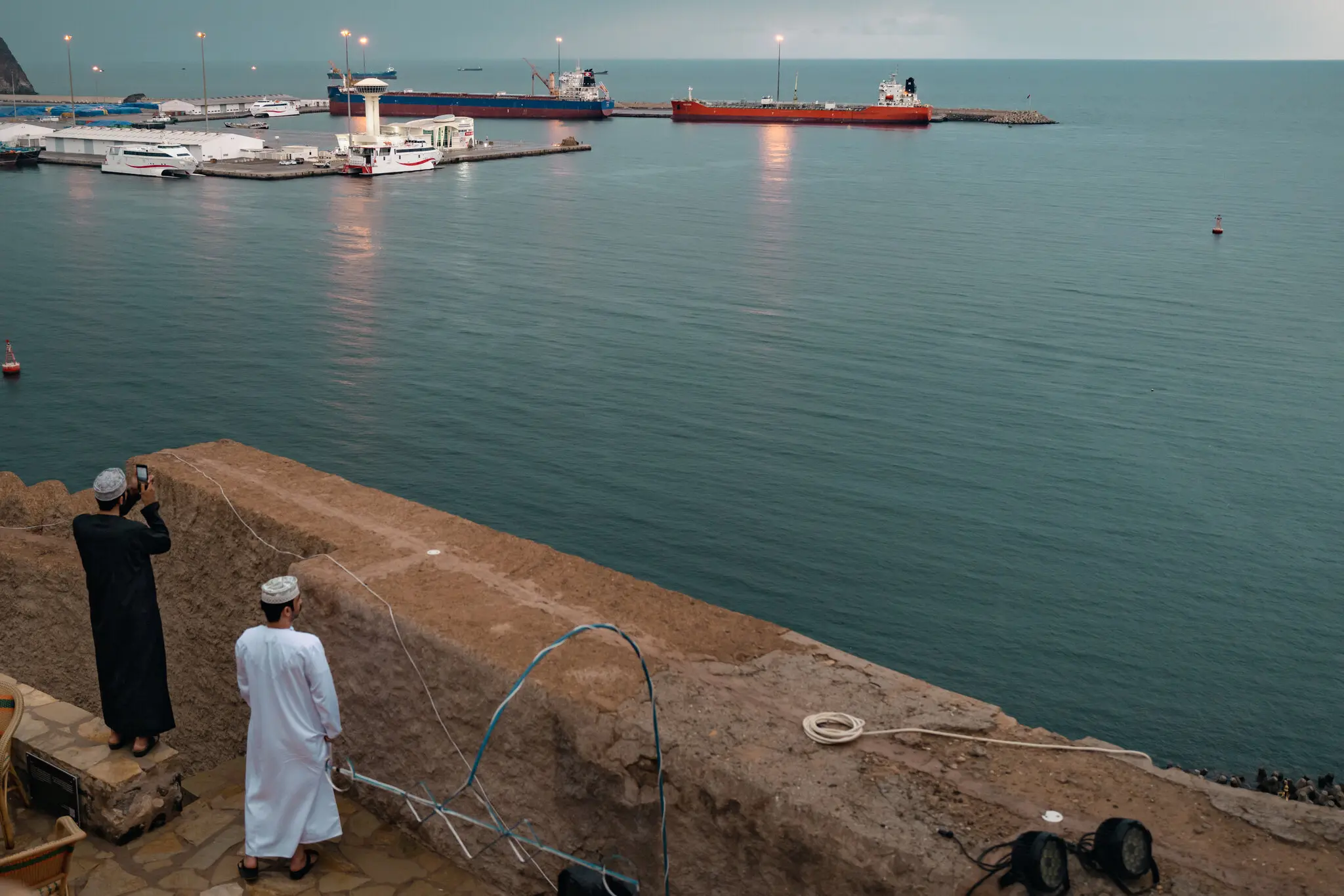 Фотографування суховантажів, що стояли на якорі в Маскаті, Оман, поблизу Ормузької протоки, минулого місяця — Елке Шольєрс


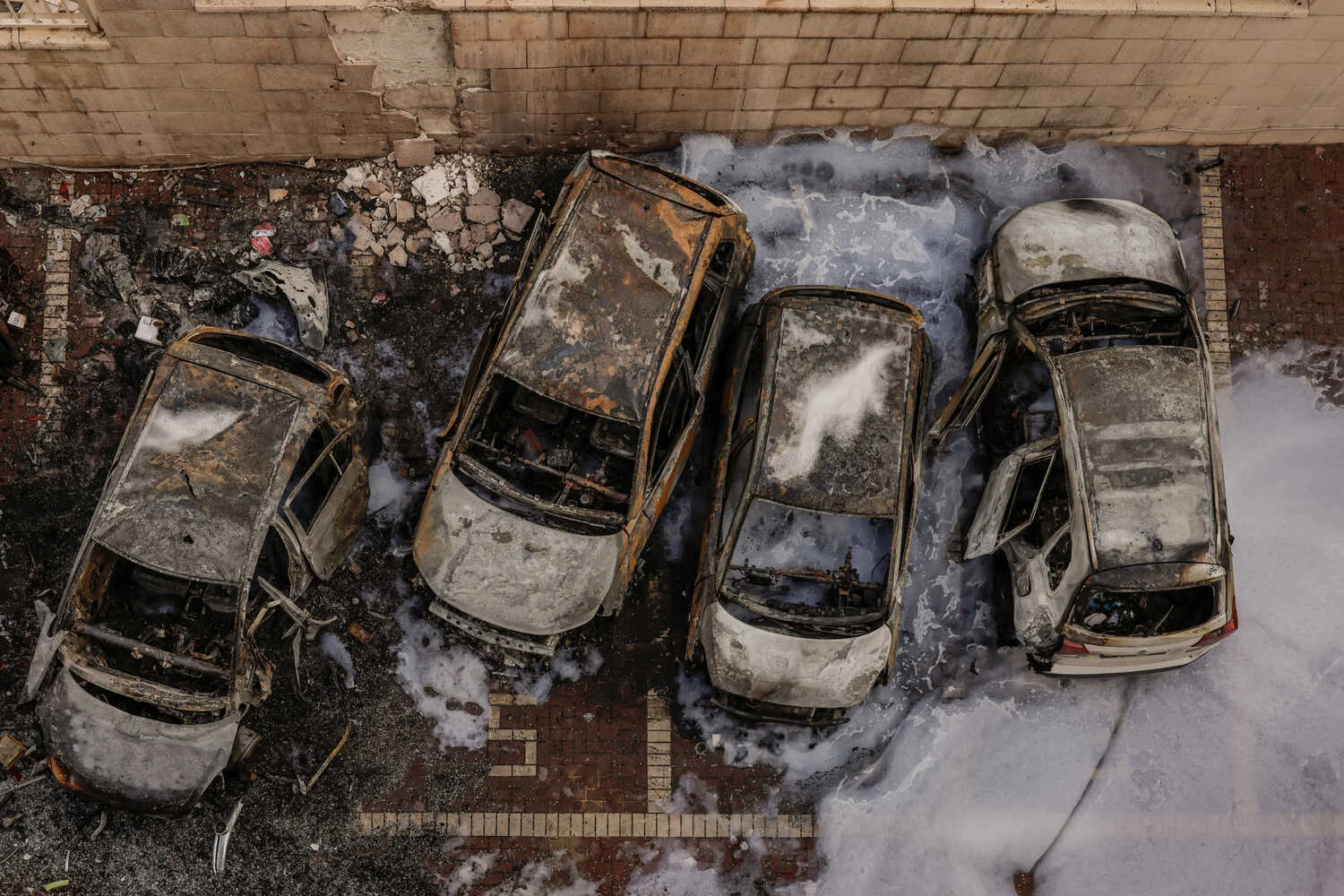


 Авішаг Шаар-Яшув




 У четвер американські військові зруйнували великий міст поблизу Тегерана, після чого пан Трамп опублікував повідомлення, що Сполучені Штати «навіть не почали знищувати те, що залишилося в Ірані» — Араш Хамуші
 Фотографія, опублікована іранськими державними ЗМІ та геолокована виданням The New York Times, показує уламки літака в провінції Ісфахан, Іран — Sepahnews