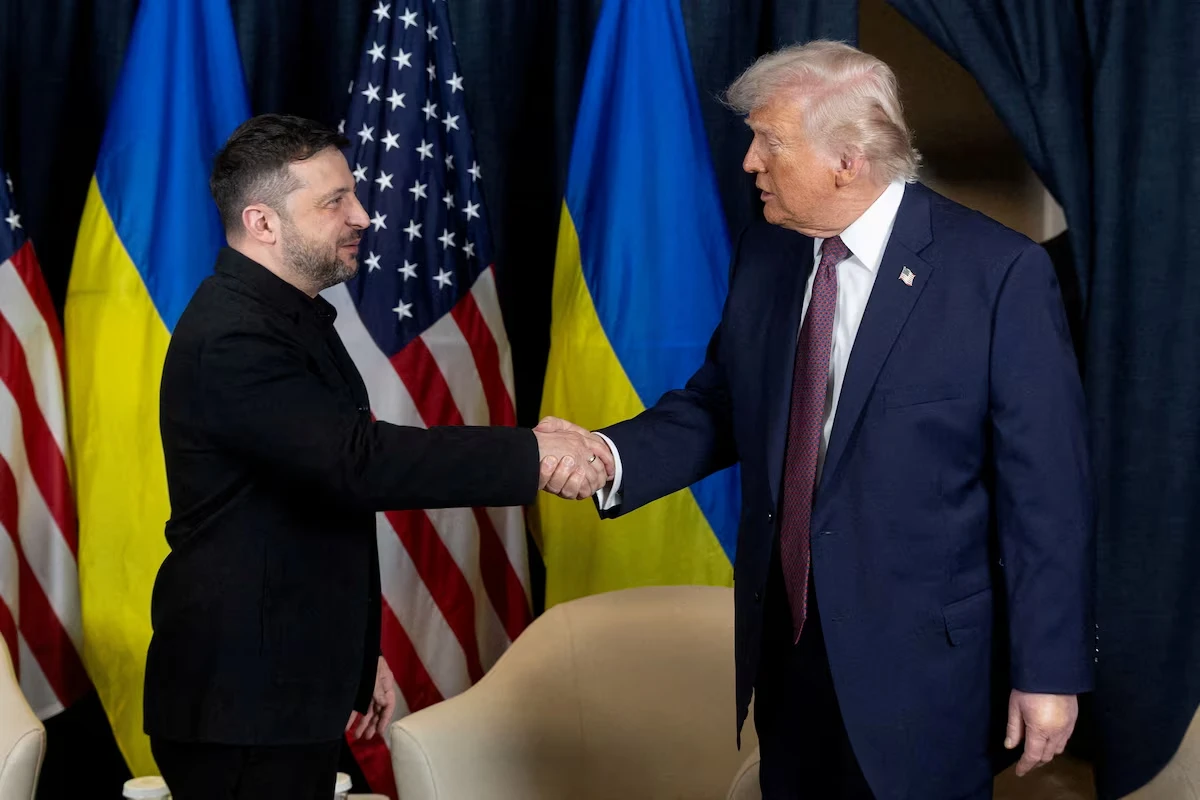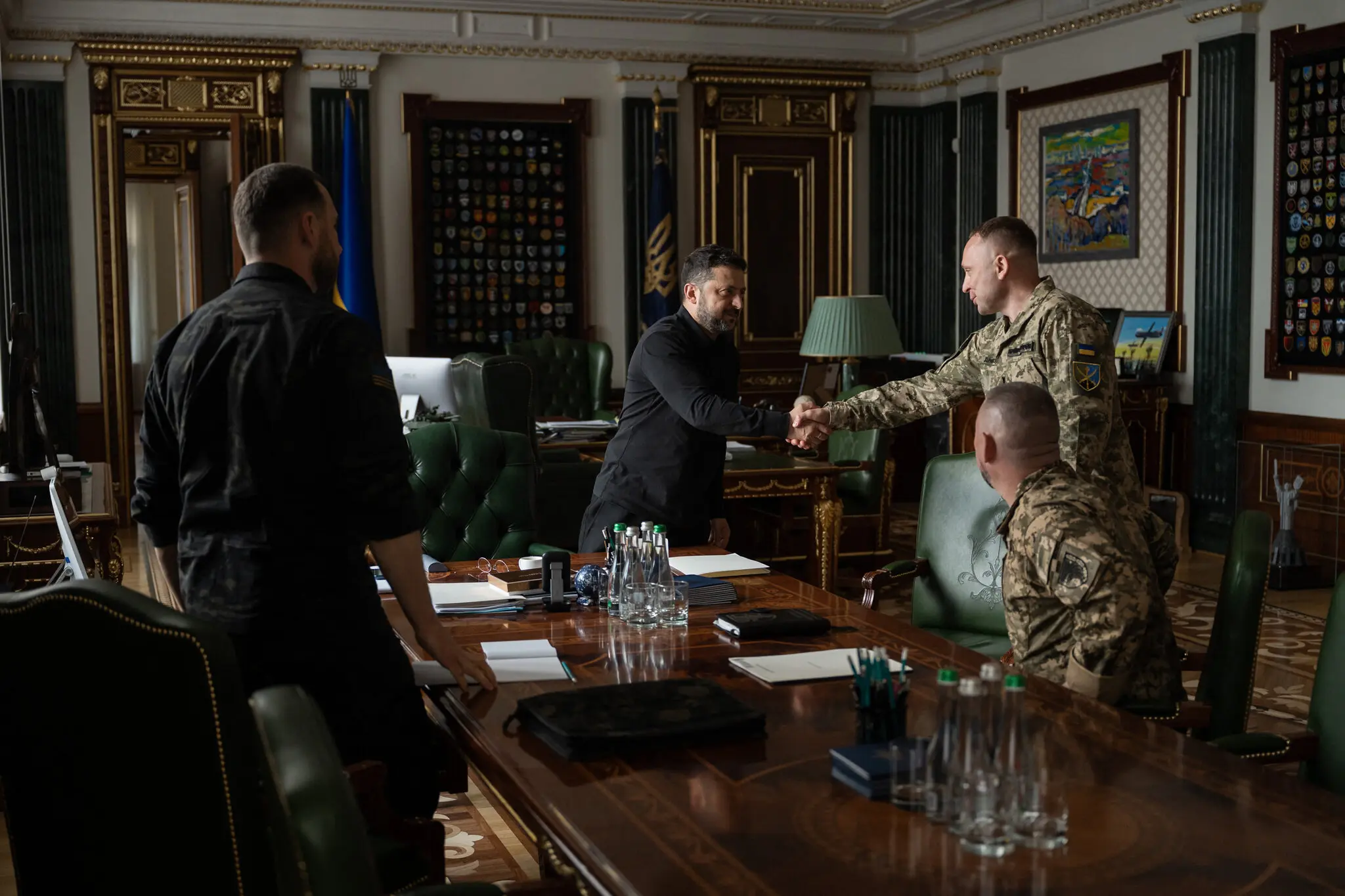



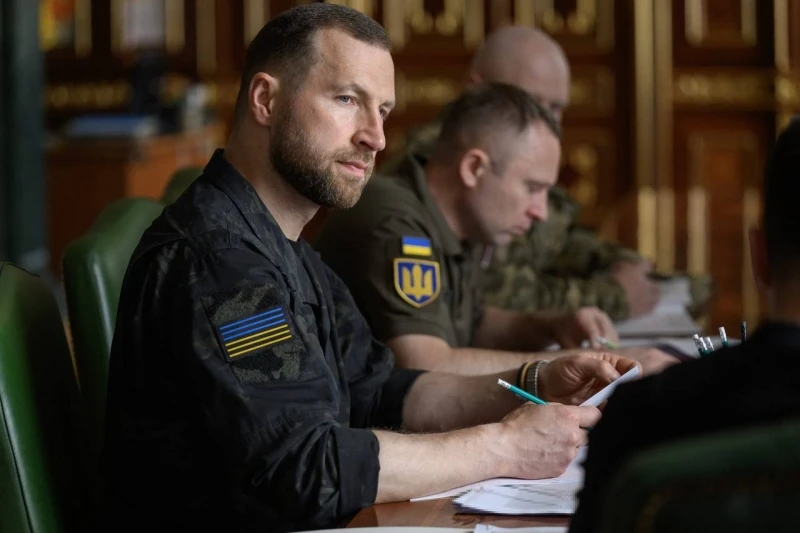















Ukraine is trying to restore the central principle without which any negotiation with Russia quickly becomes dangerous: the future of the country cannot be discussed without its political mandate. Volodymyr Zelensky has drawn that line clearly — Kyiv will decide who represents Europe in any possible dialogue with Moscow.
The position comes at a moment when the previous diplomatic momentum has effectively stalled. The U.S.-backed track has slowed amid the war around Iran, Russia continues to demand Ukrainian territory, and Europe is increasingly searching for its own format in any future settlement.
For Kyiv, the question of Europe’s representative is not a diplomatic detail. It defines the nature of the entire process. If the talks concern Ukraine’s borders, security guarantees, the end of the war and the future of continental defense, Ukraine cannot be reduced to a side that is merely informed of options agreed elsewhere.
According to Daycom’s earlier analysis, Zelensky is effectively placing a safeguard against Europe’s old habit of treating eastern security as a matter to be balanced among major capitals. In the new formula, Kyiv is not pushing Europe away; it is demanding that Europe’s role be coordinated, responsible and politically useful to Ukraine.
European leaders are indeed returning to the question of direct dialogue with Moscow, but there is no full unity on the continent over how such a conversation should be conducted. Some see a channel to the Kremlin as a necessary tool for reducing risks. Others fear that the very readiness to talk will be read by Russia as fatigue and an invitation to make new demands.
That is why the choice of the person who speaks for Europe matters more than it may seem. A negotiator’s name signals to Moscow what the West is seeking: a just end to the war, a temporary pause, a controlled freezing of the conflict, or a compromise in which Ukrainian territory becomes the price of silence.
Zelensky insists on Ukraine’s right to define that boundary because Kyiv is paying for the war not with abstract risks, but with cities, soldiers, civilian lives and economic endurance. Europe may propose formats, but the final political decision on its representation must remain with the country against which the war is being waged.
This position is especially important because of Russia’s negotiating tactics. The Kremlin has long tried to dilute Ukrainian agency and shift the conversation into arrangements with Washington or the largest European capitals. In that scheme, Ukraine would appear as a side that simply accepts or rejects decisions made by others.
Kyiv is trying to break precisely that construction. Its message is simple: Europe is needed at the table not as a decorative participant and not as a mediator seeking a quick equilibrium, but as part of a broader Ukrainian position. Otherwise, negotiations may become not a path to peace, but a mechanism of pressure.
The second dimension of the same strategy is defense-industrial. Zelensky has again raised the issue of licenses to produce American Patriot systems or their key components in Europe and Ukraine. After the G7 summit, this subject moved out of the back room and became one of the main tests of the West’s real readiness for a long war.
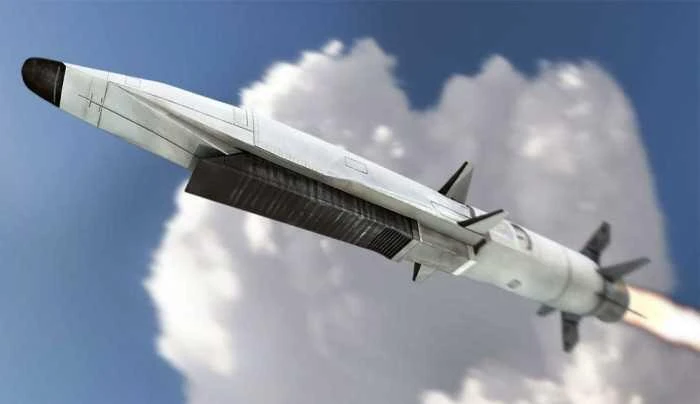
Patriot remains critically important for Ukraine against Russian ballistic missiles. Ballistic strikes allow Moscow to hit cities, energy infrastructure, military sites and industrial facilities with minimal reaction time. Without enough interceptors, even the best air defense system quickly runs into a shortage of ammunition.
The war around Iran has only exposed a global problem. The world needs more modern interceptor missiles than it currently produces. When several crises simultaneously demand high-end missile defense, American and European stockpiles stop looking like a strategic reserve and become a bottleneck in the entire security architecture.
That is why Ukraine’s request for licenses is not a technical application for a production line. It is a demand to move from the logic of aid to the logic of joint production. Kyiv no longer wants to remain only a recipient of scarce weapons. It wants to become part of the chain that creates both its own security and Europe’s.
For Washington, this is a difficult decision. Patriot is not merely a weapon, but a technologically sensitive system tied to U.S. manufacturers, component controls, export permissions and alliance commitments. Granting licenses would mean not just increasing deliveries, but changing the policy of access to technology.
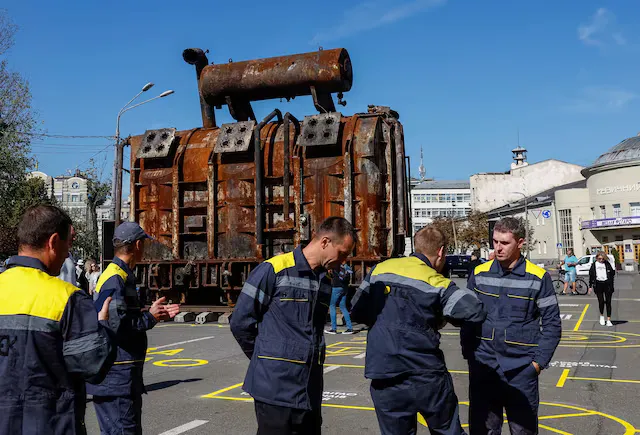
For Ukraine, however, time carries another price. Every delay in interceptor production is measured not only in contracts, but in strikes on Kharkiv, Kyiv, Dnipro, Odesa, Zaporizhzhia and energy sites. That is why Kyiv links air defense to diplomacy: without the ability to protect the sky, negotiations become a conversation under constant missile pressure.
Even a positive U.S. signal would not mean rapid production. The hardest part may not be final assembly, but the manufacture of specific high-tech components, including guidance systems. The Patriot production chain is too complex to be relocated quickly by political decision alone.
Still, the direction itself matters. At the beginning of the full-scale war, Ukraine asked for emergency deliveries. Then it asked for long-term support packages. Now it is talking about licenses, production, technology and industrial integration. This is a shift from a model of survival to a model of long-term deterrence.
This is where diplomacy and defense industry converge into a single strategy. Talks will have meaning only when the Kremlin understands that time is not automatically working in its favor. If Ukraine strengthens its air defense, production base and political control over the format of negotiations, Russia will find it harder to turn a long war into an instrument of coercion.
For Europe, this is also a test. The continent cannot claim a leading role in future talks with Russia while remaining fully dependent on American production cycles, American stockpiles and American political pauses. If Europe wants to speak about peace, it must learn to produce security.
For Ukraine, the formula is becoming clearer: no peace without a Ukrainian mandate, no European representation without coordination with Kyiv, no defensive resilience without production. This is no longer the request of a state waiting for allies to decide. It is the position of a country trying to rebuild the support system itself.
Zelensky is therefore joining two lines that may seem separate from the outside. The first is political: who has the right to speak with Russia. The second is military-industrial: who has the capacity to endure pressure while that conversation continues. Without the first, Ukraine may be bypassed. Without the second, it may be exhausted.
That is the real meaning of Ukraine’s new position. Kyiv no longer wants to be the object of someone else’s diplomacy or a dependent consumer of someone else’s defense stocks. It is demanding a place at the center of the negotiating format and at the center of the security production system. That is where the future peace will be decided — whether it is just, or merely temporarily convenient for stronger players.