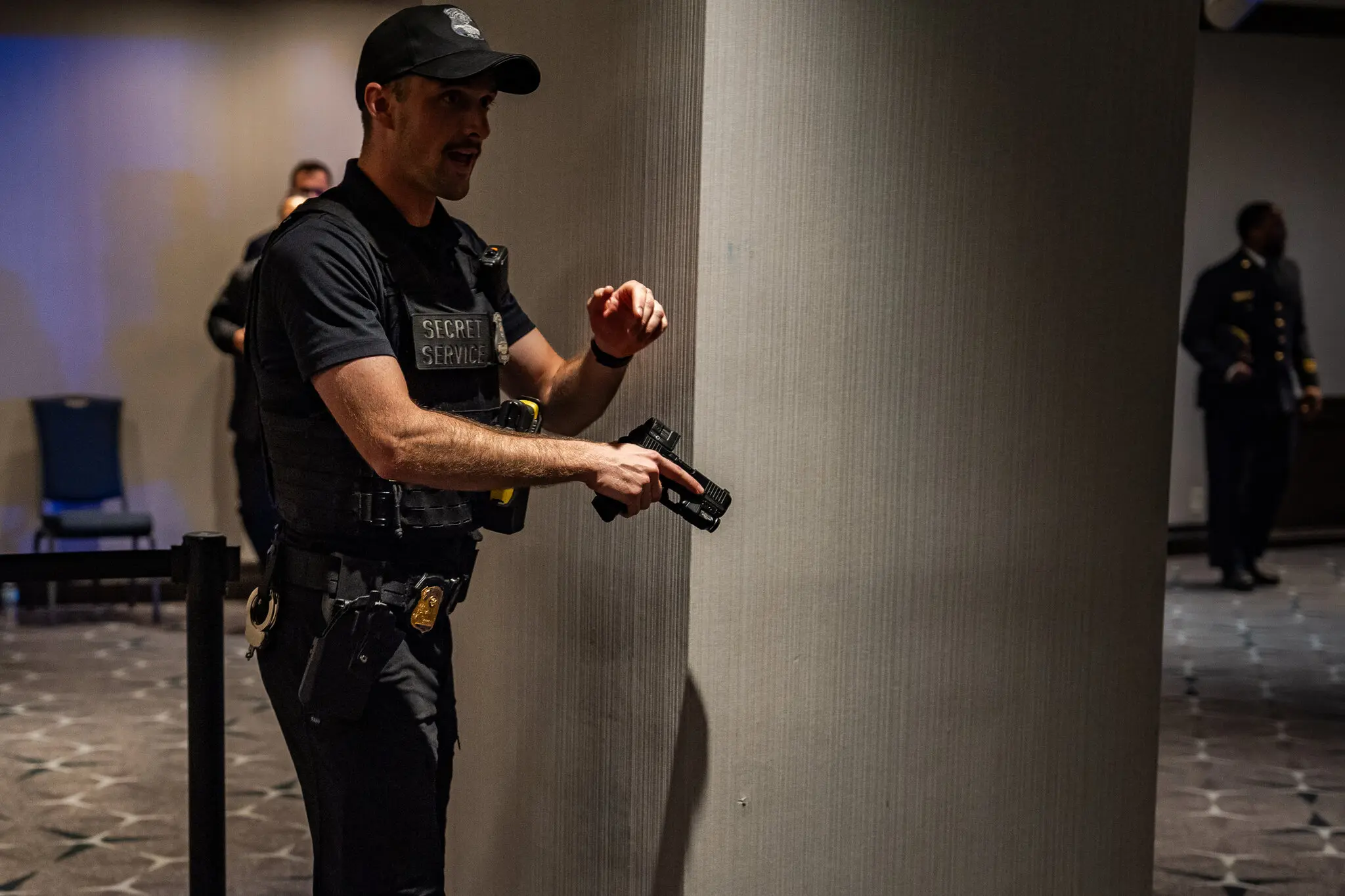


















The first gunshots had barely been reported before the internet began issuing its own verdicts. Within minutes of the attack at the White House correspondents’ dinner, social media filled with theories, suspicions, conspiracy claims and accusations.
It has become an almost automatic reflex of digital politics. When facts are scarce, caution does not fill the vacuum. Speed does. X, Facebook, TikTok and other platforms turned the incident at the Washington Hilton into an open marketplace of speculation, where truth was competing not simply with lies, but with the algorithm.
The fastest-spreading claim was that the attack had been “staged.” Users from different political camps embraced the word for different reasons: some suggested Trump wanted to distract from poor polling and the war with Iran; others treated the shooting as evidence of a broader plot against him. None of those claims came with proof.
According to Daycom’s earlier analysis, the wave of disinformation revealed not merely the force of one conspiracy theory, but the weakness of the shared information space itself. In moments of crisis, American audiences increasingly do not search for an explanation. They select the version that best matches their political instinct.
Within hours, the word “staged” became less a claim about evidence than a marker of mood. It allowed people not to wait for investigators, not to accept uncertainty and not to sit with chaos. Instead of a complicated reality, users were offered a simple formula: if an event is politically inconvenient, it can be declared theater.
That is how modern digital panic works. It does not require a central command. A few influential accounts, an emotional video, a broken sentence, a dropped call during a live appearance and thousands of users ready to see a hidden plan inside coincidence are enough.
One such episode followed the spread of a Fox News clip featuring a correspondent who had attended the dinner. She was speaking by phone from a ballroom with poor reception when the call dropped. That interruption was enough for some users to claim that the network had deliberately cut her off. A later explanation about the signal attracted far less attention than the suspicion.
This is the core mechanism of post-crisis disinformation. An error, guess or insinuation can draw millions of views within hours, while the correction arrives only after the emotional picture has already hardened. Fact-checking moves slowly because it requires verification. A falsehood moves quickly because it requires only confidence.
The political setting made the situation even more combustible. The attack occurred at an event attended by the president, senior officials, journalists and media executives. In such an environment, every detail acquires symbolic weight: who said what before the incident, who left the room first, who posted the earliest video, who appeared calm and who did not.
Trump himself added another storyline by linking the incident to his push for a new ballroom on the White House grounds. For his supporters, the argument quickly became one about security. For critics, it was another reason to suspect the political use of fear.
In a healthier political culture, an attack of this kind would first produce a pause: sympathy, restraint and a willingness to wait for official findings. Digital culture operates differently. It rewards not responsibility, but primacy. The first person to name a culprit gets views. The first person to doubt the obvious gains followers.
In this attention economy, rumor becomes an asset. An influencer can publish a collection of unsupported theories, immediately add that he does not personally believe them, and still secure the central reward: reach. The disclaimer becomes part of the manipulation. The author appears to step back from responsibility while leaving the audience with poisoned material.
That is why the information damage after such attacks lasts longer than the incident itself. A suspect can be arrested, weapons recovered, a ballroom evacuated and security restored. But the conspiracy continues to live. It adapts to new facts, changes vocabulary, rejects inconvenient evidence and shifts from argument into belief.
American politics has seen this pattern before. After earlier attempts on Trump’s life, parts of the online audience continued for years to insist that the events had been staged, despite deaths, injuries and investigative records. In conspiratorial thinking, victims, documents and witnesses do not end the story. They become new ingredients in the plot.
The most dangerous part is not that people make mistakes. Mistakes are inevitable in the first hours of a major breaking story. The danger is that growing numbers of users no longer want to wait for reliable information. They are not looking for truth, but for confirmation of the world they already believe exists.
That corrodes more than trust in media. It erodes society’s ability to agree on reality. If every attack becomes a “staged” event, every video a “fake,” every broadcast interruption proof of censorship, public life loses its common floor.
For journalists, the episode was a double test. They were not only witnesses to the attack, but also targets of the information storm that followed it. They had to describe the chaos, verify facts, contain errors and speak to an audience that had often already chosen its preferred version.
For platforms, it was another reminder of the weakness of their rules. Algorithms do not distinguish public significance from toxicity as quickly as they distribute emotional content. Words like “maybe,” “strange,” “people are saying” and “coincidence?” have become enough to launch mass suspicion.
After the gunfire at the Washington Hilton, America faced two crises. The first was physical: weapons, security, evacuation, fear inside the room. The second was informational: falsehoods, conspiracies, manipulation and a struggle to control the first explanation. The second may last longer.
Violence can end with an arrest. Disinformation rarely does. It remains in search results, reposts, video edits, memes and political conversations. It outlives facts when facts arrive too slowly for an age that has learned to believe faster than it thinks.