





















For the Pentagon, it marks a new tempo of long-range ground fire. For the region, it is a reminder that even “precision” enters reality through civilian ruin.
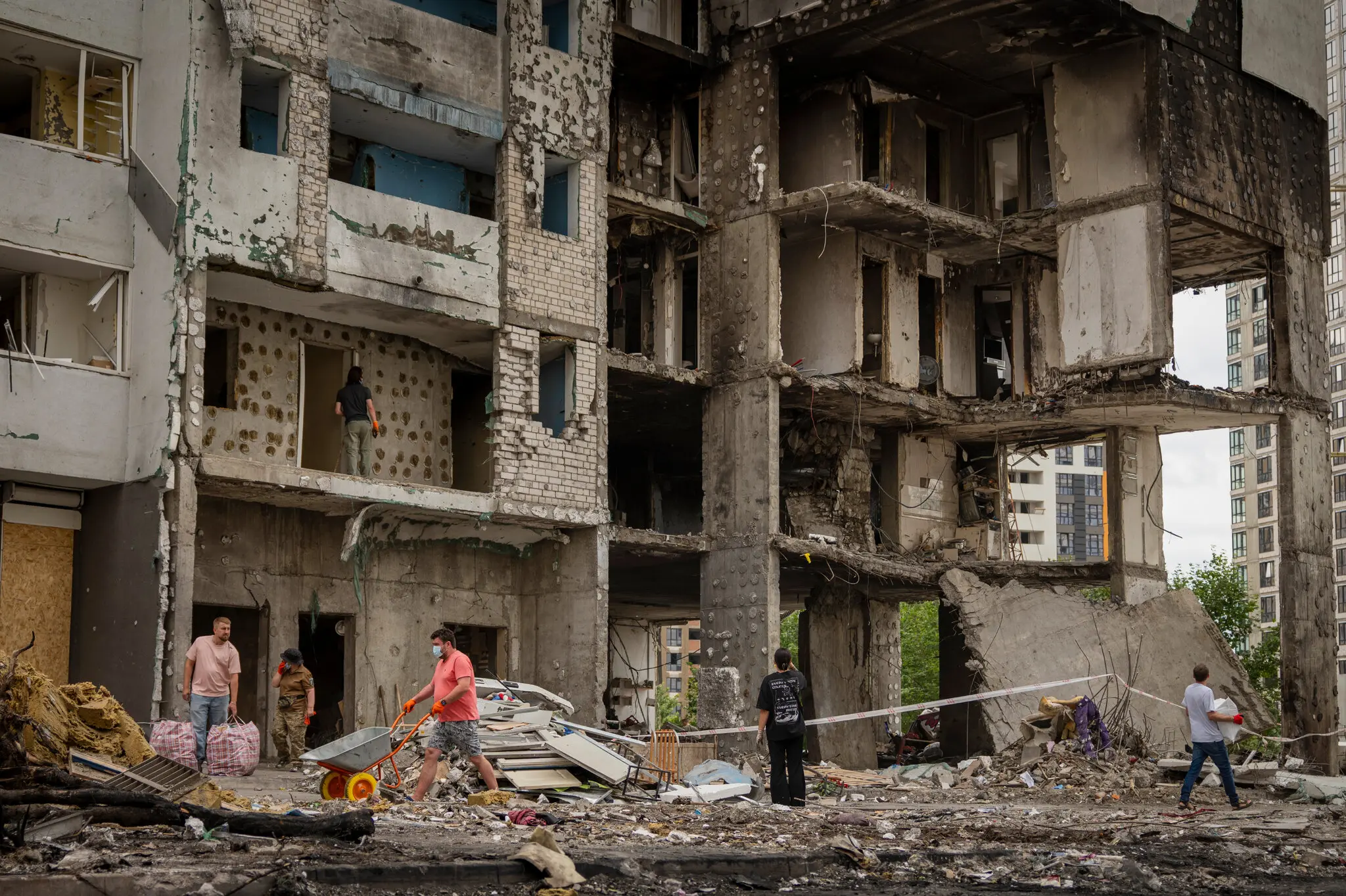
War often reveals a new weapon not on a test range, but at the moment it has already hit. That is what happened with the Precision Strike Missile, or PrSM, which has been linked to the strike on a sports hall and school in the Iranian town of Lamerd. In a single episode, the missile moved from technical obscurity into the center of public attention.
Until recently, PrSM existed for most people as little more than an acronym from presentations about Army modernization. It belonged to the language of trials, procurement schedules and future capability. It was discussed as a system in development, not as an instrument already shaping the emotional and political reality of war.
That distance is now gone. The path from prototype to battlefield has narrowed with unusual speed. What would once have remained inside procurement documents and defense briefings has entered public consciousness through a strike, civilian deaths and the shock that always accompanies the first recognizable use of a new system in real combat.
In Deikom’s assessment, the essential meaning of this episode is not simply that the Pentagon has fielded another missile. It is that a weapon still associated with accelerated testing and rollout has crossed almost seamlessly into operational war. The usual interval between technical validation, industrial ramp-up and battlefield use has been compressed into something far more immediate.
Technically, the significance of PrSM lies in what it does to ground-based strike. Fired from HIMARS and M270 launchers, it extends the reach of mobile Army platforms far beyond the older generation of battlefield missiles. That matters because it changes the role of ground artillery itself. It is no longer only a tool of support near the front. It becomes part of a deeper architecture of operational reach.
That shift alters the geometry of war. Capabilities once associated mainly with aircraft or ships can now be placed on a wheeled or tracked launcher that fires, relocates and complicates retaliation. For an adversary, that means less warning, more uncertainty and a far harder problem of detection. The next strike does not need to come from the sky to arrive from far away.
This is why the Lamerd strike matters beyond its immediate horror. It points to the kind of warfare Washington is increasingly prepared to conduct: not occupation, not only air campaigns, and not the older model of overwhelming visible force, but a networked system of long-range fire in which launchers, missiles, intelligence, timing and industrial supply operate as one integrated structure.
The industrial side of the story is almost as important as the operational one. PrSM is not merely a battlefield tool. It is also a production priority. When a new missile moves quickly from limited rollout to wartime relevance, the defense industry itself begins to shift tempo. Manufacturing capacity, contracts and deployment schedules stop looking like routine modernization and begin to resemble wartime acceleration.
Yet Lamerd also exposes the limit of every official language of precision. A missile designed to strike high-value military targets enters public memory not through its range, launch platform or engineering sophistication, but through a sports hall, a school and dead civilians. This is the central paradox of modern precision warfare: technical accuracy does not erase political consequence, and it does not lessen the moral weight of where a strike lands.
For that reason, PrSM should not be read as just another military innovation. It is better understood as a marker of a new American war model in the Middle East. A missile, a mobile launcher, real-time targeting, industrial scaling and rapid operational use now form a single system. In such a system, one strike never speaks only about one target. It speaks about doctrine.
That is why this story matters far beyond a single battlefield episode. It shows how contemporary war is collapsing the boundary between prototype, contract, deployment and civilian aftermath. Yesterday, PrSM belonged to the future tense of American power. Today, it belongs to the present tense of fear.