





















The successful recovery of an American airman from Iranian territory should have given the White House a clean story of discipline, resolve, and military competence. Instead, within hours, Donald Trump converted that tactical success into the prelude to a new escalation. His threat to strike Iran’s power plants and bridges unless Tehran reopens the Strait of Hormuz by Tuesday marks a shift far more consequential than the rescue itself.
What changed was not only the tone, but the logic. In recent days Trump had moved between two contradictory positions: at times suggesting that Hormuz was not fundamentally an American problem, at others warning that Iran would face force if it continued to restrict passage. Now the pendulum has swung sharply toward compulsion. This is no longer merely pressure within a war. It is an attempt to impose a new order on the conflict by threatening the basic infrastructure that allows a state to function.
That is why the latest threat matters more than the language surrounding it. It reveals how quickly a battlefield success can become, in Washington, an argument for widening the aims of the war. Once the rescue provided a vivid proof of American capability, the distance between military response and political punishment narrowed even further. In that frame, the downed aircraft is no longer only an incident. It becomes a rationale for raising the stakes across the entire architecture of confrontation linking the United States, Iran, Israel, and the Gulf monarchies.
In Deykom’s assessment, the deeper shift lies elsewhere: Washington is speaking less and less in the language of a limited military campaign and more in the language of coercion through civilian vulnerability. When the target set begins to include not only missiles, bases, and radar systems, but also power grids, bridges, ports, water systems, and transport links, the war enters a different phase. It becomes a campaign against a society’s ability to keep itself running. That is always a broader and more dangerous form of escalation, because it transforms not only the battlefield, but the cost of ordinary life.
This is also where the legal fault line opens. International humanitarian law is built on the principle that civilian objects do not lose protection simply because they are important to the state. Power plants and bridges do not become lawful targets by default. Yet moments like this often produce the temptation to stretch the category of dual-use infrastructure until nearly everything falls inside it. Once that logic takes hold, the law stops acting as a restraint on war and becomes a vocabulary for justifying whatever the next step happens to be.

What makes the threat more serious still is the geography behind it. The Strait of Hormuz is not a symbolic choke point or a peripheral theater. It is one of the central arteries of the global energy system. Any crisis involving Iran, shipping lanes, tankers, or coastal infrastructure in that corridor immediately spills beyond the Middle East. It reaches fuel prices, freight rates, insurance calculations, fertilizer supply chains, and the broader confidence on which global trade depends. A confrontation there does not stay local for long.
This is also why Tehran still holds a meaningful lever despite the damage already inflicted on its military assets. Even after losses to its fleet, air force, and parts of its missile arsenal, Iran retains the ability to keep the world on edge through a narrow maritime passage that cannot be replaced by rhetoric or restored by a single show of force. The louder Washington speaks about power grids and bridges, the more clearly it acknowledges the real center of gravity: control of the strait remains the nerve of the campaign.
The idea of simply forcing Hormuz open sounds far easier in political messaging than it would be in practice. It would not mean one strike or one naval maneuver, but a prolonged effort involving mine-clearing, convoy protection, suppression of coastal threats, protection for commercial shipping, and constant management of insurance and risk. Even a formal coalition would not automatically solve the problem. Shipping depends not only on the physical possibility of passage, but on the confidence that transit will not end in a fire, a seizure, or a financial disaster.
In strategic terms, Trump’s threat also says something about Trump himself. The rescue did not reduce the political pressure surrounding the conflict; it appears to have created the opposite effect, the sense that one successful operation justifies a still higher wager. That psychology is common in wars where tactical victories disguise strategic deterioration. When a leader moves directly from saving lives to threatening the electrical backbone of an adversary’s state, it suggests not control, but the growing pull of escalation.
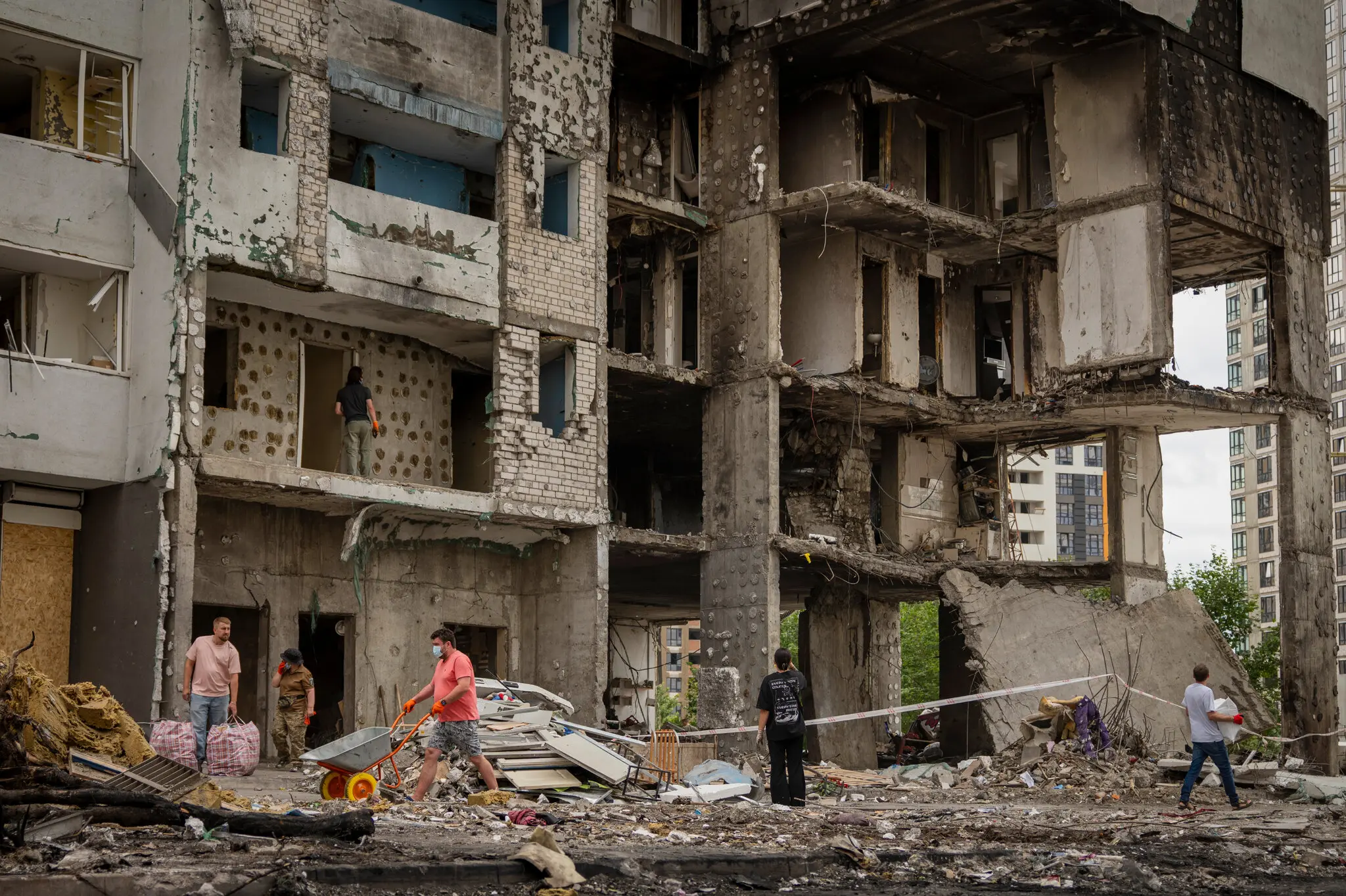
What makes the moment especially dangerous is that this war has long ceased to be only a war of aircraft and missiles. It is moving into a phase in which electricity, water, bridges, insurance, shipping, humanitarian routes, and market confidence become decisive terrain. If the threat is carried out, the conflict will change in kind. It will move from a struggle for military advantage toward a struggle over whether a state can continue to function under sustained pressure. That is a far dirtier, more expensive, and far less predictable kind of war.

This is why the present moment feels more perilous than many earlier ones. The rescue of a single airman did not close the crisis. It became the point from which the White House began speaking in the language of broader coercion. Tactical success created the impression that escalation might restore control. Wars of this kind usually prove the opposite. The wider the list of targets becomes, the weaker the ability to predict the consequences.
That is the central conclusion. Trump is trying to turn a moment of strength into leverage. In doing so, he is exposing how fragile the entire structure around the Strait of Hormuz remains. If the conflict truly shifts toward attacks on civilian-critical infrastructure, the world will be facing not only a military crisis, but an energy crisis, a legal crisis, and a systemic one. At that point, the price of every new decision will no longer be measured by the success of an operation, but by the scale of disruption it sets in motion.