
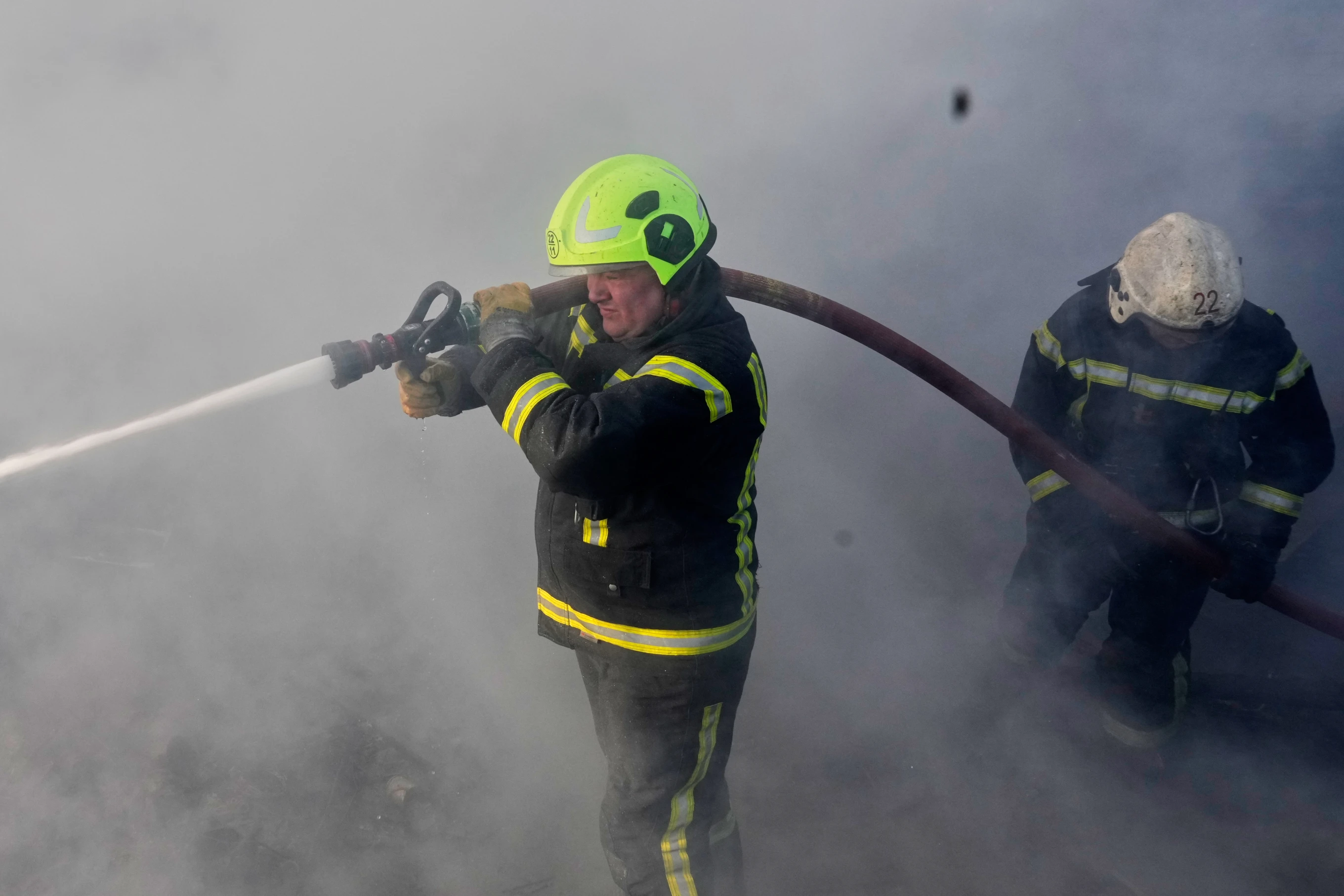




















In the early hours of April 2, almost immediately after Donald Trump’s televised address describing the military campaign as “near completion,” Iran tested the full belt of American allies across the region once again. Israel reported fresh interceptions of launches from Iran, the United Arab Emirates said its air defenses had responded to missiles and drones, and Saudi Arabia announced new interceptions of airborne threats. That gap between Washington’s triumphant language and the actual shape of the night became the defining fact of the day.
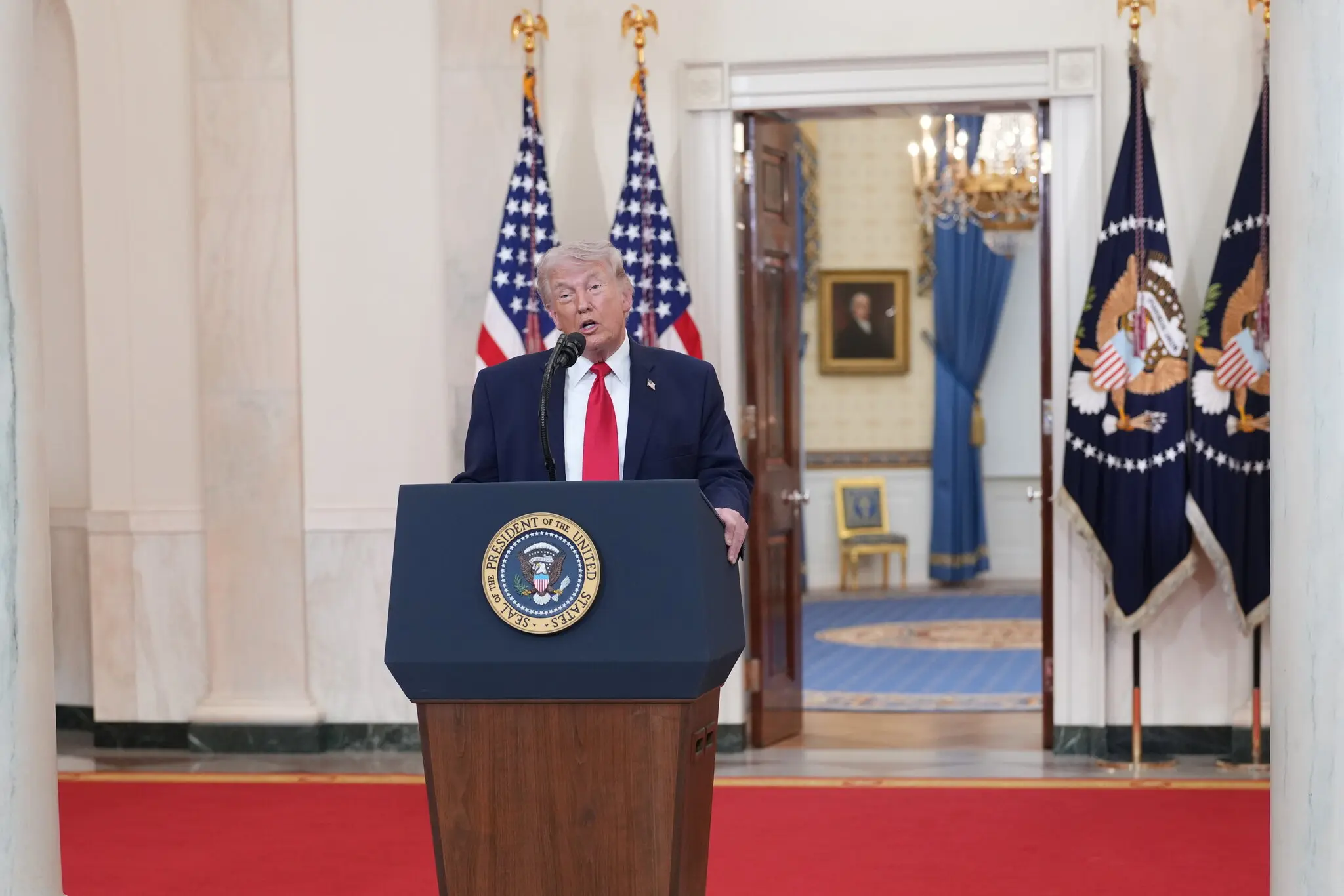
In his 19-minute address, Trump tried to do two things at once: declare the war a success and promise another two to three weeks of punishing strikes. Politically, it was an attempt to sell Americans not a clear strategy for ending the conflict, but a short time horizon meant to substitute for the absence of a credible endgame. Yet the first hours after the speech exposed the weakness of that formula. If the adversary can immediately resume pressure on Israel and the Gulf, then this is not a war approaching conclusion. It is a prolonged conflict with a shifting threshold of escalation.
That is the central change now underway. Until recently, the White House tried to frame the campaign as a systematic effort to dismantle Iranian capabilities. Increasingly, however, the war looks less like a contained operation than a stress test of America’s entire regional security architecture — from Israeli missile defense to the protection of Gulf energy infrastructure. When attacks are distributed not only across the main front but across allied space, Iran imposes a different logic: not a direct military contest with the United States alone, but the wearing down of the wider order Washington has built over decades.
By Deykom’s preliminary assessment, the most important feature of this night was not the number of missiles or drones, but the targets chosen. Tehran is demonstrating that it can retaliate not merely along a U.S.-Iran axis, but across the full system in which American military power overlaps with the interests of Israel, the Gulf monarchies, maritime logistics and the global oil market. That means any claim of success is now measured not by how many sites inside Iran have been destroyed, but by whether the United States can prevent the war from spreading through its network of allies.
The Strait of Hormuz is especially revealing. Trump has alternated between describing it as somebody else’s problem and treating the reopening of the waterway as a condition for ending the war. In response, Britain has begun assembling a separate format involving more than thirty states, without the United States, to explore a political mechanism for restoring navigation. That is the first serious sign of something larger: America’s partners are no longer waiting for Washington to resolve the crisis on its own. They are beginning to build a parallel framework of stabilization.
That, in turn, exposes a deeper problem for the White House. If the United States claims military dominance but does not assume full political leadership over the world’s most important energy corridor, it sends an unsettling signal to allies: Washington is prepared to destroy, but not fully prepared to manage the consequences of destruction. For the Middle East, this is no longer a stylistic flaw in American policy. It is a dangerous zone of vacuum, where coercion runs ahead of diplomacy and global energy security becomes hostage to incomplete control.
Markets registered that contradiction almost at once. After Trump’s renewed threats of future strikes, oil prices rose again and Asian equities fell. This was not merely a reaction to another round of escalation. It was a response to the absence of clarity about how escalation ends. For investors, for governments dependent on imported energy and for societies already living with inflation, the difference between “we are nearly done” and “we will strike for two or three more weeks” has a measurable cost — in the price of crude, in shipping rates, in currency pressure and in political anxiety.
That is why this day did not confirm American success. It marked its limits. The United States unquestionably retains overwhelming firepower. But superiority in force is not the same as control over the end of a war. After this night, one thing is increasingly clear: Iran may be weakened, but it still has the ability to shape the agenda, raise the price through Israel and the Gulf, and exert pressure through oil, logistics and maritime insecurity. The real question now is whether America can do more than continue striking. It is whether it can impose a political ending on the region that does not begin to unravel within hours of the next presidential address.