























When a president tells a country that a war is “nearing completion,” two things are usually expected: a clear objective and a credible route to the finish. Donald Trump offered neither. He declared military success, promised even harder strikes ahead, and still failed to define where pressure ends, where coercion begins, and how this campaign is supposed to stop short of becoming open-ended.
That is the central contradiction of the moment. The White House wants Americans to “keep this conflict in perspective,” to see it as a short campaign still in its second month rather than as another Iraq or Vietnam. Yet the comparison itself exposes the anxiety beneath the message. If the president is already trying to justify the duration and cost of the war, then concern at home is clearly deeper than the administration would like to admit.
Most revealing of all, the address that should have delivered strategic clarity instead displayed strategic ambiguity. Trump spoke at once of a campaign approaching success and of the need to hit Iran “extremely hard” over the next two to three weeks. If the war is truly close to ending, the obvious question follows: why did the speech sound less like a conclusion than an announcement of a new phase of escalation?
When a president tells a country that a war is “nearing completion,” two things are usually expected: a clear objective and a credible route to the finish. Donald Trump offered neither. He declared military success, promised even harder strikes ahead, and still failed to define where pressure ends, where coercion begins, and how this campaign is supposed to stop short of becoming open-ended.
That is the central contradiction of the moment. The White House wants Americans to “keep this conflict in perspective,” to see it as a short campaign still in its second month rather than as another Iraq or Vietnam. Yet the comparison itself exposes the anxiety beneath the message. If the president is already trying to justify the duration and cost of the war, then concern at home is clearly deeper than the administration would like to admit.
Most revealing of all, the address that should have delivered strategic clarity instead displayed strategic ambiguity. Trump spoke at once of a campaign approaching success and of the need to hit Iran “extremely hard” over the next two to three weeks. If the war is truly close to ending, the obvious question follows: why did the speech sound less like a conclusion than an announcement of a new phase of escalation?
In Deykom’s assessment, the importance of the address lies not in a new doctrine, but in the absence of one. Washington is trying to hold together three incompatible messages at once: the campaign is succeeding, the war remains limited, and yet the next round of strikes could be broader and harsher still. Politically, that means one thing. The administration wants to preserve freedom to escalate without fully owning the consequences of escalation.
That is why the speech felt less like a real plan for ending the war than an attempt to stabilize the domestic audience psychologically. Trump never explained the final objective of the campaign. Is the goal to destroy Iran’s nuclear capacity, to degrade its missile program, to force it into negotiations, to alter the regime’s behavior, or to alter the regime itself? On different days, Washington has suggested all of these. That inconsistency is no longer background noise. It is becoming part of the war itself.
For any military campaign, that kind of uncertainty is dangerous. When armed force is used without a clearly stated political end state, battlefield success does not necessarily bring closure. It can pull a country deeper into a logic of action that becomes harder to stop without looking weak. That is what makes the current American position unsettling. The more the White House speaks in the language of strength, the less clear it becomes what outcome it would consider sufficient.
The language of threat matters just as much. Trump’s promise to strike all of Iran’s electrical generating plants simultaneously if there is no deal signals that Washington is holding not only a military option in reserve, but an openly punitive one. This is no longer just about missile sites, launchers or military infrastructure. It is about threatening the systems that sustain civilian life. Politically, such rhetoric is meant to project resolve. Strategically, it shrinks the space for diplomacy by turning any negotiation into an ultimatum.
That is one of the administration’s deepest traps. Trump demands that Iran negotiate, while describing the failure of negotiations in the language of total punishment. From Tehran’s perspective, that makes diplomacy look less like a mutual exit from war than a mechanism for formalizing the results of American coercion. Under those conditions, even a weaker adversary has a strong incentive to prolong resistance rather than enter talks branded as the side forced into submission.
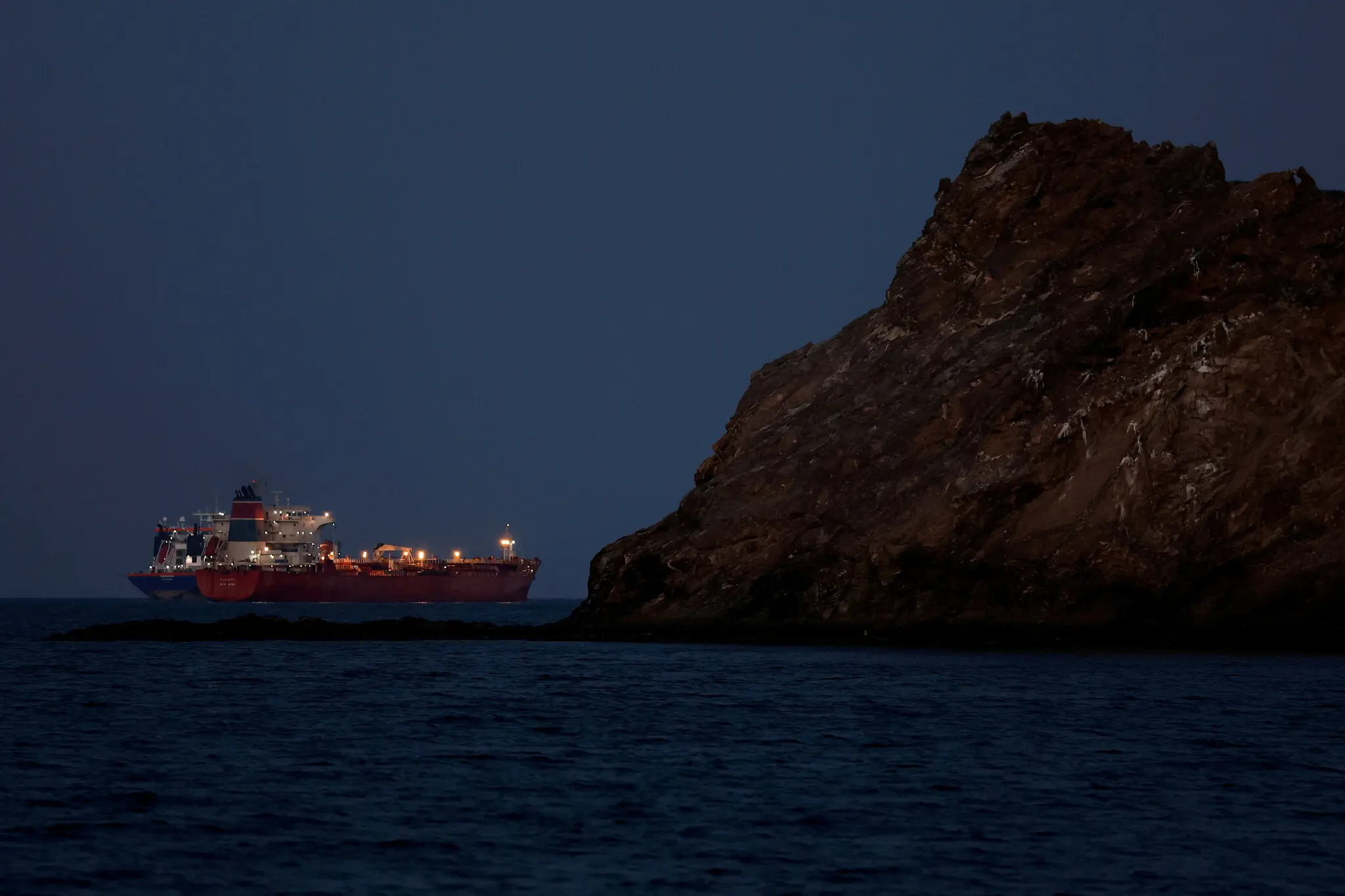
Trump’s treatment of the Strait of Hormuz was equally telling. On the one hand, he acknowledged its strategic importance. On the other, he suggested that other countries, dependent on oil flows, should take the lead in protecting it. That is where the limit of American rhetoric becomes visible. It is not possible to wage a war that destabilizes one of the world’s essential energy corridors and then pretend the economic consequences are someone else’s problem. Global markets do not recognize the distinction between an “American operation” and a shared economic shock.
The nuclear argument remains another major fault line. Trump once again presented Iran as a country on the verge of acquiring a weapon. Yet even within the American system, the assessments are more complicated than that. Enriched uranium is not the same as a deployable bomb, and the path from fissile material to an actual weapon requires time, technology and political intent. That is why wars built on compressed timelines of urgency always risk overstating the immediacy of the threat while understating the cost of long-term consequences.
There is also a broader political dimension. This was Trump’s first true prime-time address from the White House since the war began. In the classic grammar of the presidency, such speeches serve one of two purposes: to prepare the country for war or to explain how the country intends to leave one. This address did neither convincingly. It came well after military action had already begun, and it still failed to offer a new framework for ending it. The result was a speech suspended between phases, neither opening argument nor closing statement.
That sense of suspension may be the most accurate description of the current American strategy. The administration wants to appear strong without naming the real price of force. It wants to speak of an approaching end while preserving the language of a longer campaign. It wants to compel Iran into a deal while offering no persuasive explanation of how such a deal would differ from a pause before the next round of fighting. That is why the speech left behind not an impression of confidence, but of uncertainty dressed up as confidence.
For the United States, that is a dangerous place to be. Not because military superiority has suddenly disappeared; it has not. But superiority without a political endpoint has often proved to be the strong power’s trap. American history is full of moments when the ease of entering a war created illusions about the ease of leaving it. And when Trump invokes Iraq and Vietnam to calm public anxiety, he risks producing the opposite effect. Those are precisely the examples that remind Americans how often wars begin with the conviction that events are already under control.
That is why this address matters not as a turning point, but as a document of a new American hesitation. The White House does not say so openly, but it is already revealing the core weakness of the campaign. Military strikes are easy to describe in the language of victory. They are far harder to describe in the language of ending. Until that gap is closed, talk of a war that is “nearing completion” will sound less like a forecast of peace than like another attempt to buy time inside a conflict that still lacks a credible political conclusion.











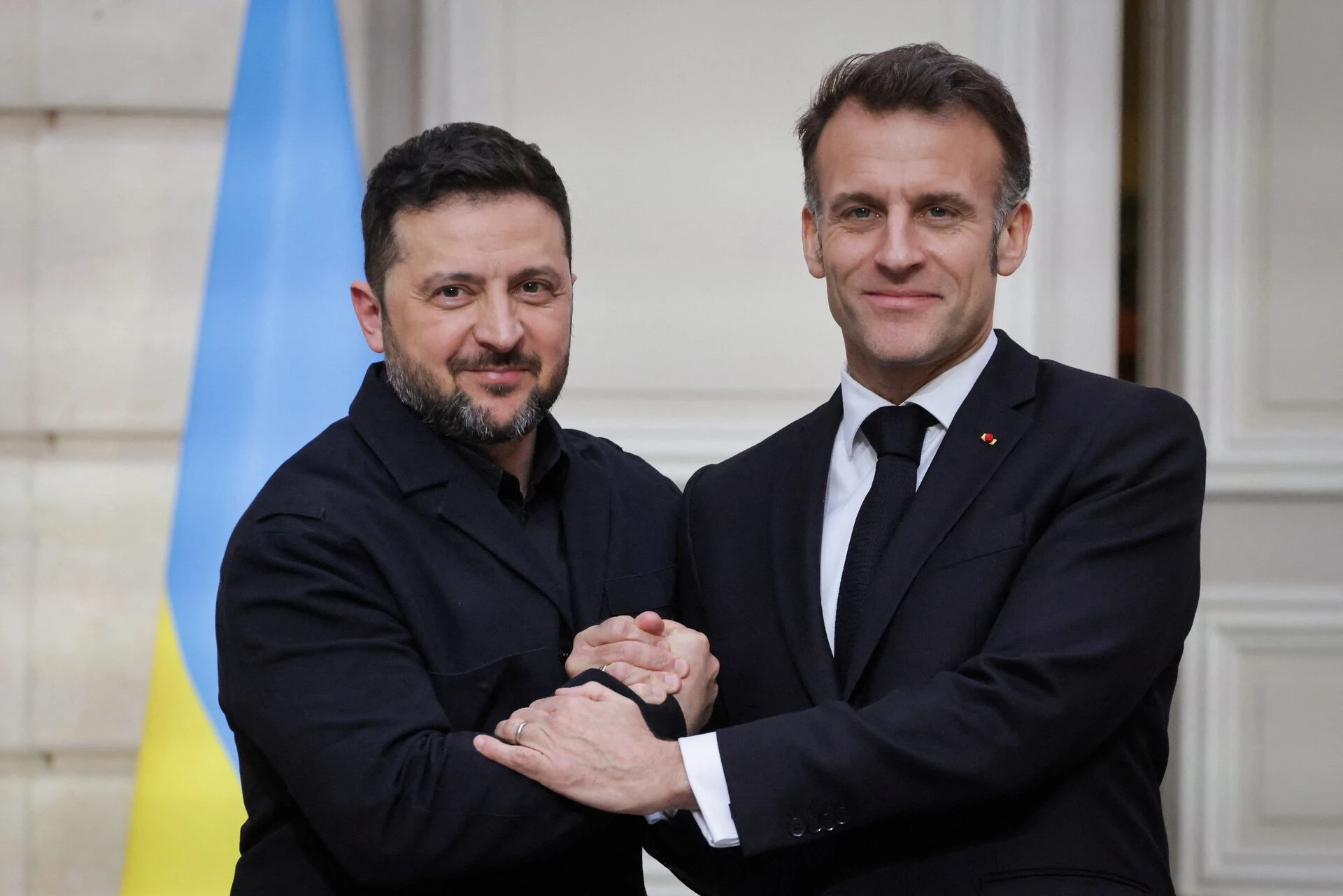 Президент України Володимир Зеленський (ліворуч) тисне руку президенту Франції Еммануелю Макрону (праворуч) після виступу на спільній прес-конференції в Парижі, 13 березня 2026 року — Фото басейну від Людовіка Маріна
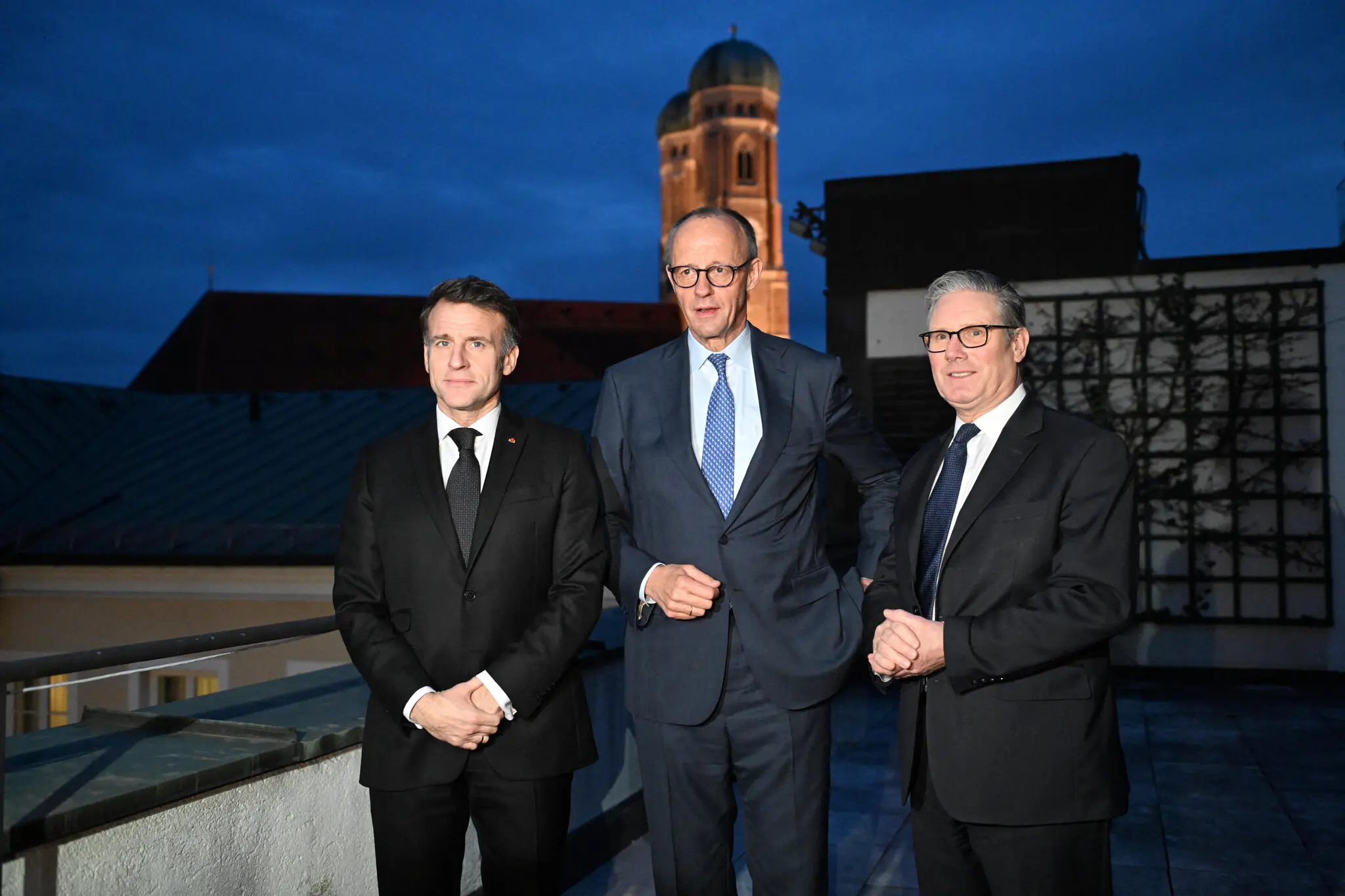 Президент Франції Еммануель Макрон (ліворуч), канцлер Німеччини Фрідріх Мерц та прем'єр-міністр Великої Британії Кір Стармер минулого місяця в Мюнхені — Фото басейну від Томаса Кінзле
 Президент Франції Еммануель Макрон Президент США Дональд Трамп у Шарм-ель-Шейху — Йоан Валат
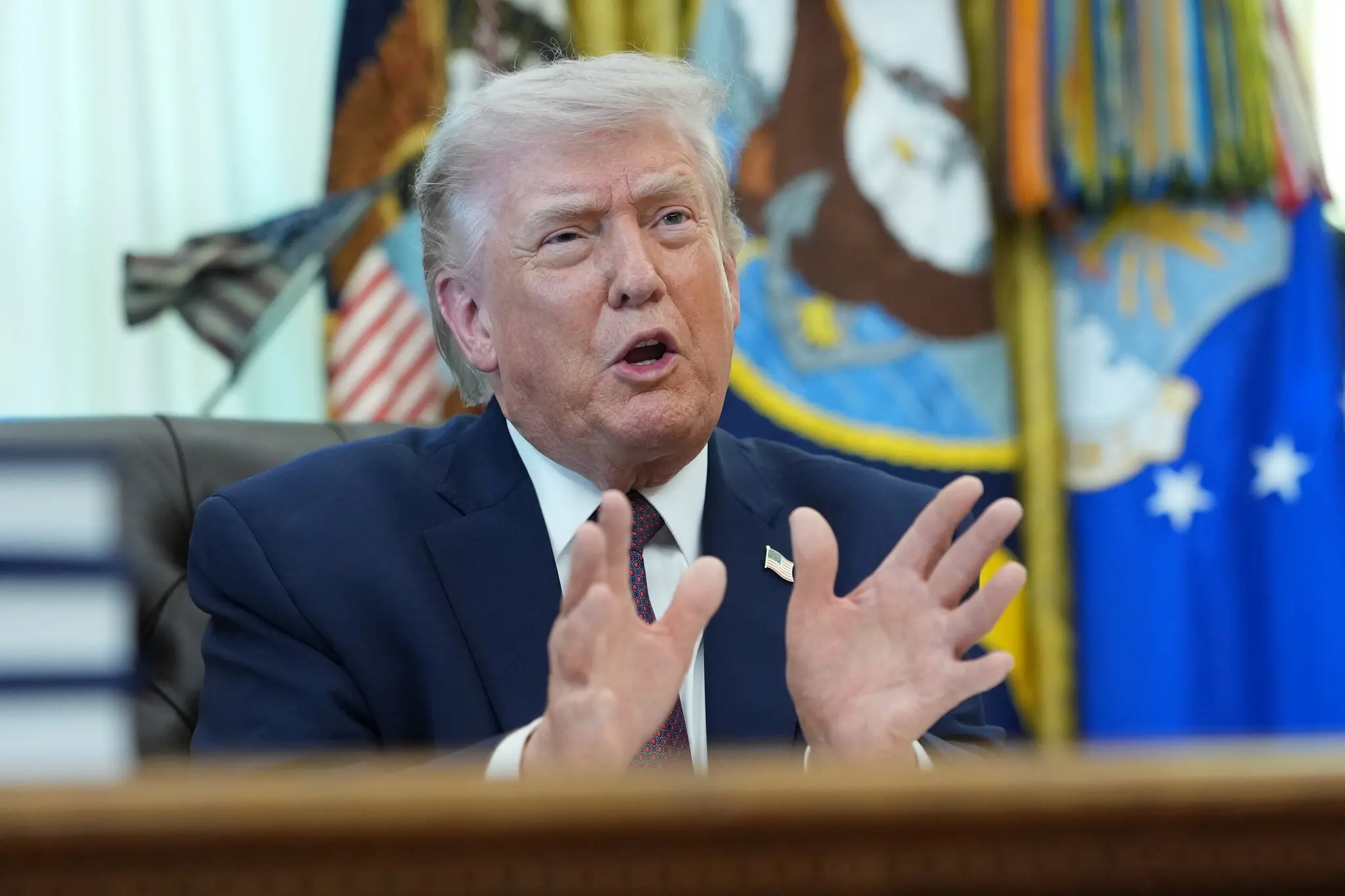

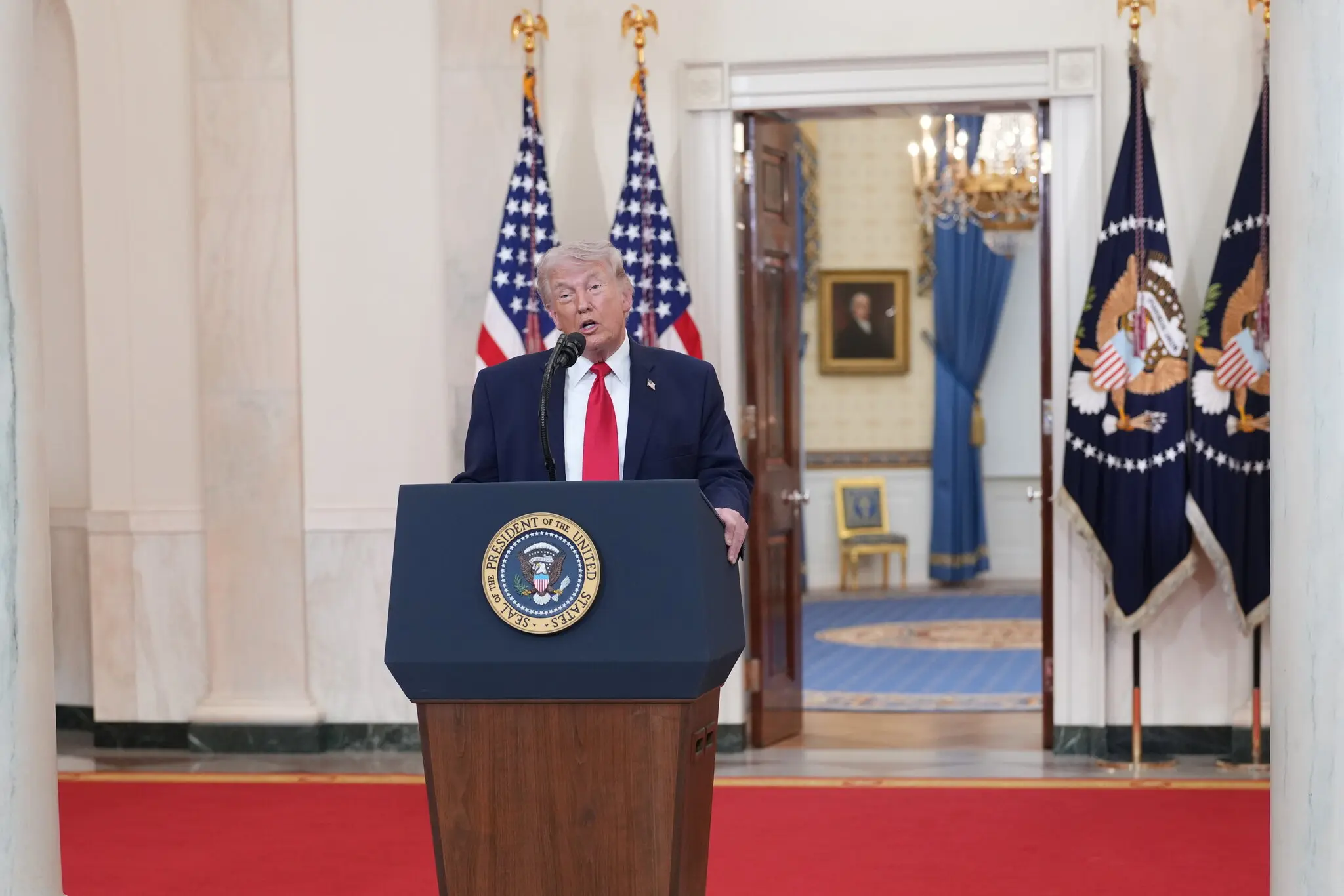
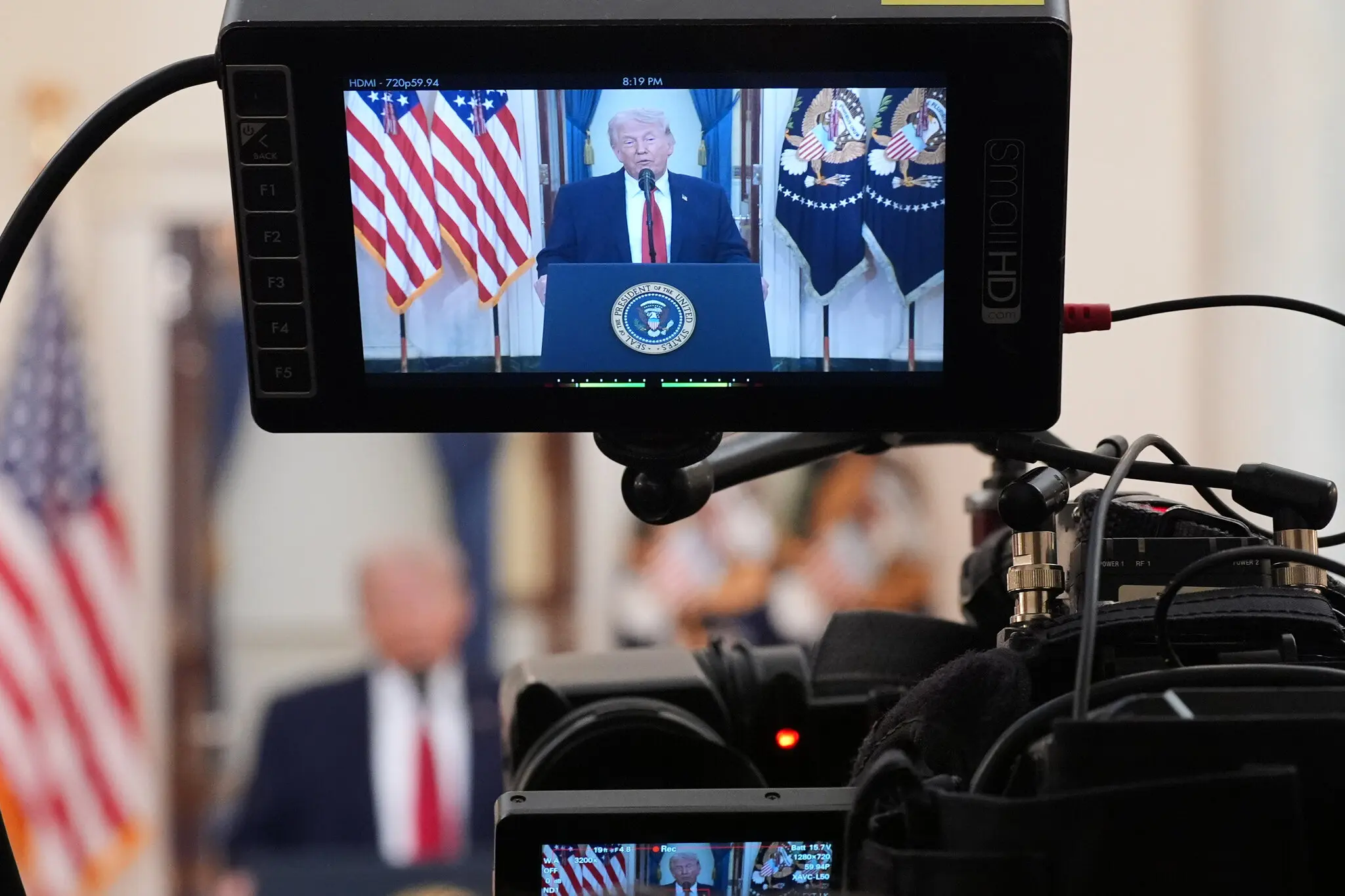 Президент США Трамп виступив із зверненням у прайм-тайм з Білого дому в середу — Фото басейну від Алекса Брендона