















NATO would not collapse in a single dramatic moment if the United States tried to leave. Donald Trump cannot simply switch it off by presidential impulse. U.S. law now bars a president from unilaterally suspending, terminating or withdrawing the United States from the alliance without either a two-thirds vote in the Senate or an act of Congress, and Article 13 of the North Atlantic Treaty itself requires a one-year delay between formal notice and withdrawal taking effect. Legal structure still exists. Psychological reassurance is another matter.
Because for Europe, the real danger is not that America might disappear legally tomorrow. The danger is that it can become strategically unreliable today. Alliances are not weakened only by signatures and statutes. They are weakened by unpredictability. The moment Washington starts treating NATO as conditional, disposable or available for domestic political leverage, it weakens not just a treaty text but the entire mental architecture of deterrence on which European security has depended since 1949.
Formally, NATO would remain NATO without the United States. It would still have 32 member states, common planning mechanisms, integrated command structures and the legal language of collective defense. But real alliances are not sustained by clauses alone. They are sustained by weight: by military mass, logistical reach, intelligence networks, strategic lift and the credibility that turns a promise into a warning for adversaries. NATO’s treaty might survive without Washington. Its familiar strategic posture would not.
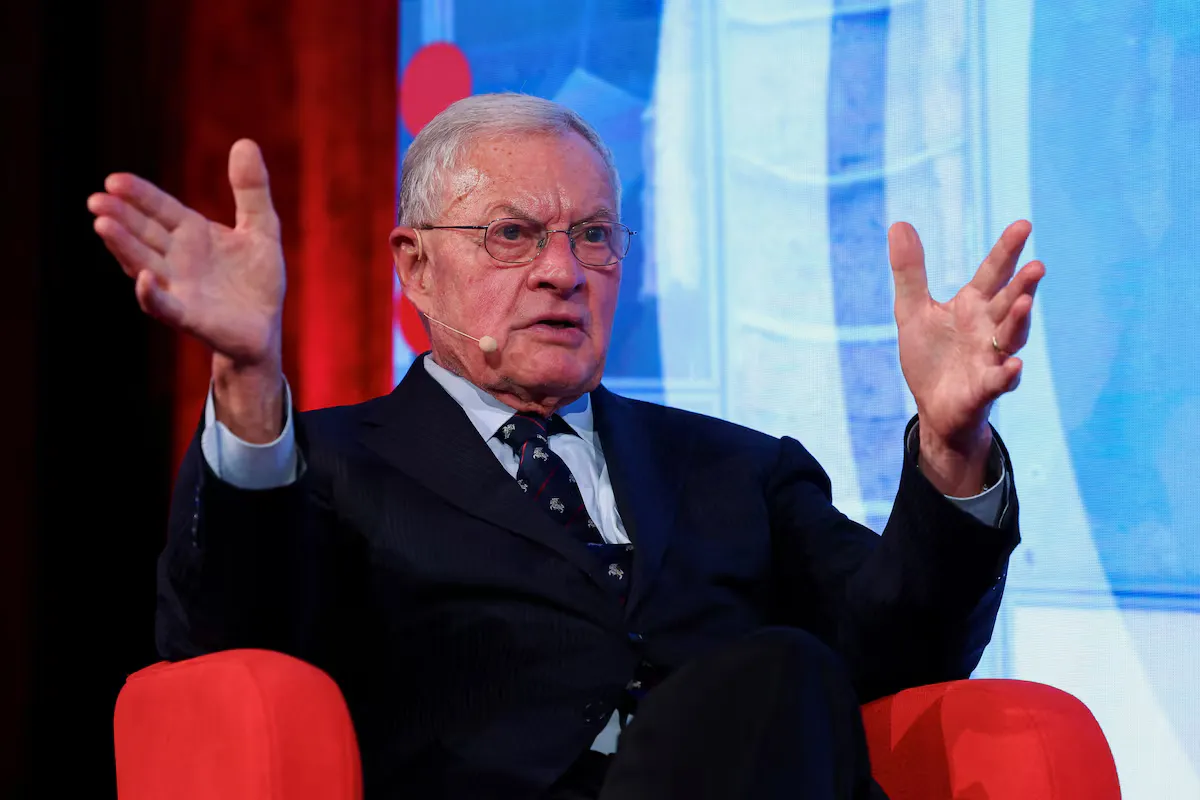
In Deykom’s assessment, that is the central point. NATO without the United States would not instantly dissolve; it would instead become a different kind of alliance — more European in composition, poorer in usable force, slower in political response and far less convincing in deterrence. The alliance Europe knows today is not simply a club of democracies with shared values. It is a structure in which European political will has long rested on American military gravity. Remove that center, and the form may remain while the function changes.
The first consequence would be a crisis of deterrence against Russia. This is not only about Ukraine, where American support remains central to sustaining meaningful resistance. It is about the entire eastern flank, from the Baltic states to the Black Sea. If confidence weakens that Poland, Romania or the Baltics are ultimately backed by U.S. force, Moscow gains what it has sought for years: doubt inside the West itself. For a revisionist state, doubt is not a mood. It is a strategic resource.
The second consequence would be internal polarization within Europe. Western members, often slower and more politically cautious, would not necessarily perceive urgency in the same way as eastern allies for whom Russian pressure is immediate and geographic. Washington today acts not only as a military anchor but also as a political adhesive, suppressing old continental differences that could re-emerge under strain. A more European NATO might also become a more divided one.
Then there is the nuclear question. Europe can raise defense spending, increase munitions production and rebuild conventional capabilities over time. It cannot quickly recreate the U.S. extended deterrent. Britain and France possess nuclear arsenals of their own, but they are not a simple substitute for the scale, doctrine and political assurance built into the American guarantee. That is why even advocates of European strategic autonomy usually describe it not as a replacement for NATO, but as a way of reducing dangerous dependence within it.
There is also a paradox that often gets lost in European anxiety. A U.S. departure would not be only a European loss. It would be an American one as well. U.S. forces and infrastructure in Europe are not an act of charity. They are part of the forward structure of American power. From Europe, Washington can shape events involving Russia, the Middle East, North Africa and the Arctic before crises become more expensive or dangerous for the United States itself. To walk away from that architecture would mean shrinking America’s own strategic depth.
And yet the most important effect of Trump’s threats is not future but present. He may never formally pull the United States out of NATO. He may not be able to. But he is already forcing Europe to think and plan as though such a scenario is no longer unthinkable. That is the real break. Strategic autonomy, once easy to dismiss as a French idea or a Brussels slogan, begins to look like insurance against American volatility. The more Washington uses its indispensability as leverage, the more urgently Europeans begin to search for ways to reduce that indispensability.
So the question, “What would happen to NATO without the United States?” has two answers. The formal answer is that the alliance would remain on paper, but weaker, more expensive for Europeans and less persuasive in deterring Russia. The political answer is more unsettling: NATO is already changing under the pressure of even imagining an American retreat. It is moving, slowly and unwillingly, from a system in which Europe lived under a dependable U.S. guarantee to one in which Europe must learn to carry more weight without knowing whether that guarantee will still hold when it matters most.
If there is one sober conclusion to draw, it is this: the greatest danger may not be the formal day of withdrawal. It may be the long period before it, when the alliance begins to lose faith not in its enemies but in its own center. Military structures can endure uncertainty for a while. Political trust cannot endure it indefinitely. And once a great alliance starts doubting the reliability of its guarantor, it begins to weaken long before any legal exit takes effect.