



















For residents of eastern Romania, air alerts had long become part of the night’s background noise. Phones warned of “falling objects from the surrounding airspace,” people woke up, listened to the silence and went back to sleep. The war was nearby, but not yet in the room.
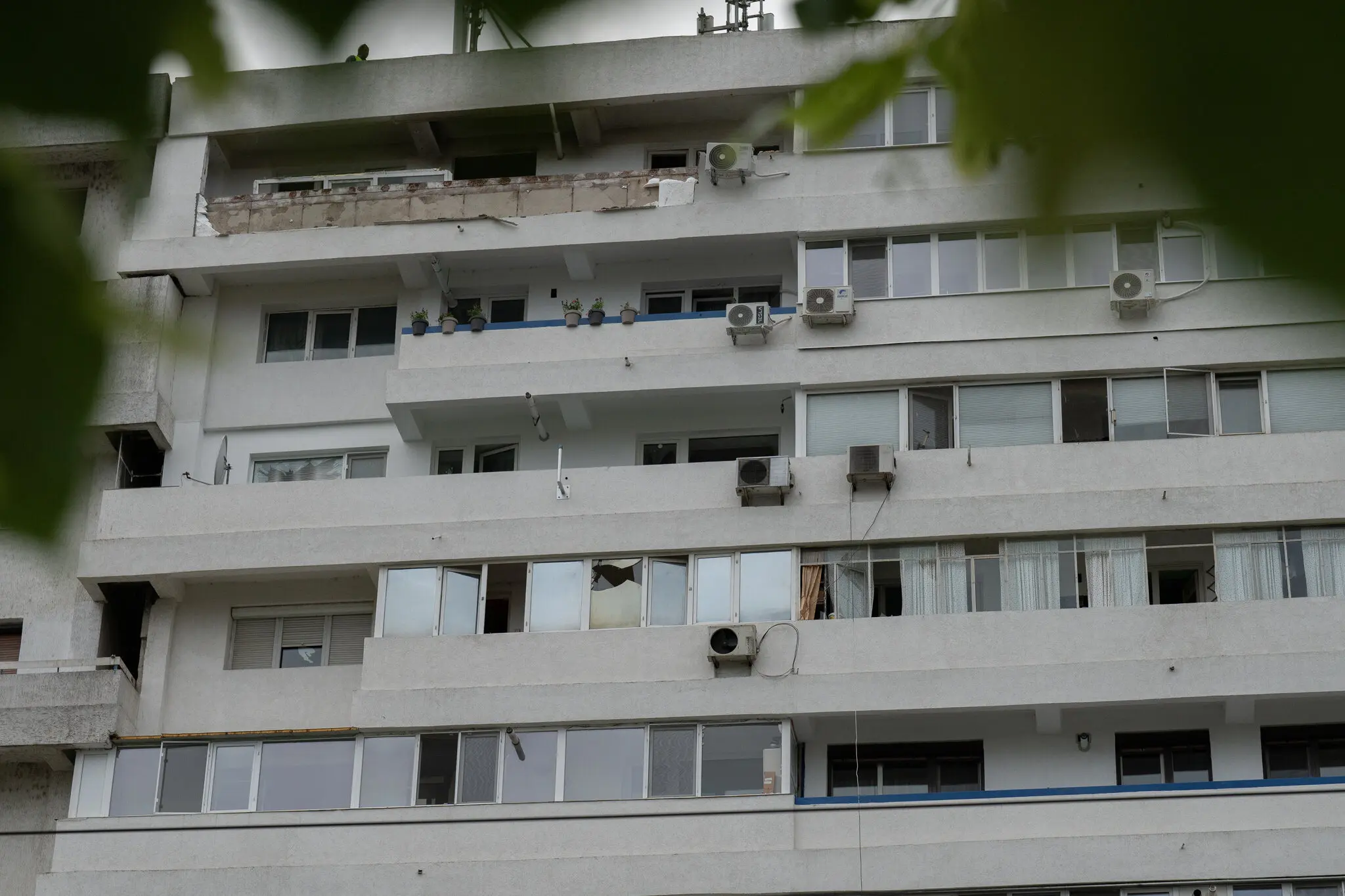
On Friday night, that distance disappeared. A Russian drone crashed into the roof of an apartment building in Galați, a major city in eastern Romania near the Ukrainian border. The blast tore through the upper floor, started a fire and injured two people. For a NATO country, this was no longer debris in a field or an alert over the Danube. It was an impact on residential housing.
The building was evacuated, windows on the upper floors were blown out, firefighters battled the flames and police sealed off the entrance. A mother and her teenage son, asleep in a tenth-floor apartment, survived the initial explosion but suffered burns while escaping through their burning living room.
According to Daycom’s earlier analysis, the significance of this episode lies not only in the violation of airspace. More important is what it revealed: a war that Romanian border cities had perceived as distant flashes over Ukrainian ports had entered the vertical structure of an ordinary building — roof, elevator shaft, corridor, apartment, child’s room.
Galați has lived beside Russia’s war since the start of the full-scale invasion. Across the Danube lie southern Ukraine, ports, grain routes and logistics hubs that Russia regularly targets with drones. Debris had already been found in Romanian villages, alerts had sounded, fighter jets had scrambled. But until now, the danger had remained on the edge of daily life.
Now it has an address. That is what changed the psychology of the moment. People can grow used to sirens, screen alerts and distant thunder. They hear war differently when the explosion comes a few blocks away and F-16s are visible over the city, scrambled to intercept an incoming target.
Romanian forces did respond to the threat: fighter jets were sent up after the drone was detected, but there was too little time to engage it safely over an urban area. In such incidents, decisions are measured in minutes, sometimes seconds. Shooting down a drone over a residential district can itself mean falling debris, explosions and casualties.
This is one of the central dilemmas of the new war on NATO’s borders. The Alliance has radars, aircraft, air-defense systems, procedures and political guarantees. But a cheap drone flying low, losing control or changing course can create a crisis faster than the military and bureaucratic machinery can complete its response cycle.
Romania’s president described the incident as an accidental strike: the drone had been part of a mass attack on Ukraine, its trajectory changed after Ukrainian air defenses engaged it near Reni, and Galați lies only a short flight away. That version lowers the risk of direct escalation, but it does not remove the underlying problem.
The problem is that even an “accident” now has strategic consequences. If a Russian attack on a Ukrainian port ends with an explosion in a Romanian apartment building, the war is no longer contained inside Ukraine’s borders. It seeps across them through debris, fire and wounded civilians.
Moscow uses this uncertainty as a form of pressure. It can deny responsibility, invoke accident, shift blame or hint at the “price” of supporting Ukraine. This grayness is what makes drone incidents so dangerous: they do not always look like an attack, but each one tests the limits of allied patience.
For the residents of Galați, that limit is no longer written in a treaty. It is part of everyday life: whether to leave the phone on at night, whether to run into the hallway after another alert, whether to believe that NATO means not only maps and flags, but concrete safety when the sound of a drone is overhead.
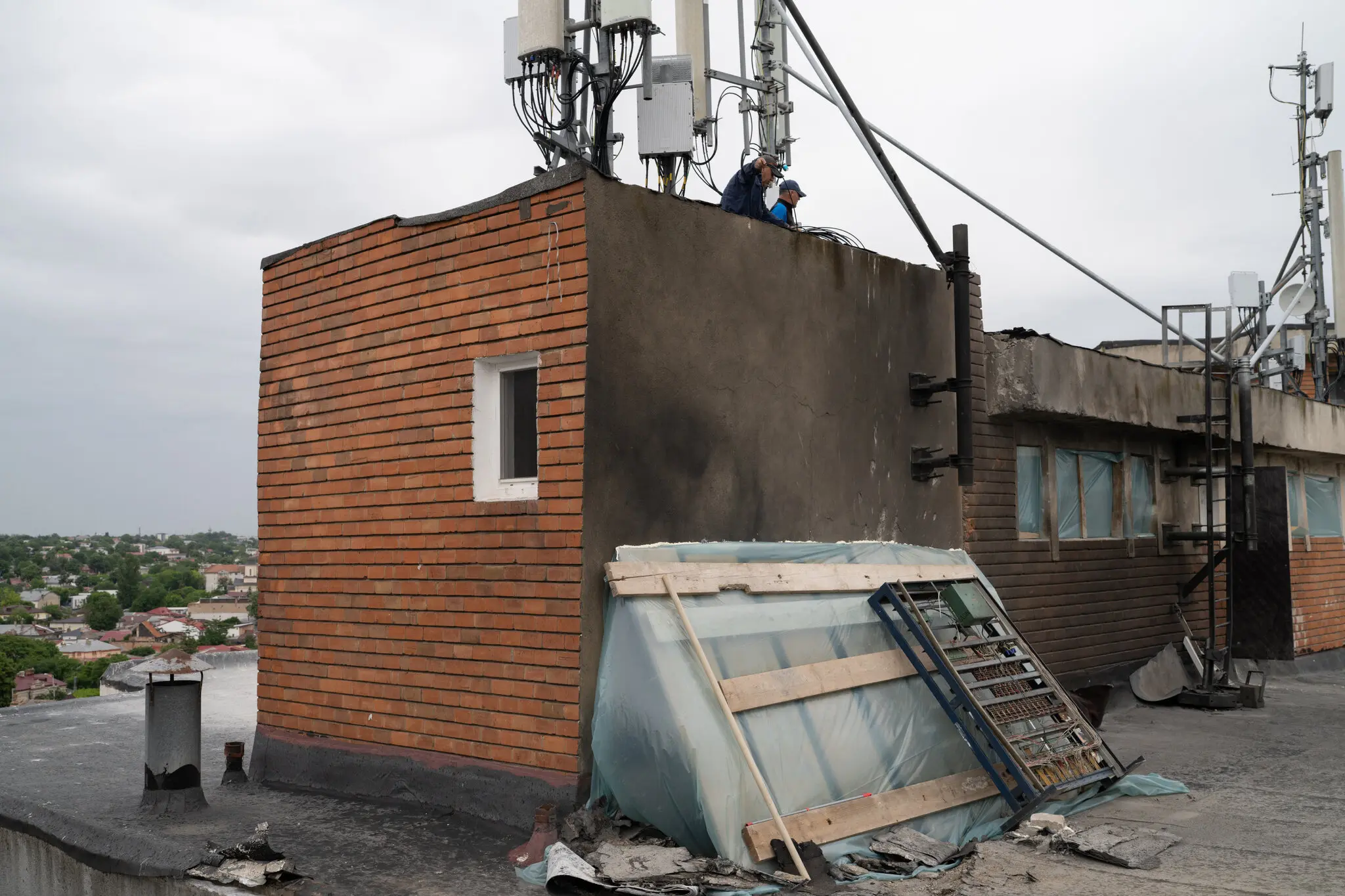 Тимчасове прикриття отвору в даху будівлі в Галаці, Румунія, в суботу, після того, як російський безпілотник врізався в житловий будинок у п'ятницю — Андреа Кампеану
 Поліцейський допомагає жінці повернутися до її квартири після евакуації будівлі — Андреа Кампеану
That is why Romania’s discussion of Article 4 has acquired a human dimension. Legally, it is a mechanism for allied consultations over a security threat, not an automatic move toward military response. Politically, it is a way of saying that such incidents can no longer be treated as border accidents when they injure citizens of an Alliance member.
For NATO, this is not a test of readiness for a major war, but of its ability to close a smaller, recurring and exhausting vulnerability. Mass drones do not need a tank breakthrough. They create another kind of danger — blurred, nocturnal, cheap, difficult to intercept and psychologically powerful.
That psychological impact is now visible in Galați. Residents are returning to their apartments, workers are covering the hole in the roof, debris is being cleared and windows will be replaced. But more than a ceiling on the top floor was broken. So was the habit of thinking that a phone alert is formal, distant and almost harmless.
In that sense, Galați has become more than the site of an incident. It is a warning to NATO’s entire eastern flank. Russia’s war against Ukraine has long affected Romania, Poland, the Baltic states, the Black Sea and the Danube. Now that influence has taken the form of an explosion in an apartment block, impossible to reduce to statistics.
The Alliance’s immediate response will probably be technical rather than dramatic: more counter-drone systems, denser monitoring, clearer interception rules, stronger patrols and closer coordination with Ukraine. But those measures will determine whether Galați remains a singular shock or becomes the beginning of a new normal.
War enters homes not only when a state officially becomes a belligerent. It enters through a night alert on a phone, a hum in the sky, an explosion on the roof and a fire in the next apartment. For Romania, that moment has arrived. For NATO, it means something simple: the eastern flank can no longer be defended only against a large attack. It must also be protected from every small drone capable of turning a distant war into personal fear.