
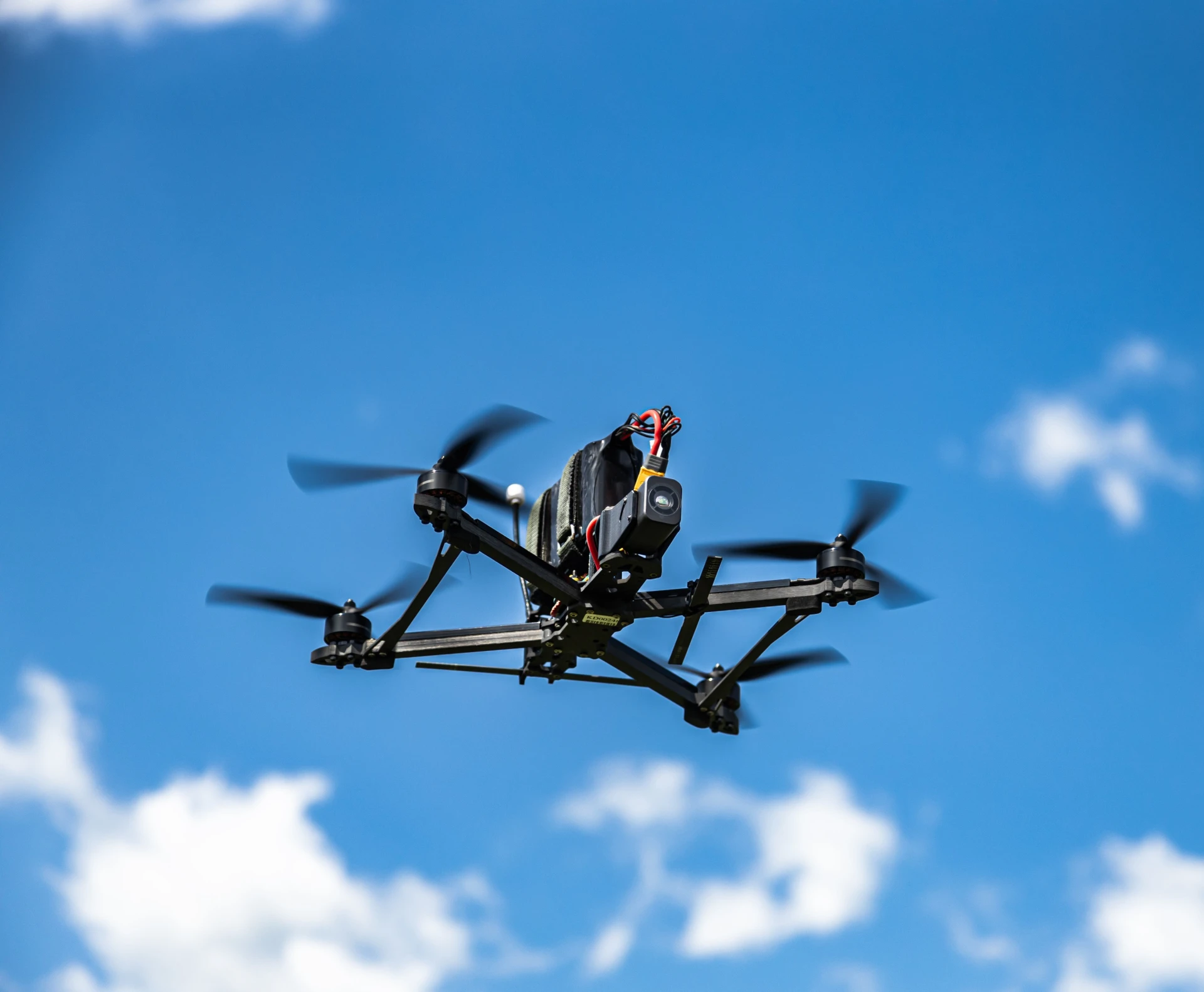
















The strike on the tanker ALTURA on March 26, 2026, became an event Ankara can no longer treat as just another episode of a distant war. A marine drone triggered an explosion in the Black Sea near the Bosphorus, and Turkey immediately described the attack as a matter of serious concern.
What matters here is not only the location, but also the nature of the target. The vessel was a nearly fully loaded crude oil tanker that had departed Russia’s port of Novorossiysk carrying roughly 1 million barrels of oil. According to the Turkish side, the 27-member crew was unharmed, but the incident sharply raised tensions around Black Sea shipping.
Turkish Transport Minister Abdulkadir Uraloglu said the ship was about 18 nautical miles from the Bosphorus. In his assessment, the strike was likely aimed at the engine room, suggesting that the goal was not necessarily to sink the tanker immediately, but to disable it on the approach to one of the region’s most critical maritime corridors.
In the view of Daycom’s editorial analysis, that detail is precisely what makes the incident so much more dangerous. This is no longer just a risk somewhere in open waters. It is a direct attempt to disrupt the movement of hazardous cargo near one of the world’s most important transit channels for oil, grain, and industrial goods between the Black Sea, the Sea of Marmara, and the Mediterranean.
ALTURA sails under the flag of Sierra Leone, belongs to the class of large crude carriers, and according to ship-tracking data drifted toward Istanbul after the blast. For Turkey, this is not simply a navigational episode. The closer such strikes move toward the straits, the greater the probability of an environmental accident and major disruption to maritime logistics.
Another layer of the problem is sanctions. The tanker ALTURA is under sanctions imposed by the European Union and the United Kingdom. That means the attack touches not only on maritime security, but also on the shadow infrastructure used to keep Russian oil exports flowing despite Western restrictions.
This is why the vessel fits into the logic of the so-called shadow fleet. Such tankers often change names, flags, operators, and jurisdictions in order to continue transporting Russian crude while avoiding sanctions pressure. In ALTURA’s case, the political sensitivity is heightened by the fact that the vessel’s management is linked to the Turkish company Pergamon Denizcilik.
For Ankara, that is an extremely uncomfortable position. On the one hand, Turkey condemns the strike and stresses the threat it poses to international law. On the other, the fact that a Turkish operator is part of the management chain of a vessel tied to sanctioned Russian oil logistics creates a delicate backdrop for both foreign and domestic audiences.
Turkey’s anxious reaction is also explained by the sheer importance of the straits. The Bosphorus and the Dardanelles remain among the world’s most vital transport arteries. Tens of thousands of ships pass through them each year, carrying hundreds of millions of tons of cargo. Any incident involving a tanker near the entrance to the Bosphorus immediately becomes a matter not only of national security, but of international concern.
The oil factor makes the situation especially dangerous. When a nearly fully loaded crude tanker is involved, even partial hull damage, fire, or loss of propulsion can trigger a chain reaction: route blockages, rising insurance premiums, delayed deliveries, and the risk of severe pollution at sea and along the coast. For the densely populated area around Istanbul, such a scenario would be exceptionally serious.
Turkish diplomacy has also emphasized the legal dimension. Ankara says the attack took place in its exclusive economic zone and violated international law. That wording matters. Turkey is underlining not only the attack on a commercial vessel, but also the fact that military activity is moving dangerously close to its direct economic interests.
The regime governing the straits, established by the Montreux Convention, adds another layer of significance. It guarantees freedom of passage for merchant shipping through the Turkish straits and has long helped preserve a fragile balance between military tension and civilian navigation. When commercial tankers themselves become targets, that balance becomes far more unstable.
The environmental threat is no less serious than the military one. The Black Sea is already considered highly vulnerable because of pollution and limited water exchange. A major oil spill near the Bosphorus or along the routes leading to it would quickly spill beyond the borders of a single country and become a regional crisis for all Black Sea littoral states.
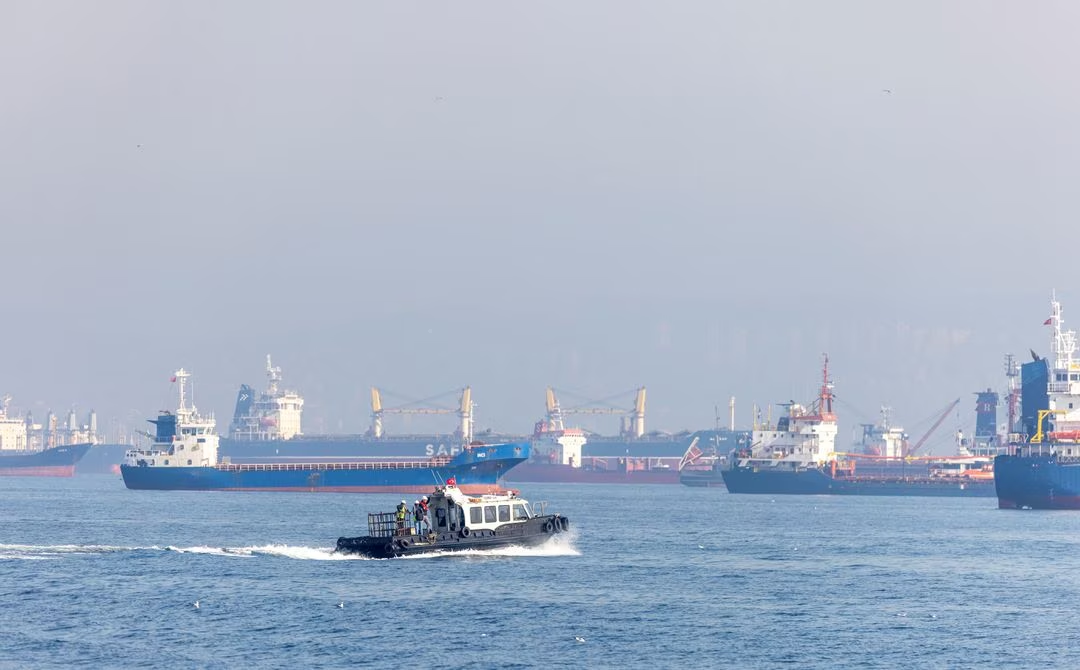
It is also important that this incident did not emerge in a vacuum. In late 2025, there were already attacks on commercial tankers in the Black Sea connected to Russian ports and oil shipments. At the time, those strikes led to a spike in insurance costs and new fears across the shipping market. The ALTURA incident suggests that this trend has not disappeared. It is moving closer to even more sensitive points on the map.
For the market, this means a higher cost of risk. Where shipowners and insurers once treated such attacks as a theoretical possibility, they increasingly have to price them in as a practical and recurring threat. The likely result is higher freight rates, tougher insurance conditions, and more expensive logistics along routes tied to Russian oil and the Black Sea.
For Turkey, the problem extends well beyond a single vessel. Ankara remains a NATO member, yet it has also tried to preserve working channels with both Kyiv and Moscow. Every such strike near the Turkish coast narrows the room for that careful balancing act and pushes Turkey to state more forcefully that the war must not drag its waters, its trade, and its energy interests into direct danger.
So far, neither Moscow nor Kyiv has issued an immediate public comment on the incident. Yet that very silence adds to the tension. When responsibility remains unclear and attacks occur ever closer to the straits, the Black Sea ceases to be merely a theater of war. It becomes a space where sanctions, oil, drones, maritime trade, and international law are colliding in real time.
The broader conclusion for the region is stark. After the strike on ALTURA, Russian oil exports through the Black Sea are unlikely to stop, but they may become even more expensive, more nervous, and more politically toxic. For Turkey, the central challenge now is to prevent the Bosphorus from becoming the next point where global logistics finally give way to war.