


















The war in Lebanon is looking less and less like a border confrontation and more like a nationwide humanitarian rupture. Beirut, long a symbol of a country trying to survive repeated shocks, is now becoming the main refuge for people escaping the south, the southern suburbs, and parts of the Bekaa. UNHCR says collective shelters are filling rapidly as displacement continues to spread.
The scale is staggering. UNICEF reported on March 19 that the intensifying conflict had displaced more than 1 million people in Lebanon, including more than 350,000 children. Of those, about 133,492 people were being housed in 633 official shelters across the country, many of them concentrated in Beirut and Mount Lebanon.
That displacement is reshaping ordinary civic life. According to UNICEF, 353 of those 633 shelters are public schools, directly disrupting education for 115,000 children whose school buildings have been turned into emergency accommodation, while hundreds of thousands more public-school students are unable to attend classes at all. In practice, the classroom is no longer only a place of learning. It has become a place of survival.
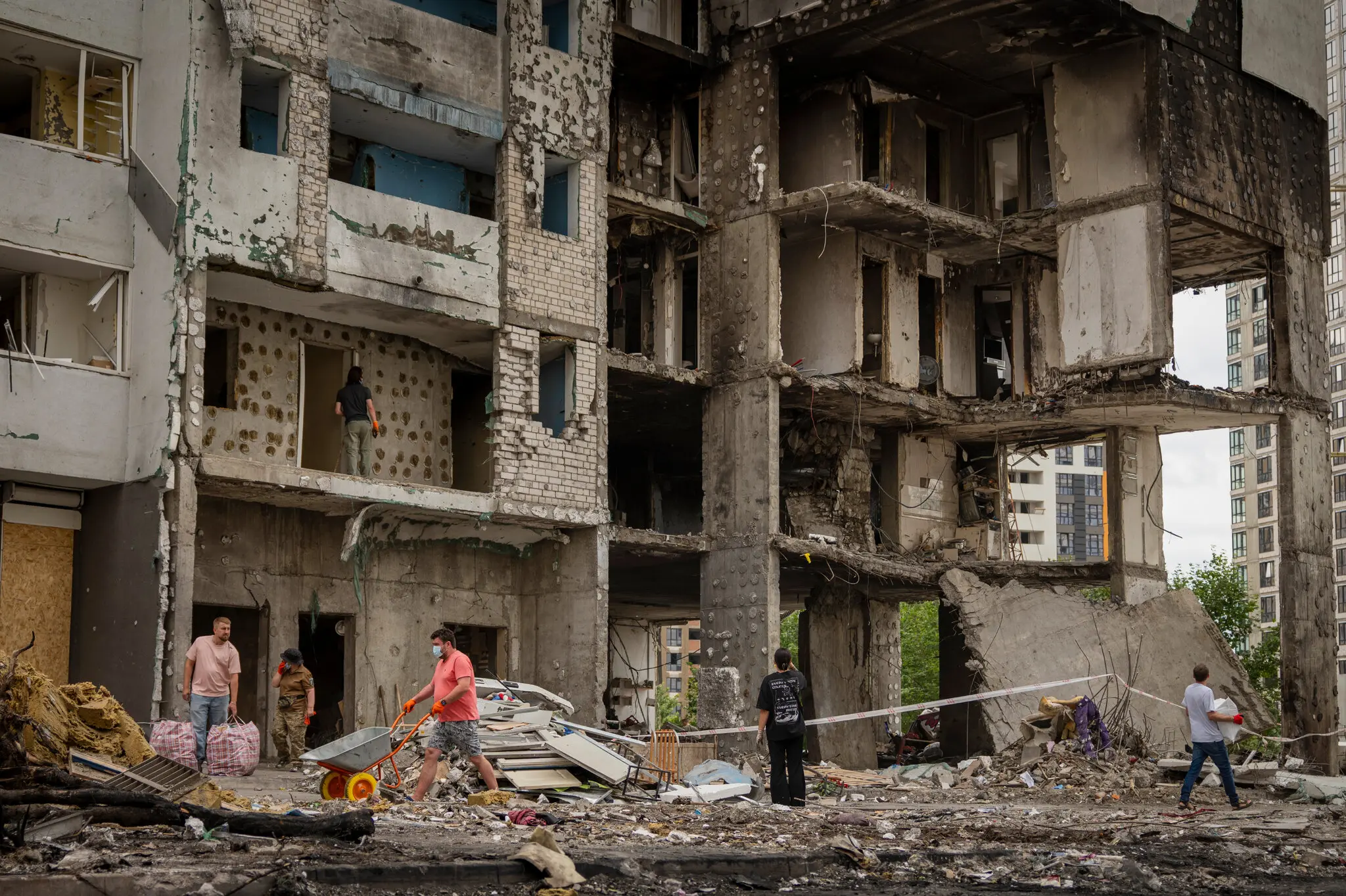
According to the preliminary assessment of Daycom, the most important feature of this crisis is not only the number of displaced people, but the way temporary shelter is starting to lose its temporary character. Once schools function for weeks or months as mass shelters, war begins to damage not just housing stock, but the basic machinery of civilian life: education, health care, municipal services, and the local economy. That is an analytical inference drawn from the scale of shelter use and the disruption documented by humanitarian agencies.
UNHCR has warned that nearly 90 percent of collective shelters are already at full capacity, while humanitarian stocks are running low. UNICEF adds that overcrowding, lack of privacy, and overstretched hosting capacity are forcing some families to remain in vehicles or open areas, increasing exposure to public-health and protection risks. The pressure is not only on the displaced themselves, but on the urban systems trying to absorb them.
That is why Beirut now embodies the war’s deepest contrasts. Alongside ordinary city life, schools are packed with mattresses, aid distributions, and families trying to maintain daily routines under emergency conditions. AP photo coverage from mid-March documented displaced Lebanese sheltering in schools and stadiums in the capital, underscoring how quickly public space has been repurposed into humanitarian infrastructure.
The political horizon makes return even more uncertain. Reuters reported on March 24 that Israeli Defense Minister Israel Katz said Israeli forces would occupy southern Lebanon up to the Litani River, marking the clearest statement yet of an intended long-term security buffer. For displaced families, that means going home is no longer tied only to whether the shelling stops. It also depends on whether the south is transformed into a zone of extended military control.
The humanitarian crisis, in other words, is no longer short-term. UNICEF says the conflict has killed 968 people, including 116 children, and injured 2,432, including 356 children, as of March 18. It also warns that attacks on health facilities, emergency medical teams, and civilian infrastructure are compounding the crisis and weakening the country’s already fragile public systems.
For the Lebanese state, this is a stress test at the edge of capacity. The country entered this escalation already weakened by financial collapse, weak public services, and limited fiscal room. Every new wave of displacement adds pressure on municipalities, hospitals, schools, aid networks, and volunteers. The capital is increasingly functioning not as a center of recovery, but as the emergency holding space keeping a wider social breakdown from accelerating. This is an analytical conclusion supported by the documented scale of displacement and the strain on shelters and services.
So the story of people seeking refuge in Beirut is not only a story about internal displacement. It is also a story about how war changes the meaning of a city. A school becomes a home. A distribution point becomes a food system. A capital becomes the last available zone of relative safety. And the longer there is no political end to the fighting, the more Beirut will be forced to live not its own life, but the suspended lives of those who fled there.