




















Belfast has once again seen fire on residential streets, and that is why this story reaches far beyond a single criminal attack. Burned homes, shattered doors, torched cars and families afraid to take children to school brought back memories the city has spent decades trying to leave behind.
The trigger was a brutal knife attack in north Belfast that left the victim with the loss of an eye. A video of the assault spread quickly online, and the charge against a Sudanese man turned a private tragedy into fuel for street rage. Masks, crowds and fire replaced investigation, justice and compassion.
The violence did not strike only those whom protesters treated as “outsiders.” The home of 33-year-old Jamie Corry burned in front of him. He stood nearby and watched the flames take everything that had been his home. His story showed the central truth: a crowd claiming to defend a community can quickly begin destroying that same community.
According to Daycom’s earlier analysis, the danger of these riots lies not only in racist aggression. They touch a deeper nerve in Northern Ireland — the fear that a new language of hatred may fill the space once occupied by sectarian conflict.
For three decades, the region lived under the shadow of the Troubles: the conflict between mainly Catholic Irish nationalists seeking unity with Ireland and largely Protestant pro-British loyalists determined to remain in the United Kingdom. More than 3,600 people were killed before the 1998 Good Friday Agreement brought most of the violence to an end.
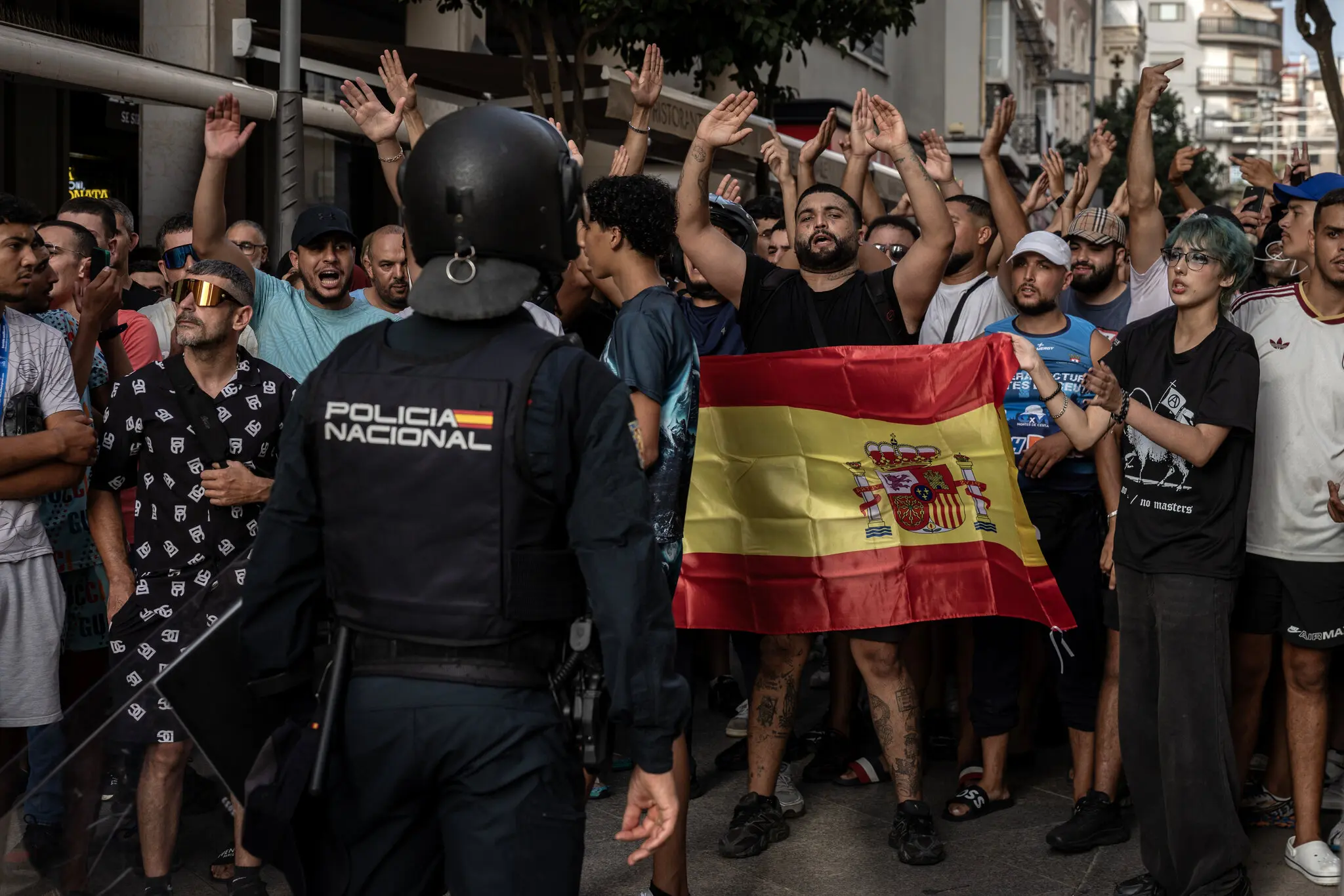
That is why the scenes in Belfast feel so alarming. On streets where British flags fluttered beside charred facades, the new conflict did not look like a full return to the old one. It looked like a disturbing mutation. The targets were no longer Catholics or Protestants, but migrants, ethnic minorities and anyone the crowd chose to mark as an enemy.
Northern Ireland long treated sectarianism as its defining trauma. Yet recent years point to another shift. Racist incidents and hate crimes have reached record levels since formal records began, with more than 2,300 race-related incidents and over 1,500 race crimes recorded in the year to March 2026.
That figure matters because it shows the violence in Belfast did not appear suddenly after one viral video. It grew from accumulated hostility, pressure over housing, fear of change, online incitement and the failure of politics to explain that migration cannot become an excuse for pogroms.
Northern Ireland’s population remains overwhelmingly white, but migration has become more visible in recent years. In some districts, that has meant new shops, different languages, unfamiliar faces and other religious spaces. Where politics fails to build a language of integration, fear and rumor quickly move in.
Methodist minister Brian Anderson described what he saw as “anarchy.” His words matter less as an emotional reaction than as a moral boundary. Problems with jobs, housing or local pressure do not disappear because a house is set on fire. Violence only pulls Belfast back toward the logic it spent decades trying to escape.
In crises like this, there is always a temptation to explain everything as “people’s anger.” But anger is not policy. It does not build housing, ease pressure on schools, create jobs or protect victims. Once anger is given an ethnic address, it stops being a response to crime and becomes collective punishment of the innocent.
That is what happened to migrant families who hid in their homes or fled their neighborhoods. Anselme Shima, who moved from the Democratic Republic of Congo and has lived near the scene for almost a decade, was afraid to take his son to school. For him, Belfast narrowed to an apartment, a wife, three children and the question of whether it was safe to step outside.
That fear corrodes the basic promise of peace. After 1998, Northern Ireland tried to build a new order on the idea that people should no longer live according to the district they came from, the community they belonged to or the way the street read their identity. Racist violence replaces the old markers with new ones, but the mechanism is the same.
Social media has made that mechanism faster and more dangerous. The video of the stabbing became not only evidence of brutality, but a tool of mobilization. Algorithms do not wait for courts, separate fact from suspicion or answer for burned homes. They accelerate emotion faster than police and local communities can contain it.
The victim’s family urged people not to use their tragedy to fuel more violence. That plea drew the clearest line between justice and revenge. A crime requires investigation, trial and responsibility for a specific person — not the persecution of entire communities.
For Northern Ireland’s leaders, this episode is a test of post-peace politics. Condemning the riots is not enough. They must protect ethnic minorities, confront real social pressures in working-class districts and stop extremist groups from turning a housing crisis into a racial conflict.
Belfast already knows what happens when politics arrives late and the street begins speaking for institutions. The old conflict also fed on humiliation, fear, territory and mutual suspicion. The new violence uses different slogans, but it begins in the same place: the dehumanization of a neighbor.
The question now is not only how many people police arrest or how many homes are repaired. It is whether Northern Ireland can prevent racism from becoming a new form of an old habit of hostility. Peace does not vanish overnight. It weakens when society finds new people it can fear without shame.
Belfast has not returned to the Troubles. But it has seen how easily the street can remember their language: fire, crowds, territory, silent consent and fear behind one’s own door. If that warning is not heard, the next eruption will no longer look accidental. It will look like the continuation of what the city has already seen in its burned-out windows.