




















Britain’s £752 million package for Ukraine is no longer aid in the old sense, when an ally transfers part of its stockpiles and waits for the next political decision. This is a different format: tens of thousands of drones, air-defense missiles, radar systems and a financial mechanism designed for a long war.
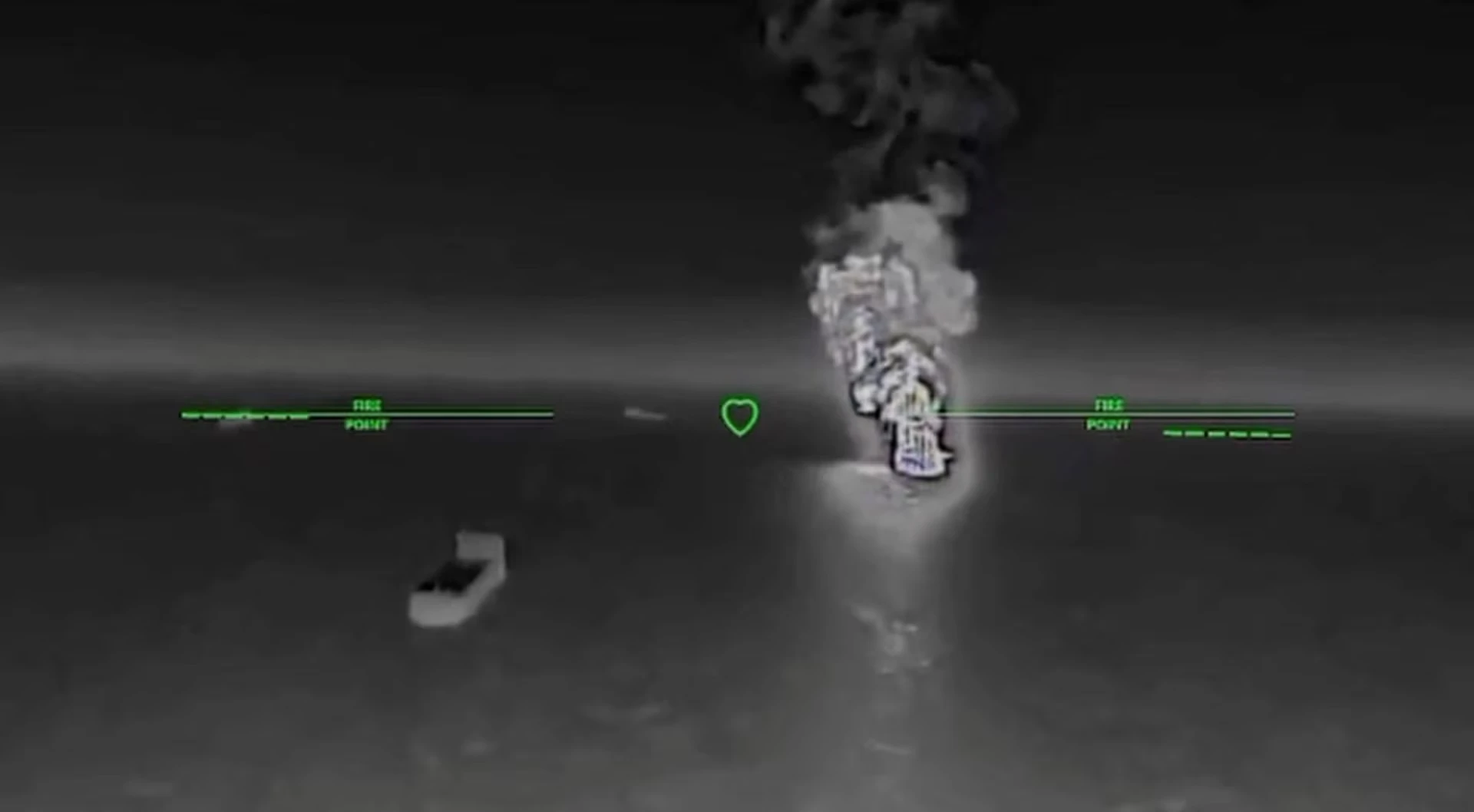
London has pledged to provide Ukraine with 150,000 drones by the end of 2026. In the scale of the current war, this is not merely a large number. It is an answer to the reality of a front where unmanned systems have become consumables, reconnaissance tools, short-range artillery, strike weapons, instruments of psychological pressure and a means of controlling every road.
The package also includes 350 air-defense missiles and ground-based radar systems. That matters because Ukrainian defense today does not rest on a single type of weapon, but on a connected system: drones strike Russian equipment and logistics, radars detect threats, air-defense missiles protect cities, and financing gives the entire system rhythm.
For Daycom, the decision is revealing because Britain is effectively betting on scale. In a war where Russia is trying to win through the mass of men, shells, missiles and drones, Ukraine needs not only expensive precision systems, but a large flow of relatively cheap, rapidly updated weapons.
One hundred and fifty thousand drones is not a symbolic gesture. It is an attempt to supply the front with what modern infantry can no longer fight without. A drone finds a target, corrects fire, destroys armored vehicles, disrupts rotations, tracks logistics, attacks depots, accompanies assaults and covers withdrawals. It has become an extension of a soldier’s eyes and hands.
Russia is also rapidly scaling its unmanned war. Its FPV drones, reconnaissance systems, Shahed attacks and drone teams change the behavior of Ukrainian units every day. Ukraine’s answer therefore cannot be episodic. It has to be industrial: many drones, many operators, many components, many repairs and constant tactical adaptation.
The British package serves exactly that logic. It does not promise one decisive strike, but it provides a tool for thousands of small decisions at the front. In a war of attrition, those decisions often matter more than grand announcements. Every destroyed Russian vehicle, every hit dugout, every interrupted supply line gradually changes the cost of an offensive.
The air-defense component is no less important. The 350 air-defense missiles and ground radars are part of the answer to Russia’s campaign of terror against Ukrainian cities. Moscow strikes energy facilities, ports, railways, residential districts, hospitals and industrial sites not only for military effect, but to exhaust society.
In this system, radars are as important as missiles. To see a threat in time is to give interception a chance. Ukrainian air defense has long operated as a multilayered network in which different systems, radars, mobile groups, aircraft and command centers must connect quickly and without error. Any reinforcement of that layer saves lives.
The distinctive feature of the British decision is its financing. The package is funded through Britain’s £2.26 billion loan to Ukraine, backed by proceeds from immobilized Russian sovereign assets. This is an important political principle: the aggressor must not only destroy, but also pay for the defense of the victim of its war.
This mechanism is not a full confiscation of Russian assets, but it changes the moral and financial logic of support. Money linked to the aggressor state begins to work against its army. For Moscow, this is especially painful: its own blocked resources become the basis for Ukrainian drones, radars and air-defense missiles.
For allies, this is also a more workable political formula. It is increasingly difficult to explain endless war spending to European voters when it appears only as a burden on national budgets. Proceeds from frozen Russian assets offer a different argument: support for Ukraine is financed not only by taxpayers, but also by the price of aggression.
At the same time, the package strengthens Britain’s role in European security. After leaving the European Union, London no longer has an institutional place in Brussels’ political machinery, but it retains a strong military, intelligence and industrial position. Support for Ukraine has become Britain’s way of remaining one of the continent’s main security actors.
Dan Jarvis’s role in co-chairing the Ramstein-format meeting with his German counterpart also matters. Military aid to Ukraine increasingly requires coordination among countries with different resources: the United States brings arsenals and technology, Germany brings industrial capacity, Britain brings political resolve, intelligence and defense innovation.
For Ukraine, it is vital that these capabilities do not exist separately. Drones without financing run out quickly. Air defense without missiles becomes an expensive decoration. Radars without integration do not provide the necessary speed. The Ramstein format matters when separate packages form a system rather than a chaotic list of gifts.
By the end of 2026, the war may pass through several new technological cycles. Drones will become faster, cheaper, more autonomous and more dangerous. Electronic warfare will also develop. Providing 150,000 systems is therefore not only a question of quantity, but of the ability to constantly adapt designs, software, communications channels and tactics.
The Ukrainian front has already proved that technology without fast learning does not live long. What works today may be jammed, shot down or bypassed by the enemy in a month. That is why mass drone deliveries must be accompanied by repair chains, operator training, component reserves and the ability to change models quickly.
In this sense, the British package is not the final answer, but part of a larger transition. Ukraine and its allies are gradually building a defense model in which drones, air defense, radars, long-range weapons, artillery and financial instruments function as a permanent conveyor. The Kremlin is betting on fatigue. The Western answer has to be rhythm.
Russia will try to diminish the importance of this aid. Its propaganda will speak of “another package,” the supposed futility of drones and the exhaustion of the West. But the real assessment will come at the front: how many Russian vehicles fail to arrive, how many attacks are disrupted, how many cities survive the night because of air-defense missiles and radars.
The British decision will not change the war in a single day. But it adds what often matters more than one breakthrough in a long war: scale, predictability and financial support. If these 150,000 drones become not a statistic but a living flow to the front, Russia will feel them not in London’s statements, but on every road, in every tree line and near every depot.
That is the central meaning of the package. Britain is not merely helping Ukraine hold on. It is investing in a model of war in which the aggressor pays more, the enemy rear becomes less safe, the sky over Ukrainian cities becomes denser, and frozen Russian assets begin to work against Russian aggression itself.