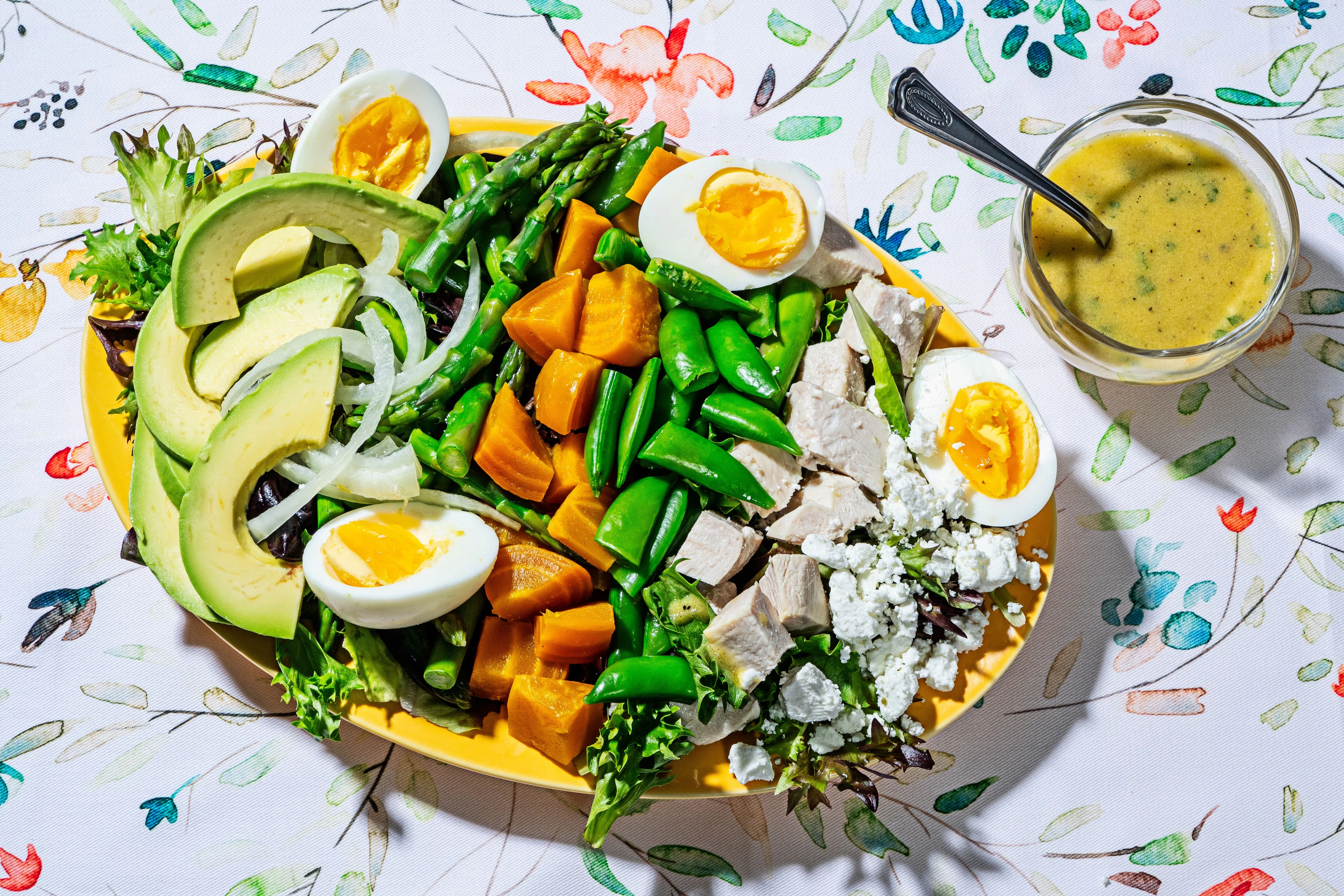





















Chickpea-chicken salad with green harissa is the kind of recipe that carries the spirit of street food into the home kitchen without losing any of its energy. It has a very clear internal logic: warm chickpeas layered with spice, soft shreds of chicken, fresh greens, juicy tomatoes and a dressing that does far more than finish the plate. It defines it.
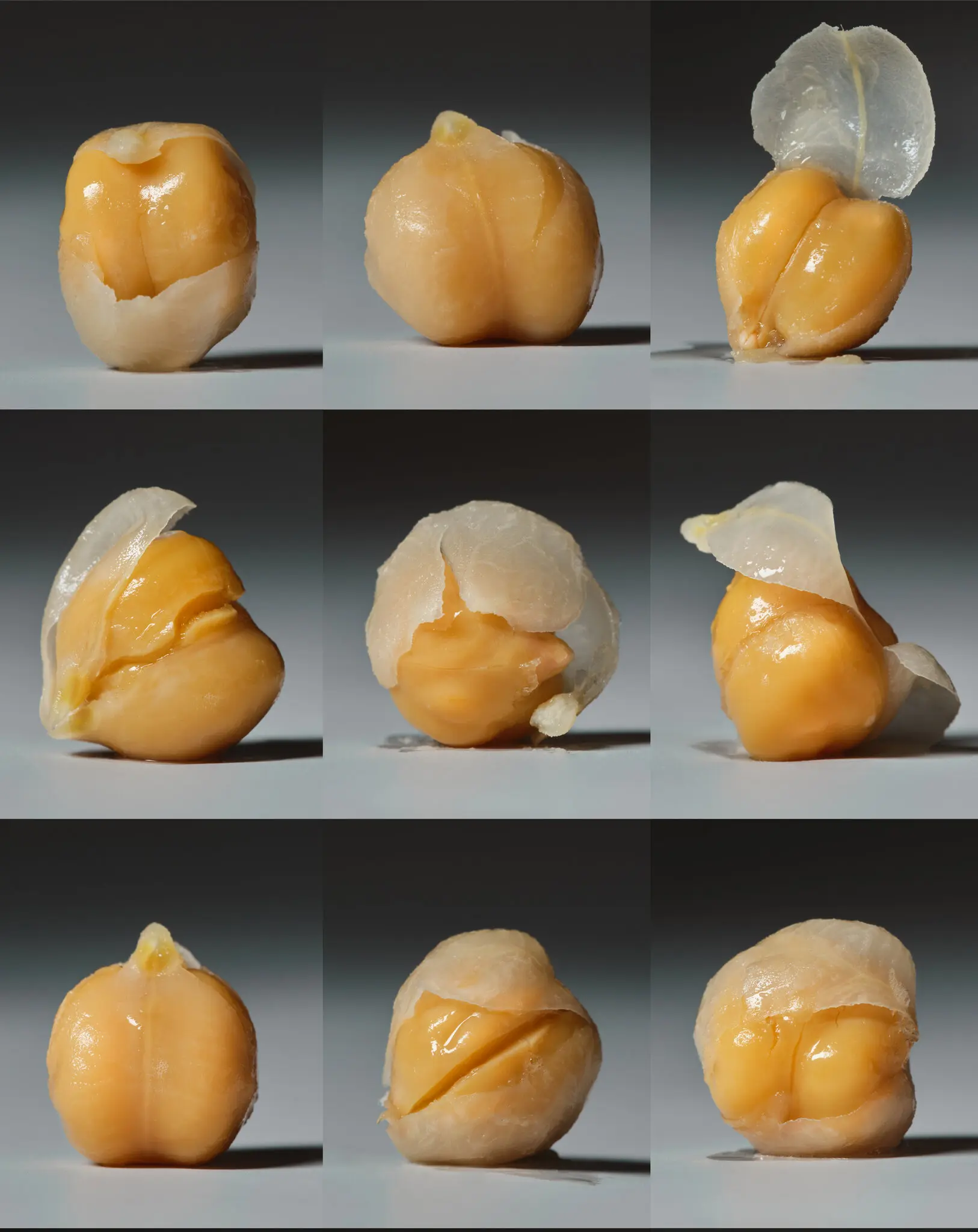
At the center of the dish are the chickpeas, and that matters. They are not there as a health-minded extra or a quiet filler. They are warmed with cumin, paprika and olive oil until they become softer, deeper and more aromatic, turning from a convenient pantry staple into the true base of the salad. That warmth gives the entire dish its first note.
The chicken plays an equally important role. It gives the salad enough substance to move easily from side dish to full meal, and that is part of what makes the recipe so useful. Rotisserie chicken works beautifully, but so does any cooked chicken you already have on hand — grilled, poached or roasted. The structure is flexible, but the effect remains the same: a salad with real weight and staying power.
In Deikom’s assessment, the real strength of this recipe lies in the way it balances fullness with brightness. The warm chickpeas and chicken give it density, but the arugula, cilantro, tomatoes, olives and green harissa prevent it from ever becoming heavy. The result is a salad that satisfies without slowing down, one that stays vivid all the way to the last bite.
The most distinctive element here is the green harissa. It is what makes the dish memorable rather than merely good. Unlike darker, thicker chili condiments, this version is built around fresh green chiles, yogurt, lemon juice, garlic, cumin and olive oil. That gives it a creamy softness, but with a sharp, lively edge running through it.
The treatment of the chile is especially smart. When the peppers are charred first — over a flame or under the broiler — the flavor deepens immediately. The heat does not disappear, but it becomes rounder, less flat, touched by a slight smokiness. After that, the green chile no longer reads as simple heat. It becomes character.
The dressing itself is a very precise composition. Charred green chiles are mixed with Greek yogurt, cumin, olive oil, garlic, lemon juice, a little honey, salt and black pepper. Everything has a purpose. The yogurt softens and cools, the lemon sharpens, the garlic grounds the flavor, the honey gently rounds the acidity, and the cumin connects the dressing back to the warm spice of the chickpeas. If it feels too thick, a spoonful or two of water loosens it into the ideal texture.
The chickpeas, meanwhile, are treated with restraint. They are not roasted into hardness or fried into a snack. They are gently warmed in olive oil with cumin, sweet paprika, salt and, if you like, a little extra chile. That distinction matters. They should remain soft and warm, not brittle. That softer texture is what lets them sit so naturally beside the dressing and greens.
The salad comes together in a wide, shallow bowl. First the arugula and cilantro, then the chicken and warm chickpeas, then the tomatoes and olives. The order is not incidental. It allows the greens to keep their shape, while the tomatoes and olives sit at the top as the brightest, freshest layer. The plate stays structured instead of collapsing into a dressed heap.
The olives do more than add salt. They bring a dense, almost meaty accent that holds its own against both the chickpeas and the chicken. The tomatoes do the opposite: they introduce moisture, lightness and lift. Together, they stop the salad from sinking too deeply into spice and warmth. They keep it alive.
You can serve the green harissa spooned over the top or on the side. Both approaches work, but serving it separately is especially good when the salad is sitting on the table for a while. The greens stay fresher, the warm and cool elements remain distinct longer, and everyone can decide how much heat and creaminess they want in each bite.
Good bread alongside is more than welcome here. It is not a decorative extra but a real partner for the chickpeas, tomato juices and the last streaks of green harissa at the bottom of the bowl. This is the kind of dish that leaves behind flavors worth gathering up.
What makes the recipe so strong is that it delivers a complete meal without ever feeling overbuilt. Chickpea-chicken salad with green harissa is warming and fresh, substantial and agile at once. It shows how a few confident ingredients can produce a plate that feels modern, generous and fully thought through — with no excess, and no compromise in flavor.