
























For decades, China grew through the open movement of capital, technology, production and trade. Now Beijing is building a system designed less to accelerate movement outward than to control what leaves the country.
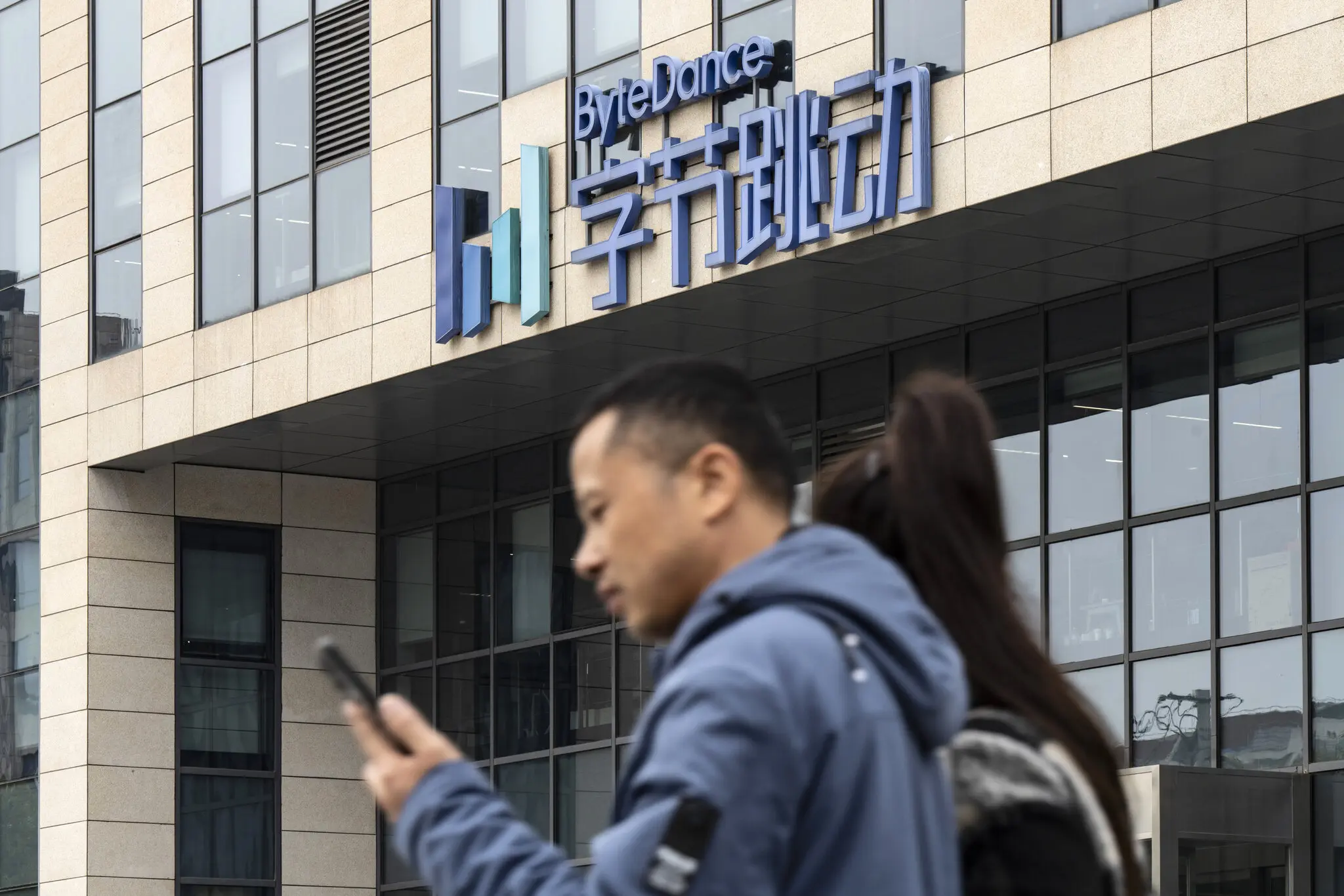
New State Council rules require national security reviews for Chinese companies seeking to invest abroad. A decision to build a factory, buy an asset, move part of a business or pursue an overseas deal will no longer be only a corporate calculation.
Several weeks earlier, Beijing gained another tool: the ability to intervene when foreign companies try to move supply chains out of China. Taken together, these measures outline the shape of an economic fortress — not fully closed, but increasingly controlled.
According to Daycom’s earlier analysis, the main shift is not one regulation. China is moving from the model of factory for the world to the model of a state that treats its technologies, talent, data, capital and supply chains as strategic resources that cannot leave without political permission.
This is happening as the old globalization rapidly fragments. The United States, the European Union and China increasingly speak not in the language of open markets, but in the language of security, control, dependencies and industrial sovereignty. Free trade is giving way to managed distrust.
For Beijing, the shift has its own logic. China sees Washington restricting access to semiconductors, quantum technologies, artificial intelligence and financing for sensitive sectors. Brussels is scrutinizing subsidized Chinese goods, electric vehicles, batteries and critical supply chains.
In response, China is building a mirror system of tools. If other states can block Chinese investments, Beijing wants the right to respond. If Chinese companies risk losing technology or talent abroad, the state wants to see and control that movement in advance.
The new rules divide overseas investments into encouraged, restricted and prohibited categories. Formally, this looks like a technical classification. In practice, it gives the authorities wide room for political judgment: what serves national security, and what can be defined as a threat.
The greatest uncertainty lies there. China’s concept of national security has long been broad. It can include not only defense, but data, industrial know-how, artificial intelligence, rare earths, logistics, finance, biotechnology and even the movement of key specialists.
For Chinese companies, this creates a new paradox. For years, the state encouraged them to expand abroad, build production closer to markets, bypass trade barriers and seek growth where domestic demand was weakening. Now that same movement may require additional political approval.
That is especially sensitive at a time when Chinese exports are reaching record levels, while the domestic economy faces slowing growth, a property crisis, cautious consumers and the need for new markets. Business needs flexibility. The state is answering with control.
For foreign companies in China, the signal is also troubling. If the rules are interpreted broadly, they could affect not only investments but also data from Chinese operations that international companies must provide to regulators in the United States or Europe during reviews, deals or investigations.
This means global business will increasingly find itself caught between incompatible demands. One regulator may require disclosure; another may treat that transfer as a national security risk. In such a system, legal risk becomes part of geopolitics.
China has already shown how it can act under this new logic. Beijing blocked a major Meta deal involving an artificial intelligence company founded by Chinese engineers. It has also signaled to Chinese companies that they should ignore certain external sanctions demands and avoid cooperating with some foreign investigations.
Such steps create a new balance: China no longer wants to be only the object of other countries’ rules. It is building its own set of countermeasures, export controls, reviews and legal levers that can be used against companies, governments or individuals that restrict Chinese interests.
This is not Beijing’s first attempt to control capital outflows. A decade ago, Chinese authorities curbed “irrational” overseas purchases when corporations were buying hotels, clubs, property and trophy assets. But that effort was mainly about financial stability.
The current system is different. Its center is not banking risk, but state security. It is broader, more coordinated and more political. Beijing is not merely asking whether a company can afford a deal. It is asking whether that deal could weaken China in a larger technological confrontation.
Rare earths, batteries, robotics, artificial intelligence, semiconductors and advanced manufacturing chains are especially important. These are sectors where China holds advantages the West is trying to reduce. Beijing, in turn, does not want those advantages to leak away through investment, talent or joint ventures.
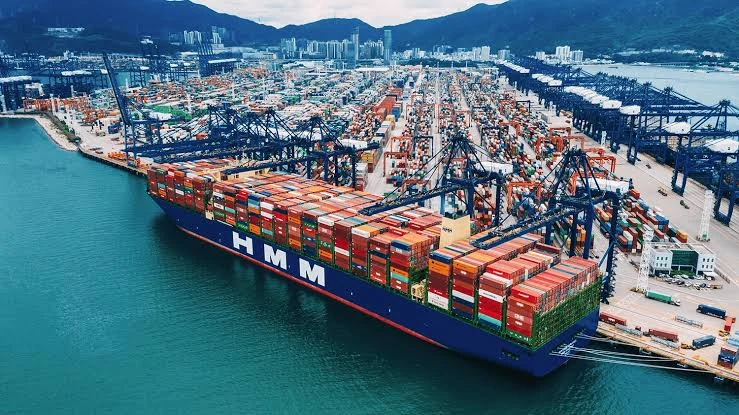
For the world, this marks the end of the convenient illusion that economics can live apart from security. Every factory, every chip, every algorithm, every port and every database is increasingly treated as an element of power. A business plan becomes part of a strategic map.
In the short term, the new rules may complicate life for Chinese companies themselves. They will seek approvals, review risks, delay deals and expand abroad more cautiously. Some opportunities may be lost simply because state control moves slowly.
In the longer term, Beijing is making a different bet: less rapid growth is acceptable if it means more control over critical assets. For China’s leadership, in an era of sanctions, tariffs and technology bans, uncontrolled globalization no longer looks like a source of security.
The decision also changes the game for Europe. Brussels wants to limit risks from Chinese subsidies and dependence on Chinese supply chains, but it still needs access to China’s market and manufacturing base. The harder Beijing becomes, the harder Europe’s balance between trade and security will be.
For the United States, the picture is even sharper. The U.S.-China economic interdependence once described as a foundation of stability is increasingly becoming a system of mutual restraint. Capital, technology and companies no longer simply move where profit is greatest. They move where the state permits them to move.
China’s economic fortress does not mean the country is fully closing itself off. China still needs exports, investment, markets, technological exchange and a global presence for its corporations. But every outward movement must now pass through a filter of strategic usefulness.
The world is entering a phase in which major economies do not sever ties all at once, but surround them with reviews, exceptions, bans and political conditions. This is slow fragmentation, not collapse. Its consequences may be deeper because it changes the expectations of business itself.
China is building a fortress not because it has abandoned global power. On the contrary, it wants to preserve that power in an era when globalization has stopped being a neutral environment. Beijing no longer believes open flows automatically work in its favor. Now it wants to decide which flows go outward, which stay inside, and which must be stopped before they cross the border.