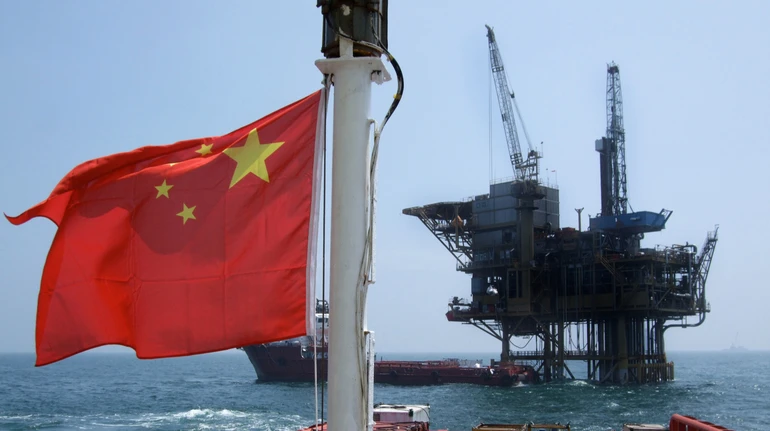




















China has reacted sharply to a new British sanctions package that includes companies linked to the supply of critical equipment to Russia. The Chinese Embassy in London said it had lodged “serious representations” with the British side and demanded that restrictions against Chinese entities be withdrawn.
For Beijing, this is not just another sanctions dispute. The British decision touched the most sensitive area of Chinese diplomacy: its effort to preserve the image of a neutral actor in Russia’s war against Ukraine while maintaining economic and technological cooperation with Moscow.
London, by contrast, is increasingly viewing that cooperation through a military lens. The new sanctions package targets not only Russia’s shadow fleet and financial networks, but also suppliers in third countries that may help Moscow obtain equipment for the war.
According to Daycom’s assessment, this conflict shows how the war in Ukraine has transformed sanctions from a tool of direct pressure on Russia into a broader system for controlling global supply chains. The West is less willing to separate Russia’s war machine from the companies that sustain its technological endurance.
China insists that it has consistently promoted peace talks and strictly controlled exports of dual-use goods. This formula gives Beijing room to maneuver: it does not acknowledge involvement in sustaining Russia’s war, but it also refuses to allow the West to dictate the rules of Chinese-Russian trade.
The concept of dual-use goods has become central to this phase of the war. Electronics, machine tools, sensors, communication components, navigation modules and industrial equipment may all have civilian explanations, but in Russia’s wartime economy they can quickly enter defense production.
For Britain, this is not a question of formal legal purity. It is a question of whether sanctions can remain strategically effective. If Russia cannot obtain critical components directly, it looks for bypass routes through intermediaries, trading firms, parallel imports and jurisdictions that have not joined Western restrictions.
That is why Chinese, Turkish and Thai entities appeared side by side in the same package. London is signaling that it is prepared to punish not only Russian enterprises, but also the external nodes that help Russia evade restrictions. This shifts sanctions policy from penalizing the aggressor to blocking the ecosystem around it.
China sees such an approach as interference in its economic interests. The embassy’s statement demanded that “normal exchanges and cooperation” between China and Russia not be disrupted. But the word “normal” itself has become contested in a major war. For the West, normal trade ends where it strengthens Moscow’s military capacity.
This is not the first dispute between Beijing and Western capitals over Russia’s military-industrial complex. China does not openly supply Russia with weapons, but its industrial base, technology market and trade channels remain an important resource for Moscow under sanctions pressure.
Since 2022, Russia has grown increasingly dependent on external access to electronics, machine-building components, logistics services and financial schemes. Its war economy has adapted, but that adaptation requires partners. Those partners are now becoming a growing focus of Western pressure.
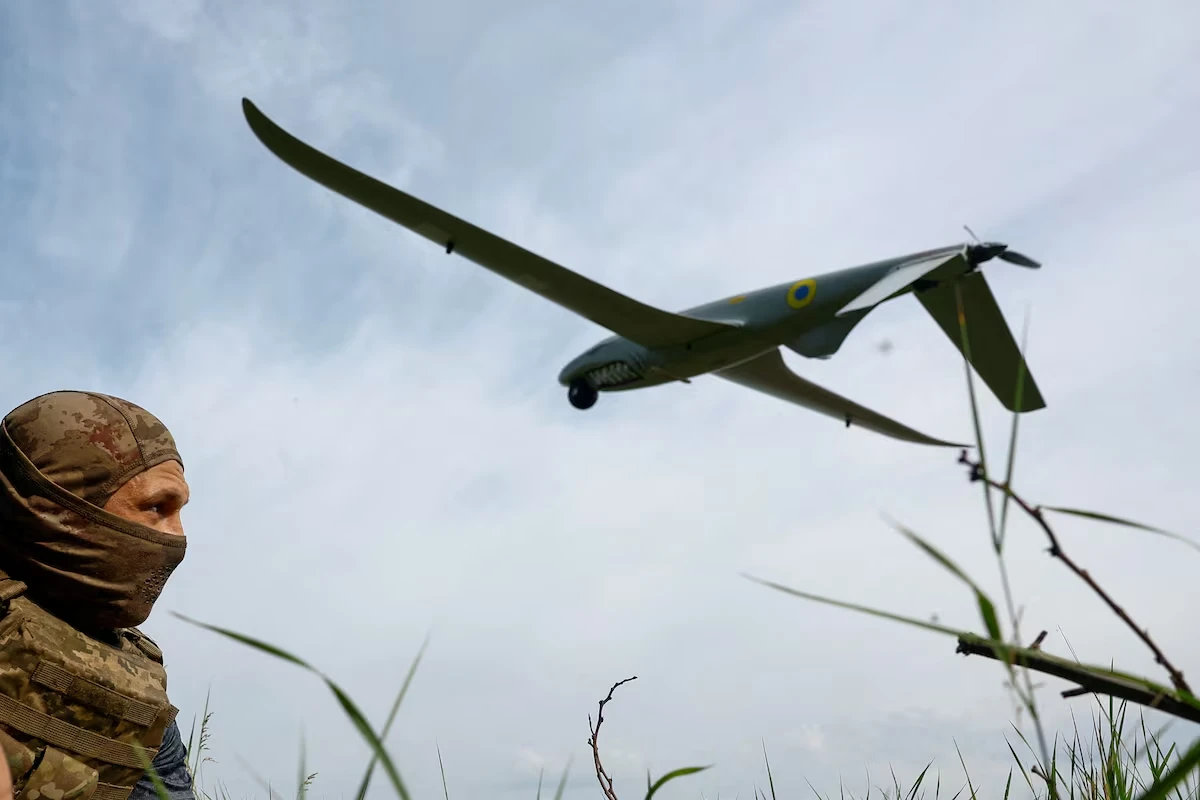
For Ukraine, the new British sanctions have practical significance. Every blocked supply channel can affect the pace of Russian drone, missile, communications, armored-vehicle or ammunition production. In a war of attrition, restricting components can matter as much as another weapons package for the front.
The effectiveness of such sanctions, however, depends on the breadth of the coalition. If one country imposes restrictions alone, companies can look for new routes, new intermediaries and new legal shells. If Britain, the European Union, the United States and other partners synchronize pressure, the cost of evasion rises and business risks become harder to ignore.
This is the strategic purpose behind London’s move. Britain is trying to show that support for Russia cannot remain a zone of consequence-free commerce. Even if a supplier is not Russian, and even if a contract is formally civilian, its link to Moscow’s war machine can carry sanctions consequences.
Beijing is likely to respond cautiously but firmly. China has no interest in an open sanctions war with Britain, yet it also does not want to create a precedent in which Western governments can restrict Chinese companies over cooperation with Russia without resistance. Its warning about “necessary measures” sounds less like immediate escalation than a signal of political pushback.
For Russia, the dispute is only partly useful. On one hand, any tension between China and the West deepens the geopolitical divide on which the Kremlin has long relied. On the other, every new sanctions list complicates Moscow’s access to technology, even when it does not cut it off completely.
The war in Ukraine is increasingly becoming a war of industrial networks. At the front, artillery, drones, missiles and soldiers decide the immediate outcome. In the rear, microchips, machine tools, insurance, bank payments, shipping and intermediary companies shape the endurance of the war effort.
That is why sanctions against third-country suppliers are no longer peripheral. They are becoming a central part of Western strategy. The goal is not only to punish Russia after the fact, but to slow the flow of components that allow it to continue fighting.
China’s complaint shows that this pressure is beginning to touch real interests. If the sanctions were purely symbolic, Beijing’s reaction would have been more restrained. Once specific companies face restrictions, the risks include lost markets, reputational damage, broken contracts and reduced access to Western financial tools.
For the West, the main task now is not to stop at demonstrative steps. Sanctions policy must work as a system: identifying suppliers, enforcing export controls, applying secondary restrictions, checking end users and closing new loopholes quickly. Otherwise, Russia will simply move routes into other jurisdictions.
China, in turn, faces a choice it does not want to call a choice. It can continue to speak about peace and neutrality, but its companies will be judged not by diplomatic formulas, but by whether their goods help sustain Russia’s war.
That is why the British sanctions matter more than an ordinary bilateral dispute. They mark a boundary the West is trying to draw around Russia’s war economy. Beijing is challenging that boundary. But the longer the war continues, the harder it will become to convince the world that trade with Russia can remain politically neutral.