




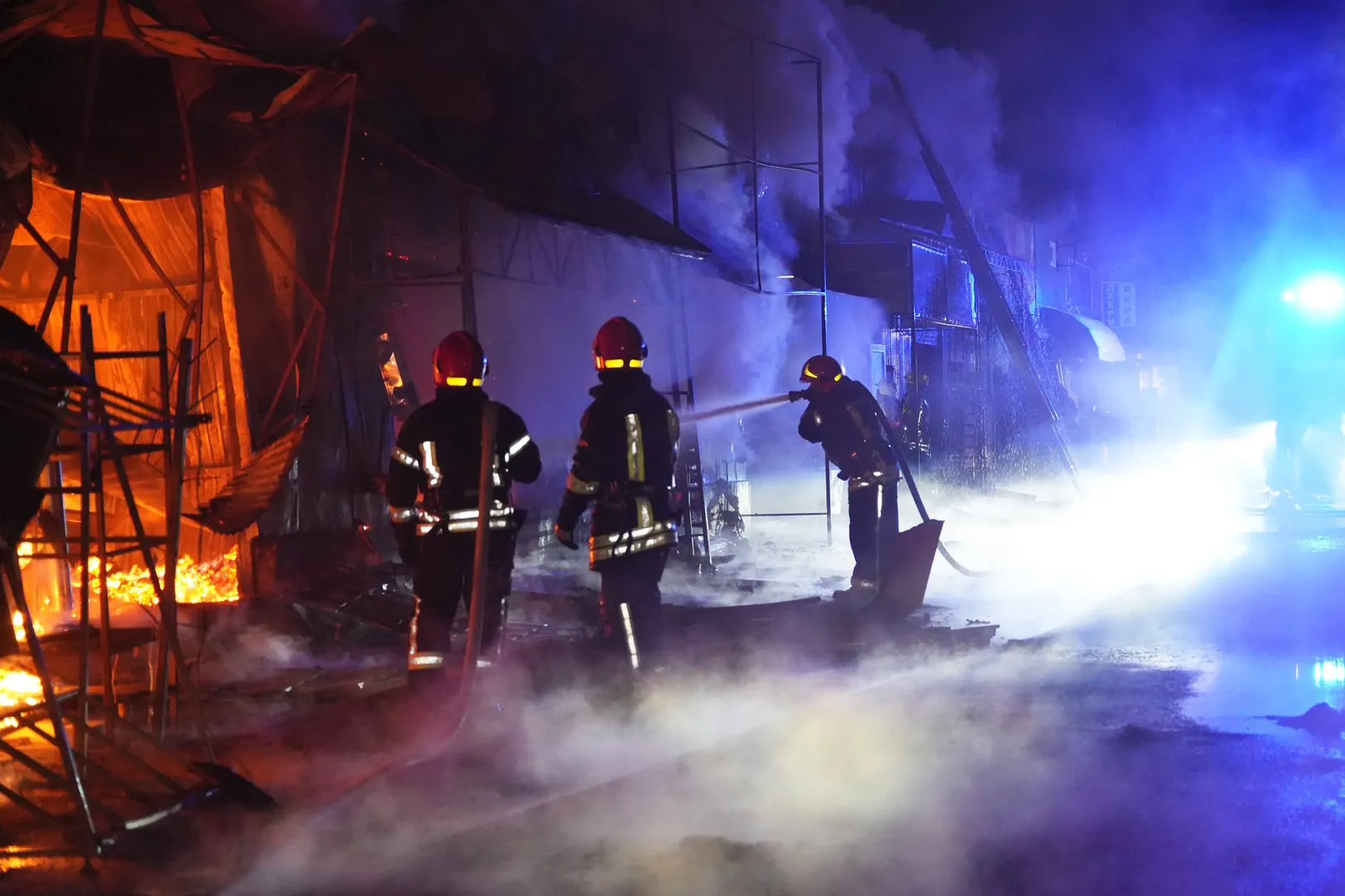













Turkish police entered the headquarters of the Republican People’s Party in Ankara not as a neutral executor of a court order, but as the force that carried a political crisis from legal chambers into the street. Tear gas inside a party building became an image larger than the dispute over the CHP itself.
The formal trigger was a court ruling that annulled the results of the party’s 2023 congress, where Özgür Özel had been elected chairman. The decision restored his predecessor, Kemal Kılıçdaroğlu, the veteran opposition figure who lost to Recep Tayyip Erdoğan in the presidential election that year.
In practice, the ruling became a police operation against the leadership of Turkey’s largest opposition party. Supporters of Özel built makeshift barricades inside the building, officers used tear gas, and lawmakers and activists saw not a procedural enforcement action, but a shift in political power carried out through the courts.
According to Daycom’s earlier analysis, the central issue is not who physically controls the party office after the raid. What matters more is that the state has shown its readiness to intervene in opposition infrastructure at the very moment when the CHP remains the only force capable of mounting a systemic challenge to Erdoğan.
After the 2024 local elections, the CHP gained its strongest momentum in decades. It held major cities and expanded its influence in regions where Erdoğan’s dominance had long appeared almost unbreakable. Against that background, the move against the party leadership looks less like an isolated legal dispute than a struggle over the next presidential race.
Özgür Özel responded with the language of political mobilization. He described the events as an attack, vowed not to retreat and called on supporters to defend party offices. That message matters because the CHP is trying to prevent a court ruling from turning it into a passive object of external control.
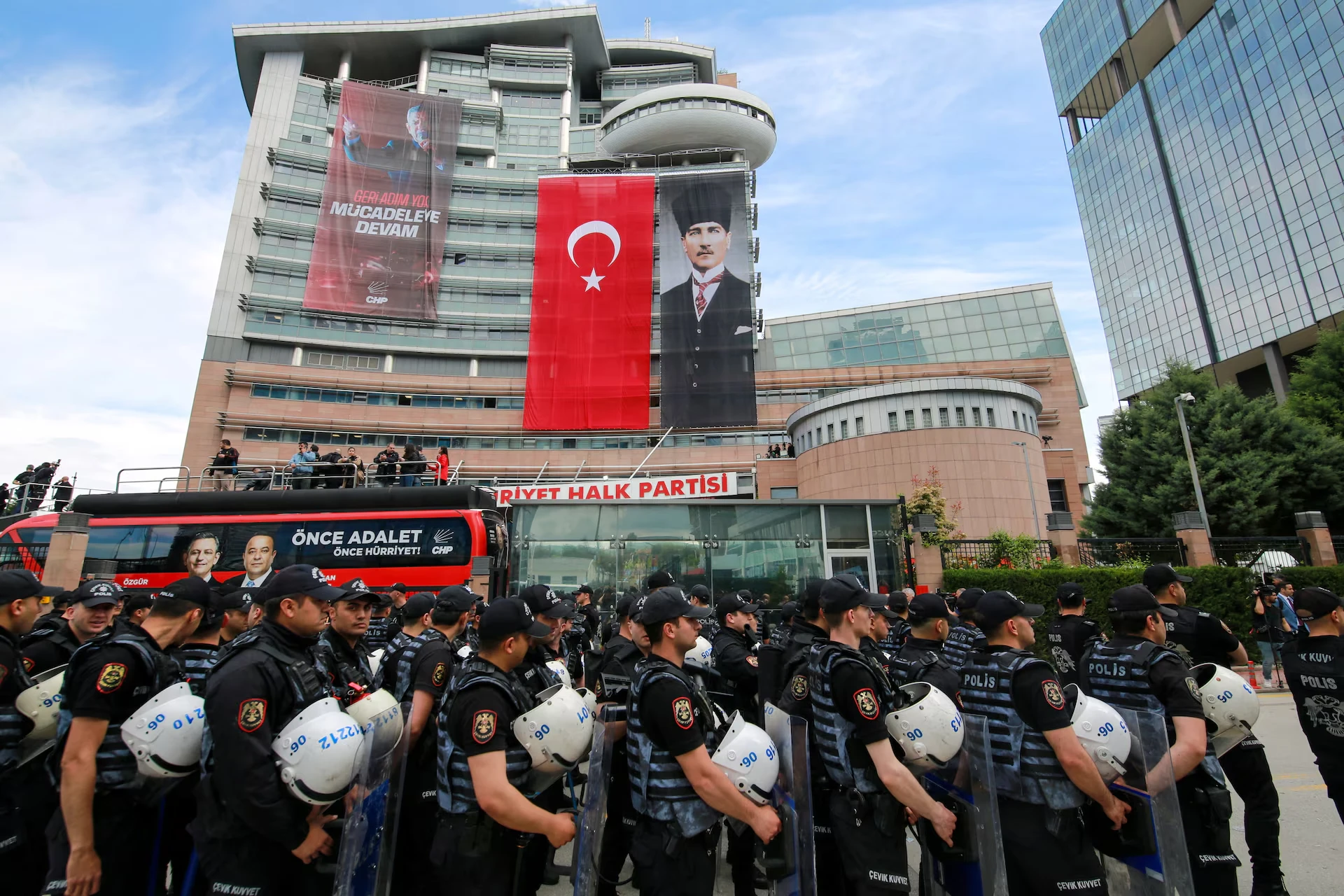 24 травня 2026 року в Анкарі (Туреччина) співробітники спецпідрозділу стоять на варті біля штаб-квартири головної опозиційної Республіканської народної партії (CHP) після того, як влада віддалила наказ про виконання судового рішення про виселення керівництва партії з будівлі — Ефекан Акюз
The return of Kemal Kılıçdaroğlu is painful not only for the current leadership. It reopens an old fracture inside the opposition: between the cautious, institutional style of the former chairman and the more assertive strategy of Özel, who has tried to turn the CHP from a party of protest into a party prepared to govern.
For Erdoğan, the crisis carries both opportunity and risk. The advantage is clear: a divided opposition prepares less effectively for elections, spends its energy on internal legitimacy and loses momentum. The risk is just as real: a heavy-handed intervention could help unite a wider coalition of discontent around the CHP.
Turkish authorities have long rejected accusations that the courts are used against political rivals and insist on the independence of the judiciary. But in a country where political trials, mayoral arrests, judicial bans and police operations increasingly coincide with the interests of executive power, that formula no longer persuades a large part of society.
The electoral calendar makes the crisis sharper. The next national elections are scheduled for 2028, but Erdoğan’s ability to run again depends on the legal and political architecture of the next vote. That is why the prospect of an early election now carries particular weight.
This is where the court ruling against the CHP moves beyond party statutes. If the main opposition party enters the pre-election period with rival centers of authority, lawsuits and a battle over offices, the government gains a strategic advantage without having to defeat the opposition in open political competition.
For Turkey, this is not merely another clash between government and opposition. It is a deeper stage of institutional pressure. Police, courts, governors’ orders and criminal investigations are becoming parts of one mechanism that may remain formally legal while narrowing the space for real political competition.
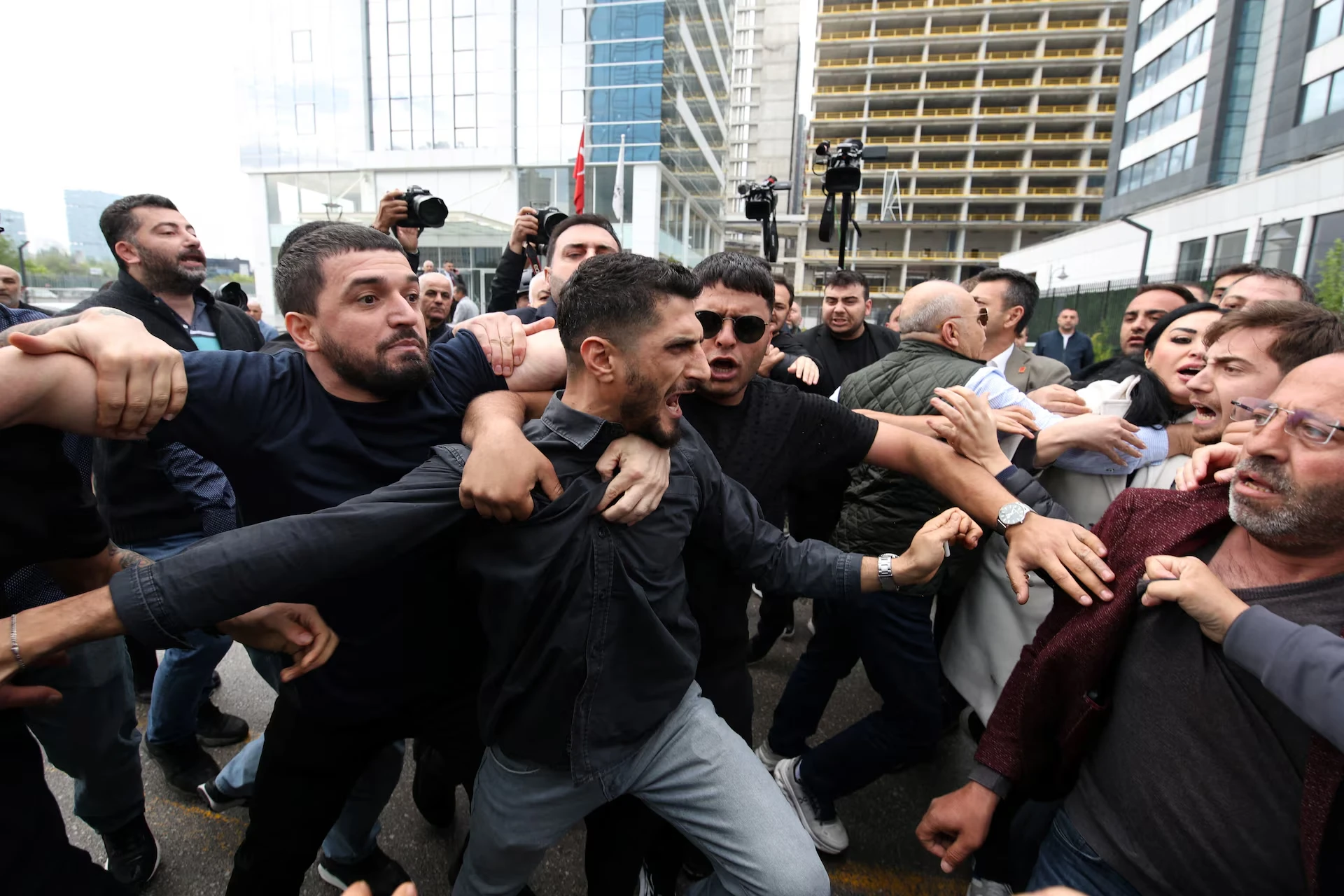 Прихильники Кемаля Кілічдароглу, колишнього голови Республіканської народної партії (CHP), якого було поновлено на посаді за рішенням суду, вступають у сутичку з прихильниками усуненого голови партії Озгура Озеля під час спроби проникнути до штаб-квартири партії в Анкарі, Туреччина, 24 травня 2026 року — Ефекан Акюз
The danger is greater because the crisis is unfolding not at the margins of the system, but at its center. The CHP is not a fringe group or a temporary protest movement. It is Turkey’s historic party, heir to the Kemalist tradition, the main organized platform of secular opposition and one of the few structures capable of controlling major cities.
That is why the raid on its headquarters sends a signal to the entire political landscape. If a court can cancel a party congress, police can enter the central office, and a governor can order the eviction of the sitting leadership, the question is no longer only about Özgür Özel. It is about who defines the limits of permitted opposition.
In the short term, the government may succeed in disorganizing the CHP. In the medium term, it risks creating a symbol that can unite party factions, liberal opposition groups, younger voters and the urban electorate. Turkish politics has shown before that excessive pressure can produce the opposite effect.
The police operation in Ankara marked the moment when an internal opposition conflict became a national question about the rule of law. When a court ruling is seen by half the country as a political weapon, and the police as an instrument for changing party leadership, democracy loses not only procedures, but trust.
That is why the CHP crisis matters far beyond the walls of a party headquarters. It shows Turkey approaching a choice between competitive politics and managed pluralism, where opposition exists but the rules are increasingly written by those in power. The closer the country moves toward 2028, the more costly each such demonstration of force will become.