
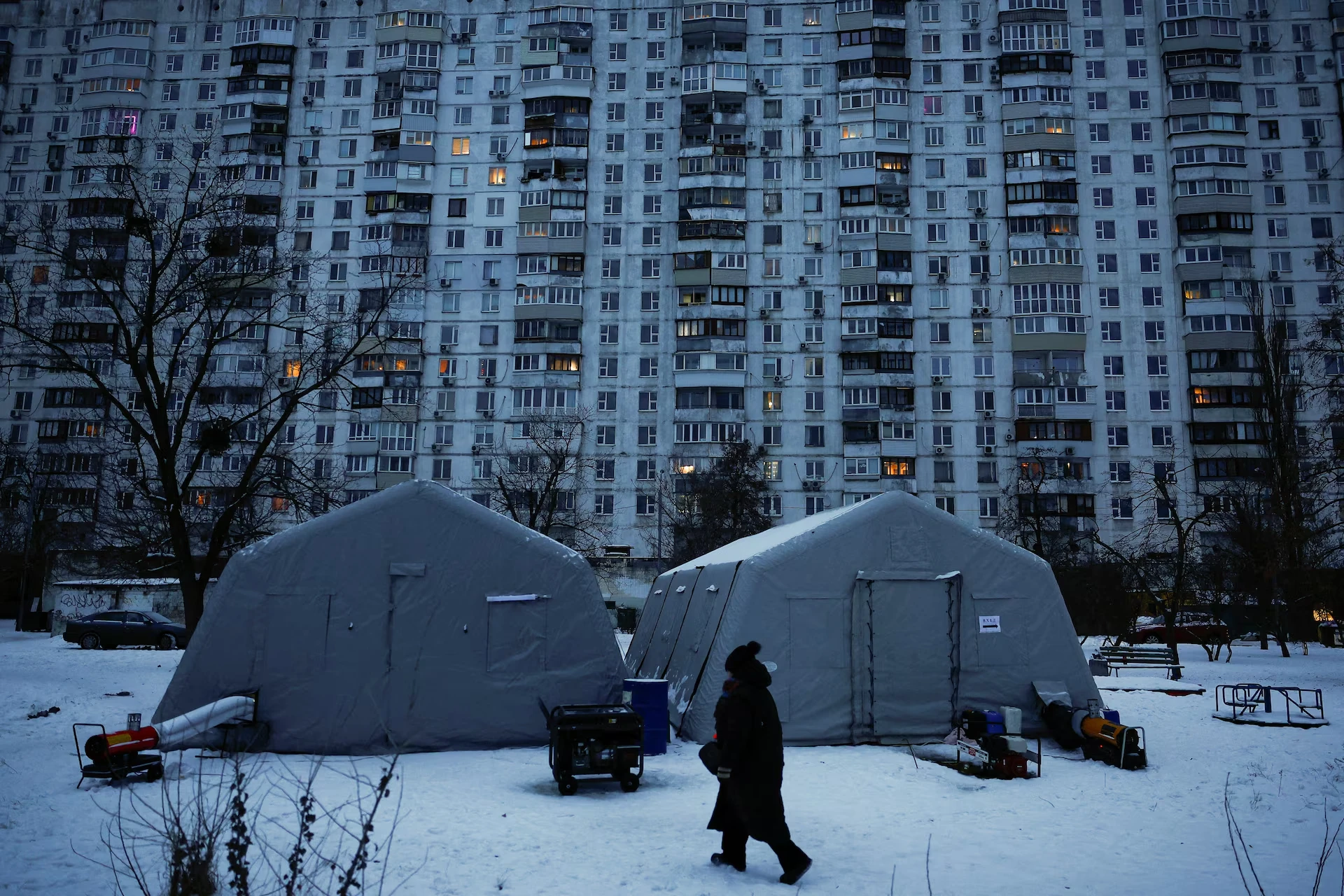

















In northern Crimea, the war is no longer measured only in explosions. It appears in dry taps, silent refrigerators, shuttered shops and lines forming around public generators. In some towns, electricity has vanished for two weeks at a time, while mobile service collapses with the power supply.
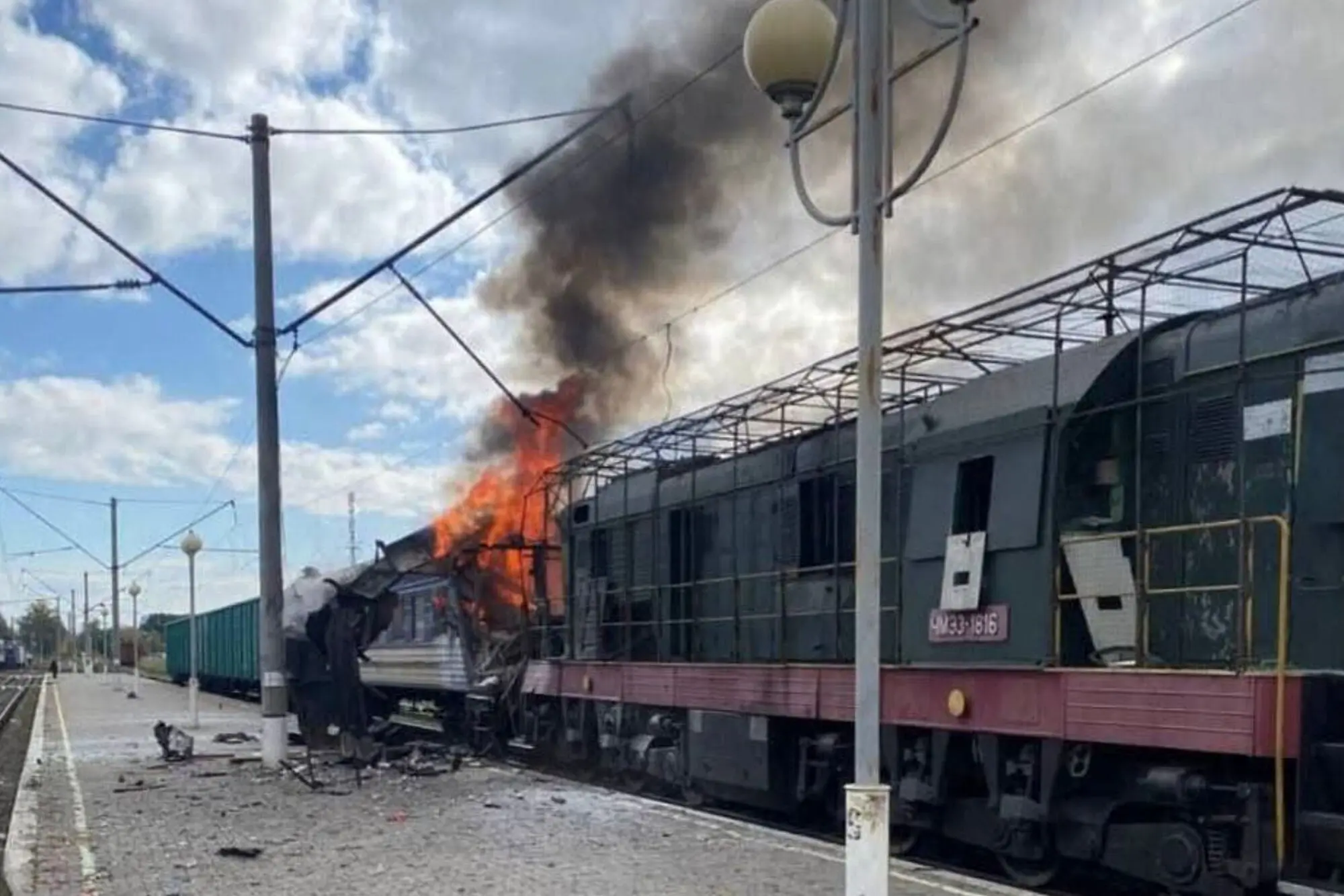
Ukraine sharply intensified its campaign against the occupied peninsula’s energy infrastructure during the summer. Substations and other facilities near Russian military bases in northern Crimea became central targets in a region crossed by supply routes serving occupation forces in southern Ukraine.
By late July, nearly every major town and settlement in the north had experienced a complete blackout. Disruptions also spread to the resort-heavy south: some districts of Yalta received running water for only a few hours a day, while authorities in Yevpatoriya installed public telephones to compensate for unstable mobile networks.
In Daycom’s assessment, Ukraine is seeking to destroy more than Crimea’s power grid. It is targeting the sense of immunity that Russia spent years constructing around the peninsula — the idea that annexation was complete and that the war remained safely beyond the Perekop Isthmus.
That illusion carried political value. For the Kremlin, Crimea was proof that territorial conquest could be made irreversible, integrated and economically normal despite sanctions. Darkened towns and empty fuel stations undermine that image more effectively than any formal declaration.
Crimea also remains a major military hub. Russia uses its airfields, depots, ports, air-defense systems, repair facilities and transport routes to support operations in southern Ukraine and the Black Sea. Electricity powers not only homes but the infrastructure of the occupation army.
That dual use defines the logic of Ukraine’s strikes. A single substation may supply a military installation, a hospital, a water pump and nearby apartment blocks. Disabling it may weaken Russian capabilities, but it also imposes an immediate cost on civilians.
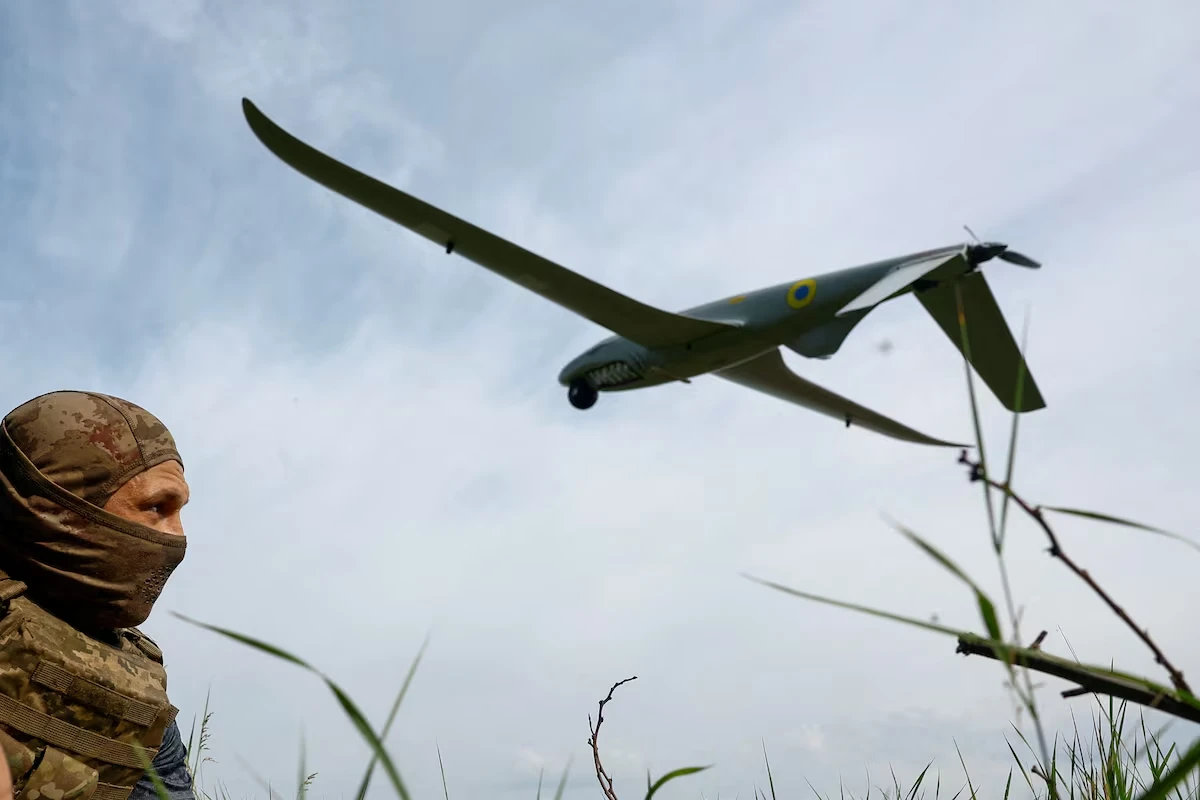
Ukrainian commanders say the campaign is directed against Russia’s military potential. Yet the head of Ukraine’s drone forces described the operation as switching off Crimea and reported attacks on more than a hundred energy sites during the first three weeks of July.
Such language has mobilizing force, but it also creates risk. When the most visible result is weeks without water and electricity, the line between targeted pressure on military infrastructure and collective punishment begins to appear less distinct.
Ukraine is entitled to attack military targets on its own occupied territory. Russia’s annexation of Crimea did not alter the peninsula’s internationally recognized status. The legitimacy of the broader objective, however, does not remove the obligation to consider proportionality and foreseeable harm to civilians.
That distinction matters because the Ukrainian campaign still cannot be equated with Russia’s years-long destruction of Ukraine’s energy system. Moscow has systematically attacked power plants, heating facilities and substations across the country, leaving millions without electricity or warmth during winter.
The difference in scale, duration and responsibility for the war is fundamental. Russia is the aggressor that occupied Crimea and uses it for offensive operations. Ukraine is defending itself and trying to remove the military advantages created by occupation.
For a family with an infant living without stable power for two weeks, however, strategic asymmetry does not refrigerate food or restart a water pump. War is experienced through its closest physical consequences: the price of fuel for a generator, the loss of communication and the fear that unstable voltage will destroy household appliances.
The crisis has been especially severe in Dzhankoi. After repeated strikes on local substations, the town endured a prolonged blackout before limited power returned for only a few hours a day. Residents began searching for generators, solar panels and power converters.
Fuel shortages compounded the pressure. Gasoline became scarcer and more expensive, forcing some families to travel across the Kerch Bridge into southern Russia. Running even a small generator for several hours became an expense many households could not sustain.
Without electricity, water pumps also stop. Crimea has long depended on a complicated supply system, and after occupying the peninsula Moscow invested heavily in wells, reservoirs and transfers between districts. An attack on the grid can therefore become a water crisis almost immediately.
The disruption spreads quickly into commerce and employment. Shops shorten their hours or close, supermarkets struggle to maintain refrigeration, factories send workers home and small businesses lose both customers and stock.
The tourist season has proved particularly vulnerable. The Kremlin spent years encouraging Russians to vacation in Crimea, turning the resorts into a display of normal life under occupation. Visitors now encounter drone alerts, fuel shortages, power cuts and increasingly uncertain transport routes.
Russian authorities offered a one-time payment to residents who had remained without electricity for more than two days. The amount was insufficient to cover the purchase and sustained use of a basic generator, much less lost income or spoiled food.
Local administrations also appeared unprepared for a prolonged emergency. Weeks into the blackout, officials were still promising to equip every hospital with backup generators. For a territory that Russia has militarized for more than a decade, the vulnerability of its civilian systems was revealing.
It exposed the priorities of the occupation model. Resources flowed into military bases, air defenses, airfields, naval installations and the propaganda architecture of annexation. Resilient power networks, hospital backup systems and emergency reserves remained secondary.
The Kremlin’s reaction was equally telling. Vladimir Putin made almost no public reference to the scale of the outages. Meetings addressed fuel supplies but avoided direct discussion of Ukrainian drones and damage to the energy system.
That silence is part of a broader political technique. Acknowledging the crisis would mean admitting that Russia cannot fully protect territory it calls its own and that Ukraine can systematically shape the lives of hundreds of thousands of people far from the front.
State television continues to show Crimean beaches, sunsets and official assurances that everything is under control. Lifestyle bloggers post idyllic videos and dismiss accounts of blackouts as hostile propaganda.
Digital denial, however, eventually meets physical reality. Residents have flooded local officials’ social-media pages with requests for water, reports of closed businesses and questions about why the power network was left so exposed.
Even Crimeans who remain broadly loyal to Russia have begun to speak about what the Kremlin most wants to avoid: not only restoring electricity, but ending the war. That does not necessarily translate into support for Ukraine. It does suggest that the social bargain Moscow offered after annexation is weakening.
The terms of that bargain were simple: political silence in exchange for stability, investment and security. When the authorities cannot guarantee electricity, water, fuel or communications, loyalty stops being cost-free.
Kyiv is counting on precisely that effect. Strikes on Crimea’s power system are intended to transfer part of the war’s burden into Russian society, increase public frustration and persuade the Kremlin that continuing the invasion carries rising domestic costs.
Political pressure, however, does not operate automatically. Authoritarian governments can isolate leaders from public anger, conceal the scale of a crisis and redirect frustration toward an external enemy.
The blackouts may strengthen demands for the war to end, or they may feed Russian propaganda portraying Ukraine as a threat to civilians. The outcome will depend on the precision of the strikes, the conduct of the occupation authorities and whether Kyiv offers residents a credible political future.
It is not enough to say that Crimeans should understand the purpose of the attacks. Ukraine must explain why particular sites are being targeted, how civilian harm is being reduced and what the restoration of Ukrainian control would mean for people who have spent years inside Russia’s legal and information systems.
Moscow, meanwhile, cannot preserve the appearance of normality indefinitely. The contradiction became especially stark at a lavish event on the southern coast, where thousands of guests gathered around giant screens and fireworks while northern Crimea remained without electricity and water.
The celebration was meant to show that resort life continued beyond the reach of war. Then a drone alert cut the festivities short, sending guests carrying their drinks into a basement.
That scene contained the central contradiction of Russia’s policy toward Crimea. The Kremlin can keep darkened towns off federal television, but it cannot order Ukrainian drones to follow the broadcast schedule.
The Ukrainian campaign has already demonstrated that occupied Crimea is not a secure rear area. The harder question is whether that military achievement will produce political pressure or merely increase civilian suffering without changing Moscow’s calculations.
The answer will depend on whether Ukraine can combine attacks on Russian military infrastructure with discipline, proportionality and a clear vision for the peninsula’s future. The war has returned to Crimea through extinguished lights. Its strategic meaning will be determined by what Kyiv offers after the darkness.