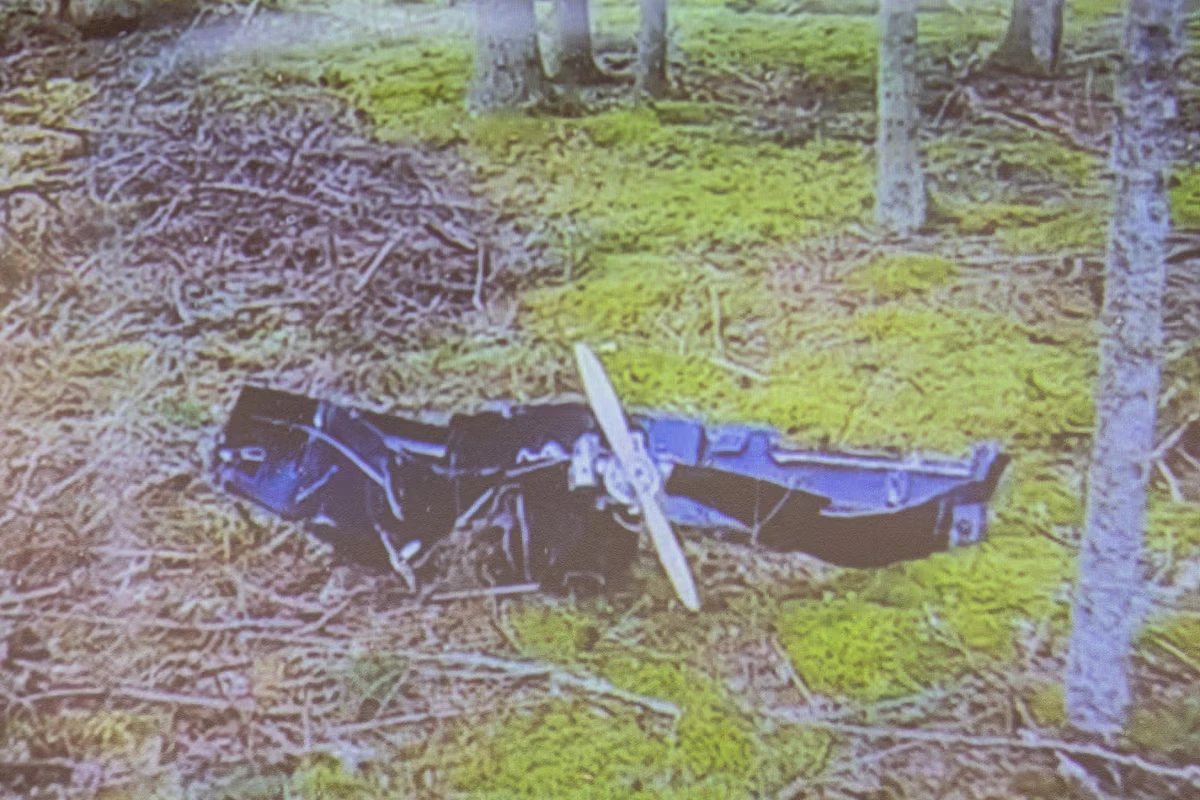























In the small village of Wolder, near the Belgian border, history has suddenly risen from beneath a church floor. Under the heavy gray slabs of a chapel, local volunteers found a skeleton — and with it the hope that the remains may belong to Count d’Artagnan.
The name sounds almost too literary for an archaeological discovery. Yet behind Alexandre Dumas’s hero stood a real man: Charles de Batz de Castelmore, Count d’Artagnan, captain of the Musketeers of the Guard under King Louis XIV. He died in 1673 during the siege of Maastricht.
For centuries, Wolder has lived with a local legend that St. Peter and Paul’s Church may have been his final resting place. But the story existed more as village pride than as proven fact. That changed when a search that began with metal detectors and old foundations led to human bones.
For Daycom, the story is compelling not only because of the possible discovery. It shows how the thin line between document, myth and tourist imagination can alter the fate of a small place that had long remained on the edge of a larger route.
Near the skeleton, searchers found a 17th-century coin and a musket ball. By themselves, these objects do not prove that the bones are d’Artagnan’s. But they make the hypothesis serious enough for the village to await scientific tests with the tension usually reserved not for a laboratory report, but for a verdict from history.
The remains have been sent to a university for examination. Carbon dating, DNA analysis and other tests are underway. In the church, meanwhile, a hole remains in the floor, covered with plywood and a rug so Mass can continue. The past is literally preventing the sanctuary from returning to its ordinary shape.
The village is waiting. So are its residents. For a community of about 1,500 people, the waiting has already become an event. Journalists, tourists, admirers of musketeer lore, French and American visitors have begun arriving at the church. Wolder has suddenly appeared on a map of imagination where it had barely been noticed before.
Maastricht, of which Wolder forms part, has long claimed a connection to d’Artagnan. The city has a statue of him, local hotels and restaurants willingly play with musketeer symbolism, and the Route d’Artagnan for walkers, cyclists and riders ends here. But Wolder is claiming something larger: not merely a memory of death, but a burial place.
The difference is enormous. A statue can be a symbol, a route a cultural gesture, a beer bearing the hero’s name a tourist detail. A confirmed grave would turn the place into a destination of pilgrimage. It would give the legend physical weight: earth, stone, bones and an address.
That is why locals are already thinking about the future. Tour operators are considering bus trips from central Maastricht. Others imagine new cycling routes. The church community has even spoken of a museum. For Wolder, this could be a chance to step out of the larger city’s shadow.
But haste would be dangerous. History loves romantic coincidence, while science demands restraint. Even if dating confirms the 17th century and the burial fits the right context, identification will remain the hardest test. D’Artagnan has descendants, but aristocratic genealogies are not always simple or biologically clean.
Here the story becomes almost detective-like. If the DNA matches a descendant line, that would be a powerful argument. If it does not, the matter may still not be entirely closed, because family lines can contain breaks, extramarital relationships or documentary errors. Science can bring the answer closer, but it cannot guarantee a beautiful ending.
Local authorities understand this more cautiously than the tourist imagination does. They need confirmation that can withstand not only headlines, but expert scrutiny. A false sensation brings fame quickly, then leaves distrust even faster.
There is another alluring detail in this story: d’Artagnan himself exists between fact and fiction. The real officer of the French crown was transformed by Dumas into a hero of friendship, courage and adventure. Millions know not so much the historical count as the literary musketeer who stands beside Athos, Porthos and Aramis.
Searching for his bones is therefore not only archaeology. It is an attempt to touch the place where the novel returns to history. Readers of Dumas have always known that d’Artagnan “existed,” but a discovered grave would make that presence unexpectedly material.
For the church in Wolder, such fame could be both blessing and burden. Already, people are entering not only to pray. They want to see the excavation site, photograph the empty space in the floor and draw closer to the legend. The parish will have to decide how to combine sacred space with tourist curiosity.
For Maastricht, that would be easier: the city already knows how to receive visitors. For Wolder, it would be harder. Its quiet fields, red-brick houses and neat tiled roofs were not built for bus traffic. If d’Artagnan is truly found there, the village will have to learn how to be famous.
And yet there is something just about that possible transformation. Great historical stories are often preserved not in capitals, but in small places, where memory survives as a family rumor, a church legend or the name of a street. D’Artagnan may have died near Maastricht, but his afterlife may have been waiting in Wolder.
For now, the answer remains suspended between the laboratory and the dream. The skeleton may prove to be the remains of an unknown 17th-century man. Or it may belong to the man literature made immortal. Wolder is not merely waiting for test results. It is waiting to learn whether history will allow a small village to say: the musketeer was here.