




















In Russia’s war against Ukraine, the drone is no longer simply a weapon. It has become a staffing problem of its own. To solve it, the state is moving ever more openly into universities and workplaces, turning students, engineers and technical specialists into a recruitment pool for unmanned units.
The language of these offers is telling. Universities are not speaking in vague patriotic abstractions. They are advertising concrete roles — drone operators, engineers, technicians, specialists in communications, software, electronics and 3D modeling. This new kind of war demands not only infantry numbers, but the kinds of technical skills that until recently belonged entirely to civilian life.
What matters even more is that Russia is no longer treating this as an improvised wartime need. Drone warfare is being organized as a permanent military function with its own personnel pipeline, training logic and institutional hierarchy. The point is not merely to fill gaps at the front, but to build a stable mechanism for reproducing the workforce of a technological war.
In Дейком’s assessment, this is where a new model of Russia’s war economy comes into view: not general mobilization, with all its political risks, but the selective extraction of useful competencies from civilian society. The message to the country’s technical youth is increasingly clear: your knowledge of electronics, robotics, mapping, coding and communications now has direct military value.
That is why the campaign relies not only on patriotic rhetoric, but on market logic. Universities and regional authorities are selling military contracts through large financial packages, academic leave, housing, social guarantees and promises of a smooth return to study. War is being presented not as an interruption of life, but as a career path with benefits attached.

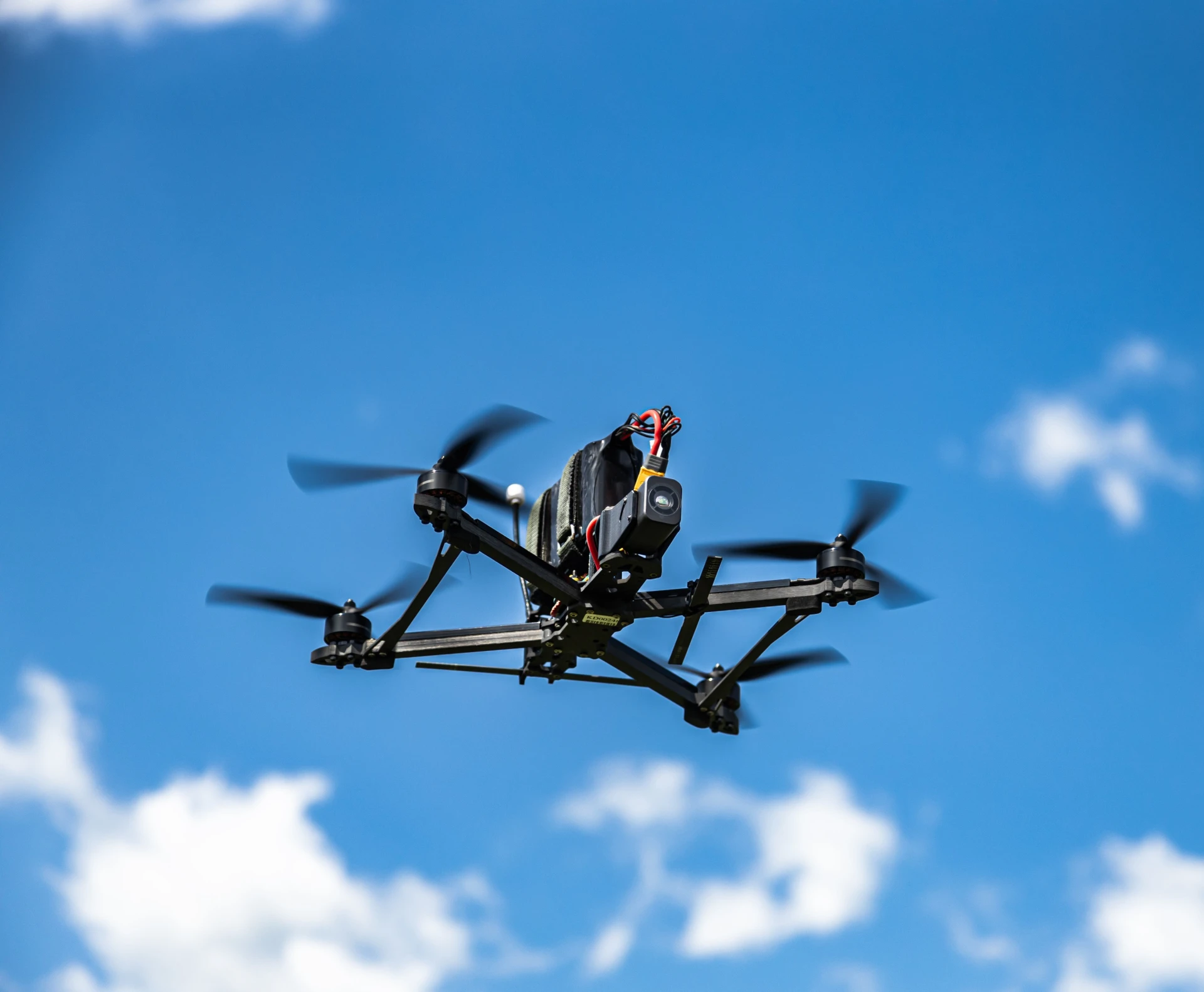
The figure at the center of this shift is the drone operator. He is no longer imagined as a conventional soldier, but as a hybrid of serviceman, engineer and gamer. Recruitment is aimed at those with technical backgrounds, experience in programming, radio electronics, simulation, piloting or adjacent digital skills. Warfare is increasingly framed as a competition for applied technological competence.
An even stronger signal comes from regional administration. When local authorities impose recruitment quotas on companies and expect employers to deliver candidates for military contracts, enlistment ceases to be the sole domain of military offices. It becomes an administrative task distributed across the civilian economy. The boundary between the labor market and the war machine begins to blur.
That is the deeper shift now underway. Russia is not simply replenishing its armed forces. It is embedding war inside the institutions of ordinary life — the university, the workplace, the regional bureaucracy. The campus provides young technical talent, the employer provides an organized channel of selection, and the state supplies money and ideological framing. Together, they form a far more flexible system than classical mobilization.
Officially, the Kremlin continues to insist that there is no need for a new wave of mass mobilization and that the contract model is functioning effectively on its own. That is precisely what makes the current campaign so revealing. A government that denies the need for coercive mass conscription while expanding targeted student recruitment and quasi-quotas for business is effectively admitting that the war no longer requires just bodies. It requires bodies with a very specific profile.
For Ukraine, this is an important signal about how Russia sees the next phase of the war. Not simply as a contest of manpower at the front, but as a long campaign of technological attrition in which drones, operators, engineers and repair teams become as critical as shells or missiles. The war is moving ever more clearly into a phase where victory belongs not only to the side with more weapons, but to the side that can more quickly convert education and labor into military infrastructure.
In that sense, the story of Russian students being drawn into drone units is not a peripheral tale about enlistment bonuses. It is an early outline of a new state norm, one in which the university no longer only teaches, the employer no longer only hires, and technical youth no longer only plans a career. All three are being pulled into a single system where drones are becoming not only a technology of war, but a mechanism for redistributing people, skills and the future itself.