

















Eurovision insists on one simple rule: politics has no place on its stage. The contest is supposed to be about songs, voices, costumes, staging and emotion. Yet every year after the final, the same truth returns: behind the glitter stands Europe, with its wars, debts, alliances and unspoken resentments.
This year’s final only confirmed that old contradiction. Bulgaria won in a surprise result, Israel finished second despite boycotts by several countries, Romania came third, and after the points were announced, several politicians and officials began speaking not about music, but about gratitude, solidarity and geopolitical memory.
The loudest episode came in Moldova. The head of the public broadcaster resigned after the country’s jury gave neighboring Romania only three points instead of the expected twelve. Formally, it was a musical judgment. Emotionally, it landed almost like a diplomatic gesture.
Daycom’s earlier analysis has noted that these are the moments when Eurovision reveals its true nature: the contest officially bans politics, but it cannot stop countries from remembering who is a neighbor, an ally, a historical relative or a source of grievance.
Moldova’s reaction was telling. It reflected not only disappointment with a musical decision, but the feeling that Romania should have received maximum support because of cultural closeness, language, history and political kinship. The jury judged a performance; society read an attitude.
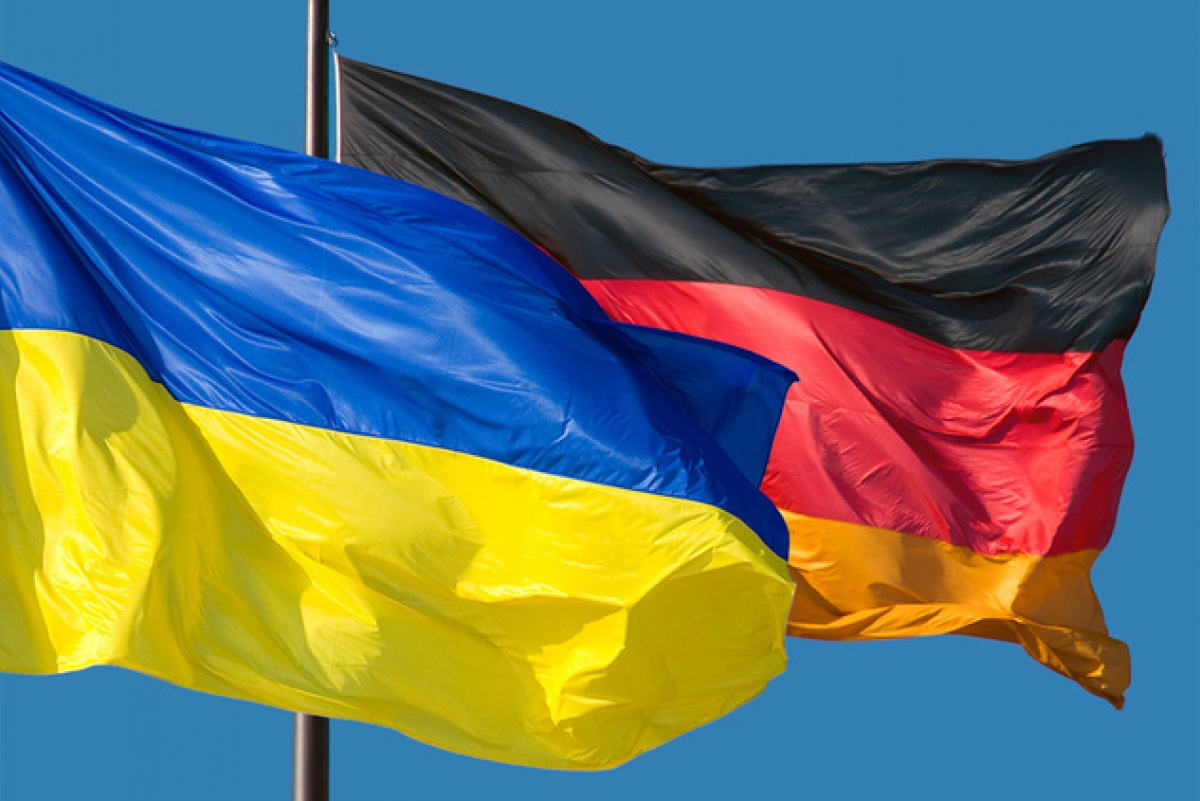
The political subtext was even sharper in Poland. Two right-wing politicians expressed outrage that Ukraine had given the Polish act no points. In their logic, a zero from Ukraine was not an aesthetic choice, but a sign of ingratitude from a country Poland has helped since the start of the full-scale war.
That complaint is dangerous because it moves voting from the realm of art into the realm of moral debt. If one country has helped another with weapons, shelter, diplomacy or humanitarian support, should that be reflected in points for a song? Formally, no. Politically, many clearly expect it.
Eurovision has long lived inside this contradiction. Viewers and juries are meant to assess composition, vocals, staging, originality and the coherence of a performance. In reality, they often also vote for proximity, sympathy, historical memory, diaspora, fear, protest or compassion.
That is why organizers have spent decades trying to curb bloc voting, without ever fully eliminating it. Nordic countries traditionally watch one another closely. The Balkans hear themselves as a distinct cultural space. Post-Soviet states bring their old connections and new fractures into the contest.
Politics entered Eurovision long before today’s crises. Boycotts, disputes over dictatorships, language conflicts, symbolic gestures, Russia’s exclusion after its invasion of Ukraine, Ukraine’s 2022 victory — all of these belong to the same story. The contest has never been only a contest.
This year, Israel sharpened the paradox. Several countries boycotted the event over the humanitarian catastrophe in Gaza, yet the Israeli entry finished second. For some, that proved music can still be separated from politics. For others, it showed that the contest lacks any moral mechanism for responding to war.
Eurovision is trapped between two impossible demands. If it fully separates the stage from politics, it is accused of indifference. If it allows political consequences to shape the competition, it risks losing the logic of the contest itself. Either way, neutrality becomes not a position, but a problem.
What made this year’s backlash distinct was that anger was directed not only at the result, but at the “wrong” behavior of allies. Moldova was expected to love Romania with twelve points. Ukraine was expected to thank Poland. Voting began to be read as a test of loyalty.
But that logic corrodes the contest from within. If points become diplomatic currency, juries are no longer judging songs. They are acting as foreign ministries in sequins. Viewers are left not with musical drama, but with a map of grievances after every zero.
At the same time, it is difficult to dismiss such reactions entirely. Europe lives in an age when wars, migration, energy shocks and alliance obligations have become part of daily life. People do not leave those emotions at the arena door. They bring them into the televote.
That is why zero points can hurt more than a lost song. They can sound like a refusal to recognize effort, closeness or sacrifice. In this sense, Eurovision works as an emotional barometer of the continent: not always fair, often chaotic, but highly sensitive.
The problem is that such a barometer is easy to distort. Politicians readily use the contest for domestic audiences. Complaints about an “ungrateful Ukraine” or insufficient love for Romania allow them to speak not about performance quality, but about national dignity.
That is especially useful for right-wing forces that interpret culture through hierarchies of debt and grievance. For them, Eurovision becomes not a light pop-cultural event, but a stage on which to demand recognition of their country’s role, sacrifice and historical righteousness.
And yet this is precisely part of the contest’s magnetism. People watch not only for the songs, but for the sense that Europe is talking to itself through the points. Sometimes unfairly. Sometimes pettily. Sometimes movingly. Always more seriously than the organizers might prefer.
Eurovision cannot become a sterile space because its contestants are not abstract performers. They represent countries. Every flag carries history. Every point has neighbors. Every zero can become a statement, even when the jury meant only that the chorus was weak.
After this year’s final, one thing became clear: the main political question is no longer whether politics influences Eurovision. It has for a long time. The real question is whether Europe can accept that even at a festival of song, it remains itself — divided, grateful, wounded, solidaristic and intensely attentive to who gave what to whom.