





















Ukraine’s parliament is advancing—cautiously but decisively—through a set of fiscal decisions that will determine the country’s financial stability during the war. What appears to be a routine sequence of tax votes is, in reality, a high-stakes negotiation between external creditors and an increasingly strained domestic political system.
At the center of the debate is a fundamental question: how to finance a state under prolonged military pressure. Ukraine needs roughly $52 billion this year alone, a figure that underscores the scale of dependence on international support. Without it, the risks extend beyond budget gaps to currency stability, social spending and the basic functioning of the state.
Delays in securing earlier tranches of aid, combined with the blockage of a major European financing package, have intensified the urgency. According to Daycom’s earlier analysis, such moments expose the structural vulnerability of Ukraine’s war-time economy—heavy reliance on external funding alongside a still-limited domestic revenue base.
The extension of the military tax into the post-war period stands out as both a symbolic and practical step. It signals to international partners that Kyiv is willing to expand its own fiscal capacity, even at political cost. At the same time, it reflects a deeper shift: the war is no longer shaping only immediate spending priorities, but also the long-term architecture of the tax system.

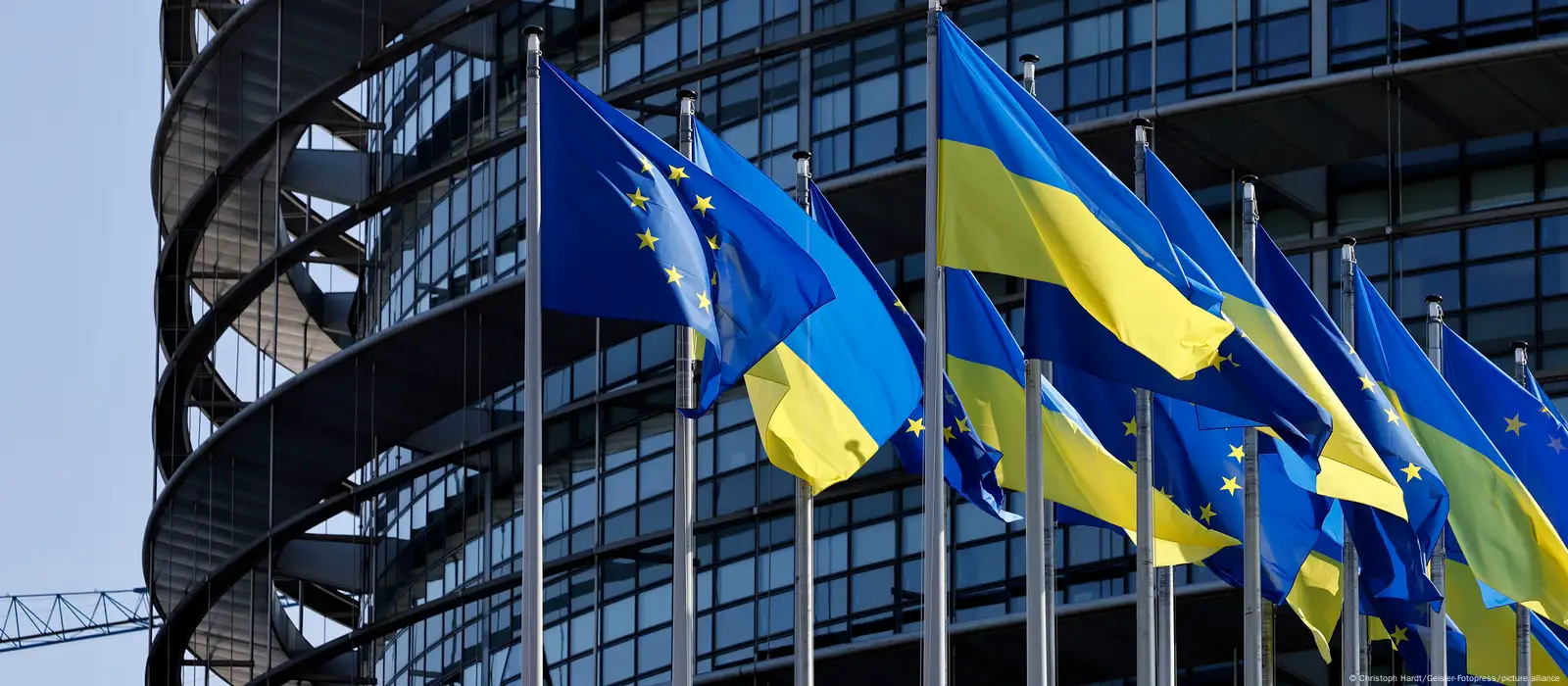
Other legislative measures tied to the Ukraine Facility and the broader EU accession process open the door to additional funding, but only under strict reform conditions. These go beyond taxation to include governance standards, transparency and expenditure control. Financial assistance is increasingly structured not just as support, but as leverage for systemic change.
Yet the passage of these laws has revealed growing political friction. Some lawmakers have openly criticized the government’s communication strategy and fiscal approach, accusing it of populism and mismanagement. Even measures deemed critical for national stability require intensive negotiation, reflecting a parliament that is no longer operating on automatic alignment with the executive.
This dynamic is particularly significant in a political system where elections are suspended due to the war. Parliament has become the primary arena of contestation, where competing interests, factions and tactical alliances can slow or reshape even urgent decisions. The legislative process itself is now part of the broader struggle over how the country navigates wartime governance.
Upcoming debates, including a contentious proposal to tax online platforms, will test the government’s willingness to broaden the tax base into new sectors. These steps are economically rational but politically sensitive, especially in an environment where businesses and citizens are already under strain. Without such measures, however, meeting IMF benchmarks becomes increasingly difficult.

The broader pattern is clear. International financial support is no longer unconditional. It is tied to timelines, reforms and demonstrable political commitment. Ukraine is being asked not only to sustain itself under extreme conditions, but to transform its economic governance in real time.
This creates a dual pressure on the leadership. On one side lies the need to move quickly and adopt unpopular policies. On the other, the risk of eroding domestic political cohesion. In the short term, this translates into complex bargaining and incremental progress. In the long term, it points toward a more disciplined fiscal framework shaped as much by external expectations as by internal necessity.
The deeper shift, however, is strategic. Ukraine’s financial resilience is becoming less about the sheer volume of aid and more about its ability to operate within the system of rules that governs that aid. The outcome of this process will define not only the country’s economic trajectory during the war, but also the foundations of its post-war recovery.