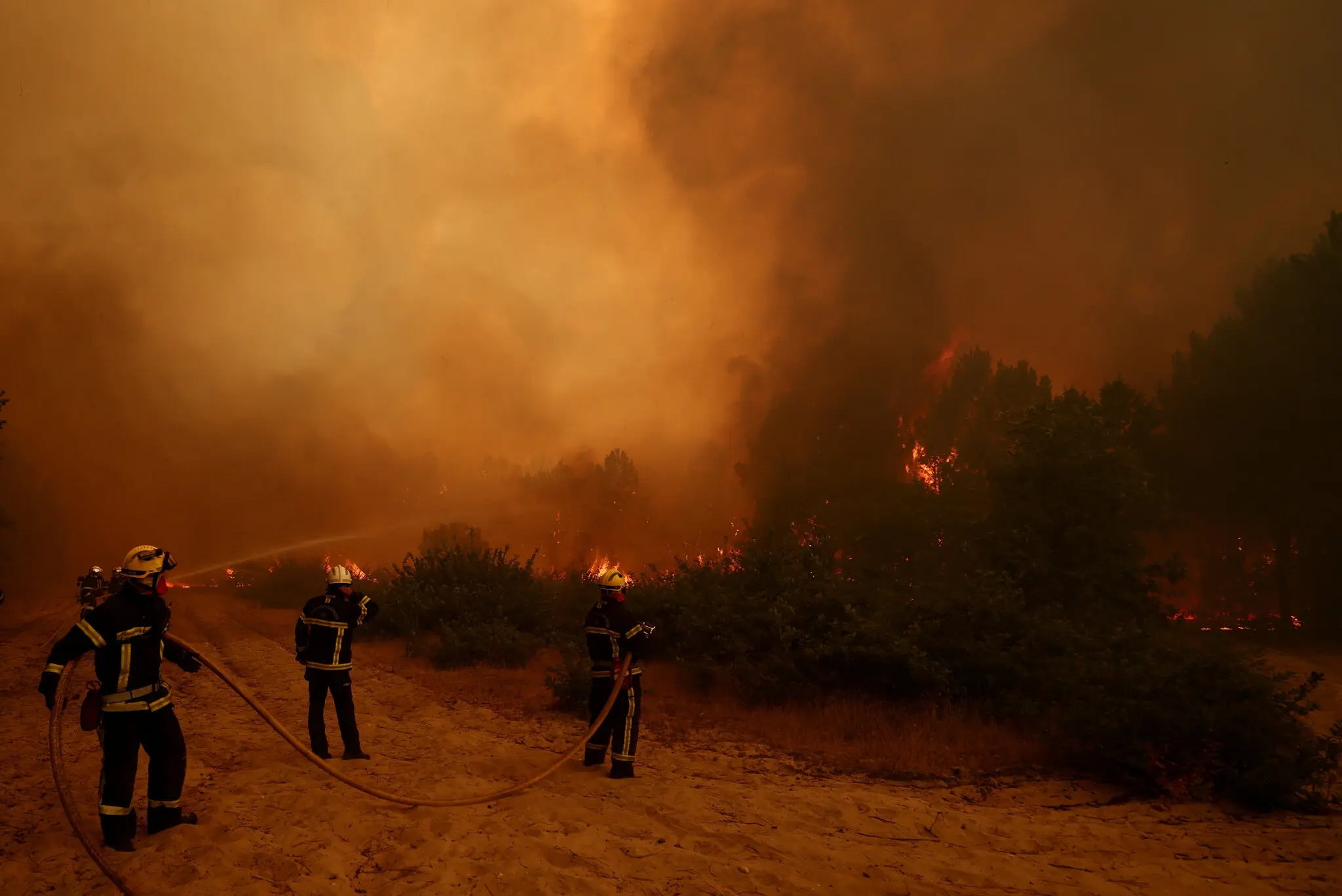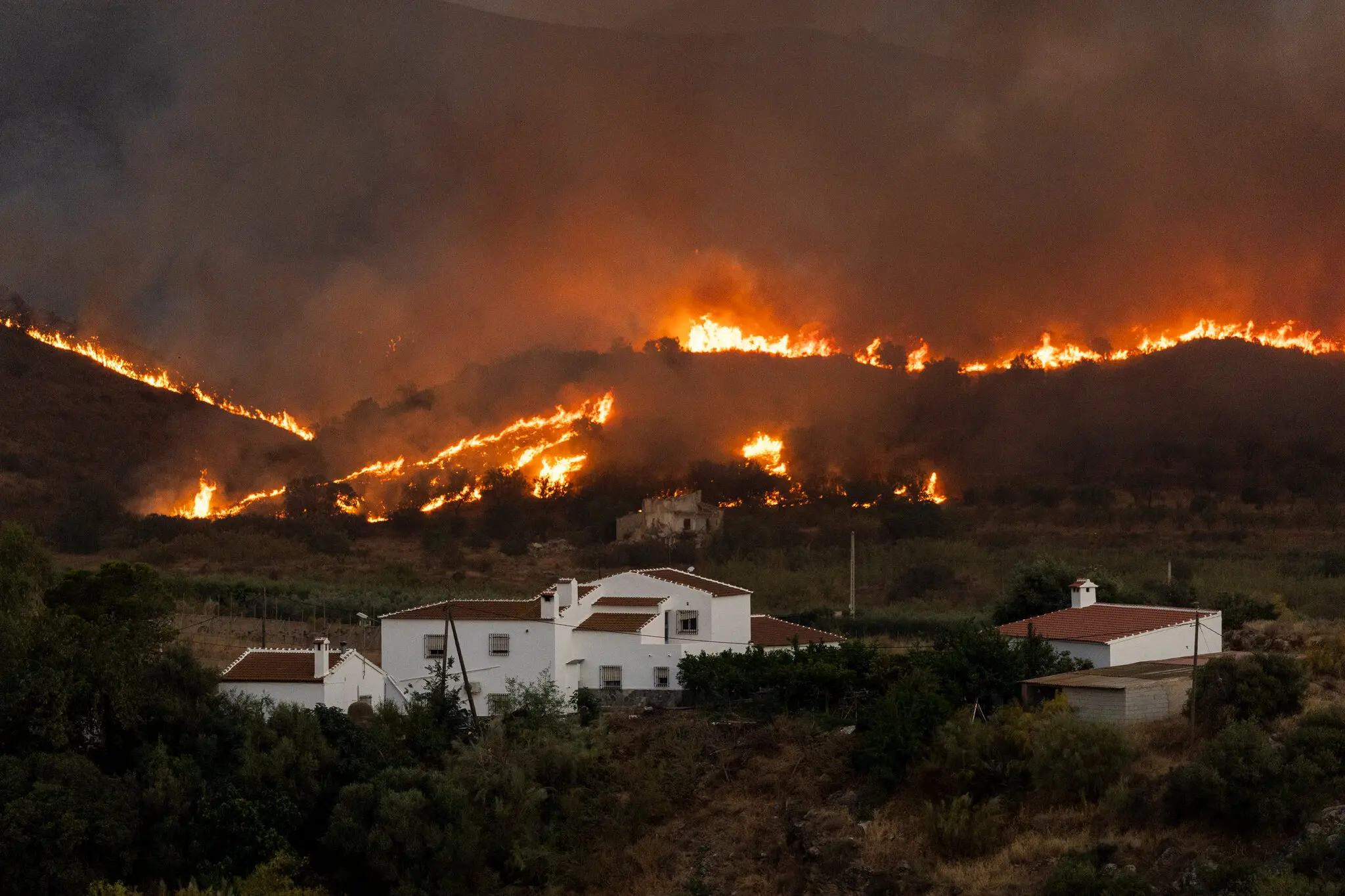

















On Saturday, fire advanced toward two major European cities at once: Madrid and Bordeaux. Flames consumed forests, fields and homes, ash settled over residential districts, and nearly 300,000 people were ordered to evacuate or remain indoors.
In France, about 197,000 residents left parts of Gironde and Landes. The fires had already burned an area roughly three times the size of Paris, while one front came within a few dozen kilometers of Bordeaux.
In Spain, more than 80,000 people west of Madrid were evacuated or told to shelter in place. Thick smoke hung over the region, ash covered roads and towns, and strong winds threatened to accelerate the flames again.
In Daycom’s assessment, the deeper shift lies not only in the scale of the disaster. European metropolitan regions are increasingly being forced to operate as if they were near a war zone, with evacuation routes, command centers, military aircraft and decisions affecting tens of thousands of lives.
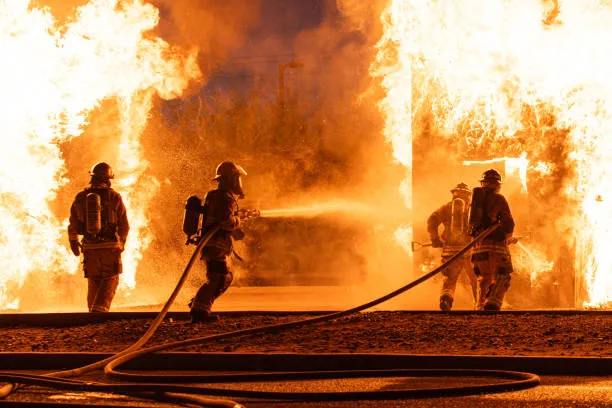
France deployed 1,000 troops, aircraft, water-dropping helicopters and a converted military transport plane designed to release fire retardant. Several European countries sent assistance, turning the firefighting effort into an international operation.
Spanish authorities followed a similarly militarized logic. Emergency units were sent into the affected areas, while the government tried to use a temporary drop in temperature as a narrow window in which to push back the flames.
The weather offered no certainty. Dry thunderstorms, powerful wind gusts and parched vegetation could alter a fire’s direction within hours, turning a safe road into a trap and a contained zone into a new front.
The speed of the fires became the defining feature of the crisis. Residents who had watched smoke on the horizon one day were leaving with a single bag the next, unsure whether their homes would still be standing when they returned.
On the Cap Ferret peninsula, a popular Atlantic holiday destination, tens of thousands of tourists fled by car and boat. Within hours, a summer vacation became a mass evacuation.
The fires even disrupted the symbolic rhythm of national life. The final stage of the Tour de France was shortened so that security personnel could be reassigned to fire-stricken areas. A major sporting ritual gave way to an emergency.
The decision mattered beyond logistics. It showed that wildfires are no longer peripheral events unfolding in distant forests. They are beginning to affect national institutions, urban life, transportation and cultural traditions.
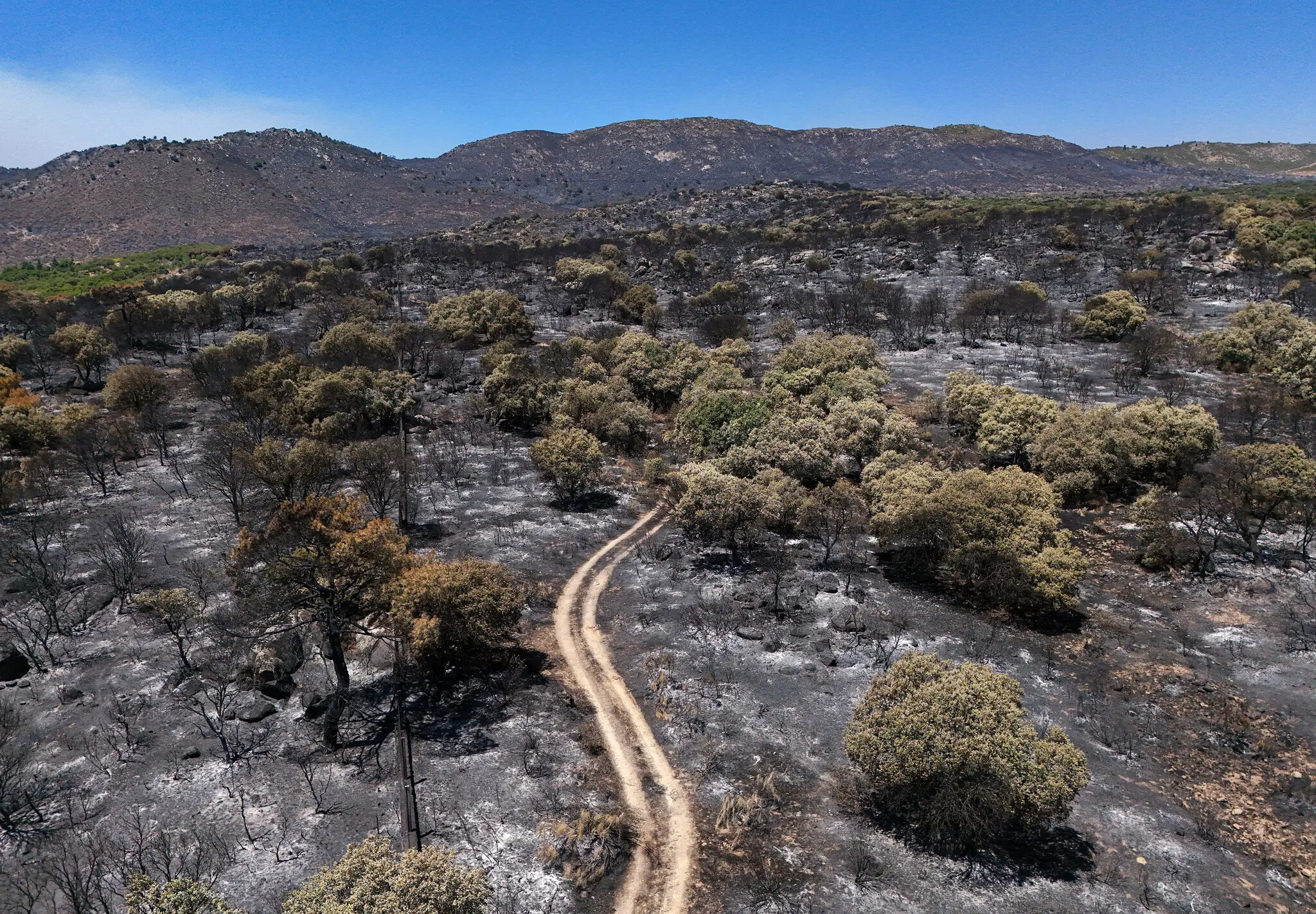
More than 240,000 acres have burned in France this year, a historic record. In Spain, the scorched area exceeded 321,000 acres, well above the annual average of the past decade.
Earlier in the summer, a blaze in the southeastern province of Almería killed 13 people, making it one of the deadliest fires in the country’s history. The new outbreaks near Madrid showed that the danger was no longer confined to one region.
Since late May, repeated heat waves had dried forests, scrubland and soil. June was the hottest ever recorded in Western Europe, creating conditions in which a single spark could become a catastrophe.
No individual wildfire can be explained by global warming alone. Ignition may come from lightning, faulty machinery, negligence or deliberate arson. Climate change, however, determines the conditions in which a fire becomes faster, hotter and harder to control.
Higher temperatures dry vegetation, reduce soil moisture and lengthen the fire season. What once seemed exceptional is becoming a recurring feature of the European summer.
The very idea of a defined “fire season” is beginning to lose meaning. The crisis is no longer concentrated in a few weeks of extreme heat. It develops over months through drought, low rainfall and the steady accumulation of dry fuel.
The geography of risk is changing as well. Wildfires are no longer seen as a problem limited to Portugal, Greece or southern Spain. They are advancing toward major economic centers, wine regions and densely populated suburbs.
Bordeaux is not merely a city but the center of one of the world’s most valuable wine-producing regions. Fire nearby threatens vineyards, tourism, harvests and an entire economic ecosystem, not only homes.
Around Madrid, the risk takes a different form. The forested western mountains are closely connected to the capital through roads and commuter towns. A rural blaze there can become an urban emergency in a matter of hours.
The response of residents also revealed the difficulty of psychological adaptation. In central Madrid, despite advice to stay indoors and wear masks, terraces remained open, tourists queued for museums and children continued playing outside.
That does not necessarily reflect indifference. People judge danger through personal experience. When flames are not visible and public transport still operates, falling ash may feel like an inconvenience rather than a warning.
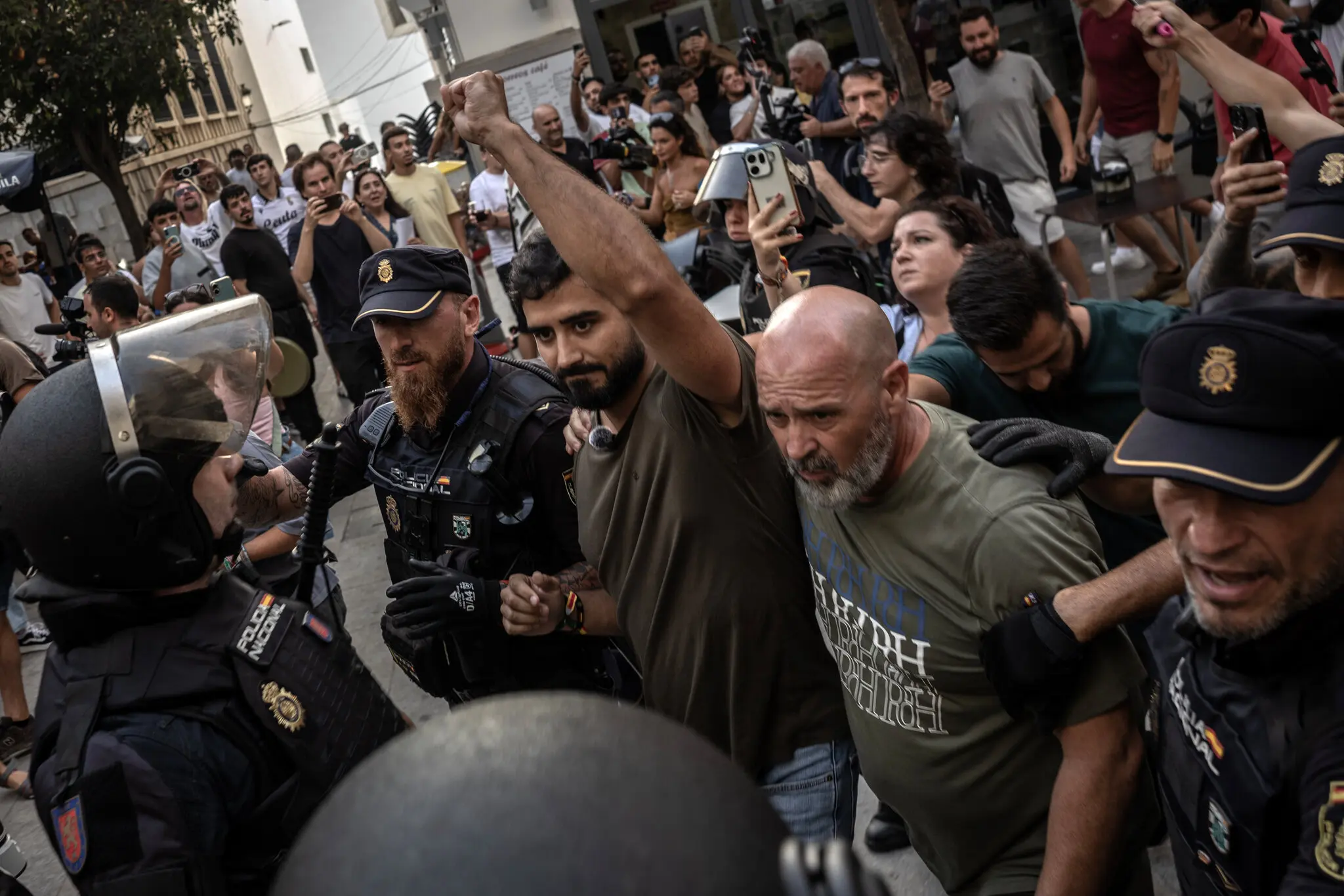
Closer to the fires, the perception was different. Residents left homes minutes before roads were closed, tried to return for pets and argued with police officers who refused to let them risk their lives.
The words “either their lives or yours,” spoken to a couple attempting to rescue two cats and a dog, captured the moral brutality of evacuation. Decisions must be made quickly, with incomplete information and no guarantee that what is left behind will survive.
Such moments show that wildfire policy involves more than aircraft and water tanks. It also depends on communication, trust in authorities, prepared routes, accessible shelters and public understanding of the point at which refusing to evacuate endangers rescue crews.
Moving nearly 300,000 people places enormous pressure on roads, hospitals, hotels, schools and local budgets. Even a temporary displacement on that scale requires logistics that European cities once prepared mainly for war or industrial disaster.
Climate adaptation is therefore beginning to resemble defense planning. Governments need reserve equipment, shared European aviation capacity, risk maps, independent communications and mechanisms for rapidly moving personnel.
Fire suppression cannot replace prevention. Forest clearing, controlled burns, firebreaks, restrictions on construction and tougher building standards are all becoming necessary in high-risk zones.
Those measures often face resistance. Local communities oppose tree cutting, developers resist limits, and governments hesitate to spend heavily on disasters that may not occur during their term in office.
The absence of investment merely pushes the bill into the future. Once fire enters the suburbs, the cost of evacuation, compensation, infrastructure repair and lost business far exceeds the price of prevention.
European mutual assistance was one of the strongest elements of the response. Romania, Croatia, Germany, Portugal, Sweden, Switzerland, the Czech Republic and Slovakia sent France equipment and resources.
International solidarity, however, has limits. If large fires erupt across many countries at the same time, governments will keep aircraft and crews at home. A system built on mutual reinforcement may face scarcity during a continent-wide heat wave.
That is what makes the climate crisis systemic. It does not strike one country at a time. It lowers water levels, strains power grids, damages crops and creates competition for emergency equipment across an entire region.
The economic consequences will continue long after the flames are contained. Burned forests will take decades to recover, damaged soil will become more vulnerable to erosion and flooding, and property insurance in high-risk areas will become more expensive.
For tourist regions, the damage may be especially long-lasting. A resort evacuated through smoke loses not only one season of business but also its reputation as a safe place to visit.
Wine production depends on climatic stability as well. Heat, ash and fire affect harvests, grape quality and access to labor. Even vineyards untouched by flames can suffer from smoke contamination or disrupted logistics.
The political danger lies in the growing gap between the scale of the threat and society’s willingness to change. Citizens expect governments to protect them, yet often oppose the taxes, regulations and restrictions required to make that protection possible.
Governments, meanwhile, are more comfortable reacting after disaster strikes, when troops can be deployed and resolve displayed. It is much harder to fund years of quiet prevention whose success is measured by catastrophes that never happen.
France and Spain still possess strong institutions, aviation fleets and the resources needed for mass evacuation. Yet even they require outside help when several major fire fronts emerge at once.
That is a warning for the rest of Europe. Countries with smaller budgets and weaker infrastructure will face the same heat but have fewer aircraft, firefighters, hospital beds and resources for reconstruction.
The hundreds of thousands displaced near Madrid and Bordeaux are not simply a feature of one exceptionally hot summer. They may represent a model of the future, in which major cities routinely prepare for smoke, closed roads and temporary population movements.
The fires had not reached the centers of either city. They had already changed daily life, forced governments to mobilize military resources and revealed how narrow the line has become between an ordinary summer day and a mass evacuation.
For decades, Europe defined security through borders, armies and financial stability. It will now have to include air temperature, soil moisture and wind speed in that calculation.
The new era of climate-driven fire does not begin when a forest burns. It begins when hundreds of thousands of people near major cities must be ready to leave their homes simply because the wind has changed direction.