

















In France, heat has stopped being a summer backdrop. It has become a field of risk, where ordinary acts — stepping into the yard, going to a river, taking a child to school, boarding a train — can suddenly turn dangerous. The heat wave has exposed what long seemed secondary: Europe’s modern cities are poorly prepared for temperatures that are becoming less exceptional.
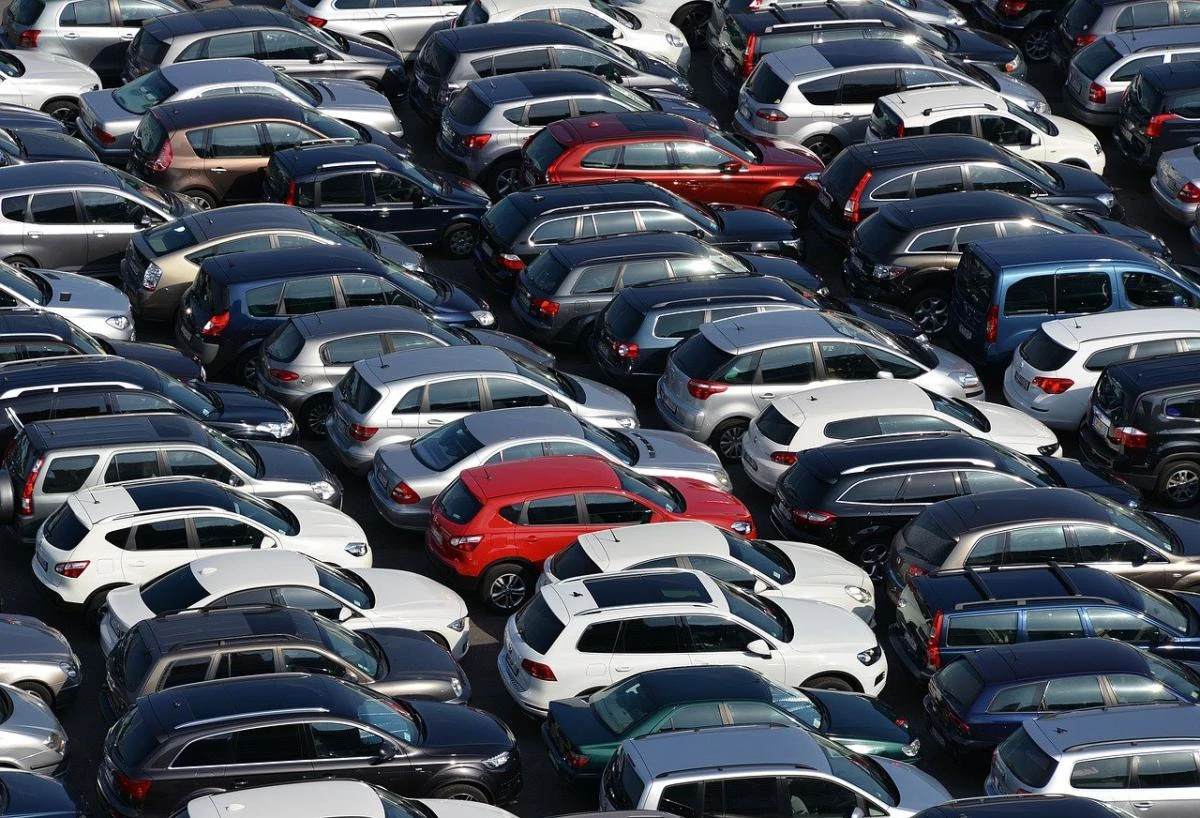
The most devastating sign this week was the deaths of three children found in cars. Near Paris, a 3-year-old boy died after apparently becoming trapped inside the family vehicle during extreme heat. Days earlier, in Carpentras in southeastern France, two children, ages 2 and 4, were found unresponsive in a parked family car.
These deaths cannot be reduced to private tragedy or a single family’s mistake. In extreme heat, a car becomes a trap within minutes: metal, glass and a sealed interior turn it into a temperature accelerator. A child has neither the time nor the physical resilience of an adult. That is why such cases become a painful test for society: whether it understands how quickly danger can unfold.
According to Daycom’s earlier analysis, the current French heat wave marks an important shift: the climate crisis is no longer perceived only through charts, records and weather warnings. It enters family yards, classrooms, offices, hospitals and transport systems, forcing the state to act in places where the old advice to “drink more water” is no longer enough.
French authorities are now speaking not only about temperature, but about a chain of consequences. Between June 18 and June 23, dozens of people drowned while trying to cool off in canals, rivers and other bodies of water. It is one of the cruel paradoxes of a heat wave: people seek relief from heat, only to enter another zone of danger, often without supervision, rescue services or a clear sense of their own physical limits.
Paris has also begun to feel the strain in concrete terms. The capital recorded a sharp rise in cardiac arrests, while the health system came under pressure from people for whom heat was not discomfort, but a direct threat. The most vulnerable remain children, older people, those with chronic illnesses, people living alone and residents of apartments without air conditioning.
France has a particular weakness: much of its housing, schools and public buildings were built for a different climate. Thick walls, narrow streets and old urban fabric can protect against moderate summer weather, but during prolonged hot nights they become heat reservoirs. When a building cannot cool down overnight, the next day begins from an already dangerous baseline.
Schools have become one of the most acute pressure points. Some had to close or adjust schedules, while teachers’ unions demanded broader action after staff members fainted or required medical care. In classrooms without cooling, children do not merely learn less effectively. They are placed in an environment that can harm their health.
The response from business has been revealing. Some companies allowed employees to bring children into offices because workplaces are often among the few air-conditioned spaces available. It is a humane gesture, but it also highlights a deeper inequality: access to cool air increasingly depends on one’s job, income, housing and neighborhood.
The transport system has proved vulnerable as well. The state rail operator canceled some services because of the heat and offered passengers refunds or free rebooking. Rails, electrical systems, signaling equipment and rolling stock all have limits. When temperatures exceed them, heat becomes a factor in national mobility.
This is what separates heat waves from the classic image of natural disaster. They do not always destroy a city in an instant, like a flood or hurricane. They act more slowly, but more widely: raising mortality, overloading hospitals, disrupting schools, stopping trains, forcing businesses to change routines and exposing the weakness of housing.
France remembers the summer of 2003, when extreme heat killed thousands and became a national trauma. After that, the country built warning systems, response plans and protocols for vulnerable groups. But today’s heat waves arrive more often, earlier and last longer. What once seemed like an exceptional scenario is becoming a recurring test of the state.
The question, then, is no longer whether France can endure a particular week of heat. The question is whether it can rebuild daily life for a climate that has changed faster than its infrastructure. That means cooled school spaces, urban shade, accessible cooling centers, greener courtyards, medical outreach to people living alone and new labor rules for extreme temperatures.
The deaths of children in cars have become the most painful symbol because they combine accident and predictability. Each case seems impossible until it happens again. But the physics of a closed vehicle, a child’s body and a hot day are well known. Tragedy occurs where knowledge has not become automatic behavior.
The same applies to waterways. People exhausted by heat jump into rivers and canals not simply out of carelessness, but because safe alternatives are missing. When a city does not provide accessible places to cool down, it pushes some residents toward dangerous improvisation. Climate adaptation begins not with grand declarations, but with whether there is a nearby place where a person can cool off without risking death.
The French heat wave also exposes the inequality of climate shocks. The best protected are those with air conditioning, flexible work, a cool office, a climate-controlled car, a second home or the ability to leave. The worst protected are those living on the upper floors of old buildings, working outdoors or in physical jobs, caring for children or depending on public transport.
This is not only a French story. It belongs to a broader European experience, in which countries with historically temperate climates are being forced to absorb Mediterranean, and at times almost semi-desert, conditions without the architecture, habits or protection systems designed for them. Europe long treated warmth as comfort. It is now learning to see it as a threat.
The hardest lesson is that adaptation must move faster than tragedy. After every death, it is easy to speak of caution, parental attention or personal responsibility. But heat on this scale cannot be left at the level of private morality. It demands from the state, cities, schools, employers and health services a new culture of safety.
France is now seeing a future that has already arrived. It does not always come as a catastrophic image. Sometimes it is a child seat in an overheated car, an empty classroom, a canceled train, an overwhelmed hospital or a person looking for relief in dangerous water. These are the details from which the new reality of the European summer is being built.
The heat wave will pass, but the question will remain. Can the country learn before the next temperature record, rather than after it? In a world where heat increasingly kills quietly, civilization is no longer measured only by roads, museums or high-speed trains. It is measured by whether a society can protect a child on an ordinary summer day.