




















Kyiv has learned to live under the threat of missiles, but not under the sound of automatic gunfire in its streets. That is why the shooting in the Holosiivskyi district — now with seven confirmed dead — has struck a different kind of nerve. This was not a strike from the front line. It was violence emerging from within a city that has adapted to war, but not to internal rupture.
The death of a man who had been in critical condition for days shifts the event decisively in scale. What began as a shocking incident now carries the weight of a national tragedy. It forces a reassessment not only of what happened, but of how secure Kyiv’s civilian environment truly remains under prolonged war conditions.
According to Daycom’s earlier analysis, the defining feature of the attack lies not only in the number of casualties, but in its structure. A gunman opened fire on passers-by and then barricaded himself inside a supermarket with hostages. This pattern — chaotic, public, and demonstrative — diverges sharply from typical criminal violence in Ukraine, where mass shootings remain rare.
That divergence explains the state’s response. Authorities are treating the case as a terrorist act, even in the absence of a clearly established motive. This classification is more than legal formality. It reflects recognition that the incident has consequences beyond individual crime — it affects the broader perception of safety in a society already under strain.
The wartime context makes the situation more complex. Ukraine is a country where access to weapons has expanded and where the presence of arms has become more normalized. Yet civilian space has largely remained controlled. Kyiv, despite regular attacks, has preserved a sense of internal order. A shooting in a residential district disrupts that fragile equilibrium.




The issue of firearms access now moves to the center of the debate. The attacker reportedly possessed an automatic weapon with legal authorization. That raises questions not only about licensing procedures, but about the state’s ability to regulate weapons circulation during wartime. A long-standing discussion about the right to self-defense now collides with a new risk: the potential for internal violence.
There is also a psychological dimension that extends beyond the event itself. Incidents of this kind reshape public behavior faster than any official statistics. Streets, parks, and shops — ordinary spaces — begin to carry a different meaning. They are no longer simply part of daily life, but potential sites of danger. And this shift unfolds in a city already conditioned by constant alert.
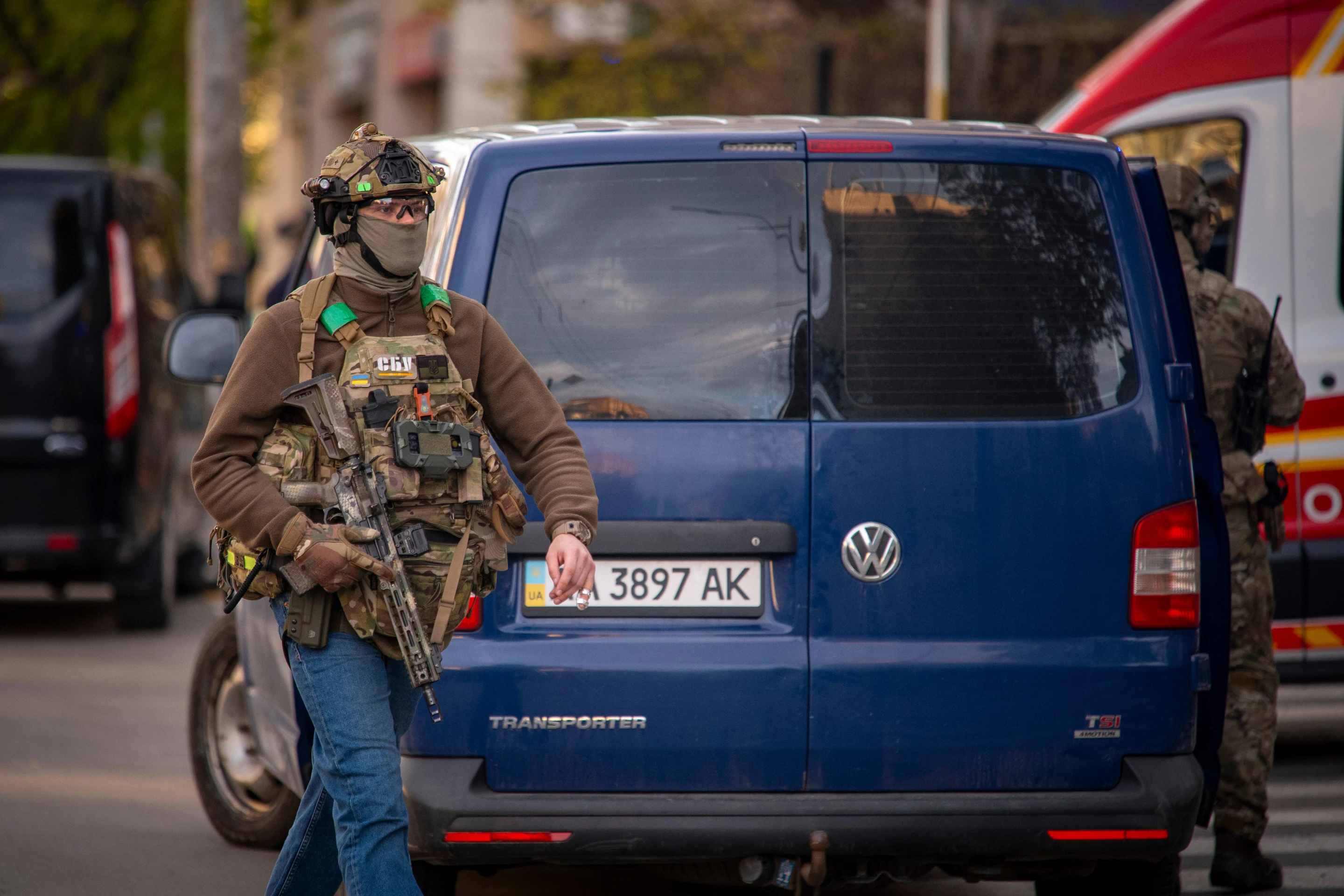
The response of security forces matters as well. The elimination of the gunman after the hostage situation indicates operational readiness and a willingness to act decisively. Yet even an effective intervention cannot undo the central fact: that such a scenario was possible in the first place.
In that sense, the Kyiv shooting is not only a tragedy, but a test. A test of whether the security system can adapt to new forms of threat, where the boundary between war and crime becomes increasingly blurred. A test of whether society is prepared to rethink the balance between freedom and control. And a test of whether the state can maintain public trust as the nature of risk evolves.
Seven deaths are no longer an anomaly. They form a pattern that demands interpretation. The question that remains extends beyond the circumstances of a single crime: whether the rear can still function as a space of safety when a long war begins to seep into the fabric of everyday urban life.