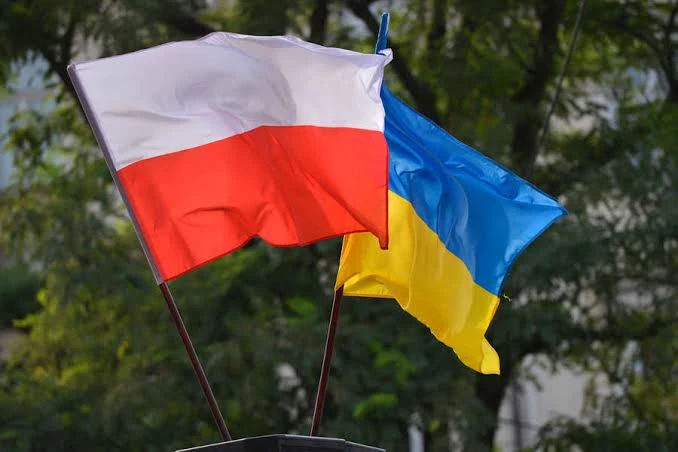



















Hungary has failed in its attempt to challenge through the courts one of the mechanisms used to finance military support for Ukraine. On September 9, the European Union’s General Court dismissed Budapest’s action against a decision governing the distribution of profits generated by frozen assets of Russia’s central bank.
The ruling matters beyond the immediate dispute between Hungary and EU institutions. The court had to determine whether it could review decisions taken under the bloc’s Common Foreign and Security Policy. It ultimately declined to examine Budapest’s arguments on their merits, concluding that it lacked jurisdiction over the case.
The dispute did not concern the confiscation of Russia’s sovereign reserves themselves. It focused on extraordinary revenues earned by European securities depositories while Russian central bank assets remain immobilized under sanctions. Under the EU’s legal framework, those revenues are treated separately from the frozen principal.
Hungary brought the case in August 2024, seeking to annul a decision by the committee governing the European Peace Facility on distributing part of those funds for military assistance to Ukraine. Budapest also challenged elements of the procedure through which the decision was adopted without Hungary taking part in the relevant vote.
Daycom’s preliminary analysis of open and verified documents indicates that the case reflects a broader dispute between Budapest and most other EU governments. Hungary sought to defend its role in collective decision-making, while the mechanism had been designed to allow funds for Ukraine to be allocated without requiring its effective consent.
The mechanism began taking shape in spring 2024, when EU governments agreed to use extraordinary profits arising from immobilized Russian reserves. Large central securities depositories were required to transfer most of the relevant net revenues to the Union once those earnings were generated from holding Russian central bank assets.
Under the original model, 90% of the proceeds were to be directed through the European Peace Facility for military support to Ukraine. The remaining 10% was intended for other EU instruments, primarily to support reconstruction. Brussels retained the option to revise that distribution as future needs evolved.
The first major transfer under the scheme took place in summer 2024. The European Union received about €1.5 billion in extraordinary profits accumulated after Russian assets were immobilized. Most of that amount was earmarked for military support to Ukraine, including ammunition and air-defense procurement.
The procedure for allocating the military share of those proceeds became the central issue in Hungary’s lawsuit. Budapest argued that it had been unlawfully excluded from the vote because Hungary was not treated as a participating state for the specific measures providing support to the Ukrainian armed forces.
Hungary maintained that this approach violated EU treaty provisions, the principle of equality among member states and the rules governing the European Peace Facility. In practical terms, Budapest argued that even if it declined to participate in financing a particular military measure, it should still retain a say over how the funds were allocated.
The dispute, however, ran into the special legal status of the EU’s Common Foreign and Security Policy. The bloc’s founding treaties sharply limit judicial oversight in this area, leaving much of foreign, security and defense decision-making to member states and political institutions rather than ordinary court review.
The General Court concluded that the decision challenged by Hungary was directly connected to foreign policy, security and the financing of military support for Ukraine. It therefore dismissed the action without determining whether Hungary’s exclusion from the vote was lawful under every argument raised by Budapest.
That distinction is essential to understanding the outcome. Hungary lost the case, but the court did not validate every element of the procedure established by EU institutions. It ruled instead that it lacked the authority to hear this particular dispute. The mechanism therefore survived because of jurisdictional limits, not a full ruling on the merits.
In practical terms, the contested decision remains in force. Budapest failed to secure its annulment, while the use of profits from frozen Russian assets continues as one source of support for Ukraine. The immediate legal risk that this particular court challenge could halt the mechanism has therefore been removed.
The underlying Russian state reserves themselves remain immobilized. The EU is using not the principal belonging to Russia’s central bank, but financial earnings generated while those assets remain under sanctions. That distinction allowed Brussels to create a structure legally separate from the direct confiscation of sovereign reserves.
The model emerged as a compromise between governments seeking the broadest possible use of Russian funds for Ukraine and those concerned about the legal and financial consequences of seizing sovereign reserves outright. Profits generated during immobilization became a way to partially bridge that fundamental divide.
European financial infrastructure plays a central role in the mechanism because a substantial share of the immobilized Russian state assets is held within it. The profits accumulated there have become a source of multibillion-euro revenues that the EU is gradually channeling toward Ukrainian defense and reconstruction.
Hungary’s lawsuit also demonstrated the limits of one member state’s ability to block support mechanisms that have already been created. Budapest has repeatedly diverged from its partners over military assistance to Kyiv, but this system was structured so that one government could not stop every subsequent allocation of funds.
For the European legal order, the case leaves a broader question about the boundaries of judicial review over EU foreign-policy decisions. When a financial measure is closely tied to military assistance and security policy, the courts’ room for intervention becomes far narrower, even when a member state claims that its procedural rights were violated.
The practical result is simpler than the legal architecture behind it: Hungary failed to overturn the mechanism directing profits from frozen Russian assets toward support for Ukraine. The decision remains in force, illustrating how the EU is gradually turning the financial consequences of sanctions on Russia into a longer-term resource for Ukraine’s defense.