






















Russia launched a large-scale overnight attack on Kyiv and the surrounding region on August 5, killing 14 people and injuring 27. Warehouses, logistics sites and urban infrastructure were hit as rescue teams continued searching for people beneath the rubble.
Air-raid alerts lasted for more than an hour across the capital, a city of roughly three million people. At least seven sites were struck in Kyiv. One person was killed inside the city and 24 were injured, four of them critically.
A warehouse near the city center was destroyed. Rescuers pulled two people from the ruins but warned that others might still be trapped. An ambulance driver was among those injured.
In Daycom’s assessment, the attack shows how Russia is shifting pressure from individual military targets toward the basic ability of a large city to function. A strike on a warehouse destroys more than a building: it interrupts deliveries, eliminates reserves and creates shortages far beyond the sound of the explosion.
Russian forces used four Zircon missiles, 24 Iskander-M missiles and 115 drones. Ukrainian air defenses destroyed or suppressed 98 of the drones but did not intercept any of the missiles.
That figure defines the central military problem exposed by the attack. Ukraine has become increasingly effective at countering large drone formations, but ballistic and high-speed missiles remain the most difficult element of Russia’s strike campaigns.
Drones exhaust the defense network, divide the attention of radar crews and consume ammunition. Faster missiles with more demanding flight profiles arrive when the system is already operating under intense pressure.
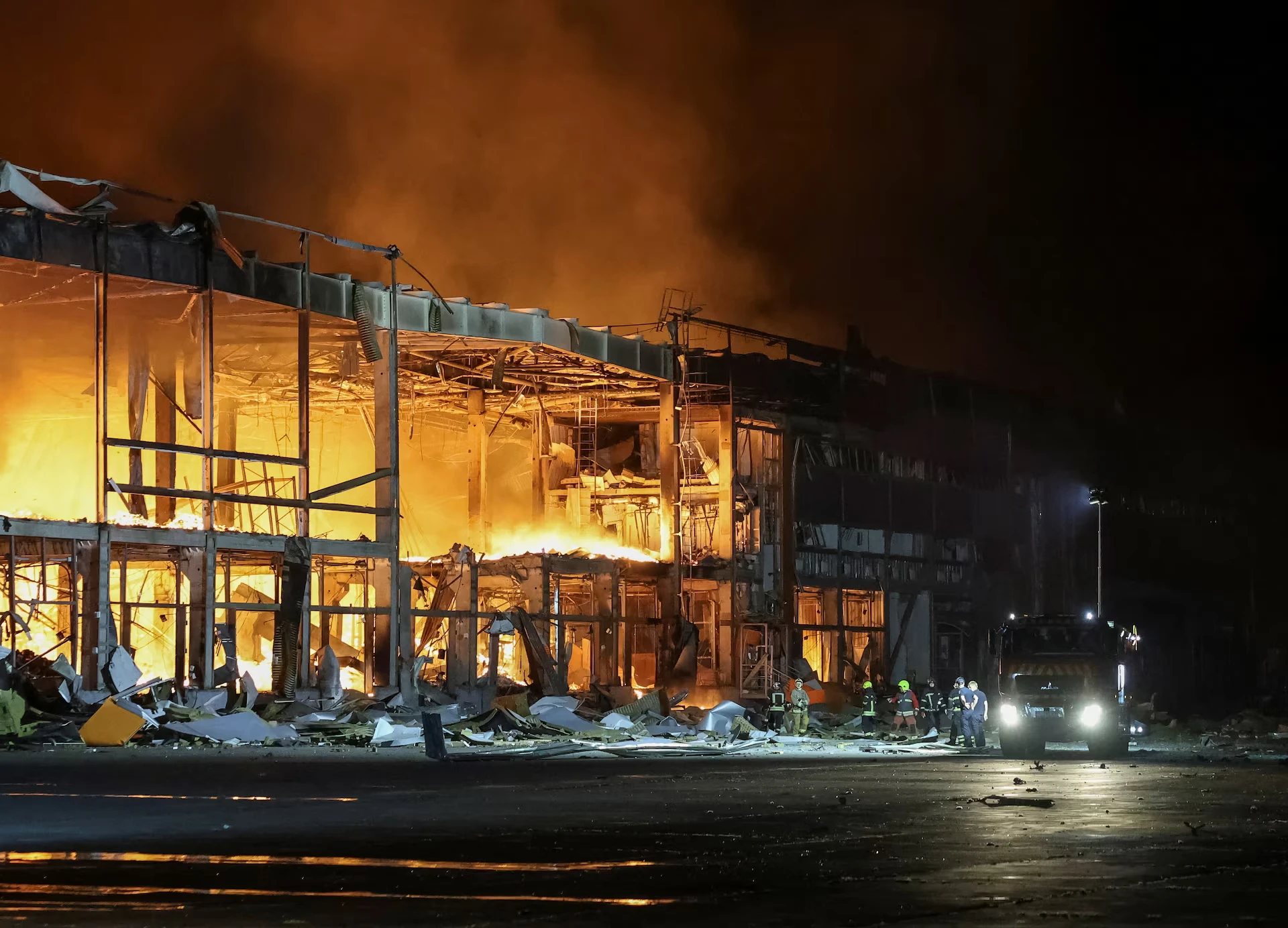
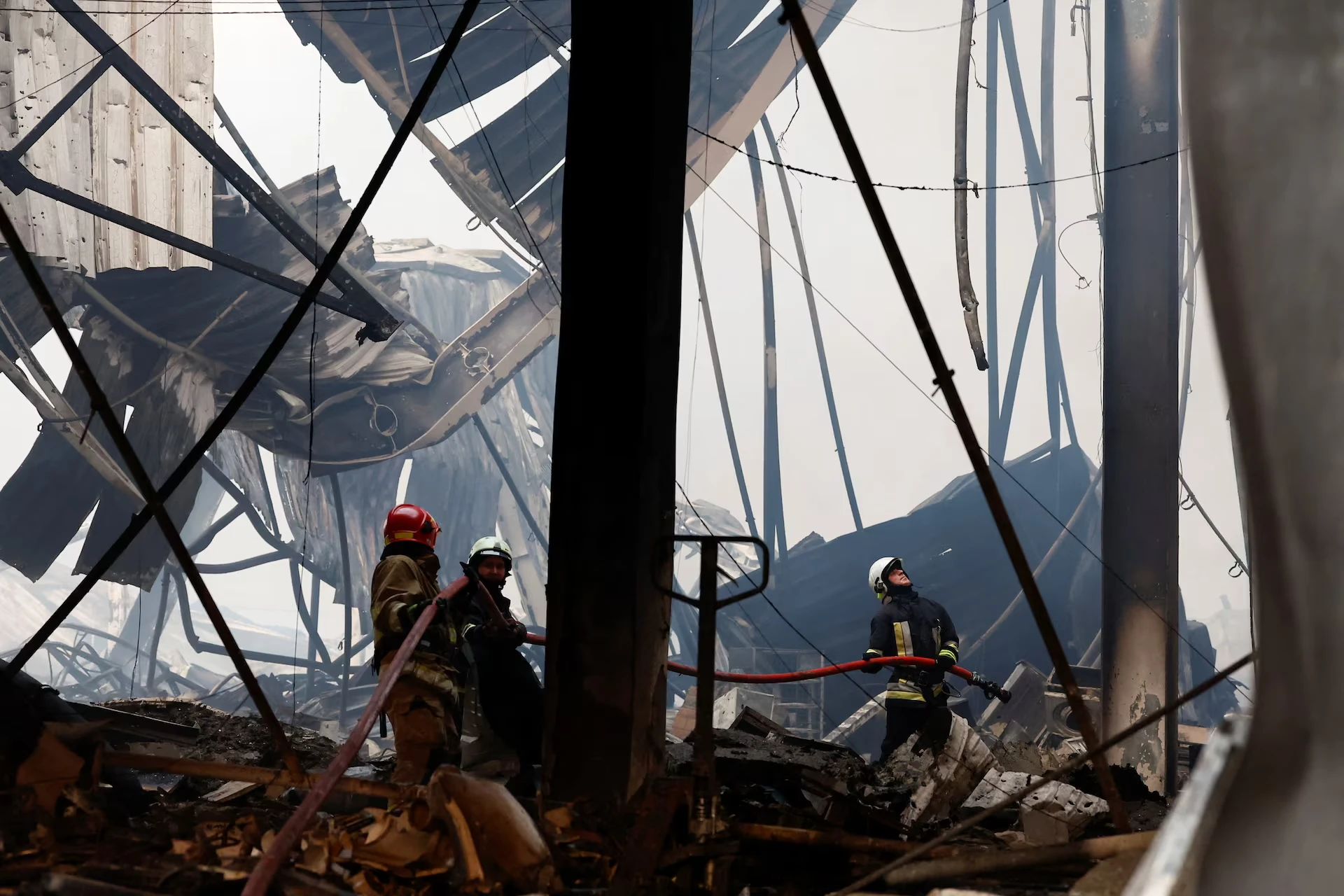 Пожежники працюють у логістичному центрі українського інтернет-магазину Rozetka після того, як він був уражений під час ночі російських ракетних атак та атак безпілотників на тлі нападу Росії на Україну, у Київській області, Україна, 5 серпня 2026 року — Томас Пітер
Kyiv needs additional PAC-3 missiles for its Patriot batteries, among the few weapons capable of intercepting Russian ballistic targets. Without an adequate stock of interceptors, the presence of the launch systems alone cannot guarantee protection.
Patriot missiles remain expensive, difficult to manufacture and scarce. Ukraine competes for them with American allies in the Middle East and with the United States military, which must preserve reserves for other potential conflicts.
Every strike on Kyiv has therefore become part of a global contest over a limited defensive resource. Russia expends missiles to damage Ukrainian cities while forcing Western governments to decide how much air-defense capacity they are prepared to transfer.
Discussions about allowing Ukraine to manufacture Patriot missiles could eventually reduce that dependence. Such an arrangement, however, would require technology transfers, licenses, new production lines and durable political commitments.
Even an agreement would not produce an immediate supply. Kyiv needs interceptors now, while domestic manufacturing would be an answer to a war that may continue for years.
The scale of the attack indicates that Moscow is still testing Ukrainian air defenses through exhaustion. Combining missiles and drones allows Russian forces to overload radar coverage, vary flight routes and increase the probability that at least some weapons will reach their targets.
This time, fires spread through warehouse and industrial areas. A large blaze broke out on the city’s outskirts, missile debris fell near an apartment building, and an ammonia leak occurred at one of the damaged sites.
A chemical leak turns a conventional rescue operation into something much more dangerous. The threat does not end when the strike is over: emergency crews must work among unstable structures, fires, toxic substances and the possibility of another attack.
Early reports that a 20-story residential building was on fire were later found to be inaccurate. Such confusion is common in the first hours after a mass strike, when information arrives in fragments and the scale of destruction cannot yet be established.
The confirmed toll was grave enough. Fourteen deaths across Kyiv and the surrounding region made the attack one of the deadliest recent assaults on the area.
Moscow said it had struck logistics hubs and supply centers allegedly used for military purposes. The precise function of every damaged site could not be independently established in the immediate aftermath.
Even a warehouse connected to military logistics, however, may stand beside residential districts, roads and civilian businesses. In a large city, the boundary between an industrial zone and ordinary urban life is rarely absolute.
That is why attacks on logistics have such a broad effect. They may destroy cargo, vehicles and production stocks while also killing workers, drivers, guards, medical personnel and residents of nearby buildings.
Warehouses have become a separate front in the war. They lack the symbolic weight of government buildings, but supply chains, trade, repairs, medicine and the routine operation of cities depend on them.
Russian attacks are increasingly aimed at places where goods are accumulated before distribution. The loss of a single logistics center can affect dozens of companies and thousands of people who have never seen the destroyed site.
Ukraine, for its part, has also expanded attacks on Russian logistics infrastructure. One of its latest targets was another warehouse complex linked to Wildberries, Russia’s largest online retailer.
Such facilities can have dual significance. They may serve ordinary commerce while also moving goods useful to the military. Yet attacks on commercial infrastructure increase the risk that the boundary between military necessity and economic warfare will continue to erode.
As the conflict lengthens, logistics becomes a central target for both sides. Armies depend not only on tanks and missiles, but on warehouses, trucks, repair depots, sorting centers and reliable delivery routes.
Still, destroying a logistics facility is not the same as achieving a strategic result. A lost warehouse may create a temporary shortage, but it rarely alters the course of a war by itself.
For civilians, the consequences are much more immediate. People die beneath collapsed structures, neighborhoods fill with smoke, roads are closed, and emergency services spend hours containing fires and hazardous leaks.
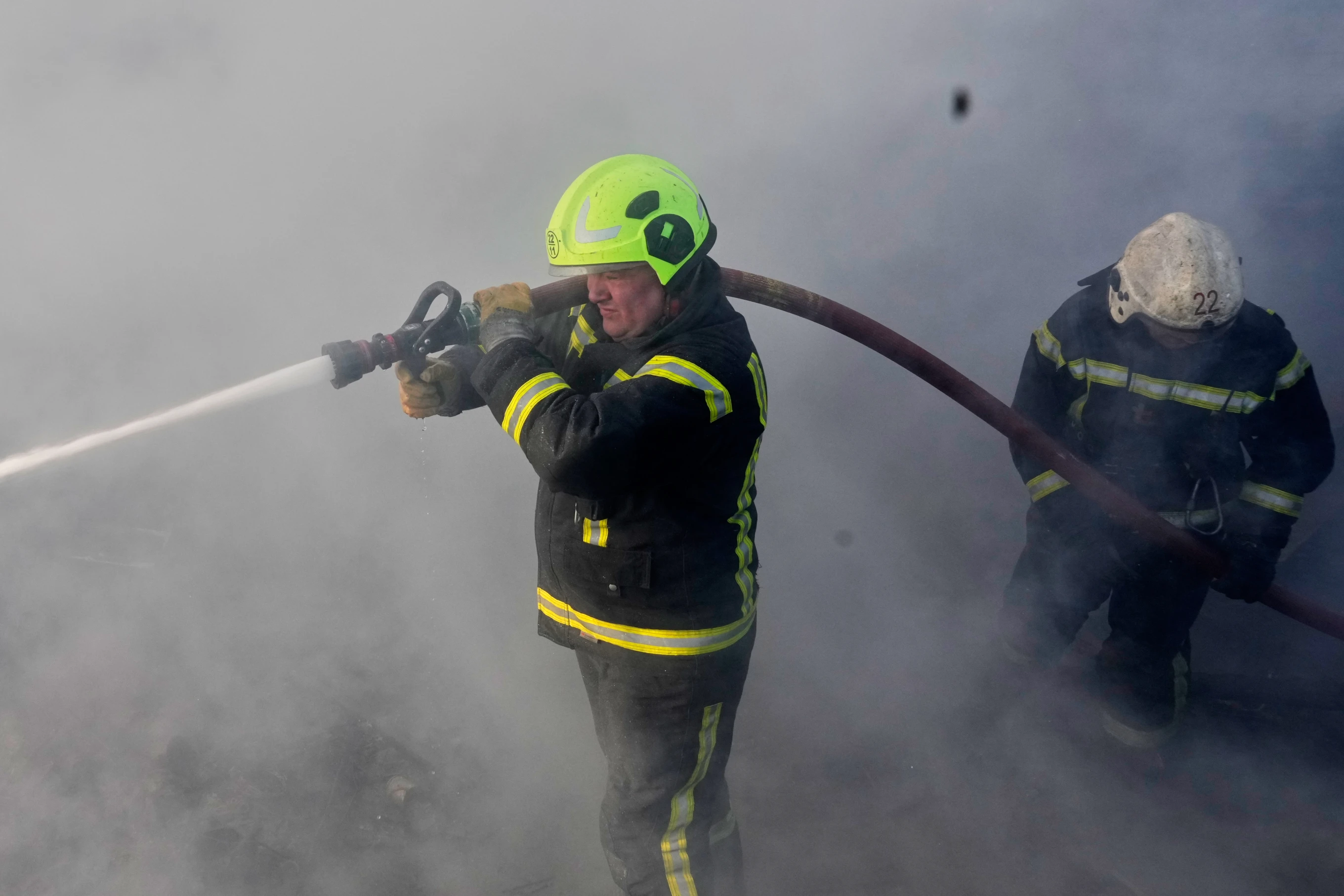
The attack also revealed the growing importance of the resilience of Ukraine’s rescue system. Firefighters, medics and utility workers no longer operate after the danger has passed; they work inside the continuing threat.
The injured ambulance driver embodies that vulnerability. The people sent to save others are themselves exposed to missile debris and blast damage, while the loss of every trained specialist weakens the response to the next attack.
Russia’s strategy is designed to create precisely this kind of cumulative pressure. A single night cannot paralyze Kyiv, but each assault damages another piece of infrastructure, depletes air-defense stocks and increases the burden on those responsible for rebuilding the city.
The capital continues to function, but maintaining that appearance of normality requires constant mobilization. Behind the morning traffic are overnight rescue operations, emergency repairs and supply routes redirected around damaged districts.
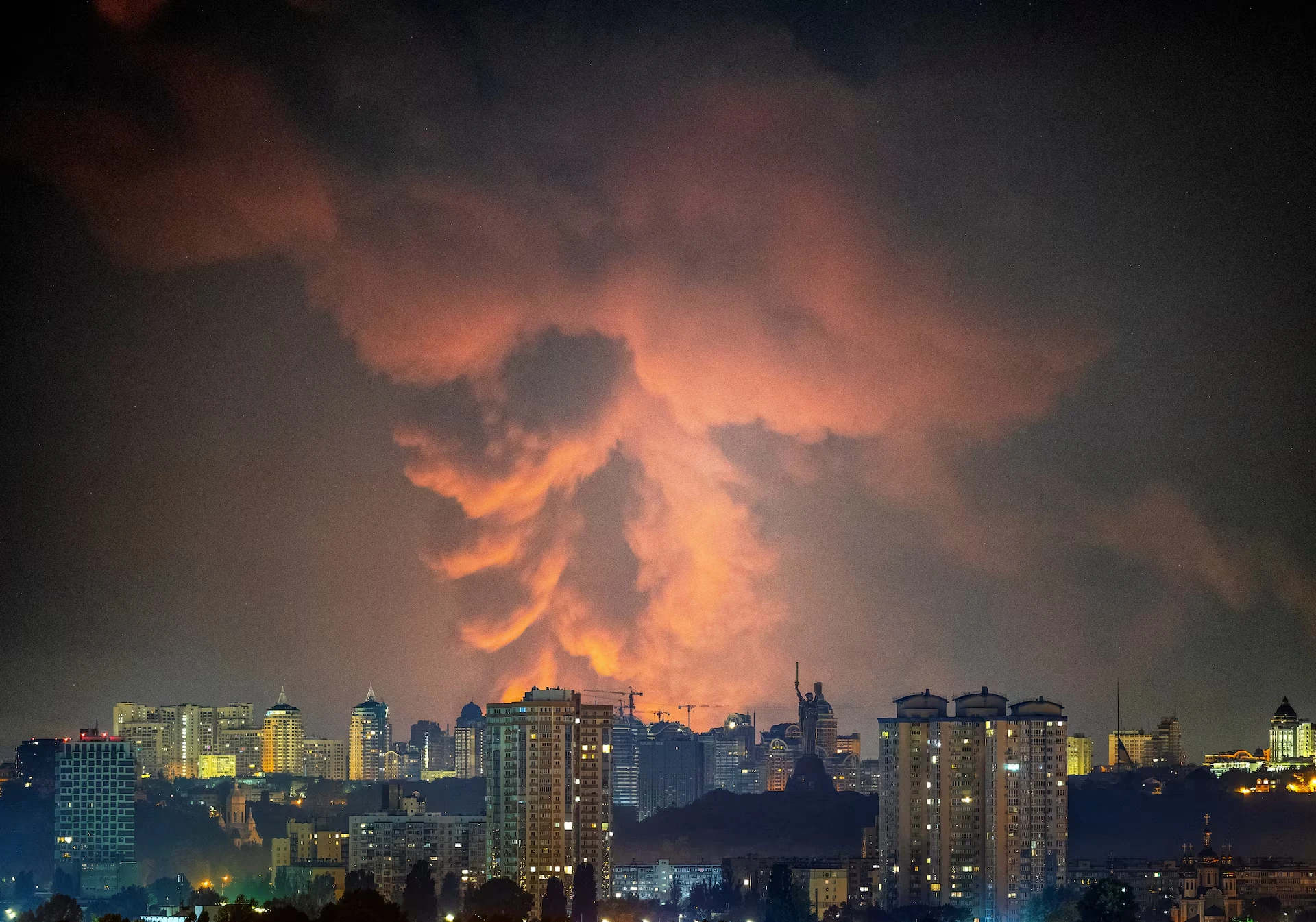 Дим піднімається в місті під час російського ракетного удару на тлі нападу Росії на Україну, у Києві, Україна, 5 серпня 2026 року — Владислав Содель
The greatest strategic danger is not one missile breaking through, but such breakthroughs becoming routine. If Patriot batteries do not receive enough interceptors, ballistic strikes will become predictably effective.
Ukraine may then be forced to concentrate protection around a limited number of critical sites, leaving industrial districts, warehouses and transport hubs more exposed.
The answer requires more than additional air-defense systems. Ukraine also needs a different logistics architecture in which supplies are dispersed, warehouses are duplicated and delivery routes are designed so that the destruction of one center cannot stop an entire network.
Such a system is more expensive and less efficient than the centralized model of peacetime. In war, however, excessive concentration turns economic efficiency into vulnerability.
The overnight assault on Kyiv was simultaneously a tragedy, a military signal and a test of the country’s resilience. Fourteen deaths were the human cost. The missiles that penetrated Ukrainian defenses exposed the limits of protection. The destroyed warehouses indicated where Russian pressure is increasingly focused.
Moscow seeks not only to break through air defenses, but also to convince Ukrainians that no district, warehouse or route can be protected with certainty. The response will depend on whether Ukraine can transform isolated, vulnerable facilities into a network capable of surviving repeated losses.
Kyiv endured the attack. Yet the destruction made clear that the struggle for the capital is no longer fought only in the sky. It continues in warehouses, industrial zones, emergency corridors and beneath the debris, where rescue teams search for survivors after the final missile has already fallen.