






















Less than a day after Washington and Tehran announced a cease-fire, its most dangerous weakness came into view. The problem was not the wording alone, but the borders of the agreement itself. The moment both sides were forced to answer whether Lebanon was inside or outside the deal, the truce stopped looking stable and began to resemble a diplomatic interval between two phases of a wider war.
The dispute is simple, which is precisely why it is so combustible. Tehran insists that if Israel continues striking Hezbollah in Lebanon, then talk of a real cease-fire is hollow. Washington says the opposite: the arrangement applies only to the direct U.S.-Iran confrontation, not to the Lebanese front. That single disagreement has already turned what was presented as de-escalation into a test of competing political realities.
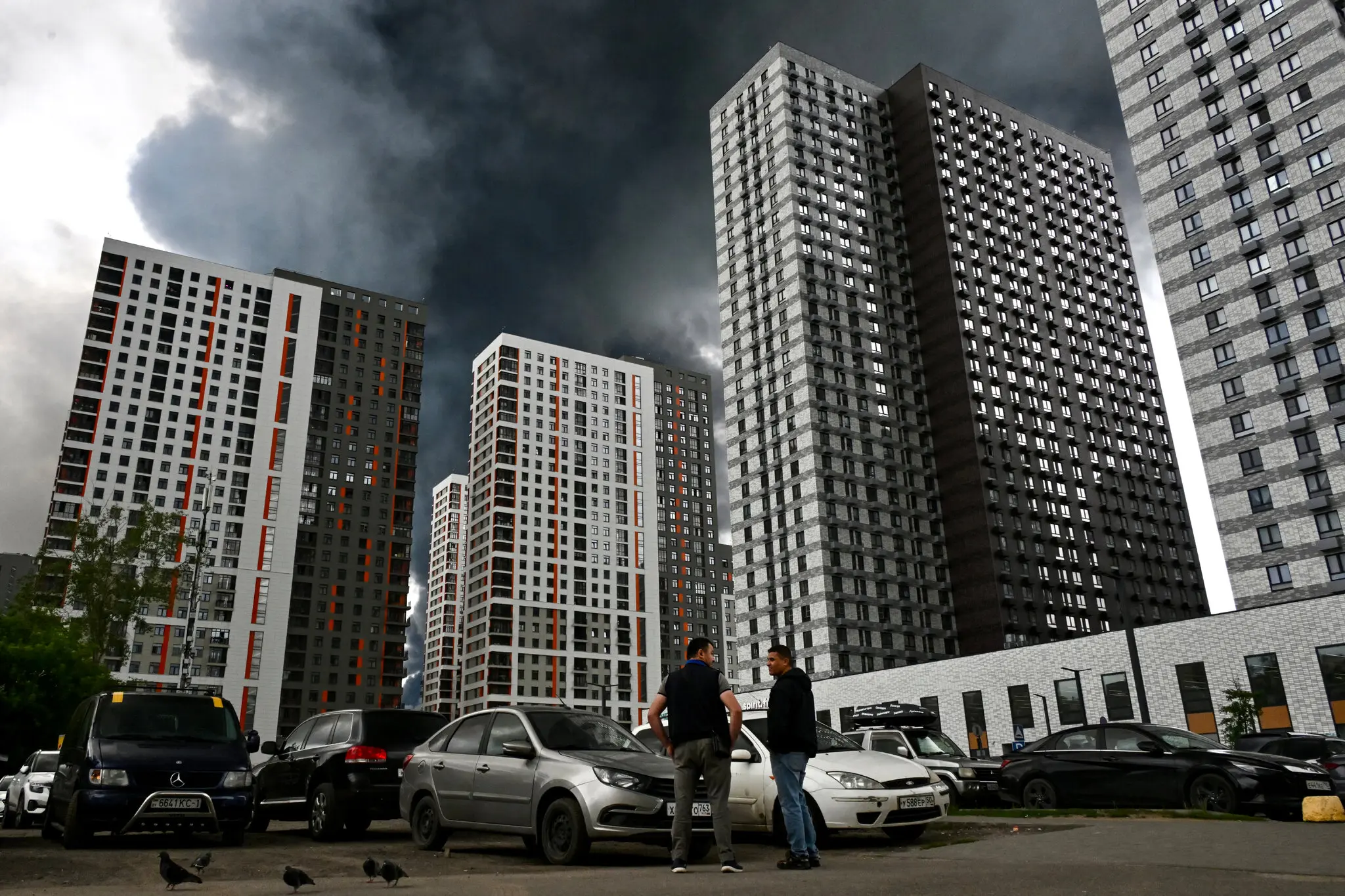
Israel’s strikes on more than one hundred targets in Lebanon, including densely hit areas of Beirut, made the contradiction impossible to soften. In the first hours after the attacks, officials reported mass casualties, and the toll rose as the scale of destruction became clearer. In practical terms, every ambiguity in the cease-fire is now being measured not in diplomatic language, but in bodies, rubble and the speed with which the region can slide back toward escalation.
According to Daycom’s earlier analysis, this is the structural flaw at the heart of the truce. It was designed as a mechanism to reduce tension between two states, but it collided with the real shape of Middle Eastern power, where Iran does not act only through its own military. It acts through allies, proxy forces and peripheral fronts that are central to its strategy even when they are treated as secondary in formal diplomacy.
For Tehran, Hezbollah is not a symbolic add-on to the war. It is one of the pillars of Iran’s regional deterrence system. If Iran appears willing to let a key ally absorb sustained Israeli punishment while it claims diplomatic progress elsewhere, it sends a dangerous message across the entire axis of resistance: in the decisive moment, Tehran cannot guarantee political cover for those who fight on its side. That would be more than an embarrassment. It would be a strategic failure.
This is why Iranian rhetoric has hardened so quickly. Its real audience is not only Israel, and not only domestic opinion. It is the White House. Tehran is effectively telling Washington that it cannot present itself as the steward of a cease-fire while allowing its closest regional ally to continue attacking one of Iran’s most important partners. In that logic, Lebanon becomes a test not of Israeli restraint, but of American control over the consequences of its own diplomacy.
Washington, by contrast, is trying to keep the agreement narrow enough to remain manageable. That instinct is understandable. The wider the recognized perimeter of the truce, the greater the burden on the United States to restrain Israel, secure maritime routes and stabilize the full arc of confrontation from Lebanon to the Strait of Hormuz. But that effort to narrow the deal also creates the risk that could destroy it. If one side sees the truce as regional and the other sees it as strictly bilateral, then the two sides are no longer operating inside the same political map.
That is the point at which Lebanon stops being a secondary theater and becomes the place where the meaning of the entire arrangement is decided. As long as Beirut and southern Lebanon remain under fire, and as long as Hezbollah retains the capacity to answer, Tehran can plausibly argue that the war has not stopped at all. It has only been redistributed. And that makes the cease-fire vulnerable not because it has formally collapsed, but because its central claim is already being contested by events on the ground.
The role of mediation only sharpens the problem. When even those involved in brokering the arrangement appear to hold different understandings of what was actually agreed, the diplomatic structure begins to weaken at the level of interpretation. Once that happens, military force starts determining the meaning of the agreement more than the agreement determines the use of force. In the Middle East, that is often the first sign that a cease-fire is becoming a pause rather than a settlement.
For Israel, the present ambiguity offers short-term freedom of action. It can continue its campaign against Hezbollah while avoiding the language of direct defiance toward the U.S.-Iran truce. But that convenience may not last. The longer Lebanon remains outside the practical boundaries of the cease-fire, the more likely it becomes that Tehran will conclude that rhetorical pressure is no longer enough. At that point, an ally of the United States would in effect be helping decide how long the pause between Washington and Tehran can survive.
The hardest truth is that this agreement was never only about stopping fire between two capitals. It was also, whether acknowledged or not, about the wider network through which this war is actually fought. If Hezbollah is excluded, Iran will see the truce as selective and incomplete. If Lebanon must eventually be included, Washington will face a more difficult obligation than issuing statements about de-escalation. It will have to confront the question of whether it is willing to limit Israeli action in a live war zone.
That is why the argument over Lebanon is not procedural noise. It is the central question of the current pause. The cease-fire can endure only if the parties agree not merely on silence between themselves, but on the limits of violence for allies, proxies and adjacent fronts. Without that, what exists is not a durable framework for peace. It is a fragile arrangement surrounded by exceptions large enough to destroy it.
Lebanon has once again become the place where the region reveals its real nature. In the Middle East, war does not stop simply because two governments say it has paused. It continues through those who fight in their orbit, through cities treated as extensions of other people’s strategy, and through the unresolved geography of power. Right now that geography has a name: Beirut. And it is there, more than in Washington or Tehran, that the fate of this cease-fire is being decided.