
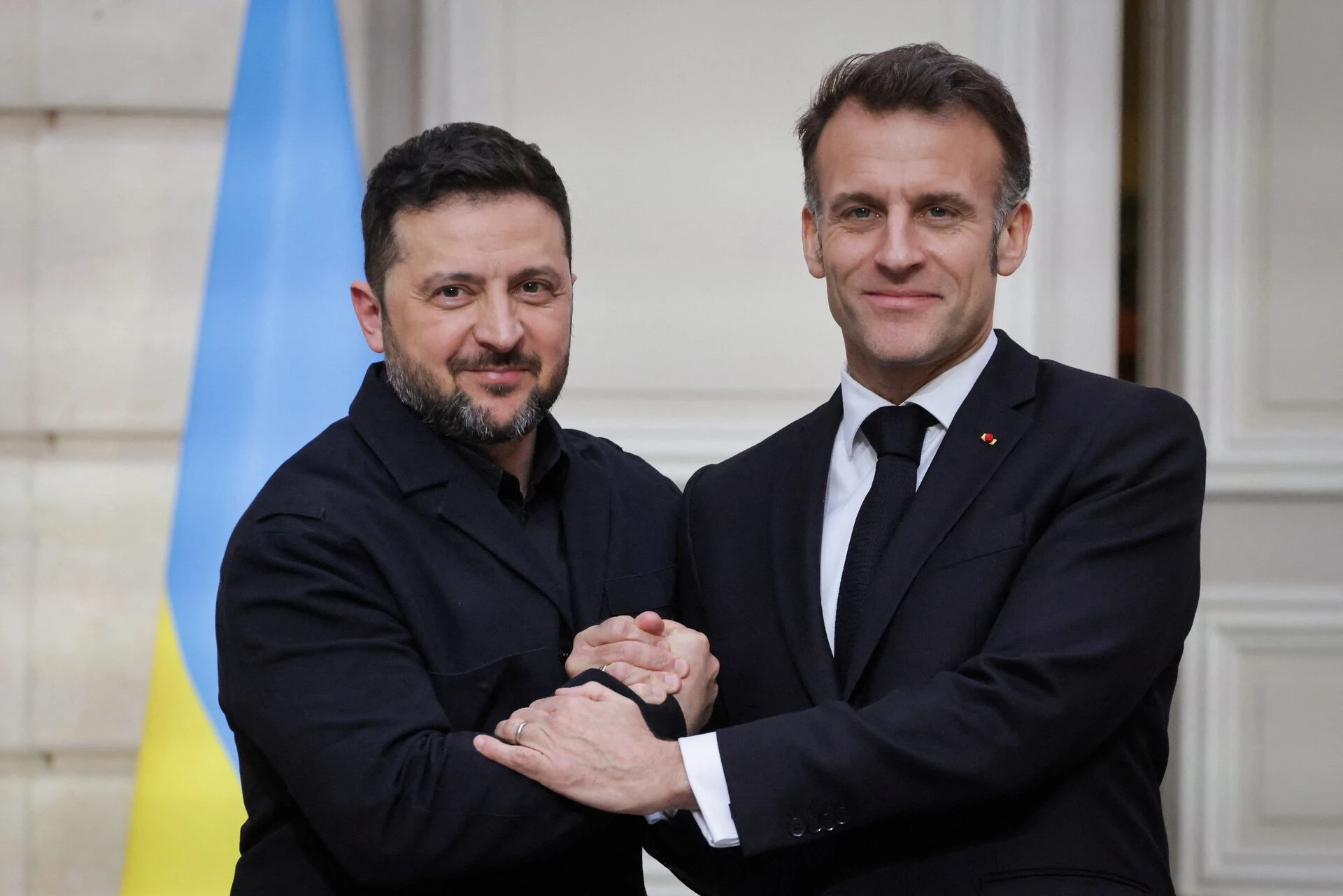















Emmanuel Macron is trying to untie the most dangerous knot in the Iran crisis: the Strait of Hormuz not after peace, but before it. The French president has called on the United States and Iran to immediately and unconditionally lift their blockades of the maritime corridor on which a major share of global energy depends.
His proposal sounds simple, but politically it is difficult. Paris wants to separate freedom of navigation from the wider negotiations over Iran’s nuclear program, ballistic missiles and support for allied forces across the region. In other words, open the sea first — and only then bargain over everything else.
For Europe, this is not abstract diplomacy. The blocked strait is already affecting fuel prices, insurance, logistics, fertilizers, industry and the political stability of Gulf partners. The longer Hormuz remains hostage to war, the more expensive each day of uncertainty becomes.
According to Daycom’s earlier analysis, Macron’s initiative matters because it shifts the focus from military control to economic necessity. The United States and Iran may continue arguing over a cease-fire, but global trade cannot wait until they settle the entire architecture of a future agreement.

The French logic is clear: the Strait of Hormuz should not be held hostage to either side’s maximum demands. If Tehran uses it as leverage in negotiations, and Washington responds with blockade and military escorts, then not only the adversaries are trapped, but also allies, importers, seafarers and entire markets.
That is why Paris and London are working on a multinational maritime mission. Its purpose would be to escort commercial vessels, conduct demining operations and gradually restore safe passage. But such a mission requires at least a minimal reduction in tensions; otherwise, every escort risks becoming a battle.
France has already sent a signal of readiness: the aircraft carrier Charles de Gaulle has been deployed to the Red Sea with escort ships. That does not mean an immediate entry into Hormuz, but it shows that Europe no longer wants to remain a spectator to a crisis that is damaging its economy.
The problem is that Iran is unlikely to accept this formula easily. For Tehran, control over the strait is one of the few major levers left after American strikes, sanctions and blockade. Taking Hormuz out of the larger negotiations would mean surrendering part of that pressure before receiving concessions.
The United States is also in a contradictory position. Donald Trump has paused the American escort operation, citing progress in negotiations, while keeping the blockade of Iranian ports in place. This is neither peace nor full escalation, but an unstable middle ground in which the market sees no clear rules.

Macron is effectively proposing that rules return before either side agrees on victory. His approach is less dramatic than American statements about opening the strait by force, but potentially more practical. Shipping does not need a one-time passage under destroyer protection; it needs a regime trusted by insurers and cargo owners.
Such a regime is impossible without Iran, even if its actions are regarded as unacceptable. Tehran has enough asymmetric tools — drones, missiles, boats, mining threats and permit mechanisms — to make passage too risky. The strait can be guarded by force, but it can hardly be normalized without a political channel.
At the same time, the French initiative is not a gift to Iran. It calls for a return to the full freedom of navigation that existed before the war, not recognition of Iran’s right to issue permits to vessels. For Paris, the key point is not concession to Tehran, but breaking the link between maritime blackmail and nuclear negotiations.
That is the subtlety of the proposal. Macron is not saying that the nuclear program, missiles or regional armed groups should disappear from the agenda. He is saying that a global energy artery cannot remain closed until all those difficult bargains are completed. Otherwise, Hormuz will become a permanent hostage to every new crisis.
For Gulf states, this is a matter of survival for their trade model. Attacks on Emirati infrastructure and incidents involving ships have shown that the war is no longer confined to the U.S.-Iran confrontation. Ports, oil infrastructure, crews and insurance routes are becoming part of the battlefield.

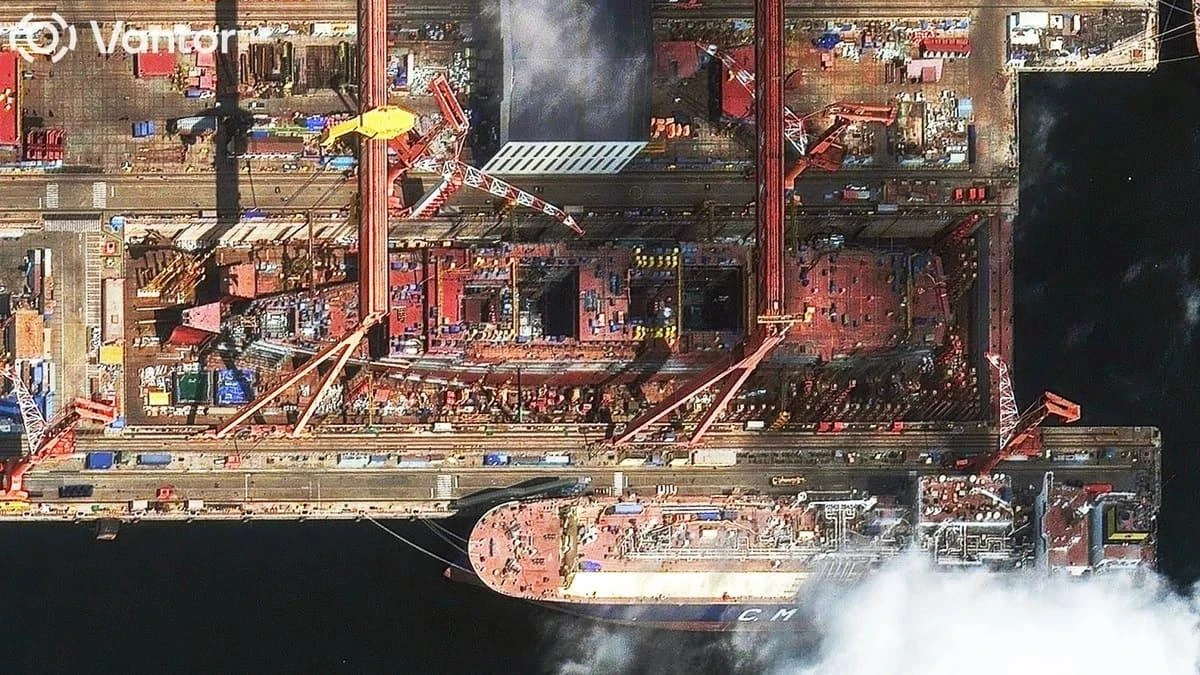
The incident involving a container ship owned by the French company CMA CGM only increased the pressure on Paris. When vessels belonging to national companies are hit, diplomatic distance becomes politically impossible. France has experienced Hormuz not as a map, but as a direct risk to business and human life.
For Europe more broadly, this is also a lesson in dependence. Even without direct participation in the war, Europe is paying for blocked sea routes through prices, logistics, inflation expectations and unstable supply chains. That is why European capitals are increasingly unwilling to wait while Washington and Tehran define the tempo of the crisis on their own.
Macron’s proposal could become a bridge toward de-escalation, but only if the sides choose to treat it as a practical exit rather than another front in a symbolic struggle. The United States would have to accept that opening the strait matters more than demonstrating sole control. Iran would have to accept that maritime blackmail cannot be a sustainable basis for negotiation.
The coming days will show whether there is room for the idea. Trump is already threatening new strikes if Iran refuses concessions. Tehran speaks of diplomacy while insisting on its own rules for passage. Between those positions, France is trying to find a narrow corridor wider than Hormuz itself.
Macron’s formula does not guarantee peace. It merely recognizes the obvious: waiting for a complete political settlement while one of the world’s main energy chokepoints is blocked means allowing war to govern the economy. Opening Hormuz before peace is not an ideal scenario. But increasingly, it looks like the only way to prevent the crisis from turning the sea into a permanent hostage zone.