


















Cuba’s medical crisis is no longer a story about a few missing drugs or temporary hospital disruptions. It is a breakdown of the entire chain of care, in which a ventilator depends on a charged battery, an operating room depends on diesel, and a patient’s odds of survival are increasingly determined not by diagnosis, but by whether electricity and fuel are still available.
That is why the accounts of sick infants, canceled surgeries, silent pharmacies, and stalled ambulances should not be read simply as a dispatch from Havana. They amount to a diagnosis of the Cuban state model itself. The island did not arrive at this point suddenly. U.S. sanctions, fuel scarcity, chronic poverty, monetary collapse, and long-term policy failure have converged into a single humanitarian mechanism of attrition.
According to Deikom’s assessment, the decisive rupture came when the energy crisis stopped being a background condition and became the core of medical degradation. For decades, Cuban health care compensated for the weakness of the broader economy and served as the regime’s most persuasive claim to social legitimacy. Now the opposite is happening: medicine has become the place where the state’s fragility is most brutally exposed.
That reversal is what makes the current moment so politically serious. Cuba’s health system was not merely another public service. It was one of the island’s foundational myths: universal, disciplined, preventive, and morally superior to the inequalities of the wider region. Once that system can no longer guarantee safe childbirth, regular dialysis, or continuous ventilation for the most vulnerable patients, the crisis ceases to be sectoral. It becomes existential for the state’s own narrative.
The material in the reporting makes clear that the stress now runs through every layer of care. Hospitals are canceling operations because staff cannot commute and generators cannot be trusted. Clinics are struggling to maintain chemotherapy and dialysis schedules through repeated outages. Ambulances sit idle because there is no fuel. Pharmacies remain bare because the cash-starved state cannot reliably import or manufacture medicine.
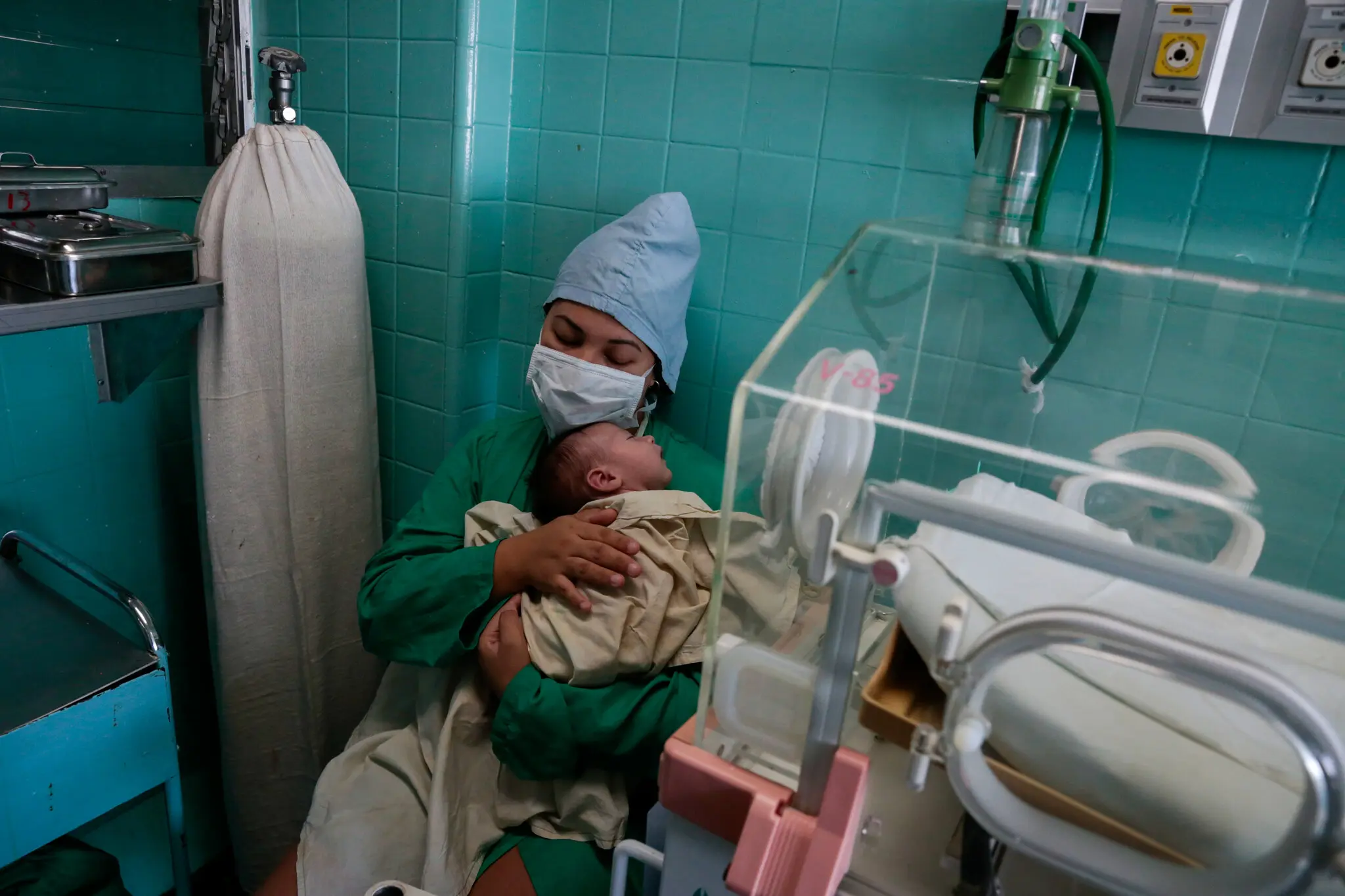 Ліагні Акоста тримає свою двотижневу дитину Айрана, яка госпіталізована з респіраторним захворюванням у Гавані. Кубинські медичні працівники проводять сортування пацієнтів через енергетичну кризу, спричинену нафтовою блокадою США — Хорхе Луїс Баньос
The cruelest aspect of the breakdown is that it strikes hardest where time is least forgiving. In neonatal units, life-support systems can go dark for crucial minutes while backup power struggles to start. Medical workers are forced to hand-pump air into the lungs of newborns because battery systems failed years ago and were never replaced. This is not a decline in quality of care. It is medicine operating at the edge of preventable death.
Maternity wards offer perhaps the clearest indicator of systemic decay. Doctors describe more severe deliveries, more underweight mothers, more premature births, and a lack of antibiotics that allows infections to spread more easily. In such a setting, even the cleanliness of delivery rooms and the timely arrival of staff become functions of fuel availability. Obstetrics stops being a purely medical question and becomes part of the island’s energy emergency.
This is why the rise in infant mortality described in the reporting is so devastating. For a country that long built its reputation on maternal and child health, the deterioration of newborn survival is not merely a bad statistic. It is a political refutation of the system’s self-image. Once the state can no longer reliably protect infants, one of its strongest moral claims begins to erode in public view.
Still, it would be too simple to explain everything through sanctions alone. The crisis has also been shaped by Cuba’s own structural failures: a rigid state-planned economy, dependence on imports, a tourism bet that did not deliver stability, mismanaged monetary reforms that wrecked the peso, and a political model that suppresses the emergence of genuine alternatives. Cuba entered this period already weakened. External pressure then made that weakness lethal.
Yet the opposite simplification would be just as misleading. In the conditions described here, U.S. pressure does not operate as a narrow punishment of the government. It cascades through civilian infrastructure. If a state runs short of fuel, the damage does not stop at transportation or industry. It reaches vaccine refrigeration, water pumps, hospital sterilization, ambulance routes, remote medical work, and the daily logic of emergency care itself. A geopolitical decision is translated directly into bodily risk.
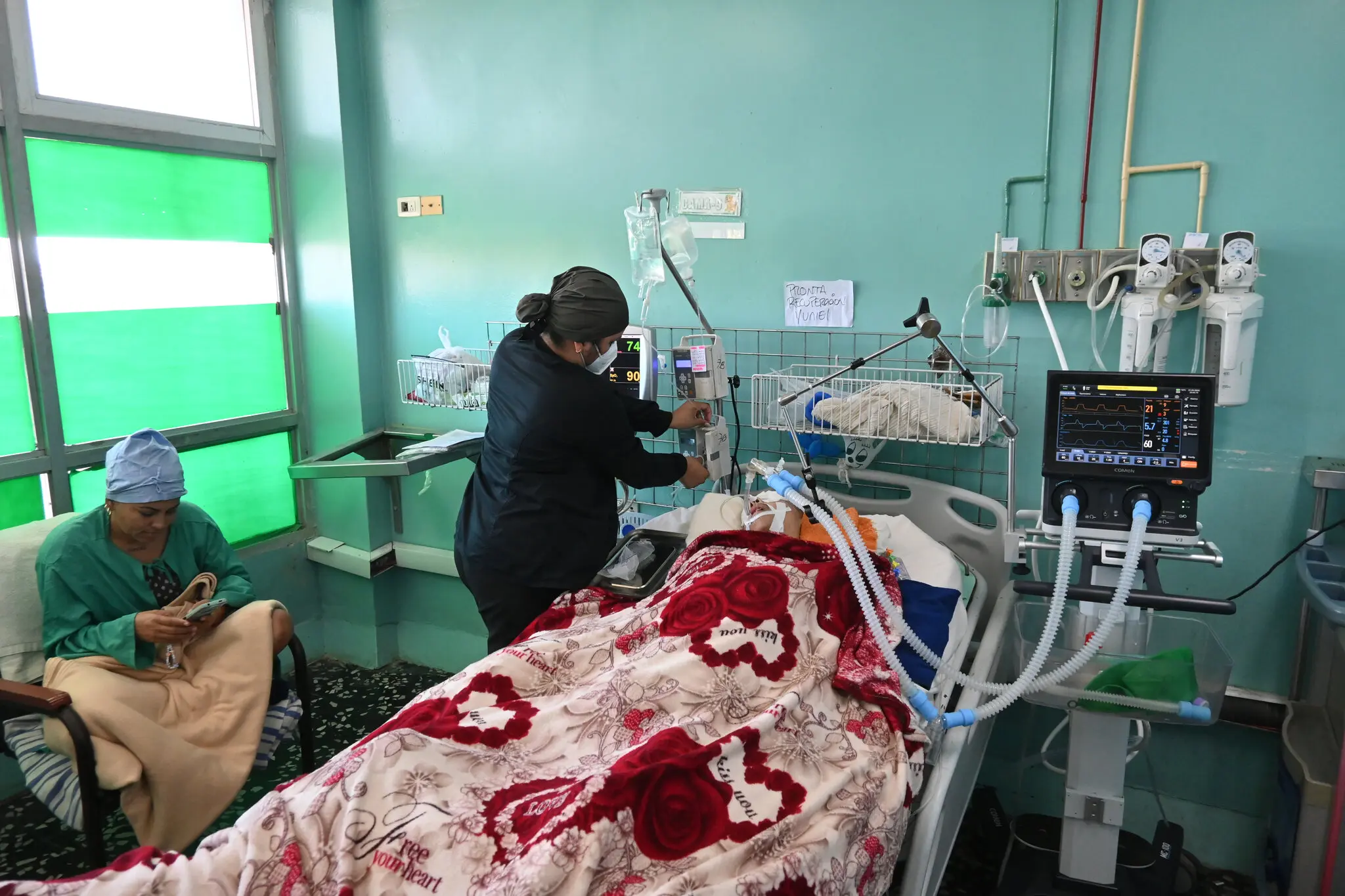 Апарати життєзабезпечення стали особливо вразливими частинами медичної системи, оскільки відключення електроенергії можуть вивести їх з ладу на кілька хвилин, поки не ввімкнуться резервні генератори — Хорхе Луїс Баньос
That is why the government’s emergency use of solar panels, though necessary, cannot be mistaken for recovery. A panel may keep a small clinic lit or support the home of a critically ill child, but it cannot replace the diesel needed for surgery, refrigeration, drug distribution, ambulance fleets, and the larger national chain of medical logistics. These are survival patches, not a systemic answer.
The crisis is also consuming the human core of the system. Family doctors and nurses are carrying heavier loads because colleagues have left for the private sector or emigrated altogether. Those who remain live under the same blackouts, transport failures, and food shortages as their patients. In other words, the health system is not only losing equipment and electricity. It is exhausting the very people expected to hold it together.
This is what makes the current collapse so revealing. Cuban medicine used to function as the state’s great compensatory institution, the area where scarcity could be morally redeemed through organization and equal access. Now that compensation mechanism is failing. A system that once symbolized order is beginning to mirror the full disorder of the country around it.
The broader implication is severe. If universal health care can no longer provide basic security to a newborn, a ventilator-dependent patient, or a person waiting for surgery, then the Cuban crisis is no longer just about hospitals. It is about the unraveling of one of the last major pillars of political legitimacy on the island. Health care was supposed to prove that the Cuban model could still deliver. It is now showing how much of that promise has already been spent.
The hardest conclusion is also the clearest one. Cuba’s medical system is no longer compensating for the weakness of the state. It has become its most painful reflection. If fuel scarcity, blackouts, economic exhaustion, and supply collapse continue to reinforce one another, the island will lose more than medicine. It will lose the final large symbol through which it still claimed social distinction. And once that symbol fails, the question is no longer how good Cuban health care once was, but how long the system can keep people alive between blackout and breakdown.
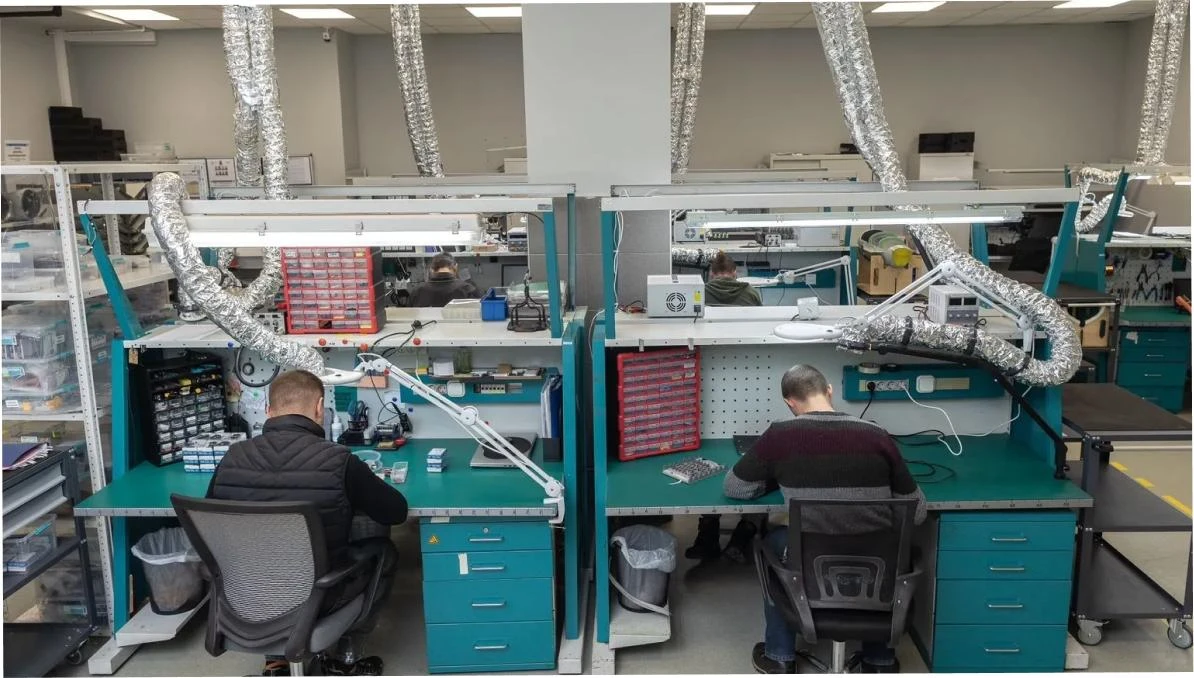
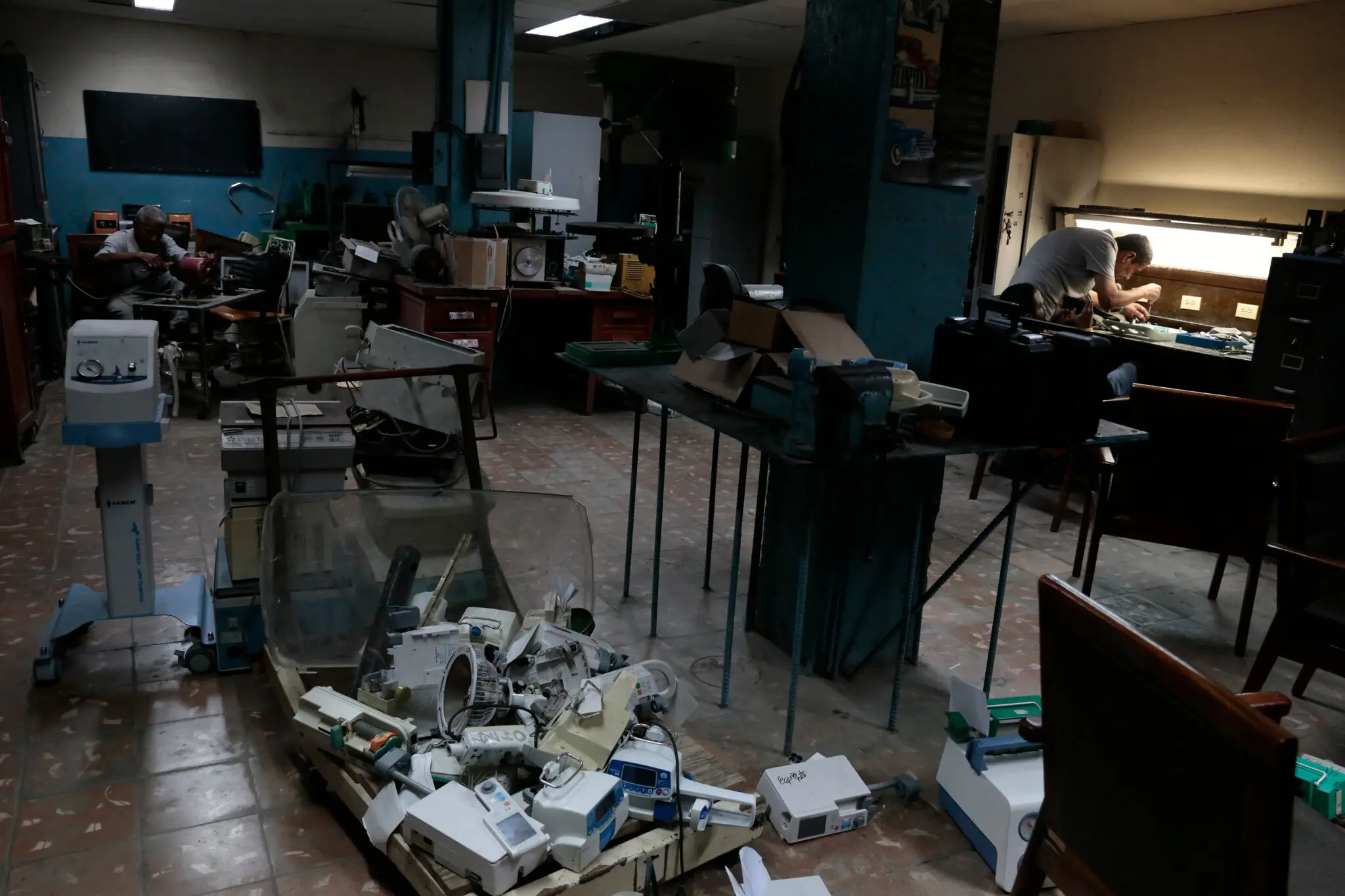 Техніки ремонтують медичне обладнання в майстерні Гавани, використовуючи деталі від старих машин. Санкції США ускладнили отримання Кубою нового обладнання — Хорхе Луїс Баньос