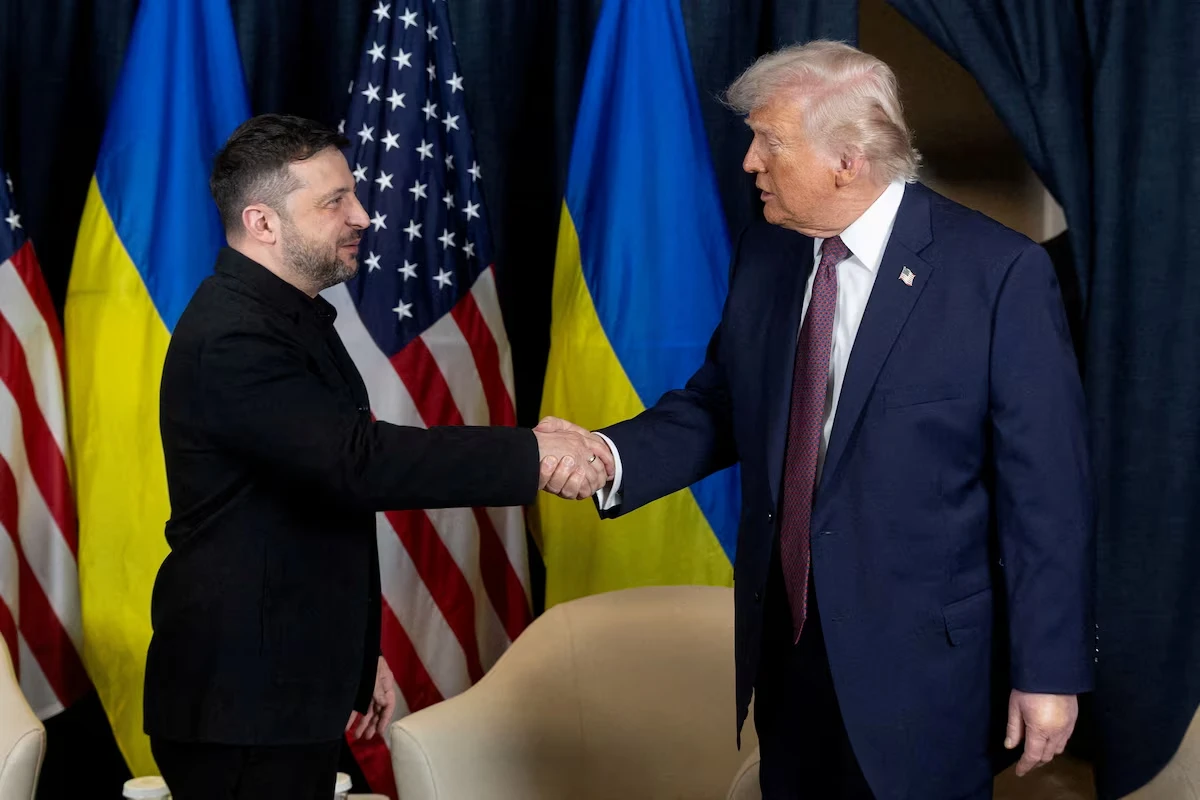






















Donald Trump’s remark about Giorgia Meloni was brief, but politically heavier than many official statements at the G7 summit. The U.S. president said the Italian prime minister had badly wanted a photo with him and had “begged” for it. For Rome, it did not sound like a joke. It sounded like the humiliation of a state.
Meloni’s response was sharp and revealing. “Italy and I never beg,” she said in a video address. The phrase was not only a defense of personal dignity, but also an attempt to restore national agency after an ally’s words placed her in the role of a petitioner before American power.
The conflict matters precisely because these were not random political opponents. Meloni had long positioned herself as the European leader best able to speak with Trump. Their ideological connection seemed to offer a convenient bridge between the American MAGA world and Europe’s new right-wing forces.
According to Daycom’s assessment, the episode exposed the weak point of that alliance: closeness to Trump gives European conservatives access to Washington, but it does not guarantee respect. A partnership built on personal loyalty and a politics of force can quickly turn an ally into an object of public domination.
Tensions between Trump and Meloni had been rising even before the photo incident. The Italian prime minister did not give unconditional support to the war against Iran, which was deeply unpopular in Italy. She also distanced herself from Trump’s attacks on Pope Leo XIV, after the U.S. president accused the pontiff of being weak on crime and catering to the radical left.
For Meloni, this was a difficult position. She could not abruptly break with Trump, because she had spent years building an image as his closest European ally. But remaining too close to the American president had become politically dangerous: the Iran war, insults directed at the pope and the unpredictability of the White House were beginning to damage her at home.
At the G7 summit in Évian-les-Bains, she was still trying to preserve the appearance of friendship. She smiled publicly, said that she and Trump had always been friends and tried to soften his remark that he had felt “abandoned” by her. It was a classic diplomatic gesture: do not escalate, do not burn a bridge, do not create a scandal in front of allies.
Trump’s response was different. His claim that he had agreed to the photo only because he felt sorry for her moved the episode from diplomatic awkwardness into public insult. He did not merely mock a political partner. He presented her as someone in need of his attention and validation.
That was what Meloni could not leave unanswered. She said she was shocked by the behavior of the president of the United States toward his own allies, and then added the most painful political reproach: Trump did not show the same resolve toward the enemies of the West and the United States, toward leaders to whom, in her view, he often proved far more indulgent.
That accusation touches a broader European anxiety. For many in Europe, Trump’s problem is not only his rudeness. It is that his harshness is often aimed at allies, while toward authoritarian leaders he can speak the language of admiration, bargaining or personal sympathy.
The Italian government quickly rallied to the prime minister’s defense. Foreign Minister Antonio Tajani canceled a trip to a business conference in Miami. Defense Minister Guido Crosetto wrote that he could not imagine Meloni asking anyone for a photo, not even under threat. Matteo Salvini declared that whoever attacks Giorgia attacks all of them.
This unity was not merely a gesture of loyalty to the head of government. For Italy’s right-wing coalition, it was about defending the dignity of the state. When the president of the United States speaks of the Italian prime minister in a tone of arrogant condescension, domestic disputes temporarily recede. An insult from outside becomes a moment of national consolidation.
It was telling that some of Meloni’s opponents also supported her. Even politicians who criticize her course and her ties to Trump called his words unacceptable. That did not erase domestic criticism, but it shifted the emphasis: one can argue with Meloni at home, yet the humiliation of an Italian prime minister by a foreign leader touches not a party, but the country.
At the same time, the opposition used the moment to remind Meloni of the price of her political bet. She had been warned for years that friendship with Trump could become not an asset, but a trap. When an ally behaves like a patron rather than a partner, excessive closeness turns into dependence.
This is where the conflict moves beyond the personal. Meloni tried to prove that Europe’s right could have a special channel to Trump while still defending Italian interests. The incident showed the opposite danger: personal access is not the same as strategic influence. Sometimes it only makes the blow more public.
For Europe, this is another lesson after a difficult G7 summit. Leaders tried to keep Trump inside a common framework on Ukraine, Iran, energy and trans-Atlantic unity. But his style constantly creates new crises where diplomacy believes a problem has already been contained. One comment can undo weeks of careful work.
Italy found itself in a particularly sensitive position. It remains a U.S. ally, a NATO member, part of the G7 and a major European Mediterranean power. Its role in helping clear the Strait of Hormuz after the Iran deal could have underlined Rome’s responsible position. Instead, attention shifted to whether Washington respects its ally.
For Meloni, this may become a moment of correction. She does not need to break relations with the United States, but she will have to show that friendship with the White House does not mean silently accepting insults. Her right-wing electorate may forgive compromises. It is harder to forgive humiliation that receives no answer.
For Trump, the incident is unlikely to seem serious within his own political logic. He often uses humiliation as an instrument of power: to show who is stronger, who asks, who depends, who receives access. But in international relations, that rhetoric leaves a longer trace than it does in an election show.
Every alliance rests not only on interests, but also on the form of mutual respect. When that form breaks down, partners begin to doubt the substance. If the prime minister of an allied country can be portrayed as begging for a photo, what prevents the same tone from being used tomorrow about deals, defense, tariffs or security?
In answering Trump, Meloni was defending more than herself. She was defending Italy’s right to be an ally without being humiliated. That is why her phrase that Italy does not beg sounded stronger than an ordinary diplomatic reply. It became a concise boundary that even a friendly Washington should not cross.
This conflict will not necessarily destroy Italian-American relations. The two states have too many shared interests for one insult to become a strategic rupture. But it has changed the tone. Meloni can no longer play without cost the role of the European politician with special access to Trump.
In the end, the photo scandal proved far larger than a story about the pride of two leaders. It showed how quickly personalized diplomacy turns into hierarchy, how dangerous it is to build foreign policy on closeness to one person, and how painfully allies react when their loyalty is treated as weakness.
Italy does not beg — that phrase will remain the political summary of the episode. Behind it stands a broader question for all of Europe: how to cooperate with Trump’s America without losing either the alliance or its own dignity.