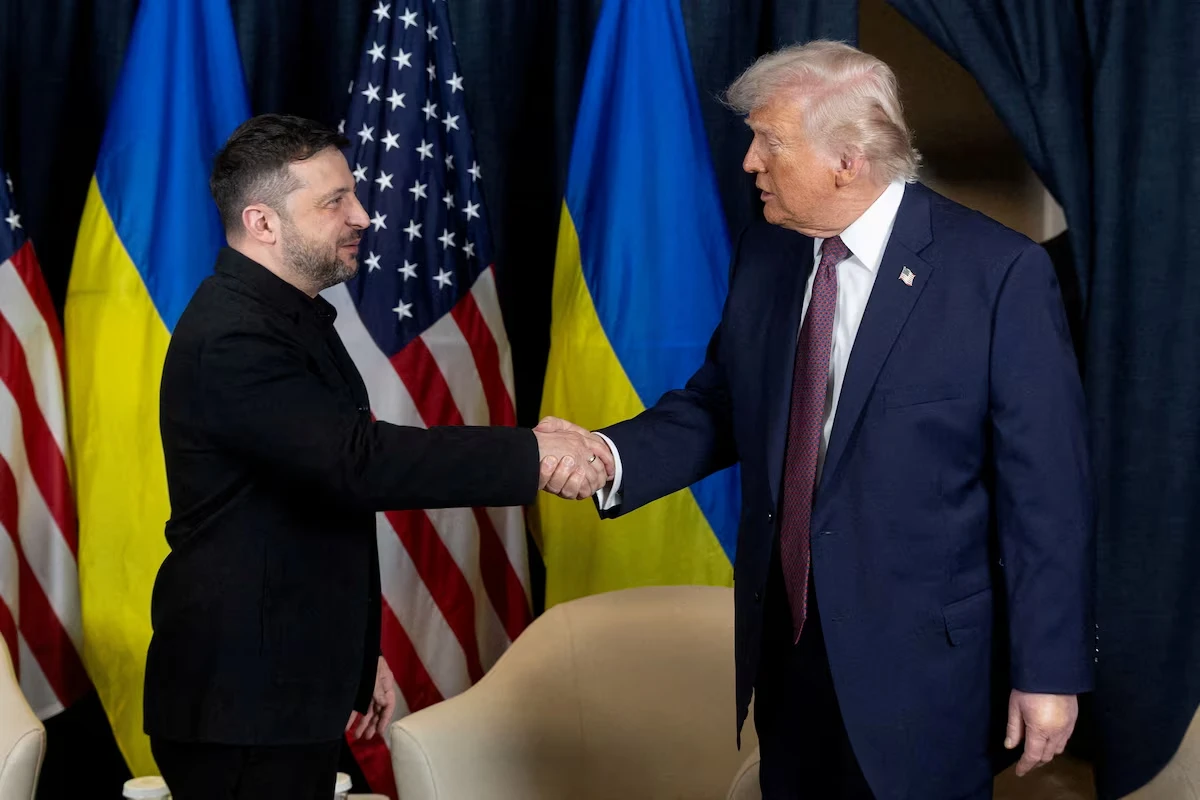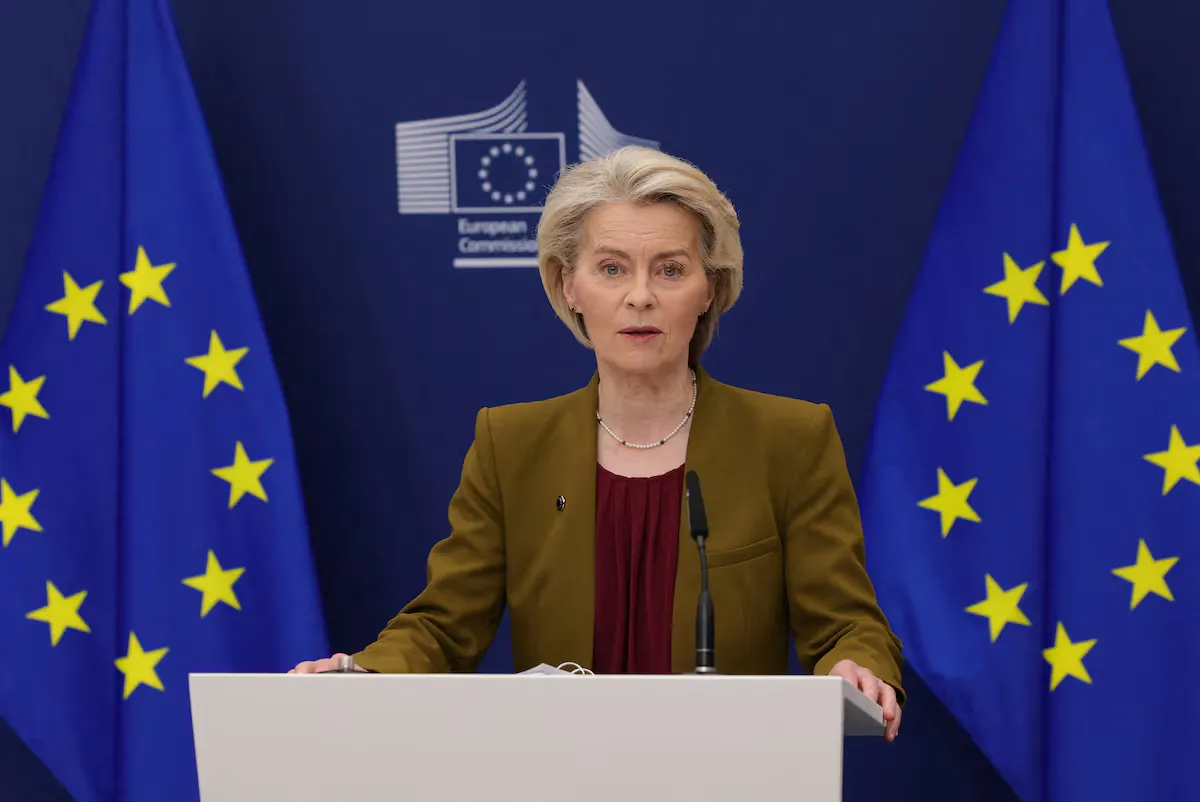
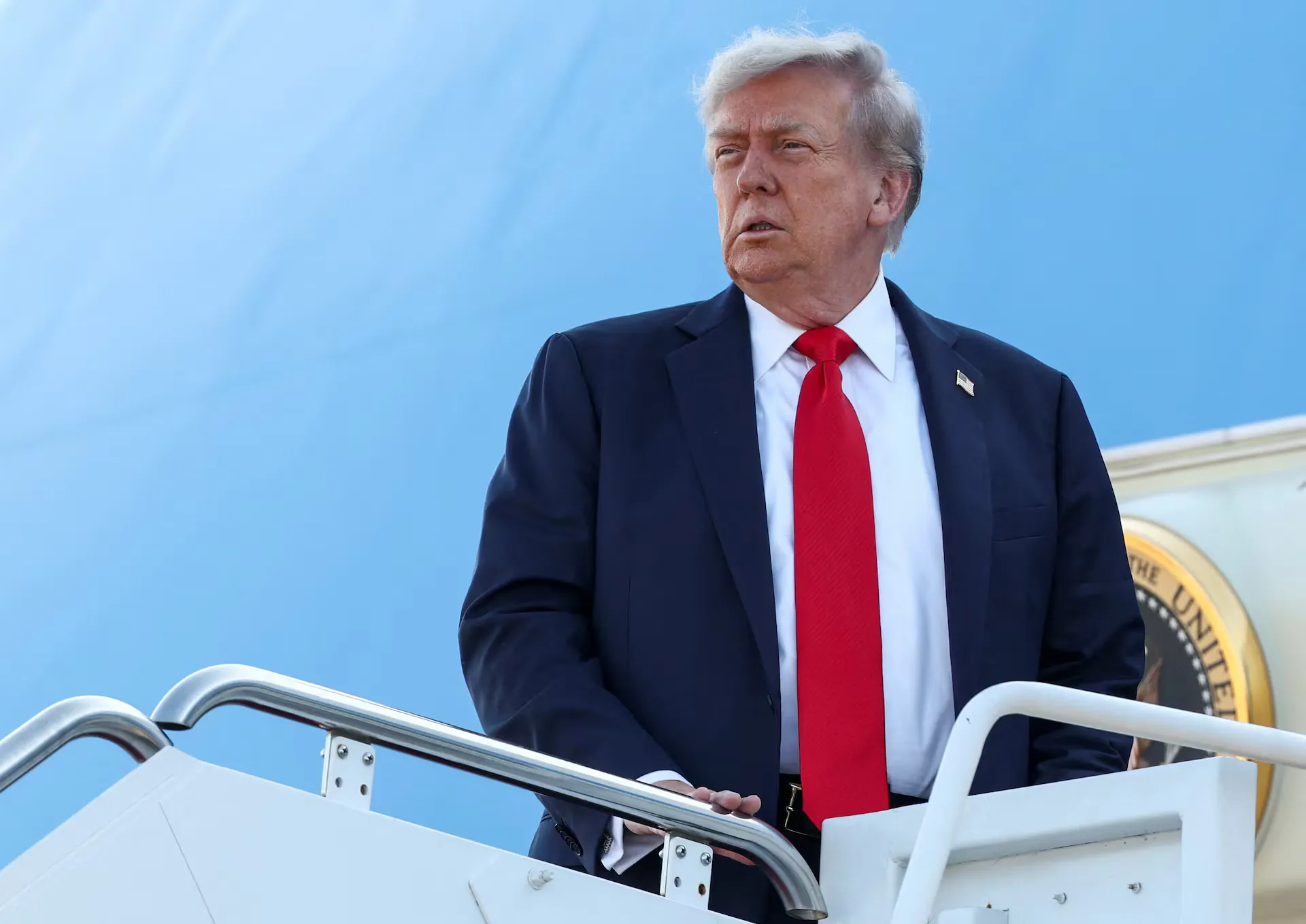




















Friedrich Merz did what now often matters more in transatlantic politics than a formal statement: he moved quickly to defuse tensions with Donald Trump without withdrawing his own disappointment in the United States. The phone call between Germany’s chancellor and the American president was an attempt to regain control over a dispute that had already moved beyond a diplomatic misunderstanding.
On the surface, the message was conciliatory. Merz described the conversation with Trump as good and stressed their shared position on Iran: Tehran should return to negotiations, the Strait of Hormuz must remain open, and Iran must not acquire nuclear weapons. The two leaders also discussed Ukraine and preparations for the upcoming NATO summit in Turkey.
Yet the political setting of the call was sharper than its official tone. Only hours earlier, Merz had spoken to young Germans in Würzburg in a very different register. He said he remained a great admirer of America, but that his admiration was not increasing at the moment. He also said he would no longer advise his own children to study or work in the United States because of the country’s changing social climate.
Daycom’s earlier analysis suggests that these two gestures — the conciliatory phone call and the public distance — capture Germany’s new dilemma. Berlin cannot afford a rupture with Washington, but it is finding it harder to hide that Trump’s America no longer functions for it as an unquestioned model of political stability, social mobility and strategic predictability.
Merz is not an anti-American politician. His biography, political instincts and long-standing commitment to the Atlantic alliance have made him a supporter of close ties with the United States. That is why his latest remarks carry more weight: they are not the language of radical opposition, but a restrained warning from the centre of German power.
The dispute with Trump began not over culture or the labour market, but over Iran. Last month, Merz sharply said that Iran’s leadership had humiliated the United States and that Washington lacked a convincing strategy to end the war. For Trump, this sounded like an attack not only on policy, but on the image of strength on which his foreign policy style depends.
The tension then moved quickly into the military sphere. A reduction in part of the American presence in Europe became a reminder for Berlin that, under Trump, even allied security can become an instrument of political pressure. For Germany, that signal is especially painful because the country remains one of the main hubs of U.S. military infrastructure on the continent.
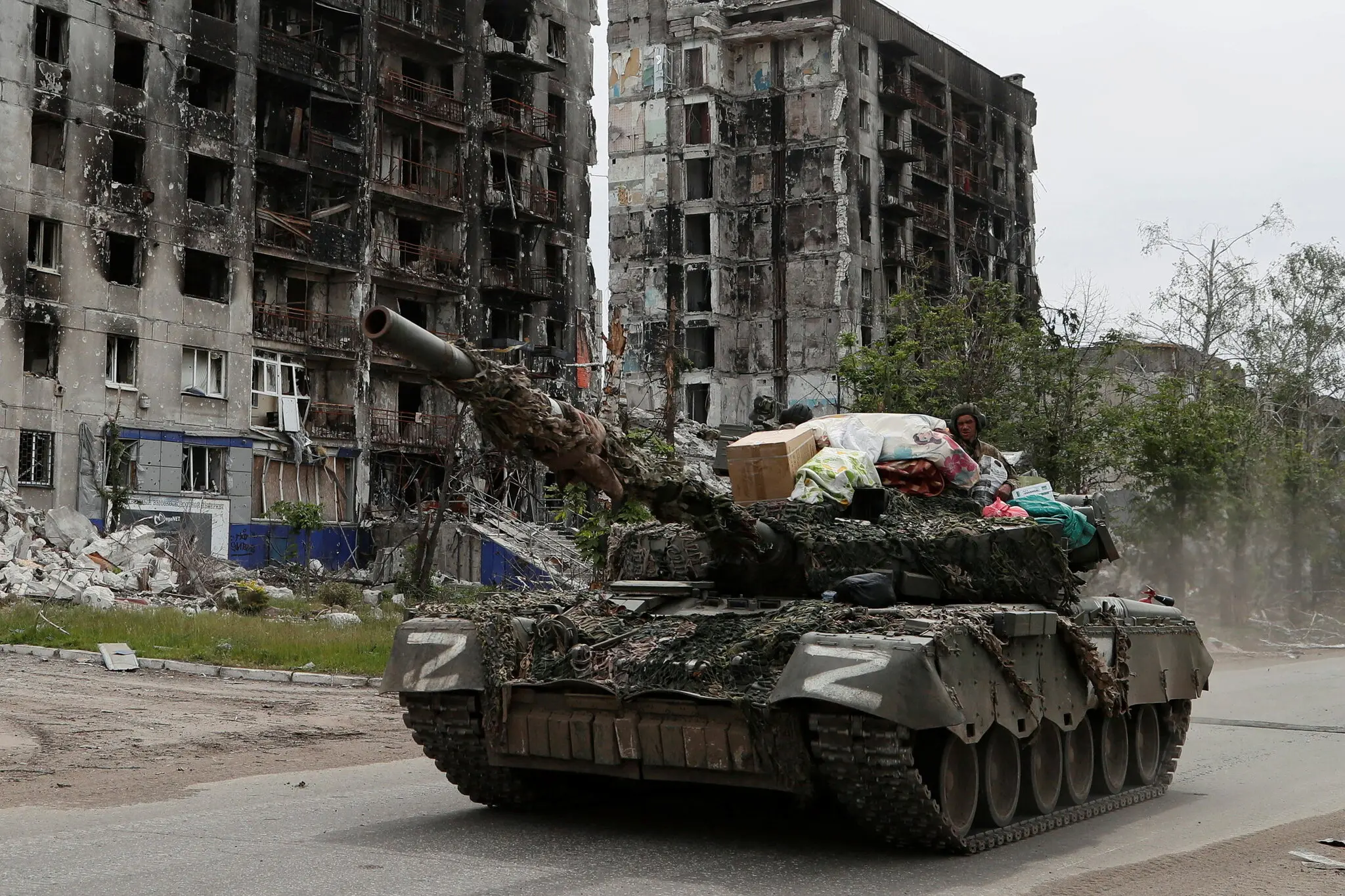
Germany’s importance to NATO has only grown since Russia’s full-scale war against Ukraine. Logistics, training, coordination and a large share of Western support for the eastern flank all depend on German territory. Any hint of a U.S. troop reduction is therefore read not as a technical rotation, but as a question of trust in the wider system of deterrence.
Merz is trying to balance two realities. The first is strategic: without the United States, European security remains incomplete, especially in intelligence, air defence, long-range capabilities and nuclear deterrence. The second is political: dependence on an unpredictable Washington is becoming increasingly costly for Berlin.
The war around Iran has exposed that contradiction. Any closure or disruption of the Strait of Hormuz would hit energy markets, industry and the cost of stabilising Germany’s economy. For a country already dealing with weak growth, expensive energy and voter fatigue over reforms, an external crisis can quickly become a domestic problem.
That is why Merz is both criticising the American course and calling Trump. He needs to show German voters that he is not silent before Washington, while also reassuring the White House that Berlin is not leaving allied discipline. This is not diplomatic elegance; it is political survival between domestic pressure and external dependence.
The exchange with young people in Würzburg was not a casual aside. German students and young professionals pressed the chancellor on living costs, jobs, prospects and the feeling that the state demands more from them than it offers in return. Merz tried to shift the focus by arguing that Germany still gives young people strong opportunities.
His reference to the United States turned that argument into a comparison that would have seemed almost unthinkable a few years ago. America long stood for many Europeans as a symbol of career acceleration, freedom of choice and a strong labour market. Now Germany’s chancellor is using it as an example of a country where even well-educated people struggle to find a stable path.
This is not only an economic statement. It points to a break in how America is perceived among European elites. The United States remains an indispensable ally, but it no longer appears to be an unquestioned moral and social reference point. For postwar Germany, that shift carries particular weight: the American presence was part of the country’s political architecture.
Trump sees the partnership differently as well. His foreign policy is not built on the automatic logic of alliances, but on a constant recalculation of advantage. NATO, for him, is not only a system of collective defence, but also a venue for demands, bills and punishment. That forces Europeans to speak of autonomy not as an abstract ambition, but as a practical necessity.
But autonomy cannot be created by declarations. Germany needs years of investment in the Bundeswehr, the defence industry, infrastructure, cyber protection and joint European programmes. Until that process is complete, Berlin must live with a paradox: criticising Trump’s America while keeping it inside Europe’s security system.
That is why the phone call between Merz and Trump was more a pause than a solution. It allowed both leaders to project control: the chancellor could show responsibility toward NATO, while the U.S. president could show that allies remain close. But the deeper fracture did not disappear.
Berlin and Washington remain strong partners because the geography of war, the structure of NATO and the Russian threat to Ukraine require it. Yet the partnership increasingly resembles negotiation rather than default trust. Every phrase, every troop decision and every German judgment about America now carries a price.
For Merz, the real test is only beginning. He must preserve access to Trump without looking dependent, strengthen Europe without provoking a break with the United States, and speak honestly to German society without weakening the alliance on which the continent’s security still rests. It is within that tension that the new transatlantic reality is taking shape.