




















War teaches a state to live with permanent scarcity — of time, money, manpower and political energy. But for Ukraine, one shortage has become especially dangerous now: the shortage of governability. Volodymyr Zelensky’s public appeal to lawmakers to pass a package of critical legislation is no longer just another disciplinary signal from Bankova. It reads as a warning that the country’s fiscal architecture is moving into a danger zone.
The problem is not simply that Ukraine needs money. It has long operated on a model in which external financing is not a supplementary resource but one of the basic conditions for the state to function under full-scale war. When outside funding needs amount to roughly a quarter of annual economic output, any delay in the legislative cycle ceases to be an internal bureaucratic inconvenience. It becomes a question of macrofinancial stability, state payments, military endurance and the confidence of lenders.
That is why the current moment looks more serious than the familiar story of a parliament moving too slowly. Ukraine has fallen behind on part of its obligations to key external partners, and that delay has created grounds for major financing packages to be stalled or withheld. This is no longer a hypothetical risk hanging somewhere in the distance. It is a practical threat to the budget over the coming months.
As Deykom has assessed, Kyiv has reached a point where war, reform and parliamentary discipline have fused into a single problem. Until recently, those three tracks could still be discussed separately: the front had its own logic, European integration had another, and internal political tensions could be treated as a third sphere. That separation is no longer possible. If laws do not move, money does not move. If money does not move, the entire structure of the wartime state begins to wobble.
In that sense, the content of the legislation Zelensky is demanding is especially revealing. These are not vague declarations of loyalty to the European project. They are measures that Brussels and international financial institutions read as tests of state maturity: judicial reform, changes in energy-sector procedures, and institutional rules that signal whether Ukraine can do more than ask for support — whether it can reshape itself to meet standards of trust. For Ukraine’s Western partners, these are no longer parallel processes. Funding is being tied ever more tightly not to the fact of war alone, but to the quality of governance during war.
This marks a harder phase in external support. In the first stage of the full-scale invasion, the West financed Ukraine above all as a country fighting to survive. In 2026, a different logic is asserting itself more clearly: Ukraine is being financed as a state that must wage war, reform itself and prove it can manage resources without institutional drift. In other words, outside money is no longer only an act of solidarity. It is increasingly a contract based on functionality.
That puts Kyiv in an uncomfortable position. On one level, the demands of partners are entirely rational. No external backer wants to keep pouring billions into a system without checking whether that system can meet the commitments attached to the support. On another level, Ukraine’s own political machinery is operating under extreme strain. A fifth year of major war means not only social exhaustion, but accumulated friction inside government, souring relations in parliament, weak communication between ministers, the presidential office and lawmakers, and a general decline in political flexibility.
The situation is made worse by the fact that formal presidential control does not automatically produce operational control. In the early years of the war, the political vertical held because the country functioned under a mobilizational consensus: the state was under attack, and decisions had to be made fast. But the longer a war lasts, the less that emergency logic works on its own. Lawmakers increasingly want more than instructions to vote. They want explanation, consultation and a clearer sense of why some measures are rushed while others remain stuck for months.
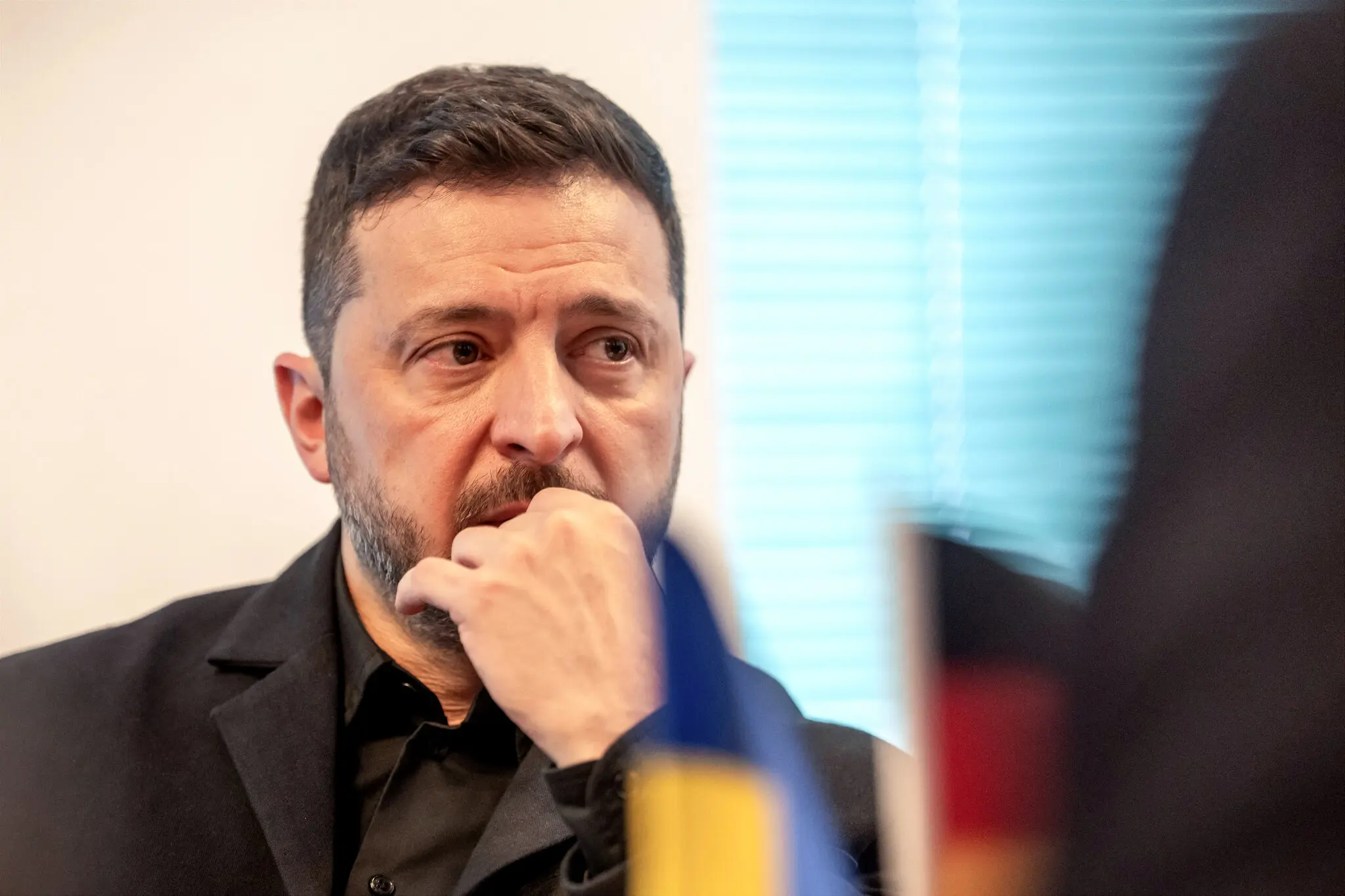
That is why Zelensky’s appeal to all factions matters as more than an effort to round up votes. It is also an indirect admission that relations between the presidency and parliament can no longer be reduced to automatic compliance. When the president publicly links specific bills to the survival of the budget, he is trying to move the discussion away from factional maneuvering and back toward the language of state survival. He is trying to force lawmakers to see a direct line between their votes and whether the budget can hold through the summer.
There is also a European dimension that makes the moment more severe. For Ukraine, reforms long ago stopped being a moral appendix to the goal of EU membership. They became a currency of access. Every missed benchmark, every delayed measure, every law left unpassed is no longer just a source of irritation in Brussels. It is a concrete sum of money that fails to enter the system. Under wartime conditions, European integration no longer lives primarily in the realm of symbolism. It lives in deadlines, tranches and fiscal calendars. That may be the most adult phase yet in Ukraine’s relationship with the European Union: politics translated fully into obligations.
The broader external setting is no less punishing. Hungary’s blocking of a major support package has underlined how dangerous it is for Kyiv to depend so heavily on decisions it cannot directly shape. Ukraine has long existed in an environment where even one government inside Europe can hold up critical financing for reasons only loosely connected to Ukraine’s needs. Against that backdrop, delays inside the Verkhovna Rada become doubly toxic. They do not occur in isolation. They stack on top of outside blockages and create the sense of a tightening ring.
There is a psychological dimension as well. When economists warn that, without meeting key obligations, the state may only have enough money until May or, at best, mid-summer, that changes the atmosphere of governance itself. The country begins to operate not in a mode of strategic budgeting, but in a mode of short-horizon survival. Under such conditions, any long-term reform becomes politically harder to sustain, because the whole system shifts toward patching holes. That in turn creates a vicious circle: the more the state lives from one cash shortfall to the next, the harder it becomes to carry out the very reforms that would unlock the missing money.
There is also an uncomfortable truth here for the Ukrainian authorities. Not everything can be explained by Viktor Orbán, geopolitics or Western fatigue. Part of the problem lies inside Ukraine’s own politics. Slow reforms, stalled draft laws, weak coordination with parliament, corruption scandals and accumulated irritation inside the governing structure now carry a fiscal price. And that price is no longer reputational. It is cash. Money is not failing to arrive only because partners have become stricter. It is also failing to arrive because Kyiv has spent too long assuming that wartime conditions would automatically compensate for institutional underperformance.
That leads to the central political conclusion. Spring 2026 may become the moment when the Ukrainian state is forced to mature in several senses at once. First, it must accept that international support has limits and is being tied more aggressively to results. Second, it must recognize that even in wartime, parliament cannot remain merely a technical appendage to the executive if access to billions depends on parliamentary action. Third, it must absorb a basic fact: European integration is not a separate foreign-policy course running alongside the life of the state. It is increasingly a method of organizing the state itself, and one on which immediate fiscal survival depends.
That is why the upcoming votes in the Verkhovna Rada are not routine and not just another episode of bargaining between Bankova, the cabinet and lawmakers. They are a test of whether Ukraine’s political system, after five years of war, can shift from inertia to concentration. If the package passes, Kyiv will gain more than a chance to close part of its financial gap. It will also send an important signal to external partners that, despite fatigue, scandal and internal friction, the country can still do difficult institutional work under fire.
If it fails, the consequences will extend far beyond the budget. The question will then become harsher and more fundamental: can a state fighting for its survival afford political looseness at the exact point where every delayed bill costs it billions?