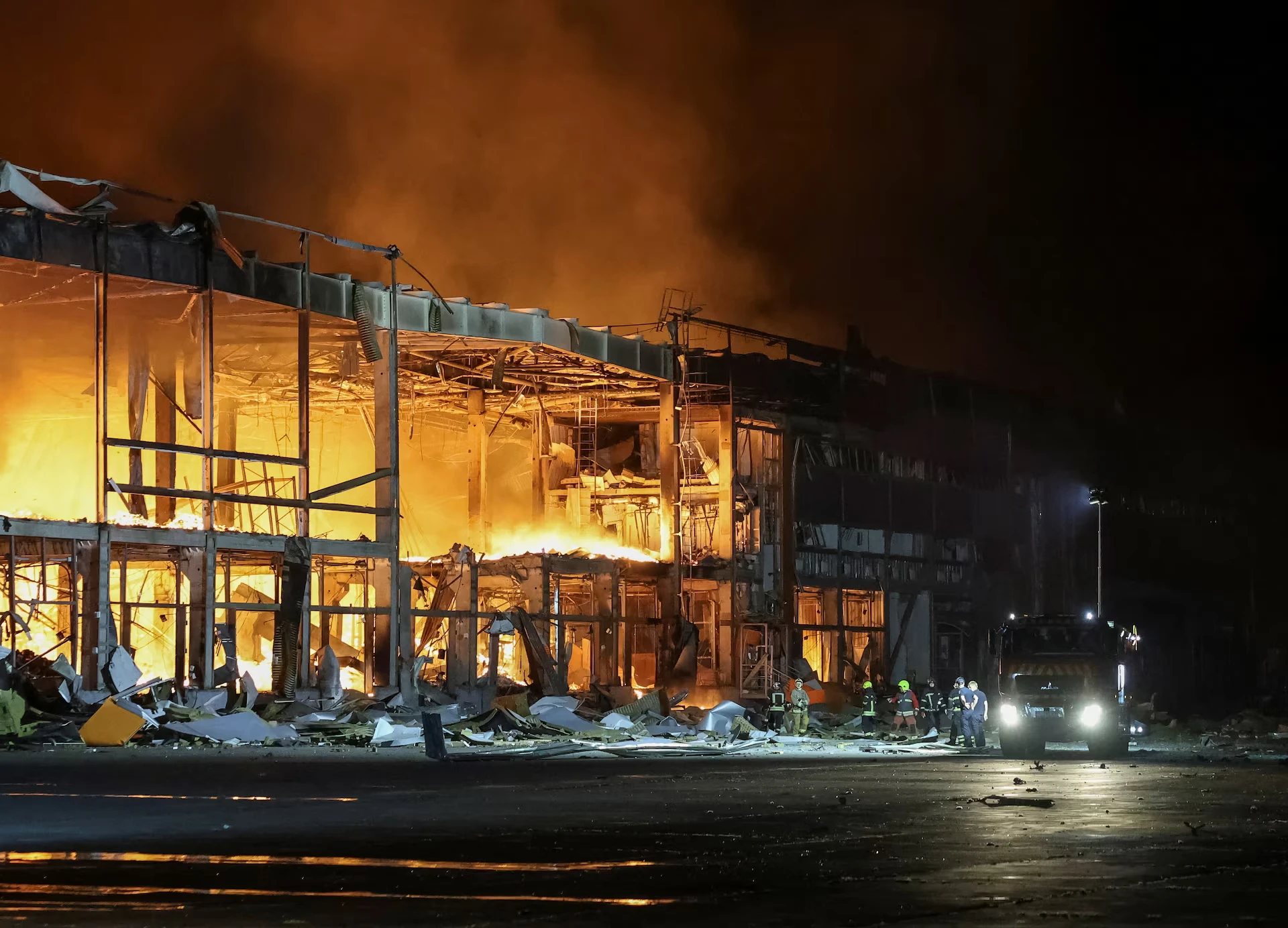






















Kyiv woke on Saturday to smoke, fires and shattered apartment buildings. At least nine people were killed in the overnight Russian attack, rescuers searched through collapsed structures, and the central weakness of Ukraine’s defense was once again visible in the streets: a shortage of missiles for the Patriot system.
Russia fired 27 ballistic missiles at Kyiv and other cities during the night. Ukrainian forces intercepted only one. The problem was not simply a lack of launchers, but a lack of ammunition — without interceptors, even the most advanced air-defense battery becomes an expensive empty platform.
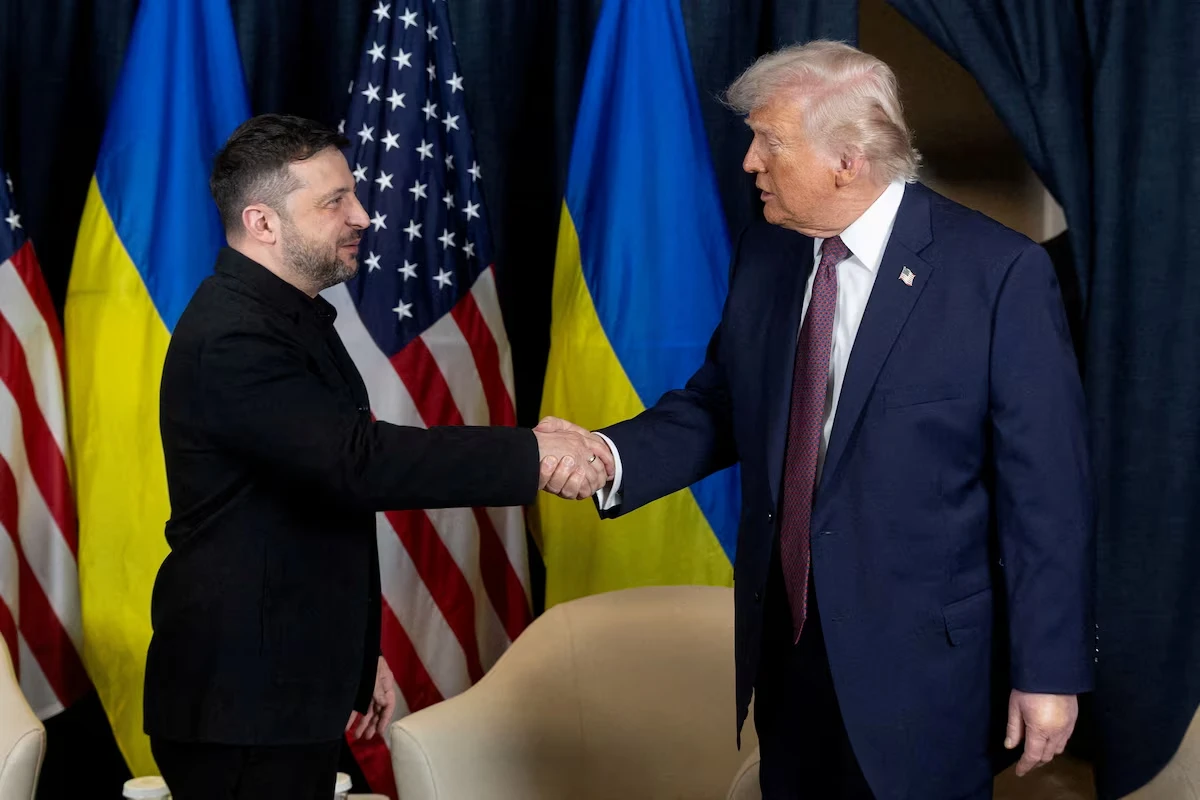
At almost the same moment, Donald Trump stepped back from his recent promise to allow Ukraine to manufacture American-designed Patriot interceptors under license. Only days earlier, the arrangement had appeared close to approval. The U.S. president now said he had agreed to no such deal.
In Daycom’s assessment, the significance of that reversal lies not only in another sudden change of policy in Washington. It came at a moment when Russia’s strategy increasingly depends on exhausting Ukraine’s antiballistic defenses.
Patriot remains Ukraine’s most reliable weapon against ballistic missiles. Attack drones can be engaged by mobile fire teams, aircraft, guns and cheaper interceptors. Cruise missiles can be targeted by other systems. Against Iskanders and comparable high-speed weapons, the available choices are far narrower.
A shortage of Patriot missiles therefore changes Russian behavior. If Moscow sees Ukrainian stocks declining, every new mass barrage has a greater chance of penetrating the defense. The shortage does not merely weaken protection; it gives Russia an incentive to launch more frequently.
The deaths in Kyiv were therefore not the consequence of a single decision. They emerged from Russia’s missile production, limited global inventories of Patriot interceptors, competition from other regional conflicts and the slow pace of Western defense manufacturing.
Trump said he opposed transferring technology that could theoretically be used against the United States one day. Germany and Japan are currently the only countries outside America permitted to produce parts of the Patriot system.
That concern follows the logic of export control and technological security. Ukraine, however, is a state that has operated Patriot for years in the most intense missile war of the modern era and remains dependent on American supplies to protect its cities.
A license would not have saved Kyiv immediately. Production would require factory lines, certification, access to specialized components, trained engineers and long-term contracts. The first Ukrainian-made interceptors would not appear within weeks and probably not within months.
The agreement nevertheless carried strategic value. It offered a path from complete dependence toward joint production and a gradual expansion of the overall interceptor supply available to the Western air-defense system.
That was why Trump’s initial pledge produced cautious optimism in Kyiv. Volodymyr Zelensky met Lockheed Martin executives, while Ukrainian and American teams began discussing practical mechanisms for industrial cooperation.
The reversal did not destroy a signed contract. It destroyed the expectation that Washington had accepted Ukraine’s central argument: in a war of attrition, deliveries from existing stockpiles are not enough. Production itself must expand.
Trump’s behavior has now become a strategic risk in its own right. His position can move within days from public support to uncertainty and then to outright denial of what had appeared to be an agreement.
A Ukrainian lawmaker described the pattern as “one step forward and two steps back.” It is more than a political metaphor. Defense planning requires decisions that remain valid for years, while White House rhetoric can change faster than a missile production cycle.
The reason may extend beyond concern over technology. In Kyiv, suspicion is growing that Trump wants to avoid measures Vladimir Putin might interpret as a major strengthening of Ukraine.
If that logic is shaping American policy, it creates a dangerous contradiction. Washington calls for negotiations while limiting the tools that could prevent Russia from using attacks on cities as an instrument of coercion.
Diplomacy without sufficient air defense becomes negotiation under pressure. When one side can repeatedly destroy residential districts and the other lacks enough missiles to protect them, formal equality at the table does not produce a genuine balance of power.
The overnight strike on Kyiv showed how that imbalance works in practice. Two apartment buildings partly collapsed, residents were trapped under debris, and fires filled the city center with acrid smoke.
For someone living in the capital, a dispute over manufacturing licenses remains abstract only until a missile strikes the next building. At that moment, industrial policy, export restrictions and the judgment of an American president become questions of personal survival.
Ukraine is already trying to reduce its dependence on the United States. Together with European partners, it is developing a new missile-defense system, while the Ukrainian company Fire Point is testing an interceptor of its own.
Creating an effective weapon against ballistic missiles is exceptionally difficult. It requires precise radar, near-instant processing, reliable guidance and the ability to destroy a target moving at enormous speed and potentially maneuvering during flight.
Skepticism about the Ukrainian project is not an argument for abandoning it. On the contrary, a domestic system is becoming a strategic necessity. It cannot, however, replace Patriot in the near term.
Another possible layer of defense is the French-Italian SAMP/T system. Ukraine expects newer versions designed to engage ballistic targets. They could broaden the range of available options, but their numbers are limited as well.
The global shortage of missile-defense systems has been intensified by wars in the Middle East and rising demand in Asia. Every battery and every interceptor has multiple potential recipients, while production is failing to keep pace with consumption.
That is why a license for Ukraine mattered beyond Ukraine itself. It could have expanded the West’s industrial base and created another center of expertise in a country with unique operational experience using Patriot under sustained attack.
Trump’s retreat preserves the old model: Ukraine remains dependent on political approval, American inventories and its place in line behind other allies. Such a system may function during a brief crisis, but it is increasingly unsuited to a war lasting years.
For Russia, this is a favorable environment. It possesses domestic factories, an economy reorganized for war and the ability to plan serial attacks around the known limitations of Ukrainian air defense.
Moscow does not need to destroy every Patriot battery. It needs only to force Ukraine to expend interceptors faster than the West can manufacture and deliver them. Once that happens, even a functioning launcher ceases to be a reliable shield.
Ukrainian cities already live inside that arithmetic. Every interception saves lives but reduces the stock available for the next night. Every missile withheld because supplies are low increases the chance that a home, hospital or energy facility will be struck.
Trump could reverse himself again. His policies have often proved temporary, and negotiations with manufacturers may continue through other channels. But a national defense cannot be built around the expectation of another presidential reversal.
Kyiv needs a model in which American support remains important without remaining the sole foundation. That means developing European systems, domestic interceptors, joint radar production and a larger arsenal of cheaper weapons against drones and cruise missiles.
Ukraine’s partners must also recognize that the problem is no longer solved by transferring several additional batteries. This is an industrial competition in which Russia is trying to produce more missiles than the West can produce weapons to destroy them.
The nine people killed in Kyiv offered the harshest reminder of the cost of that imbalance. It is measured not only in interceptors remaining in warehouses, but in bodies carried from ruined buildings by rescue workers.
A Patriot license would not have saved them that night. Trump’s retreat from the idea nevertheless showed that the West has still not created a long-term answer to a war Russia has already placed on a permanent industrial footing.
As long as political promises change faster than production lines can be built, Moscow will retain a crucial advantage: the ability to prepare its next barrage on the assumption that Ukraine will have fewer interceptors in its launchers than Russia has targets in the sky.