



















At first glance, the oil market’s response looks almost subdued. After Donald Trump’s latest threats toward Iran, crude prices edged up only slightly on Monday, while Asian equity markets moved in different directions. For a conflict of this scale, that kind of reaction appears strangely restrained.
But the restraint is the signal. Markets are no longer treating every statement as a discrete shock. They are shifting into the logic of a long crisis, one in which each new development in the Middle East does not trigger immediate panic so much as slowly reshape expectations around inflation, shipping, energy security and global growth.
That means investors are no longer thinking in terms of a one-off spike. They are thinking in terms of durable risk. At the center of that risk sits the Strait of Hormuz, a critical passage for oil and liquefied gas that in ordinary times carries as much as one-fifth of the world’s oil supply.
In Daycom’s assessment, the central story is not the daily move in prices but the market’s changing logic. The question is no longer whether another strike will come. It is how long maritime disruption will last, how much damage energy infrastructure can absorb, and who will pay first for this new geopolitical normal.
Brent crude hovered near $109 a barrel on Monday, while U.S. benchmark WTI traded around $111. The day’s movement was modest. The deeper shift matters more: Brent has risen by roughly 60 percent since before the war, and WTI by about 66 percent. That is no longer a burst of emotion. It is a new pricing floor.
The unusual fact that WTI has moved above Brent only underscores how unsettled the structure has become. Under normal conditions, the global benchmark tends to trade at a premium. But when war distorts expectations and futures begin to absorb not only physical scarcity but fear of future disruption, familiar relationships start to lose their meaning.
That is why the small day-to-day move should not be mistaken for stability. The market already did the heavy repricing earlier, when it rewrote the value of a barrel against a new map of risk. What it is tracking now is not the existence of war itself but the architecture of that war: whether disruption in Hormuz becomes prolonged and whether repeated attacks on energy facilities in Iran and across the Gulf begin to produce cumulative damage.
The crucial point is that traffic through the Strait of Hormuz has been effectively frozen since the war began. Isolated ship movements do not disprove the disruption; they highlight it. When a single Western-owned vessel becomes notable, the exception itself becomes evidence that the route is no longer functioning as a routine commercial artery but as a zone of strategic fear.
The consequences reach far beyond oil terminals. Expensive crude quickly becomes expensive electricity, higher transport costs, more costly chemicals, more expensive food and renewed pressure on consumer prices. For wealthy economies, that means a return of inflationary strain. For more vulnerable regions, it means fuel shortages, pressure on water systems, power insecurity and a harsher daily life.
This is where a Middle Eastern war becomes global not because of headlines but because of cost structure. If energy prices remain elevated, the burden spreads automatically to importing countries, industrial sectors, central banks and households. Geopolitics is translated, once again, into utility bills, freight rates and the cost of living.
Asian equity markets are already showing how uneven that pressure may become. Japan and South Korea advanced, with the Nikkei 225 rising about 0.6 percent, while other regional markets were weaker. That is not a sign of confidence. It is a sign of selective adaptation, as investors begin to distinguish between economies that can absorb expensive energy and those that cannot.
Holiday closures across parts of Asia and all of Europe also muted the visible reaction. Thin trading can create the illusion of calm without reducing the underlying danger. On the contrary, in a shallow market, any further escalation — a fresh hit on infrastructure, a new threat to close the strait, a supply interruption — can be repriced far more violently once full liquidity returns.
S&P 500 futures were little changed, but that, too, looked more like a pause than relief. The index had already fallen nearly 6 percent from its late-January peak and had come close to correction territory. Equity markets are not yet behaving as though a full crisis has arrived, but they are behaving as though confidence in the idea of “manageable escalation” is wearing thin.
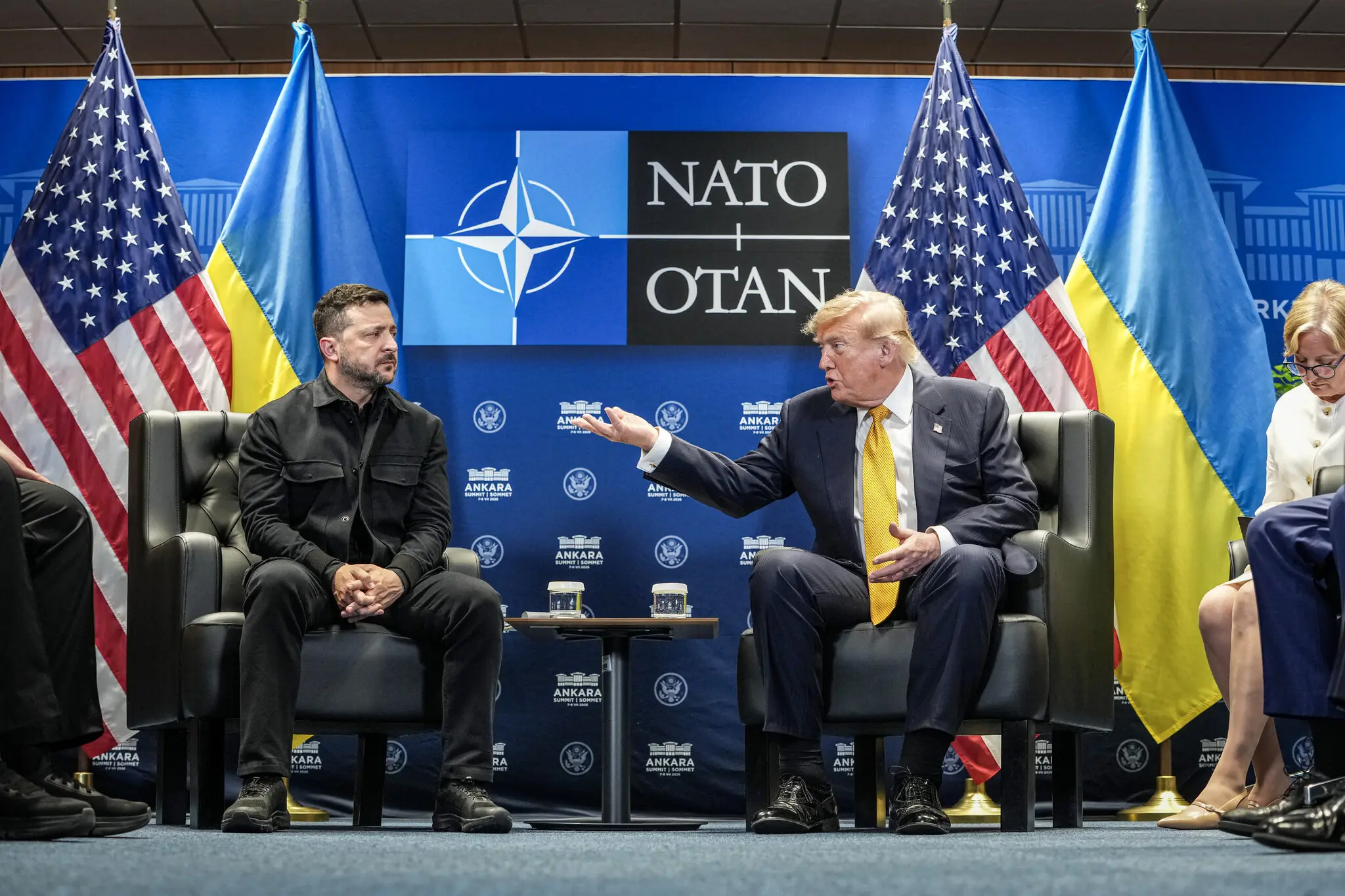
That brings the story back to politics. Trump’s threats, including his demand that Iran reopen the Strait of Hormuz after the rescue of an American airman, are not just signals to Tehran. They are also signals to the market that the White House is prepared to raise the stakes without offering a clear account of the duration, limits or cost of the next phase.
In that setting, even a mild rise in crude should not be read as resilience. It should be read as cold repricing. The market has not calmed down. It has simply begun to price a scenario in which instability in the Persian Gulf is no longer a temporary deviation but part of the financial, energy and trade reality of 2026.
And that is what makes the present moment more dangerous than it looks. Once war stops surprising markets, it starts embedding itself inside the economy. And once it embeds itself inside the economy, the price of every new political impulse is measured not only in missiles and ships, but in inflation, recession risk, energy insecurity and the widening divide between countries that can still afford the shock and those that no longer can.