






















European support for Ukraine is increasingly moving beyond the familiar categories of missiles, air defense systems and budget aid. War changes the hierarchy of value. In that new hierarchy, not only advanced weapons matter, but also ordinary materials that can save lives under fire.
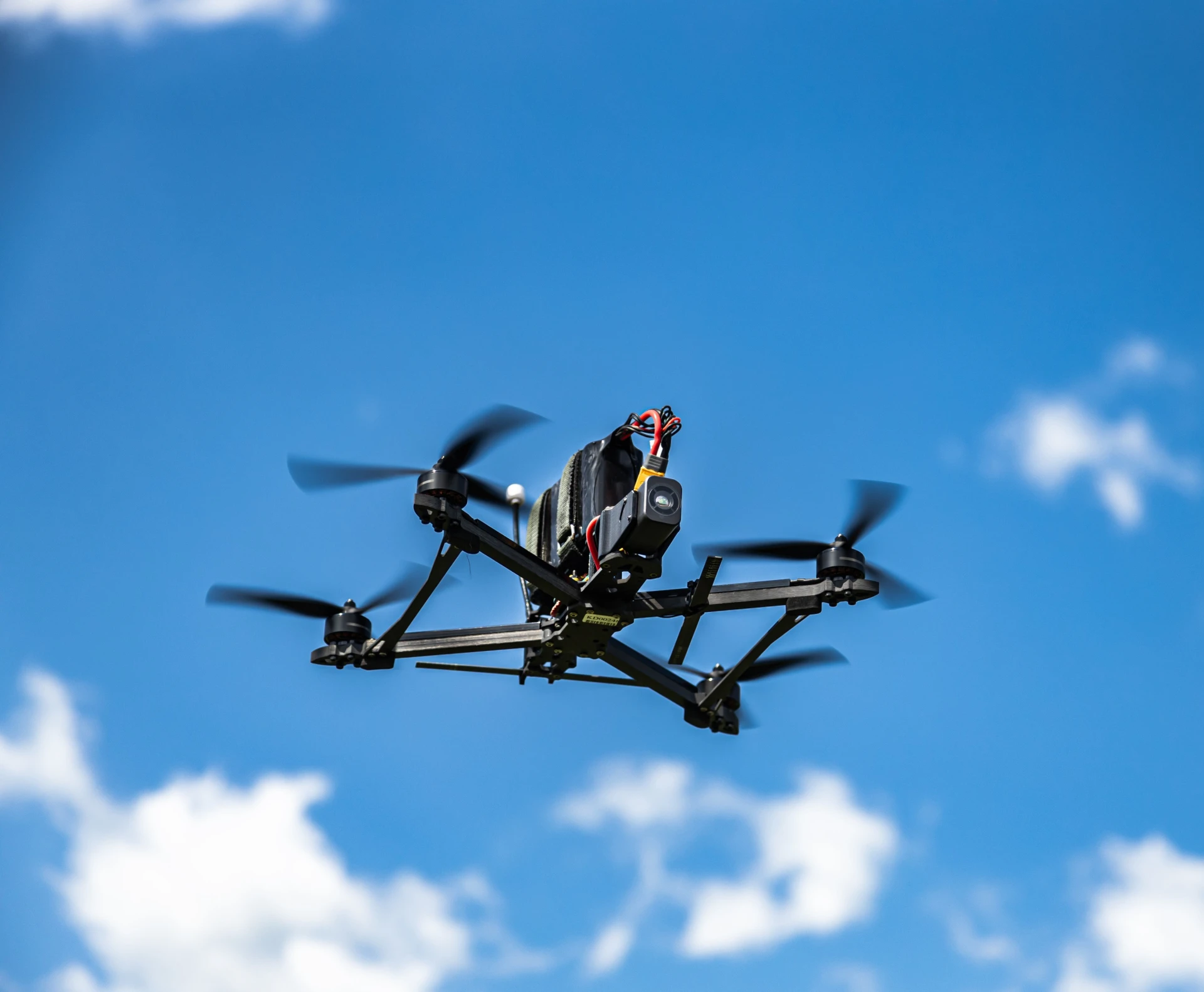
That is the logic behind a new initiative in Italy, where senators have proposed incentives for fishing companies to send discarded nets to Ukraine. At first glance, the idea sounds almost improvised. In reality, it fits the character of this war with unusual precision: a cheap drone often demands an even cheaper, but still effective, form of defense.
Ukraine has sharply expanded the use of anti-drone netting above roads in frontline areas. The point is not to destroy an incoming drone, but to interrupt the strike: snag the propellers, distort the trajectory, prevent the aircraft from reaching a vehicle, a hospital, an energy site or civilian traffic moving through exposed corridors.
In Deykom’s assessment, the importance of the Italian proposal lies not only in its practical value, but in the architecture of the idea itself. It brings together waste disposal, wartime logistics, industrial incentives and political solidarity in a single mechanism, where even a discarded material becomes part of the defense system.
The bill is straightforward. Fishing companies that send old nets to Ukraine would be exempt from disposal costs and would also receive compensation based on the weight of the material delivered. The state, in other words, is not merely appealing to goodwill. It is trying to make solidarity economically rational.
That distinction matters. Much of Europe’s support for Ukraine is framed in moral or strategic language, but policy works best when those arguments are translated into incentives that businesses can actually use. The Italian proposal does exactly that. It does not ask companies to act against their own interests. It creates a model in which helping Ukraine aligns with practical commercial logic.
Politically, the measure is revealing as well. The bill was introduced by Senator Ivan Scalfarotto of the centrist Italia Viva party, which sits in opposition to Prime Minister Giorgia Meloni’s government. Yet support for Ukraine in Italy has long served as a fault line that cuts across party labels and exposes deeper tensions inside the political system.
The governing coalition has never been entirely uniform on Kyiv. Meloni’s Brothers of Italy and Forza Italia have maintained a broadly pro-Ukrainian line, while parts of the right have often sounded more ambivalent and, at times, closer to arguments favorable to Moscow. That makes even a seemingly technical proposal like this one more than an administrative measure. It becomes a test of whether support for Ukraine remains operational, not just rhetorical.
Its symbolism is stronger than its modest subject might suggest. Italy has already backed Ukraine with repeated military aid packages, including air defense assistance. This proposal does not compete with that track; it complements it. It reflects a deeper lesson of the war: modern defense is layered, and protection does not begin and end with expensive systems. It also includes field fortifications, route shielding, engineering barriers and physical obstacles that complicate the attacker’s final approach.
In that sense, fishing nets are not a relic of a simpler era. They are an example of adaptive defense. Drone warfare has radically altered the relationship between the cost of attack and the cost of protection. If an unmanned aircraft can be produced relatively cheaply and used at scale against roads, supply vehicles, civilian cars or medical routes, the response does not always have to be technologically elegant. Often it has to be immediate, repeatable and affordable.
That is the real advantage of anti-drone nets. They do not replace electronic warfare, surveillance or missile defense. They solve a different problem. They operate at the low, close, daily level of threat — the level at which a drone hunts along a road, tracks a vehicle, waits over an evacuation route or attacks civilian movement in predictable corridors. In that environment, a physical barrier can be the difference between a successful strike and a failed one.
There is also a broader European dimension. In several countries, volunteer groups and charity networks have already sent fishing nets to Ukraine. What the Italian bill attempts to do is institutionalize what had previously depended on ad hoc coordination, donations and civic initiative. That shift matters more than it seems.
Once assistance moves from improvisation into law, it changes character. What was once a one-off shipment can become a supply channel. What was once a gesture can become a reproducible mechanism. And what looked like a marginal contribution can become part of a larger European defense ecosystem shaped by continuity rather than urgency alone.
For Ukraine, that distinction is strategic. Wars of attrition are not sustained by headline deliveries alone. They are sustained by the ability to solve hundreds of smaller problems over and over again — cheaply, quickly and at scale. Those problems rarely dominate diplomatic summits, but together they determine how resilient a front line really is, how safely logistics can move, and how long civilian life can continue under pressure.
This is why the Italian initiative deserves attention beyond its immediate material value. It says something important about the way Europe is learning to think about the war. The continent is slowly adjusting to a harder truth: support for Ukraine is not only a matter of high politics or heavy weapons. It is also a matter of building long chains of practical decisions in which every useful resource, from an air defense battery to an old fishing net, has a place.
In that new arithmetic of war, simplicity no longer looks like weakness. It looks like efficiency.